
Why I Love Using Conversation Starters with Kids
Some of the most meaningful moments I’ve had with children didn’t come from big planned lessons—but from the quiet in-betweens: the ride to school, a walk down the hall, or five unscripted minutes before bedtime. But starting those conversations? That’s not always easy.
Kids aren’t always ready to talk when we are. And asking “How was your day?” often gets you the dreaded one-word answer: “Fine.”
That’s why I love using simple, open-ended conversation starters—especially ones designed with a child’s world in mind. The right question can make a child’s eyes light up, build emotional safety, and turn an ordinary moment into a bridge for connection.
Whether you’re a parent trying to connect after a long school day or a teacher hoping to foster more sharing in the classroom, these kid-friendly prompts are here to spark laughter, insight, and those little windows into a child’s inner world that matter so much.
Let’s open the conversation.
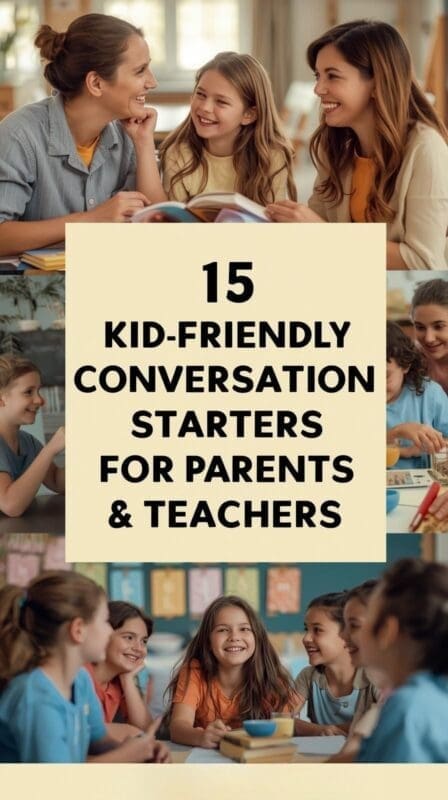
Why Conversation Starters Are Important
Children, like adults, thrive on meaningful interactions. Conversations are more than just exchanges of words—they’re opportunities to:
- Build trust and connection: When kids feel heard, they feel valued.
- Encourage self-expression: Open-ended questions give kids the space to share their thoughts and feelings.
- Develop critical thinking: Thoughtful questions challenge kids to think creatively and consider new perspectives.
- Strengthen emotional intelligence: Conversations help kids practice empathy, express emotions, and develop social skills.
For parents and teachers, asking the right questions can also provide insights into a child’s inner world—their interests, concerns, and aspirations.
15 Conversation Starters for Parents and Teachers
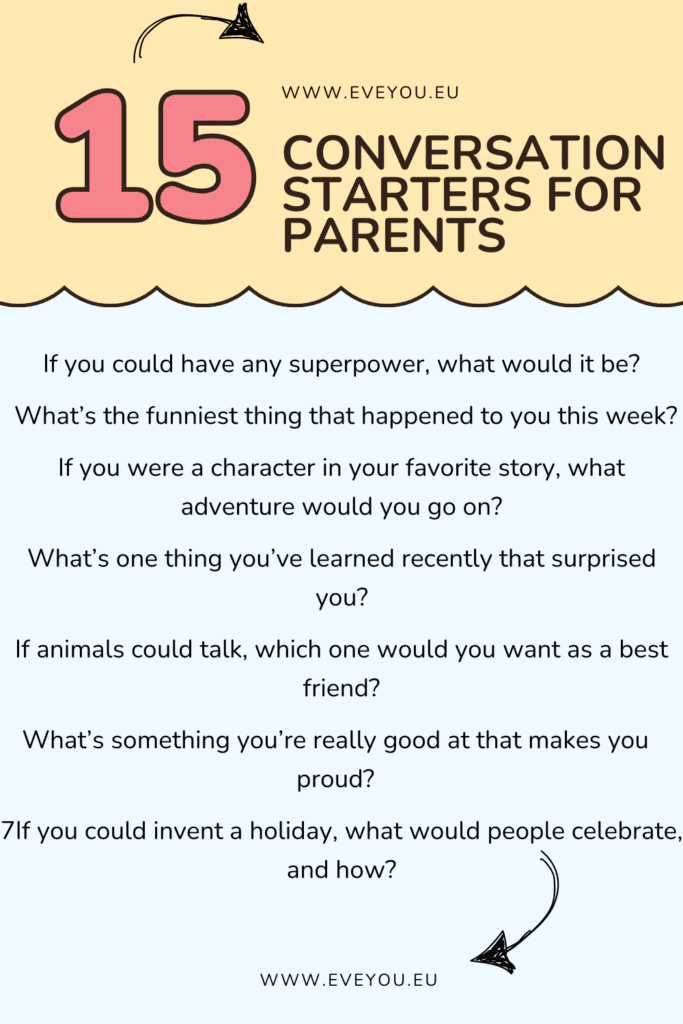
Here are 15 kid-friendly conversation starters guaranteed to spark curiosity and get kids talking:
1. If you could have any superpower, what would it be, and why?
Kids love imagining themselves as superheroes! This question lets them dream big and often reveals what they value—like helping others, being brave, or solving problems.
2. What’s the funniest thing that happened to you this week?
Encourage kids to reflect on their week and share lighthearted moments. It’s a great way to shift their focus to positive memories and create a relaxed, fun atmosphere.
3. If you were a character in your favorite story, what adventure would you go on?
Perfect for kids who love reading or storytelling, this question allows them to tap into their creativity while sharing their favorite books or movies.
4. What’s one thing you’ve learned recently that surprised you?
This question encourages curiosity and shows kids that learning is exciting. Their answers might even surprise you!
5. If animals could talk, which one would you want as a best friend?
This whimsical question helps kids explore their imaginations and often leads to funny and endearing answers.
6. What’s something you’re really good at that makes you proud?
Building self-confidence starts with recognizing strengths. This question encourages kids to celebrate their achievements, no matter how big or small.
7. If you could invent a holiday, what would people celebrate, and how?
Kids love being creative, and this question invites them to think outside the box. From “National Pizza Day” to “Superhero Week,” their ideas can be wonderfully unique!
8. What’s one thing you’d love to learn how to do?
This question can reveal hidden talents or interests. Whether it’s learning to play an instrument, bake cookies, or do karate, you’ll gain insights into their aspirations.
9. What’s the weirdest food you’ve ever eaten or would want to try?
Food-related questions are always a hit with kids. Sharing stories about unusual foods can lead to lots of giggles and even inspire them to try something new.
10. If you could travel back in time, what year or moment would you visit?
This question combines imagination with history. It’s a fun way to spark discussions about different eras, famous events, or even their own family history.
11. What’s your favorite way to help others?
Teaching kindness and empathy starts with simple conversations. This question helps kids reflect on the joy of helping others and might inspire acts of kindness.
12. If you could design your dream school or home, what would it look like?
Kids love to dream big! Their answers might include wild inventions, colorful designs, or unique rules that reflect their personalities.
13. What’s the silliest rule you’d make if you were in charge?
Prepare for some laughs! Kids often come up with absurdly funny rules, like “Ice cream for breakfast every day” or “No bedtime ever.”
14. What’s your favorite way to spend a rainy day?
From cozy indoor activities to splashing in puddles, kids’ answers can give you a glimpse into their hobbies and what makes them happy.
15. If you could switch places with any adult for a day, who would it be, and what would you do?
This question reveals who kids admire and what they find intriguing about the adult world. Their answers can also spark conversations about responsibility and aspirations.
How to Use These Conversation Starters
1. Make Them Part of Daily Life
Incorporate these questions into everyday moments, like car rides, family meals, or classroom discussions. Kids are more likely to open up when they feel relaxed and unpressured.
2. Tailor Questions to the Situation
Choose questions that fit the context. For example, if you’re discussing books in a classroom, a question about characters or adventures is perfect.
3. Follow Their Lead
If a child gives a short answer, don’t worry. Ask follow-up questions or gently guide the conversation. Letting them take the lead shows you value their input.
4. Use Humor
Kids respond well to lightheartedness. Feel free to laugh with them or share your own funny stories to keep the mood upbeat.
5. Make It Interactive
Turn some questions into drawing or storytelling activities. For example, if a child describes their dream school, ask them to sketch it or write about it.
Why These Conversations Matter
Engaging kids in meaningful conversations isn’t just about filling time—it’s about:
- Building Relationships: Asking thoughtful questions shows kids you care about their thoughts and feelings.
- Fostering Emotional Growth: Talking about emotions, values, and ideas helps kids develop emotional intelligence and confidence.
- Encouraging Lifelong Curiosity: Open-ended questions teach kids to think critically and explore the world around them.
Whether you’re a parent hoping to strengthen your bond or a teacher aiming to create a positive classroom environment, these conversation starters are tools for connection. They remind kids that their voices matter and that their ideas, no matter how small or silly, are worth sharing.
Final Thoughts: Small Questions, Big Connections
In a busy world of routines, screens, and distractions, it’s often the simplest questions that create the most meaningful moments. Whether you’re a teacher hoping to understand your students a little better or a parent trying to connect during car rides or bedtime, these prompts are gentle invitations—not just to talk, but to feel seen, heard, and safe.
Kids may not always have the words for how they feel, but with the right question, they’ll often surprise you. The key isn’t having all the answers—it’s showing up with curiosity, warmth, and a willingness to listen.
💬 Every question is a doorway. What matters most is that you knock gently and stay for the answer.
Looking for More Meaningful Tools to Support Emotional Growth?
Explore these popular reads next:
Top 5 Weighted Blankets for Kids (and Why They Work)
Discover how sensory tools can support calm and emotional safety.
10 Creative Journal Prompts to Boost Your Mood
Great for older kids or parent-child journaling time that builds connection.
10 Valentine’s Day Crafts That Promote Mental Health for Kids
Activities that encourage emotional expression and bonding through creativity.
Fairy Garden Ideas for Mental Health and Imaginative Play
A beautiful way to support storytelling, self-regulation, and joy.

About the Author
Hi, I’m Eve, a former school counselor with a master’s degree in School Psychology and a passionate advocate for children and families navigating sensory challenges. As a mom of children with sensory sensitivities, I deeply understand the journey special-needs parents face, and I dedicate myself to researching and sharing practical solutions to help children thrive and feel comfortable in their bodies. My goal is also to empower counselors, therapists, and psychologists with creative strategies and supportive resources to enrich their everyday practice. When I’m not writing or exploring new therapeutic approaches, you’ll find me spending quality time with my family and continually seeking inspiration from everyday moments.