
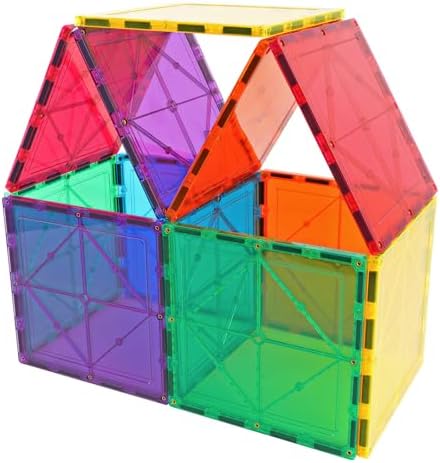
A pile of magnetic tiles can become a castle, a garage, a rocket, a marble run, or an elaborate house in the space of a few minutes.
But in a classroom, counseling office, therapy room, or home, those same colorful shapes can also become something else:
A feelings house.
A coping-skills tower.
A friendship bridge.
A worry wall.
A circle of control.
A problem-solving maze.
That is what makes magnetic tiles ideas so adaptable for social-emotional learning. You do not need to turn play into a formal therapy exercise or tell children that every building has a psychological meaning. Instead, magnetic building gives you a concrete, visual medium that can make an abstract conversation easier to begin.
A child can build a wall between two characters instead of explaining a friendship conflict immediately.
They can knock down and rebuild a tower while talking about what happens when something does not work the first time.
They can create a tiny house for each feeling, build a road toward different coping choices, or make a bridge between two people who are trying to solve a disagreement.
Below are 17 magnetic tile SEL activities for feelings, friendship, coping skills, frustration, problem-solving, strengths, worry, and connection.
Use the prompts that fit your child or group and ignore the rest.
The magnetic tiles are not the intervention.
They are simply the material that helps the activity come to life.

This post contains affiliate links, including Amazon Associate links. If you make a purchase through these links, I may earn a small commission at no extra cost to you.
What You Need for Magnetic Tile SEL Activities
Most activities require only:
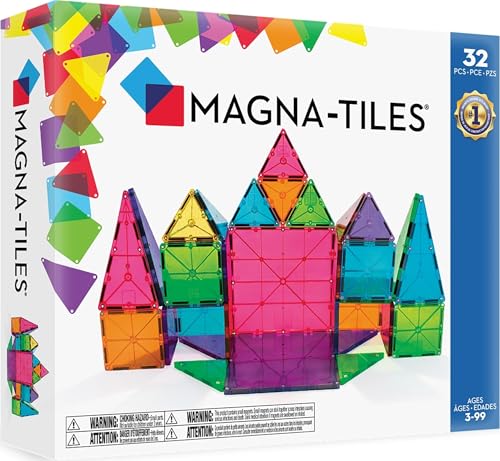
- magnetic building tiles
- index cards or small paper slips
- washable markers
- small toy figures or animals
- a few small toy cars
- painter’s tape if you want floor labels
You do not need a special “SEL magnetic tile set.”
If you already own magnetic building tiles, use those.
Small figures and cars are optional, but they become especially useful for storytelling, friendship situations, problem-solving, and magnetic car ramp activities.
Avoid writing directly on your tiles unless the manufacturer says the surface can safely be marked and cleaned. Small paper labels or cards are much easier to reuse.


A Quick Safety Note About Magnetic Building Toys
Use magnetic building toys that are appropriate for the child’s age and follow the manufacturer’s safety guidance.
Regularly inspect pieces for cracking, separated seams, or exposed magnets, and remove damaged pieces from use. The U.S. Consumer Product Safety Commission warns that swallowed high-powered magnets can cause very serious internal injuries, and recalls have occurred when magnets could become loose from magnetic building products.
This article focuses on enclosed magnetic building tiles—not loose high-powered magnetic balls or small magnetic construction pieces that may present different hazards.
17 Magnetic Tiles Ideas for Social-Emotional Learning


1. Build a Feelings House
Start with several simple magnetic tile houses.
Ask the child to decide which feeling lives in each house.
Maybe:
Yellow house: excitement
Blue house: sadness
Red house: frustration
Purple house: worry
Green house: calm
But let the child choose the colors.
Do not assume red automatically means anger or blue means sadness.
Then add a small figure.
Ask:
“Which house would this character be in today?”
You can create short situations:
The character has a new teacher.
Their best friend is absent.
They won a game.
Their birthday party is tomorrow.
Then ask whether the character might belong in more than one feelings house at the same time.
That creates a natural way to introduce mixed emotions without requiring the child to talk about themselves.
2. Build an Emotion Color Tower
Give the child several colors of magnetic tiles.
Ask:
“If today were a tower, which feelings would be inside it?”
The child builds one layer for each emotion.
A tall yellow section might represent excitement.
One small purple tile might represent a little worry.
A large green area could simply be a color they like.
There is no need to interpret the finished structure.
Instead ask:
“Tell me about your tower.”
If the child says the colors have nothing to do with feelings anymore because the tower has become a spaceship, let it become a spaceship.
The conversation can follow the play rather than competing with it.
3. Make a Coping Skills Tower
Build a tall tower one level at a time.
Each level represents one option a child might try during a difficult moment.
For example:
- ask for help
- draw
- take a short break
- move my body
- get a drink
- tell someone what happened
- use a familiar sensory tool
- listen to music
- choose a quieter space
Once the tower is finished, ask:
“Which of these would you actually use?”
That question matters more than the height of the tower.
You do not need fifteen coping strategies.
Three realistic options are enough.
For more general emotional-learning activities, see Eveyou’s Mental Health Awareness Activities for Upper Elementary Students.
4. Build a Magnetic Tile Circle of Control
Use magnetic tiles to create three zones on the floor or table.
Zone 1: I Can Control
Examples:
- my words
- whether I ask for help
- whether I apologize
- what I do next
Zone 2: I Can Influence
Examples:
- making a friend
- improving at a skill
- a group project
- how a disagreement develops
Zone 3: I Cannot Control
Examples:
- the weather
- another person’s feelings
- the past
- whether someone says yes
Read a scenario and let the child place a figure in the zone where they think it belongs.
For complicated situations, ask:
“Is there one part you can’t control and another part you can?”
That is often more useful than forcing every problem into a single category.
5. Build a Worry Wall
Create a magnetic tile wall.
Each section represents a worry.
You can write worries on small pieces of paper and place them beside the tiles rather than directly on the building pieces.
Then sort the worries into three questions:
Can I do something about this?
Do I need someone to help me?
Is this something I cannot know yet?
Next, add a door to the wall.
Behind the door, place one possible next step.
For example:
“I’m worried I won’t know anyone at the party.”
Next step:
Ask who will be there.
Or:
Stay close to someone familiar when we arrive.
The goal is not to knock the worries down and pretend they have disappeared.
It is to decide what kind of response each worry needs.
6. Build a Friendship Bridge
Put two small figures on opposite sides of the table.
Their challenge is to build a bridge between them.
Before adding each section, name one thing that can help friendship.
For example:
- listening
- honesty
- sharing interests
- apologizing
- asking before taking something
- giving space
- taking turns
- respecting “no”
- including others
Then introduce a problem:
One friend wants to play soccer. The other wants to draw.
Ask:
“Does the bridge have to break because they want different things?”
Children can redesign the bridge while brainstorming possibilities.
For more friendship and perspective-taking activities, continue with Empathy Activities for Kids.
7. Create Empathy Windows
Build a small magnetic tile house with windows on two sides.
Place one character on each side.
Present a situation:
Two children both want the same seat.
Ask what each person might:
see
think
feel
want
Then look through the opposite “window.”
Ask:
“Could this situation look different from this side?”
This gives perspective-taking a physical element.
You are not asking children to agree that everyone’s behavior is acceptable.
You are practicing noticing that two people can experience the same event differently.
8. Build a Problem-Solving Maze
Create a simple maze from magnetic tiles.
Place a figure at the beginning and a goal at the end.
At several points, place scenario cards.
For example:
Someone says no.
Your first idea doesn’t work.
You need help.
The plan changes.
At each obstacle, brainstorm at least two possible responses before the character continues.
Then compare them:
“What might happen if the character chooses this?”
The activity works particularly well for children who enjoy stories more than direct questions about their own problems.
9. Try a Frustration Rebuild Challenge
Build something small together.
Then intentionally change the challenge.
For example:
“Now we have to make it taller.”
or:
“The bridge needs space for a car underneath.”
If something collapses, avoid immediately turning it into a lesson about resilience.
Just notice what happened.
You might say:
“That didn’t work the way we expected.”
Then:
“What do you want to try next?”
The child can:
- rebuild
- change the plan
- ask for help
- make something completely different
- stop
The activity gives you a natural opening to talk about frustration without manufacturing distress on purpose.
If a child enjoys hands-on ways to explore intense emotions, Eveyou’s Creative Craft Ideas to Help Children Express Anger offers more options.
10. Build a Strengths Skyscraper
Each tile or level represents one strength.
Possible ideas:
- creative
- curious
- brave
- persistent
- funny
- thoughtful
- observant
- patient
- fair
- willing to try
- good listener
But do not stop at naming strengths.
Ask:
“When have you used that?”
For example:
“Persistent.”
“I kept practicing until I could ride my bike.”
That example becomes more meaningful than simply building a tower of positive adjectives.
You can also invite children to add a strength they are still developing:
“Something I want to get better at.”
11. Create a Support People Village
Build several small magnetic tile houses.
Each house represents a person or place where the child can find support.
For example:
Home
School
Family
Friend
Counselor
Place figures in the houses.
Then use scenarios:
“You don’t understand your homework.”
“Someone is being unkind at school.”
“You feel worried at night.”
Ask:
“Which house could your character go to?”
A child does not need a huge support village.
One or two reliable people are meaningful.
And some situations should clearly include adult help rather than expecting children to solve every problem independently.
12. Build a Kindness Community
Instead of building one large tower, create a small magnetic tile town.
Each new building requires one example of something that helps a community feel more welcoming.
Ideas include:
- invite someone
- help clean up
- listen
- say thank you
- give someone space
- return something you borrowed
- notice when someone needs help
- respect boundaries
Then add problems to the town.
Maybe one character is left out.
Another needs quiet.
Two characters disagree.
Children can decide how the “community” responds.
This works nicely in classroom SEL because students can talk about fictional characters rather than disclose personal experiences.
13. Build SEL Conversation Cubes
Use square magnetic tiles to create a cube.
Attach removable paper prompts to different sides.
Possible prompts:
Something that made me proud
Something that was difficult
Someone who helped me
Something I am looking forward to
A problem I solved
Something I want to practice
Roll or turn the cube and answer whichever prompt appears.
Keep sharing optional.
In a group, children can also answer for an imaginary character.
14. Make a Magnetic Car Ramp With Coping Choices
This activity combines magnetic construction play with simple choice-making and flexible problem-solving.
Construct a magnetic tile ramp for a small toy car.
At the bottom, create several destinations.
For example:
Ask for Help Garage
Take a Break Station
Talk About It House
Try Again Workshop
Read a simple situation:
“The character can’t finish the puzzle.”
The child chooses where the car should go.
Then ask:
“Could the car go somewhere else too?”
This helps avoid teaching children that every emotional situation has one correct coping response.
And after the SEL portion is finished, let them build ramps simply because ramps are fun.


15. Build a Change-of-Plan Road
Create a road from magnetic tiles.
Put a figure or car at the beginning.
The destination might be:
Playground
Halfway there, change the plan:
“It starts raining. The playground is closed.”
Now ask:
“Where could the road go instead?”
The child physically rebuilds the route.
Try more situations:
- friend is absent
- favorite activity is unavailable
- class changes rooms
- expected food is not available
- event gets cancelled
The goal is not to teach children that they should enjoy every unexpected change.
They can still be disappointed.
The activity asks:
“What could happen next?”
16. Try a Team Magnetic Building Challenge
Give two or more children a shared building task.
Examples:
Build a house with two doors.
Build a bridge that can hold a toy animal.
Build a garage for three cars.
Then introduce simple collaboration rules:
Ask before removing someone else’s piece.
Everyone contributes at least one idea.
You can disagree with an idea without insulting the person.
The plan may change.
Afterward, ask:
“What made building together easier?”
and:
“What got difficult?”
Do not evaluate the building itself.
The interesting part is how the group worked together.
17. Build an SEL Story World
This may be the most flexible activity of all.
Give the child:
- magnetic tiles
- figures
- animals
- cars
Then let them build any world they want.
Once the story begins, follow it.
A dragon may lose its house.
Two animals may fight over the same cave.
A car may be afraid to cross a bridge.
One character may live alone.
Another may need help.
You can ask gentle questions:
“What happens next?”
“How does that character feel about it?”
“Who could help?”
“Do they want help?”
“What could they try?”
But do not assume the story is autobiographical.
A child making an angry dragon does not automatically mean the child is angry.
Sometimes an angry dragon is simply an excellent angry dragon.
For another hands-on building approach already in the Eveyou SEL cluster, see Building Emotional Resilience Brick by Brick: How to Use a LEGO Wall in Therapy and at Home.

Magnetic Tile Activities by SEL Goal
You certainly do not need all 17 activities.
Choose according to your actual goal.
For Emotional Awareness
Try:
- Feelings House
- Emotion Color Tower
- SEL Story World
- Conversation Cube
For Coping Skills
Try:
- Coping Skills Tower
- Worry Wall
- Magnetic Car Ramp
- Change-of-Plan Road
For Friendship and Social Skills
Try:
- Friendship Bridge
- Empathy Windows
- Kindness Community
- Team Building Challenge
For Problem-Solving
Try:
- Circle of Control Build
- Problem-Solving Maze
- Frustration Rebuild Challenge
- Change-of-Plan Road
For Strengths and Support
Try:
- Strengths Skyscraper
- Support People Village
How to Use Magnetic Tiles in School Counseling
Magnetic tiles work particularly well when the activity remains simple enough that the building supports the conversation instead of taking it over.
Individual Counseling
Try:
- Worry Wall
- Support People Village
- Feelings House
- Change-of-Plan Road
- Story World
A child can build while talking rather than needing to maintain direct face-to-face conversation.
Small Groups
Try:
- Friendship Bridge
- Kindness Community
- Team Building Challenge
- Problem-Solving Maze
Group activities let children practice negotiating the actual building process as well as discussing the SEL prompt.
Classroom SEL
Choose activities that do not require personal disclosure.
Good options include:
- Kindness Community
- Empathy Windows
- Circle of Control
- Strengths Skyscraper
- Team Building
For broader classroom SEL ideas, continue with Mental Health Awareness Activities for Upper Elementary Students.
How to Adapt Magnetic Tile SEL Activities by Age
Preschool and Early Elementary
Keep everything concrete.
Use:
- emotion faces
- simple stories
- houses
- roads
- toy characters
- two-choice problems
Instead of:
“What coping strategy could this character implement?”
try:
“The bear is upset. Should he ask for help or knock the tower over?”
Grades 3–5
Introduce:
- mixed emotions
- friendship conflict
- influence vs. control
- changing plans
- strengths
- several possible solutions
This age group can often explain why two different responses might both work.
Older Children
Magnetic tiles may still work if the activity does not feel overly childish.
Try architecture-style challenges:
Build a bridge representing trust.
Build a structure showing three things you can control.
Create a problem-solving maze.
Design a community where everyone needs something different.
Let the building become more abstract rather than requiring toy characters.
Common Mistakes When Using Magnetic Tiles for SEL
Turning Every Build Into a Lesson
Sometimes children want to build.
Let them.
You do not need to ask:
“And what does this tower represent emotionally?”
after every structure.
Asking Too Many Questions
One thoughtful prompt is often enough.
Constant questioning can make play feel like an interview.
Assuming Colors Have Universal Meanings
Red does not automatically equal anger.
Ask the child what a color means to them.
Forcing Personal Disclosure
Children can answer for:
- a toy character
- imaginary child
- animal
- fictional situation
The activity still works.
Correcting the Build
If the child creates a crooked friendship bridge, the bridge does not need to look Pinterest-perfect.
The building belongs to the activity, not the photograph.
Creating Frustration on Purpose
Do not deliberately destroy a child’s structure to “teach resilience.”
Natural building problems provide plenty of opportunities to talk about what happens when things do not work.
Forgetting That Play Can Stay Play
The tiles do not become more valuable because every minute has an SEL objective attached to it.
Sometimes unrestricted building is exactly what the child wants.
Are Magnetic Tiles a Therapy Tool?
Magnetic tiles are building toys.
They can also be used within counseling, SEL, classroom, or parent-child activities when they provide a helpful way to represent an idea.
That distinction matters.
A set of magnetic tiles does not teach coping skills by itself.
It does not treat anxiety, ADHD, anger, autism, or emotional dysregulation.
The value comes from:
- the activity you design
- the questions you ask
- the child’s own play
- the conversation that develops
- the relationship around the activity
And sometimes their value is simply that children enjoy building with them.
That is enough too.
Simple Magnetic Building Supplies to Keep Together
For most of these activities, a small reusable basket can contain:
- magnetic tiles
- several figures
- three or four toy cars
- index cards
- small paper labels
- marker
- painter’s tape
You do not need dozens of SEL-specific accessories.
If you already use magnetic tiles in a classroom or child-therapy setting, keeping the figures and cards beside them makes it easier to turn ordinary building into an activity when useful.
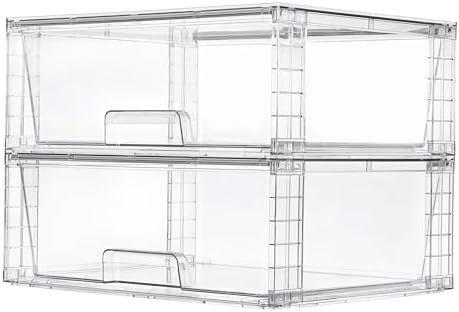
For Eveyou, this is also where light product recommendations fit naturally: magnetic building tiles, a small car set, storage, and reusable activity cards can genuinely support implementation without turning an informational SEL article into a shopping catalog.



Final Thoughts
The most interesting magnetic tiles ideas for SEL do not begin with:
“How can I make this toy therapeutic?”
They begin with:
“What are we already talking about—and could building make the idea easier to see?”
A friendship can become a bridge.
A worry can become a wall with a door.
A difficult change can become a road that needs a new route.
Strengths can become a skyscraper.
Support people can become a village.
And coping choices can become destinations at the bottom of a magnetic car ramp.
That physical representation can make an abstract SEL idea feel much more concrete.
But keep the balance.
Ask the question.
Build together.
Follow the story.
Then leave enough room for the castle to become a spaceship, the coping tower to become a garage, and the friendship bridge to turn into something completely unexpected.
Because the best magnetic tile activity is still one the child actually wants to play.

About the Author
Hi, I’m Eve, a former school counselor with a master’s degree in School Psychology and a passionate advocate for children and families navigating sensory challenges. As a mom of children with sensory sensitivities, I deeply understand the journey special-needs parents face, and I dedicate myself to researching and sharing practical solutions to help children thrive and feel comfortable in their bodies. My goal is also to empower counselors, therapists, and psychologists with creative strategies and supportive resources to enrich their everyday practice. When I’m not writing or exploring new therapeutic approaches, you’ll find me spending quality time with my family and continually seeking inspiration from everyday moments.

