
Creating a therapeutic environment that sparks imagination, supports emotional regulation, and encourages expression does not have to be complicated. Sometimes, one of the most powerful tools in a child-centered therapy space is also one of the simplest: an interactive building brick wall.
At first glance, it may look like a playful activity corner. A wall of baseplates, small bins of colorful bricks, and a cozy place to sit can seem like a fun waiting room feature or a creative break between more structured tasks. But when used intentionally, a building brick wall can become much more than decor. It can support emotional expression, storytelling, nervous system regulation, problem-solving, social connection, and resilience.
As a school counselor and mom, I love tools that feel playful but carry deeper emotional value. Children do not always have the words to explain what happened at recess, why their body feels tense, or what they need from adults. But they can build. They can choose colors. They can create scenes. They can show us what they cannot yet say.
In this article, I’ll walk you through how to use a building brick wall in a therapy room, school counseling space, playroom, or home emotional check-in corner.
This post may contain affiliate links, including Amazon and selected partner links. If you make a purchase through these links, I may earn a small commission at no extra cost to you.
This post may contain affiliate links, which means I may earn a small commission at no extra cost to you if you choose to make a purchase. I only recommend products I genuinely find helpful in creating warm, therapeutic spaces.
Why a Building Brick Wall Belongs in a Child Therapy Room
A building brick wall transforms an ordinary wall into an interactive, child-led space for creativity and communication. Unlike a regular table activity, a vertical building surface naturally invites movement. Children stand, reach, shift their body position, cross the midline, organize pieces, and make choices with their hands.
This matters because many children process emotions through action before they can process them through words.
A child who is anxious may not be ready to sit across from an adult and explain their feelings directly. A child who is angry may struggle to answer, “What happened?” without shutting down or escalating. A child who feels ashamed may avoid eye contact but still feel safe enough to build a wall scene while talking indirectly.
A building brick wall gives children another language.
They can build a tower to show how big a feeling is. They can create a safe house, a storm, a bridge, a wall, a monster, or a garden. They can use color, shape, height, and placement to communicate something important about their inner world.
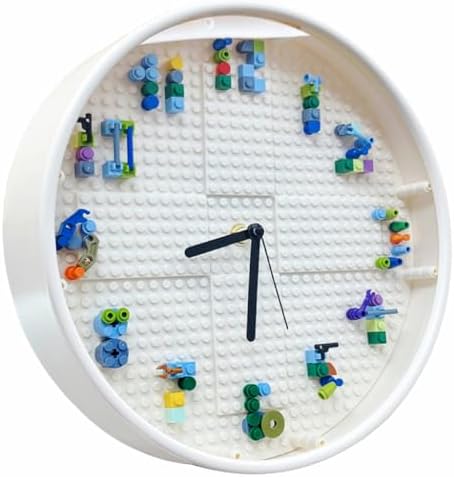
- CREATIVE DIY DESIGN: This interactive building block wall clock allows kids to freely create and decorate it with colorf…
- FUNCTIONAL WALL CLOCK:Equipped with a precise and high-quality movement, paired with clear and easy-to-read hands, it fe…
- IDEAL BIRTHDAY GIFT: Makes an excellent present for children who love building toys, offering a unique combination of ro…
Emotional and Developmental Benefits:
- Encourages imaginative play that often leads to spontaneous storytelling.
- Promotes bilateral coordination and fine motor skill development.
- Helps with focus and sensory regulation through tactile stimulation.
- Facilitates emotional expression in a safe, non-verbal way.
How to Set Up a Building Brick Wall in Your Therapy Office
Creating a building brick wall is more affordable and flexible than it may look. You do not need a huge room, custom furniture, or a complicated installation. Even a small section of wall can become a meaningful emotional expression station.
Materials Needed:
- Large LEGO-compatible baseplates (gray or white work best)
- Strong mounting adhesive (like Command strips or heavy-duty Velcro)
- A clear bin or shelving system for bricks
- A low bench or stool (optional)

- [Build on Walls or Table] Suitable for living room, desktop, Furniture surface, Children’s room, toy house, Office, shop…
- [Compatible with All major Building Blocks] Building blocks fully work with all Major brands. Kids can easily mix with t…
- [Unbeatable Value] Educational toy set includes 8 Pcs Large Green baseplate, 444 pcs compatible building bricks, 70 pcs …

- Plastic
- HEAVY DUTY CABINET WITH 24 DRAWERS: The 24-drawer small storage cabinet is made in the U.S.A. from rugged, high-impact p…
- GARAGE ORGANIZATION: The small parts organizer is great for garages and workshops for both homeowners and businesses; Th…

- 【Wall Mounted Building Panel】This kids activity station for lego designed to be wall-mounted, The Construction panel is …
- 【Extra Shelf with 4 Hooks】The bottom holding tray of this kids activity wall is perfect for storing smaller items like l…
- 【Premium Quality and Safety 】Our kids wall hooks certified by ASTM, CPSIA and CPC, featuring great durability. and sturd…
If your therapy room already has a sensory-friendly design, this wall can fit beautifully alongside calming tools, cozy seating, and soft lighting. For more inspiration, you may also like my guide on sensory room design for counselors:
https://eveyou.eu/sensory-room-design-for-counselors-how-to-create-calming-spaces-that-support-regulation-and-healing
Assembly Steps:
- Measure and mark your wall space. Ideally, place baseplates at child height.
- Arrange plates like a grid and attach securely.
- Sort bricks by color, size, or theme in labeled bins nearby.
- Add a small poster or card key that links brick colors to emotions.
A Simple, Effective Emotional Check-Ins with Building Bricks
One of the easiest ways to use a building brick wall is as an emotional check-in tool. This works beautifully in therapy rooms, school counseling offices, classrooms, homeschool spaces, and even family routines at home.
Children often struggle with direct emotional questions like:
“How are you feeling?”
“What happened?”
“Why are you upset?”
“What do you need?”
These questions can feel too big, especially when a child is already dysregulated. A brick-based check-in gives the child a concrete way to answer.
How a feeling tower works
Choose a few brick colors and assign each one a feeling. For example:
red = angry
blue = sad
yellow = excited
green = calm
white = worried
black = overwhelmed
purple = confused
Then invite the child to build a tower that shows what is happening inside.
You might say:
“Can you build your morning?”
“Can you show me your feelings with these colors?”
“Which color feels biggest today?”
“Is there one feeling at the bottom holding everything up?”
“Would you like to change anything about your tower?”
The tower becomes a visual map of the child’s emotional world. You can notice patterns together without judgment.
For example, a child may build mostly red and black bricks after a conflict. Another child may build yellow on the outside and blue hidden in the middle. These choices can open gentle, meaningful conversations.
Why this works
A feeling tower works because it makes emotions visible. Instead of talking about anger in the abstract, the child can see it. They can move it. They can make it smaller. They can add calm. They can rebuild.
This can be especially helpful for children who are still developing emotional vocabulary. It also supports children who are anxious, avoidant, highly active, neurodivergent, or more comfortable communicating through play than direct conversation.
Creative Therapy Activities for a Building Brick Wall
Once your wall is set up, it can become much more than a check-in station. You can use it for individual counseling, small groups, social-emotional learning, parent-child sessions, classroom support, or home routines.
1. My Day in Bricks

Invite the child to build a simple timeline of their day.
The left side of the wall can represent morning, the middle can represent school or daily events, and the right side can represent home or evening.
Ask gentle prompts such as:
“What part of your day felt heavy?”
“Where did something change?”
“Which part felt safe?”
“Where would you add a helping brick?”
This activity helps children organize experiences in sequence, which can be calming for the nervous system. It also helps adults understand the child’s perspective without turning the conversation into an interrogation.
2. Calm Tower and Chaos Tower
Ask the child to build two towers.
One tower shows what chaos feels like. The other shows what calm feels like.
After both towers are complete, compare them together.
You might ask:
“What is different about these two towers?”
“Which one feels more like today?”
“What helps you move from chaos to calm?”
“What would we need to add to the calm tower?”
This activity can help children externalize dysregulation. Instead of saying, “I am bad,” they begin to understand, “My body feels chaotic right now, and I can use tools to feel calmer.”
3. Build a Safe Place

Invite the child to create a safe place on the wall or on a tray. It could be a house, garden, fort, cozy room, treehouse, island, or imaginary world.
Then ask:
“Who is allowed inside?”
“What makes this place safe?”
“What sounds are here?”
“What colors belong here?”
“What would you add if someone felt scared?”
This activity is especially useful for children who need help building inner safety, coping imagery, or calming visualizations.
4. Build the Problem, Then Build the Helper
Ask the child to build a problem they are facing. It might be a wall, storm, messy tower, locked door, or confusing maze.
Then ask them to build something that could help.
This might be a bridge, key, helper figure, calm corner, friend, grown-up, or coping tool.
This activity supports problem-solving and resilience because the child is not only naming the difficulty. They are practicing the idea that support, repair, and change are possible.
5. Rebuild After Something Breaks
In this activity, the child builds something and then gently takes part of it apart. Together, you talk about what it feels like when something breaks, changes, or does not go as planned.
Then the child rebuilds it in a new way.
This can become a powerful metaphor for resilience.
You might say:
“Sometimes things do not go back exactly the same, but they can still become strong again.”
“What helped you rebuild?”
“What did you do differently this time?”
“What would you tell someone who feels broken right now?”
This is a gentle way to explore frustration tolerance, flexibility, grief, mistakes, and repair.
Using a Building Brick Wall for Social Skills and Group Work
A building brick wall can also support social-emotional learning in small groups. It gives children a shared task with clear structure, which can make cooperation easier.
Collaborative building challenge
Give two or three children one shared goal, such as building a kindness garden, a friendship city, or a calm-down house. Each child gets a turn adding pieces.
The goal is not to create the “best” design. The goal is to practice:
turn-taking
listening
asking before changing someone else’s idea
using flexible thinking
handling disappointment
repairing conflict
noticing others’ contributions
After the activity, reflect together.
Ask:
“What made teamwork easier?”
“What was hard about sharing the space?”
“How did you solve disagreements?”
“What did someone else add that you liked?”
“What would you do differently next time?”
This kind of structured play can be especially helpful for children who struggle with impulsivity, social awareness, perfectionism, or emotional reactivity.
For more child-friendly therapy space ideas, you may also like:
https://eveyou.eu/child-therapy-room-decor-ideas-that-foster-safety-creativity-and-emotional-growth
Add Seasonal Magic: Wall Decor Ideas
Changing up your wall with the seasons not only keeps kids interested but also invites new therapeutic themes.
Seasonal Prompts:
- Fall: Build a gratitude tree with orange and yellow bricks.
- Winter: Create a safe snow fort or build your worries and melt them.
- Spring: Design a feelings garden or color-coded mood rainbow.
- Summer: Let kids build their dream vacation and talk about hope.
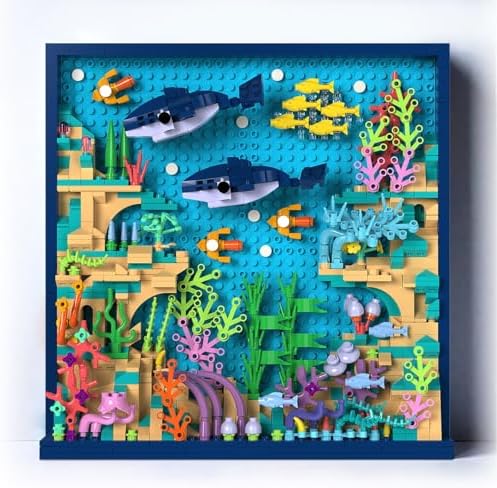
- Create & Customize Your Vibrant Underwater Masterpiece: Dive into a rewarding building experience with 803 micro bricks,…
- Dual Display Versatility: Showcase your ocean world your way! Transform your creation into eye-catching wall decor or a …
- Relaxing & Engaging Building Experience: Enjoy hours of fun and relaxation as you piece together a breathtaking underwat…

- A celebration of love – Older kids with a passion for meaningful interior design can customize a LEGO Heart Ornament (40…
- Highly customizable – The heart shaped arrangement of artificial flowers can be decorated with the included bricks for V…
- Measurements – The unique arts & crafts activity for kids measures over 7 in. (19 cm) high and 7.5 in. (20 cm) wide, and…
Add themed pieces (like hearts in February or flowers in May) in a small jar to spark imagination.
How Parents Can Create a Building Brick Emotional Check-In Station at Home
You do not need a therapy office or a large wall to use this idea at home. A small corner, a few baseplates, and a container of interlocking bricks can become a simple emotional regulation station.
As a parent, I love tools that can become part of daily life. Emotional regulation is not something children learn only during big meltdowns. They learn it through repeated, gentle moments of noticing, naming, expressing, and repairing.
A building brick check-in station can become one of those gentle moments.
Step 1: Choose a calm location
Choose a place where your child already feels comfortable. This might be near a reading corner, playroom shelf, hallway wall, bedroom nook, or small table.
Try to avoid placing it in the busiest or loudest part of the home if your child is easily overwhelmed.
Step 2: Decide between wall or tray
If you want a vertical setup, attach a few baseplates to the wall using removable adhesive. If you prefer something portable, use a tray, lap desk, or small table.
For younger children, a flat tray may be easier. For older children, a wall can feel more engaging and special.
Step 3: Create feeling bricks together
Instead of deciding all the colors yourself, invite your child to help create the meaning.
You might ask:
“What color feels like anger to you?”
“What color feels calm?”
“What color feels like too much noise?”
“What color feels like happy?”
This gives your child ownership and makes the tool more personal.
Step 4: Build a daily check-in ritual
Choose one predictable time of day. After school, before bedtime, or after dinner often works well.
Keep it short and low-pressure.
You might say:
“Want to show me your day with bricks?”
“Can you build what your body feels like?”
“Which color feels biggest right now?”
“Do you want to rebuild it after a cuddle?”
The goal is not to make your child talk. The goal is to create an invitation.
Step 5: Keep all feelings welcome
Try not to correct the child’s emotional choices. If they build a huge angry tower, that is information. If they hide a sad piece behind a happy structure, that is information too.
You can reflect gently:
“I see a lot of red today.”
“That blue piece is tucked behind the yellow one.”
“This tower looks very tall. I wonder if the feeling feels big.”
When children feel safe expressing emotions without judgment, they are more likely to come back to the tool again.
What to Keep Near Your Home Brick Station
A home emotional check-in station works best when it is paired with calming supports. If your child builds something that shows sadness, anger, worry, or overwhelm, it helps to have soothing tools nearby.
You might keep:
a feelings book
a glitter jar
a soft blanket
a breathing card
a small stuffed animal
calming playdough
a visual calm-down menu
a journal for older kids
noise-reducing headphones if needed
This turns the area into a small regulation corner rather than just a play activity.
If you want more ideas for child-friendly emotional tools, you may also find this helpful:
https://eveyou.eu/waiting-room-sel-tools
Important Safety and Practical Considerations
Because small building bricks can be choking hazards, this setup is best for children who are old enough to use small pieces safely. For younger children, choose larger age-appropriate blocks or use the activity only with close supervision.
Also consider your specific setting. If you work in a school, clinic, or shared office, check your organization’s safety rules before attaching anything to walls or offering small pieces.
Keep the space easy to clean, easy to supervise, and simple enough that it does not create stress for you.
A therapeutic tool is only helpful if it is sustainable.
Final Thoughts: Small Bricks, Big Emotional Possibilities
Building bricks may be small, but the emotional opportunities they open can be surprisingly meaningful.
A child can build anger before they can explain it. They can create safety before they fully understand what safety means. They can show a problem, rebuild a broken structure, create a calm tower, or design a whole world where their feelings finally have a place to land.
Whether you are a therapist designing a child therapy room, a school counselor looking for engaging SEL tools, or a parent trying to create more mindful routines at home, a building brick wall can become more than a playful feature.
It can become a space for connection.
It can become a way to tell stories.
It can become a gentle bridge between what a child feels inside and what they are ready to share with the world.
And sometimes, that is where emotional resilience begins: one small brick at a time.

About the Author
Hi, I’m Eve, a former school counselor with a master’s degree in School Psychology and a passionate advocate for children and families navigating sensory challenges. As a mom of children with sensory sensitivities, I deeply understand the journey special-needs parents face, and I dedicate myself to researching and sharing practical solutions to help children thrive and feel comfortable in their bodies. My goal is also to empower counselors, therapists, and psychologists with creative strategies and supportive resources to enrich their everyday practice. When I’m not writing or exploring new therapeutic approaches, you’ll find me spending quality time with my family and continually seeking inspiration from everyday moments.

