
There’s a hush that only winter knows — that soft quiet after the first snow, when the world seems to hold its breath. I often think mindfulness feels the same way. In my sessions with kids, snowflakes have become our favorite metaphor: unique, fleeting, and full of beauty if you slow down long enough to notice. This season, I’ve gathered some of my favorite snowflake-themed mindfulness crafts that turn simple materials into moments of calm — for classrooms, therapy offices, or cozy afternoons at home.
Why Snowflakes Are Perfect for Mindfulness
Snowflakes are quiet miracles. They fall softly, each one unique, and remind us to slow down and notice small details. That’s why snowflakes make the perfect theme for mindfulness crafts with kids.
In classrooms and therapy offices, winter can be both magical and chaotic. Excitement, disrupted routines, and overstimulation often leave children dysregulated. Snowflake crafts offer a gentle pause. As kids cut, fold, color, and notice patterns, they practice patience, focus, and presence — the foundations of mindfulness.
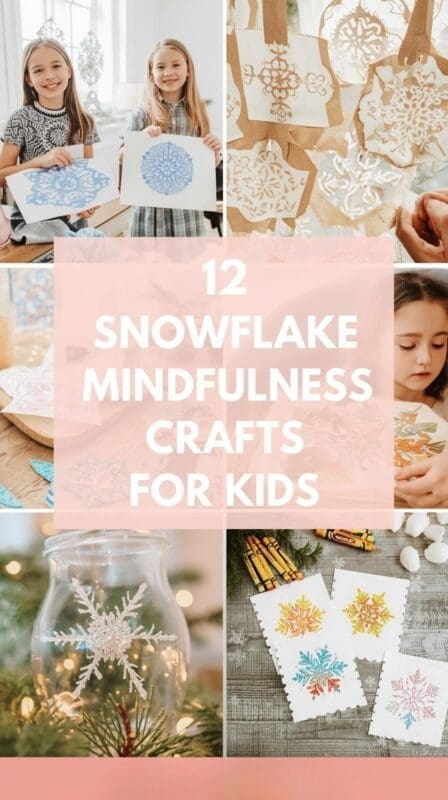
Here are 12 snowflake-inspired mindfulness crafts designed for therapy, classrooms, and home. Each activity combines creativity with calming SEL (social-emotional learning) benefits.
1. Classic Paper Snowflakes with a Twist
There’s magic in unfolding a snowflake — that tiny moment before you see what pattern you’ve made. I love watching kids hold their breath in anticipation, eyes wide as the paper opens into surprise.
Give each child a square of white paper. Before cutting, pause together. Inhale. Exhale. Fold carefully, cut slowly, and imagine each snip releasing a little worry. When they open the paper, remind them: no two snowflakes — or feelings — ever look the same.
Why it works:
This quiet, repetitive action promotes focus, patience, and joy in imperfection. The act of unfolding becomes a metaphor for curiosity and self-acceptance.

2. Gratitude Snowflakes
Gratitude shines brightest in winter, when days grow short and light must be found within. Invite children to write something they’re thankful for on each arm of a paper snowflake — family, friends, pets, or even cozy socks.
I’ve hung these gratitude snowflakes in therapy rooms before, and within days, walls turn into sparkling mosaics of thankfulness. Children see not only their own gratitude but the collective kindness of a group.
Why it works:
Gratitude brings emotional warmth. Writing small joys trains the mind to notice abundance instead of absence — a powerful antidote to winter blues.
3. Glitter Calm Jars: Snow Edition
Shake, breathe, watch — three steps to mindfulness disguised as play.
Fill clear bottles with water, silver glitter glue, and white glitter. As kids shake the jar, the glitter drifts like snow in slow motion.
When I introduce this activity, I tell them: “Your thoughts can be like glitter — swirling fast, hard to see through. Let’s wait for them to settle.” And we do. Together, we breathe until the “snow” clears.
Why it works:
Visual slowing down connects directly to emotional regulation. Watching the glitter settle mirrors what happens when we pause and breathe — our inner snowstorm calms too.

- Package Included: You will get 50 gram glitter snowflake confetti, more than 2000pcs snowflake confetti in one package.S…
- Size: The diameters of snowflake sequin confetti set is about 0.1inch.Great size assortment addition to your craft proje…
- Material:The glitter snowflake confetti is made of high quality plastic material,lightweight and soft to touch,vivid and…
4. Snowflake Mandalas
There’s something meditative about coloring snowflake mandalas — symmetry meets softness. Kids trace gentle lines, fill spaces with cool blues and purples, and the rhythm of it all quiets the chatter around them.
Use mandala templates or draw simple snowflake outlines. Play soft instrumental music and invite kids to notice their breath as they color. “If your mind wanders,” I tell them, “bring it back to the line you’re coloring.”
Why it works:
Coloring in repetition supports mindfulness through sensory focus. The geometric snowflake design naturally recenters attention and slows pace.

5. Cotton Ball Snowflake Collage
Some mindfulness crafts feel almost like therapy for the hands. This one does. Give each child dark construction paper, glue, and soft cotton balls. As they build fluffy snowflake shapes, the texture itself invites calm — cool, smooth, cloudlike.
Encourage them to work slowly: “Press, pause, place.” When I did this with a preschool group, the quiet that filled the room felt sacred — just tiny hands, soft glue sounds, and a world of calm.
Why it works:
Tactile repetition grounds the body. Sensory input from soft textures helps regulate the nervous system, making it ideal for anxious or overstimulated children.
6. Mindful Movement: Snowflake Breathing Wands
Attach paper snowflakes to craft sticks or straws. When children hold them up and breathe slowly, the snowflakes rise and fall with their breath — visible proof of calm.
We often stand in a circle, lifting snowflakes on the inhale and letting them drift down on the exhale. The movement is small, rhythmic, and beautiful to watch.
Why it works:
Brings mindfulness into motion. Breath becomes visible, and body awareness grows through gentle coordination.

7. Positive Affirmation Snowflakes
On each point of a paper snowflake, invite children to write affirmations like “I am kind,” “I can try again,” or “I am safe.” Glitter pens and pastel markers make them glow.
When I tried this with a group of second graders, one child added, “I’m learning to be brave.” It hung in our window all winter, catching the light — a reminder of growth that feels gentle, not forced.
Why it works:
Combines art with emotional affirmation. Writing affirmations helps kids internalize compassion and see self-worth reflected in color and pattern.
8. Snowflake Window Clings
Using white puffy paint or glitter glue, kids draw snowflake shapes on clear plastic sheets or freezer bags. Once dry, they peel them off and press onto windows.
As the winter light filters through, the windows shimmer softly. It’s one of those crafts that transforms an ordinary day — suddenly, the whole classroom glows with hand-made frost.
Why it works:
Encourages patience while waiting for paint to dry and creates sensory calm through beauty. Seeing their artwork catch the sunlight reinforces mindfulness through visual joy.
9. Snowflake Journaling Prompt
Print snowflake outlines with lines on each branch. On every arm, kids write a calming strategy — “Take a deep breath,” “Ask for a hug,” “Listen to music.”
In sessions, I often pair this with a conversation about what “icy feelings” feel like — anger, fear, frustration — and what warmth helps melt them. Writing gives children ownership over their own emotional toolbox.
Why it works:
Connects mindfulness with self-regulation planning. Encourages reflection and empowers kids to identify coping strategies.
10. Snowflake Mobiles
String together paper or foam snowflakes and hang them from an embroidery hoop or branch. Let them twist and spin gently in the air.
When the classroom light hits them just right, the movement is mesmerizing — like snow caught mid-fall. I often use these mobiles during transitions; children quietly watch them sway as they reset.
Why it works:
Provides a visual anchor for mindfulness. Moving objects encourage focus and stillness through observation.
11. Snowflake Gratitude Jar
Decorate a jar with snowflake stickers or paint. Each day, children add a note of gratitude — a moment they appreciated, a person who helped, something that made them smile.
In January, open the jar together and read the notes aloud. I love this ritual — it turns gratitude into something visible and shared, brightening cold days with remembered warmth.
Why it works:
Combines reflection with community. Regular gratitude practice supports resilience and emotional balance during long winter months.
12. Group Snowflake Quilt
Each child creates a unique snowflake — paper, felt, or recycled materials. Then, combine them on a large bulletin board to form a collective “snowflake quilt.”
The message is simple and powerful: we’re all unique, yet we belong together. Watching the display grow reminds everyone — teachers, students, and parents alike — that community is the heart of emotional wellness.
Why it works:
Encourages belonging and collective mindfulness. Teaches that individuality and togetherness can coexist beautifully.
❄️ Reflections: Calm Like Snow
Snowflakes teach the same lesson mindfulness does — that beauty is found in stillness, that no two moments are ever the same, and that slowing down lets us see more clearly.
When I work with children in winter, I remind them to imagine their breath as snow — cool, gentle, falling softly inside. These crafts aren’t about perfection; they’re about presence. Each cut, each brush of glitter, each quiet breath is an act of noticing.
As the world outside turns white, may your classroom or home feel full of warmth — a place where calm is created one snowflake at a time.
🌾 Explore More Winter SEL Ideas
- Mindful New Year Crafts for Kids
- Christmas SEL Crafts and Gratitude Activities
- Winter Sensory Calming Tools for Classrooms

About the Author
Hi, I’m Eve, a former school counselor with a master’s degree in School Psychology and a passionate advocate for children and families navigating sensory challenges. As a mom of children with sensory sensitivities, I deeply understand the journey special-needs parents face, and I dedicate myself to researching and sharing practical solutions to help children thrive and feel comfortable in their bodies. My goal is also to empower counselors, therapists, and psychologists with creative strategies and supportive resources to enrich their everyday practice. When I’m not writing or exploring new therapeutic approaches, you’ll find me spending quality time with my family and continually seeking inspiration from everyday moments.

