Preschoolers have big emotions inside very small bodies.
One moment they are laughing uncontrollably, and the next they are crying because the banana broke in half or someone sat in “their” chair.
To adults, these reactions can sometimes seem dramatic or confusing. But for young children, emotions are incredibly real, physical, and overwhelming experiences.
At this age, children are only beginning to develop:
- emotional vocabulary
- impulse control
- frustration tolerance
- self-awareness
- communication skills
- nervous system regulation
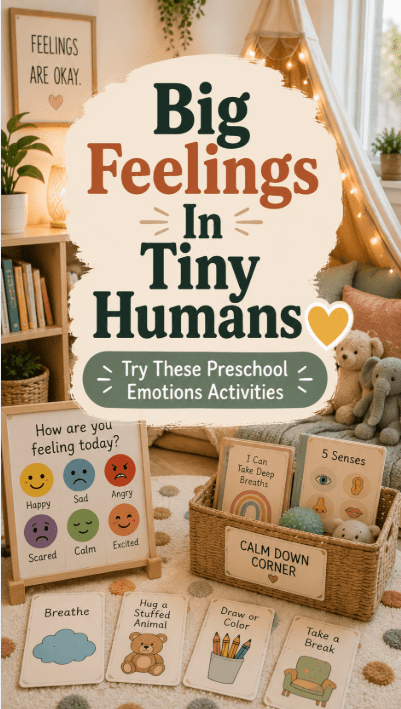
That means preschoolers often express emotions through behavior long before they can explain what they feel.
This is why emotions activities for preschoolers are so important.
Through play, movement, storytelling, art, and sensory experiences, young children slowly begin learning:
- how to identify feelings
- how to express emotions safely
- how to understand others
- how to calm their bodies
- how to communicate needs
And because preschoolers learn best through hands-on experiences, emotional intelligence activities work far better when they feel playful rather than overly instructional.
In this guide, you’ll find meaningful emotions activities for preschoolers that support emotional intelligence and emotional regulation in developmentally appropriate ways.
These ideas work beautifully for:
- preschool classrooms
- home routines
- therapy offices
- calm-down corners
- daycare settings
- kindergarten readiness
- homeschool environments
You may also enjoy our complete pillar guide:
https://eveyou.eu/feelings-and-emotions-activities-for-kids-that-actually-help-emotional-regulation/
Why Emotional Intelligence Starts in Preschool
The preschool years are one of the most important windows for emotional development.
During this stage, children are rapidly learning:
- social communication
- emotional expression
- empathy
- flexibility
- cooperation
- frustration management
But many preschoolers still experience emotions as full-body experiences.
For example:
- anger may feel explosive
- anxiety may show up as clinginess
- sadness may become irritability
- overwhelm may become hyperactivity
Young children often do not yet have the brain development needed to pause, reflect, and regulate independently.
That’s why emotional learning in preschool should focus less on punishment and more on:
- co-regulation
- modeling
- playful repetition
- emotional safety
- body awareness
- calming routines
Why Play Is the Best Way to Teach Feelings
Play is the natural language of childhood.
When children play, they process:
- emotions
- relationships
- fears
- experiences
- social situations
- stress
Play-based emotional learning feels safe because it removes pressure.
Children are far more likely to engage emotionally when they are:
- pretending
- moving
- drawing
- laughing
- storytelling
- exploring sensory experiences
This is especially important for preschoolers who:
- are shy
- struggle with anxiety
- have ADHD traits
- are highly sensitive
- become emotionally overwhelmed easily
1. Feelings Faces Matching Game
How to Play
Print or draw emotion faces showing:
- happy
- sad
- angry
- scared
- excited
- calm
- worried
- surprised
Ask preschoolers to:
- match identical feelings
- imitate the face
- name times they felt that way
Why Preschoolers Love It
Young children naturally learn through imitation and facial recognition.
This activity strengthens:
- emotional vocabulary
- facial expression recognition
- empathy
- self-awareness
Make It More Engaging
Use:
- mirrors
- puppets
- stuffed animals
- magnetic boards
- Velcro emotion charts
Children often become much more emotionally expressive when playful objects are involved.
2. Emotion Freeze Dance
Movement-based emotions activities are incredibly effective for preschoolers because young children regulate through the body first.
How to Play
Play music and call out emotions:
- “Dance like you feel excited!”
- “Move like you feel sleepy.”
- “Show me angry stomping.”
- “Float like calm clouds.”
Pause the music occasionally and ask:
“What feeling are you showing?”
Why It Helps
This activity supports:
- body awareness
- emotional expression
- impulse control
- movement regulation
- emotional recognition
It also helps energetic preschoolers release emotional energy safely.
3. Feelings Sensory Bin
Sensory play naturally calms the nervous system while encouraging emotional communication.
Fill a Bin With:
- pom-poms
- kinetic sand
- scoops
- emotion toys
- colored rice
- calming sensory objects
Hide emotion cards or tiny faces inside.
As children discover them, discuss:
- what the feeling means
- what helps when someone feels that way
Why This Works So Well
Sensory activities:
- reduce stress
- increase focus
- support regulation
- improve emotional engagement
Children often talk more openly during sensory play because their nervous systems feel calmer.
4. “What Helps Me Feel Better?” Poster
Many preschoolers know when they feel upset but do not yet know what helps.
This activity teaches coping strategies visually.
Create a Poster Together
Include pictures or drawings of:
- hugging a stuffed animal
- taking deep breaths
- asking for help
- drinking water
- sitting in a cozy corner
- squeezing playdough
- listening to music
Why It Matters
This helps preschoolers begin building:
- emotional problem-solving
- self-regulation habits
- emotional independence
Over time, children begin reaching for calming strategies more automatically.
5. Puppet Feelings Conversations
Some children communicate emotions more easily through pretend play than direct conversation.
Try Using:
- animal puppets
- sock puppets
- finger puppets
- stuffed animals
Create tiny emotional stories:
- “Bear feels nervous about preschool.”
- “Bunny is angry because someone grabbed her toy.”
- “Fox feels lonely today.”
Ask:
“What could help?”
Why Puppet Play Is Powerful
Puppets create emotional distance.
Children often project their own feelings onto characters, making emotions feel safer to explore.
This activity strengthens:
- empathy
- communication
- emotional reasoning
- emotional safety
6. Calm Breathing With Visuals
Preschoolers struggle with abstract instructions like:
“Calm down.”
But visual breathing activities make regulation easier.
Try:
- pretend to smell flowers and blow candles
- use bubbles
- trace breathing boards
- use pinwheels
- blow feathers across a table
Why It Works
Young children need concrete, visual, sensory experiences.
Breathing becomes easier when it feels playful rather than forced.
7. Feelings Story Time
Books are one of the best emotional learning tools for preschoolers.
Pause during stories and ask:
- “How does the character feel?”
- “What clues tell us that?”
- “What might help them?”
- “Have you ever felt like that?”
Why This Builds Emotional Intelligence
Stories help preschoolers:
- identify emotions
- understand perspectives
- normalize feelings
- build empathy
Children often process their own emotional experiences through fictional characters.
8. Emotion Color Sorting
Many preschoolers connect emotions to colors before language fully develops.
Activity Idea
Sort colored objects into emotion categories:
- yellow = happy
- blue = sad
- red = angry
- green = calm
Then discuss:
“What color feels calming to you?”
Why This Helps
This activity strengthens:
- emotional association
- emotional awareness
- symbolic thinking
- communication skills
It also works beautifully in calm-down corners.
9. Cozy Calm Corner for Preschoolers
One of the most effective emotional regulation supports for preschoolers is a calm-down space that feels emotionally safe rather than punishing.
A preschool calm corner might include:
- pillows
- soft rugs
- stuffed animals
- emotion posters
- books
- fidgets
- weighted lap pads
- sensory bottles
- soft lighting
Important Reminder
A calm corner should never feel like isolation or punishment.
It should feel like:
“You are safe here while your feelings settle.”
That emotional message matters deeply.
You may also enjoy:
- https://eveyou.eu/sensory-room-design-for-counselors-how-to-create-calming-spaces-that-support-regulation-and-healing
- https://eveyou.eu/child-therapy-room-decor-ideas-that-foster-safety-creativity-and-emotional-growth
- https://eveyou.eu/waiting-room-sel-tools
10. Feelings Art Invitations
Open-ended art activities are wonderful for preschool emotional expression.
Try:
- painting emotions
- drawing “what calm feels like”
- making worry monsters
- creating happy collages
- using clay for feelings shapes
Why Art Helps Preschoolers
Art:
- slows the nervous system
- supports nonverbal expression
- encourages emotional exploration
- reduces pressure
Children often reveal emotions naturally during creative play.
How to Support Preschoolers During Big Feelings
One of the biggest misconceptions about preschool behavior is expecting young children to regulate independently too early.
Preschoolers still rely heavily on adult co-regulation.
That means children often need adults to:
- stay calm
- help label emotions
- reduce stimulation
- model coping strategies
- create emotional safety
Emotional regulation develops gradually through repeated supportive experiences.
Not through shame.
Not through fear.
And not through constant punishment.
Signs a Preschooler May Need Extra Emotional Support
Some emotional intensity is completely normal in preschool years.
However, additional support may help if a child frequently experiences:
- extreme meltdowns
- aggression
- panic-like reactions
- emotional shutdowns
- severe separation anxiety
- difficulty recovering after distress
- intense sensory overwhelm
- ongoing emotional rigidity
In these situations, emotionally supportive routines and consistent regulation activities can make a meaningful difference.
Helpful Tools for Preschool Emotions Activities
This post may contain affiliate links, including Amazon and selected partner links. If you make a purchase through these links, I may earn a small commission at no extra cost to you.
Helpful items for preschool emotional learning may include:
- emotion flashcards
- sensory bins
- fidgets
- breathing boards
- calming storybooks
- weighted lap pads
- mirrors for facial expression practice
- puppets
- visual schedules
- calm-down corner supplies
The goal is not to overwhelm children with tools.
The goal is to create emotionally supportive experiences that help children feel safe enough to learn emotional skills.
Final Thoughts
Preschool emotional learning is not about teaching children to “never cry” or “always stay calm.”
It is about helping young children slowly understand:
- what emotions feel like
- how emotions affect the body
- how to express feelings safely
- how to recover after overwhelm
- how to ask for support
And most importantly:
it teaches children that emotions are not dangerous.
They are human.
When preschoolers are given playful, emotionally safe opportunities to explore feelings, they begin building emotional intelligence skills that can support relationships, learning, confidence, and mental wellbeing for years to come.
FAQ
What are the best emotions activities for preschoolers?
The best activities are playful, visual, and movement-based. Preschoolers learn emotions best through games, stories, sensory play, pretend play, and hands-on experiences.
Why are feelings activities important in preschool?
Feelings activities help preschoolers develop emotional vocabulary, empathy, communication skills, frustration tolerance, and emotional regulation.
How do you teach emotional regulation to preschoolers?
Young children learn regulation through co-regulation, modeling, routines, sensory supports, calming strategies, and repeated emotional learning experiences over time.
What are calming activities for preschoolers?
Helpful calming activities include sensory play, breathing games, movement breaks, soft music, cozy calm corners, glitter jars, and art activities.
How do emotions activities help behavior?
Many behavior challenges in preschool are connected to emotional overwhelm. Emotional learning activities help children recognize feelings earlier and express needs more safely.

About the Author
Hi, I’m Eve, a former school counselor with a master’s degree in School Psychology and a passionate advocate for children and families navigating sensory challenges. As a mom of children with sensory sensitivities, I deeply understand the journey special-needs parents face, and I dedicate myself to researching and sharing practical solutions to help children thrive and feel comfortable in their bodies. My goal is also to empower counselors, therapists, and psychologists with creative strategies and supportive resources to enrich their everyday practice. When I’m not writing or exploring new therapeutic approaches, you’ll find me spending quality time with my family and continually seeking inspiration from everyday moments.