
This post may contain affiliate links, including Amazon Associate links. If you make a purchase through these links, I may earn a small commission at no extra cost to you.
There is a reason kids love paper fortune tellers.
They get to fold, choose a color, count numbers, open and close the paper, and wait for the surprise hidden underneath. It feels like a game, but it is also one of the easiest ways to turn a simple paper craft into something meaningful.
A paper fortune teller coping skills craft takes that familiar childhood activity and gives it an emotional regulation twist.
Instead of silly fortunes, children open the flaps to find calming strategies, breathing prompts, feeling check-ins, kindness challenges, or problem-solving ideas. It becomes playful, hands-on, low-prep, and surprisingly useful for home, classroom SEL lessons, school counseling sessions, calm corners, and therapy-inspired spaces.
This is one of my favorite easy paper crafts for kids because it does not feel like a worksheet. Children get to move their hands, make choices, and practice coping skills in a way that feels light and engaging.
If you are a parent, teacher, school counselor, or therapist looking for a simple SEL craft that kids actually want to use, a coping skills fortune teller is a beautiful place to start.

What Is a Coping Skills Fortune Teller?
A coping skills fortune teller is a folded paper fortune teller filled with coping strategies instead of traditional fortunes.
You may also know it as a paper fortune teller, chatterbox, or cootie catcher. The child folds a square piece of paper into a small interactive tool. Then they write colors, numbers, feelings, or prompts on different parts of the folded paper.
When the child plays with it, they choose a color or word, count numbers, and open the final flap to reveal a coping skill.
Instead of reading something like “You will have good luck,” the child might discover:
- Take three slow breaths.
- Name five things you see.
- Ask for help.
- Draw the feeling.
- Stretch your hands.
- Get a drink of water.
- Say, “I can try again.”
- Choose one small next step.
This turns a nostalgic paper craft into a simple emotional regulation activity for kids.
It can be used when children feel worried, angry, sad, frustrated, overwhelmed, restless, or unsure what to do next. It can also be used proactively during SEL lessons, morning meetings, friendship groups, or quiet reflection time.
Why Kids Love Paper Fortune Tellers
Children often enjoy paper fortune tellers because they combine craft, movement, choice, and surprise.
This matters because emotional regulation skills can feel boring or forced when they are only taught through lectures, worksheets, or adult reminders. A child may resist being told to “use a coping skill,” but they may happily play a quick round of a paper fortune teller.
The activity feels more like play than correction.
A coping skills fortune teller gives children:
- something to hold
- something to move
- choices to make
- a little anticipation
- a playful structure
- a clear next step
- ownership because they helped make it
For some children, especially those who struggle to talk directly about feelings, the paper fortune teller can lower the pressure. They do not have to immediately explain everything. They can start with a color, number, or feeling word and let the activity guide the conversation.
That small shift can make emotional learning feel safer.
Why This SEL Craft Supports Emotional Regulation
A coping skills fortune teller is simple, but it can support several important social-emotional learning skills.
First, it helps children pause. When a child is upset, even a small pause can create space between the feeling and the reaction. Opening and closing the paper fortune teller gives their hands something structured to do while their brain catches up.
Second, it helps children make a choice. Emotional regulation becomes easier when children have a small menu of options. Instead of hearing “calm down,” they can choose between breathing, drawing, stretching, asking for help, or naming what they feel.
Third, it builds emotional vocabulary. You can write feeling words on the outside or inside of the fortune teller, such as mad, sad, worried, proud, frustrated, calm, lonely, embarrassed, or excited.
Fourth, it makes coping skills concrete. Many children need repeated practice before coping strategies become familiar. A paper fortune teller turns practice into a game.
Finally, it supports independence. Over time, children may begin to reach for the tool before an adult suggests it.
That does not mean the fortune teller replaces adult connection. Children still need co-regulation, empathy, and support. But this small craft can become one practical tool in a larger emotional regulation toolkit.
If you are building a wider SEL craft collection, you can also read Simple Paper Crafts for Kids That Support Creativity, Calm, and Emotional Learning once it is published.
Supplies You Need for a Paper Fortune Teller Coping Skills Craft
This SEL craft is very low-prep. You only need a few basic supplies.
You will need:
- square paper or regular printer paper cut into a square
- markers, crayons, or colored pencils
- scissors if you need to trim the paper
- stickers if children want to decorate
- optional printable template
- optional laminating sheets if you want to make a stronger classroom version

- Value Pack: Umikk origami paper provides 1500 sheets of origami paper bulk, 75 sheets per color – plenty for beginners, …
- Perfect Square Size: Our origami paper 6×6 inch is the perfect square size – large enough for detailed folds, yet small …
- Creative Colors: Origami paper double sided in 20 vivid colors helps your creations pop. Unlike cheap paper with white b…
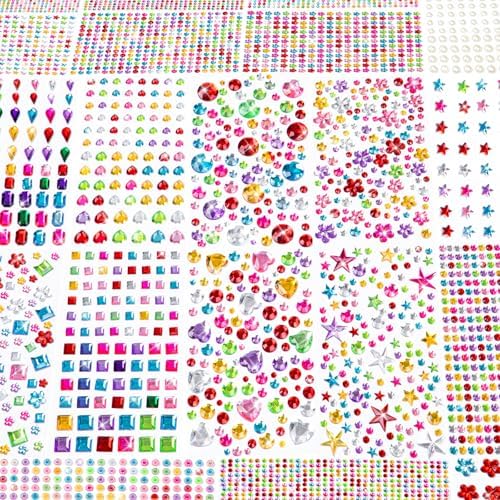
- Product Details:Included in the set are approximately 6124 gems and 20 sheets of 3D gem stickers in multiple colors, var…
- Easy to Use:These are self-adhesive rhinestone stickers with built-in adhesive, allowing easy application to various cra…
- Multiple Festival Uses: These craft jewelry stickers are the perfect decorative choice for birthday parties, Valentine’s…
For younger children, regular printer paper is usually easiest to fold. Cardstock is more durable but can be harder for small hands to crease.
If you are making this in a classroom or counseling group, you may want to pre-fold one example so children can see the finished version before they begin.
How to Make a Coping Skills Fortune Teller
You can make this with a blank square piece of paper or a printable template.
If children are younger, it helps to fold slowly and model each step. Older children may be able to follow the directions more independently.
Step 1: Start With a Square Piece of Paper
If you are using regular printer paper, fold one corner diagonally to create a triangle and trim off the extra rectangle. When you open it, you will have a square.
Place the square flat on the table.
Step 2: Fold the Paper in Half Both Ways
Fold the paper in half from side to side, then open it.
Fold it in half the other direction, then open it again.
You should now see crease lines that divide the square into four sections.
Step 3: Fold Each Corner to the Center
Take one corner and fold it toward the center point.
Repeat with all four corners.
You should now have a smaller square with four folded triangles meeting in the middle.
Step 4: Flip the Paper Over
Carefully turn the whole paper over so the folded corners are facing down.
Step 5: Fold Each Corner to the Center Again
Just like before, fold each corner toward the center.
You will now have an even smaller square.
Step 6: Fold the Square in Half
Fold the square in half one way, then open it.
Fold it in half the other way, then open it.
This helps loosen the folds so the fortune teller can move more easily.
Step 7: Place Fingers Under the Flaps
Slide your thumbs and pointer fingers under the four outside flaps.
Gently push the corners together until the paper fortune teller takes shape.
Step 8: Add Colors, Numbers, Feelings, and Coping Skills

Now it is time to turn the paper craft into an SEL tool.
On the outside flaps, write colors or feeling words.
On the next layer, write numbers.
Under the final flaps, write coping skills, reflection prompts, or calming strategies.
Children can decorate the fortune teller with patterns, hearts, stars, clouds, faces, or calming colors.
What to Write on a Coping Skills Fortune Teller
The most important part of this craft is choosing prompts that are short, clear, and realistic.
When children are upset, they need coping skills that are easy to understand and easy to try.
Here are some good options.

Breathing Coping Skills
Write prompts such as:
- Take three slow breaths.
- Smell the flower, blow the candle.
- Breathe in slowly, breathe out slowly.
- Trace your fingers while you breathe.
- Blow out like you are cooling soup.
- Put one hand on your belly and breathe.
- Count four breaths.
- Whisper, “I can slow down.”
Breathing skills work best when children practice them before they are very upset. The fortune teller can make that practice feel playful.
Body-Based Coping Skills
These prompts are helpful for children who need movement or body awareness.
Try:
- Push your hands together.
- Stretch your arms high.
- Press your feet into the floor.
- Roll your shoulders.
- Squeeze and release your fists.
- Do five wall pushes.
- Shake your hands gently.
- Take a slow walk to the door and back.
Body-based coping skills can be especially useful when children feel restless, angry, or overwhelmed.
Sensory Coping Skills
These prompts help children notice their senses and return to the present moment.
Try:
- Name five things you see.
- Find three blue things.
- Listen for two sounds.
- Hold something soft.
- Get a drink of water.
- Notice your feet on the floor.
- Touch your desk gently.
- Look around and name one safe thing.
Sensory prompts are wonderful for calm corners, classrooms, and school counseling spaces because they are concrete and easy to explain.
Thinking Coping Skills
These prompts help children slow down and problem-solve.
Try:
- Ask, “How big is this problem?”
- Think of one small next step.
- Say, “I can try again.”
- Ask for help.
- Name what you need.
- Think of two choices.
- Remember one time you handled something hard.
- Ask, “What can I control?”
These are best for older children or children who are calm enough to reflect.
Creative Coping Skills
Creative prompts work well for children who express themselves through art, play, or imagination.
Try:
- Draw the feeling.
- Make a feeling monster.
- Write one worry down.
- Create a calm symbol.
- Color for two minutes.
- Make a tiny comic about what happened.
- Draw what would help.
- Write a kind note to yourself.
This connects beautifully with other SEL crafts and emotional expression activities. For children who need more anger-expression ideas, you can also read Creative Craft Ideas to Help Children Express Anger.
Feelings Prompts to Add to the Fortune Teller
A coping skills fortune teller can also help children identify feelings before choosing a strategy.
Instead of writing only coping skills, you can include feeling prompts.
Try writing:
- Name one feeling you have today.
- Where do you feel it in your body?
- What color is your feeling?
- Is your feeling small, medium, or big?
- What does your feeling need?
- What happened before this feeling?
- What would help this feeling feel safer?
- Who can help you with this feeling?
This turns the paper fortune teller into a feelings check-in tool.
For younger children, use simple emotion words:
- happy
- sad
- mad
- scared
- calm
- tired
- excited
- worried
For older children, add more specific emotions:
- frustrated
- embarrassed
- disappointed
- lonely
- jealous
- proud
- overwhelmed
- confused
The more specific children’s emotional vocabulary becomes, the easier it is for them to communicate what is happening inside.
Kindness Prompts for a Classroom SEL Fortune Teller
You can also create a kindness version of this craft for classroom SEL activities.
Instead of coping skills, write small kindness challenges under the flaps.
Ideas include:
- Give someone a compliment.
- Invite someone to join.
- Say thank you.
- Help clean up.
- Ask, “Are you okay?”
- Use gentle words.
- Let someone go first.
- Say something kind to yourself.
This version is helpful for morning meetings, friendship lessons, classroom community-building, or small groups focused on empathy.
For more related ideas, you can link to Empathy Activities for Kids.
Problem-Solving Prompts for Older Kids
Older children may benefit from a problem-solving fortune teller.
This version works well for upper elementary students, friendship groups, conflict resolution lessons, and school counseling sessions.
Prompts can include:
- What happened?
- What did you feel?
- What did the other person feel?
- What do you need now?
- What is one safe choice?
- What can you say kindly?
- What can you try again?
- What would help repair this?
This helps children slow down and think through social situations instead of reacting immediately.
It is especially helpful when children struggle with impulsivity, friendship conflicts, or big emotional reactions.
Classroom Version: How to Use a Coping Skills Fortune Teller at School
A coping skills fortune teller is very classroom-friendly because it is cheap, quick, and easy to store.
You can use it in several ways.
Morning Meeting Activity
Let students make their own fortune tellers during a morning meeting or SEL block.
After they finish, invite them to try one prompt with a partner.
You might ask:
“What coping skill did you get?”
“When could that skill help during the school day?”
This helps students connect the craft to real situations.
Calm Corner Tool
Place several coping skills fortune tellers in your classroom calm corner.
When a student needs a reset, they can choose one and try the coping skill they land on.
Make sure you introduce and practice the tool before students are upset. A calm corner tool works best when it is already familiar.
Transition Break
Use the fortune teller during transitions.
For example, before moving from recess to math, a child might choose one quick regulation prompt:
- Take one slow breath.
- Roll your shoulders.
- Press your feet down.
- Name one thing you are ready for.
This can help children shift from active play into focused learning.
Partner SEL Practice
Students can work in pairs. One student operates the fortune teller, and the other follows the prompt.
This creates a playful way to practice coping skills without making it feel too serious.
School Counseling Version
This SEL craft is especially useful in school counseling because it gives children a concrete object to use during conversation.
Some children find it hard to answer direct questions like:
“How are you feeling?”
“What coping skill could you use?”
“What happened at recess?”
A paper fortune teller gives the conversation a softer starting point.
Individual Counseling
In individual counseling, you can invite the child to create a personalized coping skills fortune teller.
Ask:
“What feelings are hardest for you?”
“What helps you when you are upset?”
“What do adults say that actually helps?”
“What coping skill do you want to remember?”
The child’s answers can become the prompts inside the fortune teller.
This makes the tool personal, not generic.
Small Group Counseling
In small groups, each child can create their own fortune teller and then practice using it with the group.
This works well for groups focused on:
- anxiety
- anger
- friendship
- self-control
- confidence
- coping skills
- problem-solving
- emotional awareness
You can also make one large group version where everyone contributes one coping skill.
Waiting Room or SEL Station
A coping skills fortune teller can also be placed in a waiting room SEL area or quiet activity station.
Keep prompts simple and emotionally safe.
Good waiting room prompts include:
- Take one slow breath.
- Find something blue.
- Stretch your fingers.
- Think of one kind word.
- Name one feeling.
- Count five things you see.
- Sit with calm feet.
- Smile gently at yourself.
For more ideas like this, you may enjoy Waiting Room SEL Tools.
Home Version: How Parents Can Use It After School
At home, a coping skills fortune teller can be a gentle after-school tool.
Many children come home tired, overstimulated, hungry, or emotionally full from the school day. They may not want to answer many questions right away.
Instead of asking, “How was your day?” and getting “fine,” you can use the fortune teller for a low-pressure check-in.
Try saying:
“Want to try one coping skill before homework?”
“Let’s see what your fortune teller chooses.”
“Pick a color for how your day felt.”
“What feeling did you land on?”
This makes emotional check-ins feel more playful and less like an interrogation.
Good Times to Use It at Home
A coping skills fortune teller can be useful:
- after school
- before homework
- during sibling conflict
- before bedtime
- before a new activity
- when a child feels worried
- after a disappointment
- during a calm family check-in
- when practicing coping skills proactively
The key is to use it during calm moments too. If children only see the fortune teller when they are upset, they may begin to associate it with correction. But if it is used playfully and regularly, it becomes familiar and safe.
How to Make the Activity Emotionally Safe
A coping skills fortune teller should feel supportive, not forced.
Avoid using it as a punishment.
Try not to say:
“Use your coping skill fortune teller because you are being difficult.”
“Do this until you calm down.”
“You got breathing, so stop crying.”
“Your fortune teller says you need to be kind.”
Instead, use warmer language:
“Let’s see if this tool can help us choose one next step.”
“Would you like to pick a coping skill or have me pick one with you?”
“You do not have to talk yet. We can just try the prompt.”
“Your feeling is allowed. Let’s help your body feel safer.”
The tool should communicate: feelings are welcome, and support is available.
Reflection Questions to Ask After Using the Fortune Teller
Reflection helps children connect the craft to emotional learning.
Ask one or two questions, not all at once.
For younger children:
- What coping skill did you get?
- Did it help a little, a lot, or not yet?
- What feeling did you have?
- Where did you feel it in your body?
- Do you want to try another one?
For older children:
- When could this coping skill help?
- Which prompt feels easiest to use?
- Which prompt feels hardest?
- What would you add to your fortune teller?
- What helps you when adults are not nearby?
- What is one coping skill you want to practice this week?
For classrooms or groups:
- Which coping skills did our group choose most?
- What coping skills help during school?
- What can we do when a friend has a big feeling?
- How can we remind ourselves to pause?
- What makes a coping skill easier to use?
The goal is not to make children give perfect answers. The goal is to build emotional language and practice noticing what helps.
Final Thoughts: A Small Paper Craft Can Become a Real Coping Tool
A paper fortune teller coping skills craft is simple, but that is exactly why it works so well.
It takes something children already enjoy and turns it into a playful SEL activity. It helps kids pause, choose, breathe, reflect, and practice coping strategies without making emotional regulation feel heavy or boring.
For parents, it can become an after-school check-in tool.
For teachers, it can become a classroom SEL activity.
For school counselors, it can become a low-prep coping skills lesson.
For therapists and child-focused professionals, it can become a playful bridge into emotional expression.
Most importantly, children get to make it themselves.
They fold the paper. They choose the colors. They write the coping skills. They decorate it in their own way.
And later, when a big feeling shows up, they have something small and familiar in their hands that can gently remind them:
I can pause.
I can choose one next step.
I have tools that can help me.

About the Author
Hi, I’m Eve, a former school counselor with a master’s degree in School Psychology and a passionate advocate for children and families navigating sensory challenges. As a mom of children with sensory sensitivities, I deeply understand the journey special-needs parents face, and I dedicate myself to researching and sharing practical solutions to help children thrive and feel comfortable in their bodies. My goal is also to empower counselors, therapists, and psychologists with creative strategies and supportive resources to enrich their everyday practice. When I’m not writing or exploring new therapeutic approaches, you’ll find me spending quality time with my family and continually seeking inspiration from everyday moments.

