
Not every school counselor gets a beautiful, spacious office with natural light, built-in storage, and a perfectly cozy conversation area.
Sometimes your “office” is a tiny room beside the nurse’s office. Sometimes it is a shared space, a converted storage room, a windowless corner, or a room that also holds extra curriculum boxes, testing materials, and three mystery chairs no one else wanted.
And yet, students still walk through that door needing something important.
They may need a quiet place to breathe before returning to class. They may need to talk about friendship stress, family changes, anxiety, grief, conflict, or a hard morning. They may need a safe adult, a soft chair, a tissue, a fidget, or simply a few minutes in a room that feels less overwhelming than the hallway.
That is why small school counselor office design matters.
You do not need a large budget or a Pinterest-perfect room to create a calming and functional counseling space. You need thoughtful zones, smart storage, soft visual cues, and a few intentional choices that help students feel welcome without overcrowding the room.
This guide will walk you through practical small school counselor office ideas that support calm, connection, organization, and emotional regulation, even when your space is limited.
This post may contain affiliate links, including Amazon and selected partner links. If you make a purchase through these links, I may earn a small commission at no extra cost to you.

Why Small School Counselor Offices Need a Different Design Approach
A small counseling office can become visually cluttered very quickly.
One extra chair, one overflowing shelf, a few stacks of paper, a bright bulletin board, and a basket of fidgets can make the room feel busy instead of calming. In a small space, every item has more visual weight.
That does not mean your office has to feel bare or cold. It simply means every piece should earn its place.
Before decorating, ask yourself what your office needs to do.
Most small school counselor offices need space for:
- One-on-one conversations
- Short emotional regulation breaks
- Confidential paperwork
- Small-group materials
- Student-friendly tools
- Teacher or parent check-ins
- A calm visual environment
- Easy cleanup between students
When you start with function, your office becomes easier to design. Instead of asking, “What can I fit in here?” ask, “What does this room need to support?”
A small room can still feel emotionally spacious when it is clear, warm, and intentional.
Start With Three Zones: Talk, Store, and Reset

Even the tiniest school counseling office can usually be divided into three simple zones.
The Talk Zone
This is where students sit when they need to talk, draw, process, or check in. It may be two chairs, one comfortable chair beside your desk, a floor cushion, or a small rug with flexible seating.
The goal is to make the conversation area feel more welcoming than a formal office meeting.
The Store Zone
This is where you keep paperwork, files, group materials, art supplies, SEL tools, books, and counselor resources.
In a small office, hidden or vertical storage is your best friend. The less visual clutter students see, the calmer the room will feel.
The Reset Zone
This is a small calming area with a few tools students can use to regulate. It does not need to be a full calm corner. A basket, shelf, or rolling cart can hold breathing cards, fidgets, feelings cards, a timer, and drawing paper.
Thinking in zones helps you avoid the most common small-office mistake: trying to make every wall, shelf, and corner do everything at once.
1. Choose One Comfortable Chair Instead of Too Much Seating
A small school counselor office does not need a full seating set.
If your room is tiny, one comfortable student chair can be more effective than several mismatched chairs that crowd the space. Choose something soft, supportive, and compact enough that students can sit comfortably without feeling trapped.
Good options include:
- A compact accent chair
- A small upholstered chair
- A floor cushion for younger students
- A storage ottoman
- A small bench with a pillow
- Two lightweight chairs placed at an angle
Avoid arranging chairs directly across a desk if you can. Sitting across a desk can feel formal or intimidating, especially for younger students or children who are already anxious.
A chair angled slightly toward your own seat often feels more relaxed. It communicates, “We are here together,” rather than “You are here for an interview.”
If your office also serves middle school or high school students, keep the seating simple and not too childlike. Older students often appreciate a space that feels respectful, calm, and not overly decorated.

- Premium Boucle Fabric: This small accent chair features a padded cushioned seat upholstered in soft, breathable boucle f…
- Compact Size for Small Spaces: Measuring 22.8″D x 26″W x 31″H, this boucle chair is perfect for small spaces, fitting se…
- Comfortable Seating Experience: This modern accent chair features high-density bounce-back foam, soft boucle fleece and …

- 100% Polyester
- Luxurious Boho Texture: Crafted from super-soft, premium corduroy, these decorative throw pillow covers are a must-hav…
- Create Cozy Corners: The ultimate accessory for reading nook decor or window seat decor. These 18×18 inch decorative pil…

- CONVENIENT STORAGE: This ottoman foot rest offers a concealed compartment for organizing items, maintaining a clean spac…
- DURABLE & STABLE: Built with a sturdy wood frame and tapered legs, this ottoman stool provides reliable strength and sta…
- COMFORTABLE DESIGN: Linen-inspired fabric and button-tufted ottoman stool with foam cushion provide plush comfort, makin…
2. Use a Small Rug to Define the Counseling Area

A small rug can completely change the feeling of a tiny office.
It creates a visual boundary around the conversation area, softens the room, and helps the student seating feel intentional. Even if your office has tile, industrial carpet, or old flooring, a small rug can make the space feel warmer.
Choose a rug that is:
- Washable or easy to clean
- Low-pile
- Neutral or softly patterned
- Large enough to anchor the chair
- Small enough not to block movement
A 3×5 rug can work well in many small offices. If the room is extremely tiny, even a small mat near the student chair can create a sense of place.
Soft colors work especially well in counseling spaces: sage green, cream, warm gray, dusty blue, beige, muted teal, or gentle earth tones.
Avoid rugs with overly busy patterns if your room already has shelves, bulletin boards, or lots of materials. In a small space, calm usually comes from fewer competing visuals.
3. Add Vertical Storage to Save Floor Space
When floor space is limited, look up.

Vertical storage can help you organize supplies without filling the room with bulky furniture. It also keeps frequently used items visible to you but not necessarily distracting for students.
Small counselor office storage ideas include:
- Floating shelves
- Wall file holders
- Tall narrow bookcases
- Over-the-door organizers
- Pegboards
- Hanging pockets
- Stackable drawers
- Wall-mounted baskets
- Slim rolling carts
Use vertical storage for materials you need often, but keep the display simple. Open shelves can become visually overwhelming if every item is visible.
A good rule is to group supplies into baskets or bins instead of leaving loose items on shelves. For example, one basket for fidgets, one for art supplies, one for small-group cards, and one for tissues or comfort items.
If you use open shelves, leave a little empty space. Negative space makes a small office feel calmer.


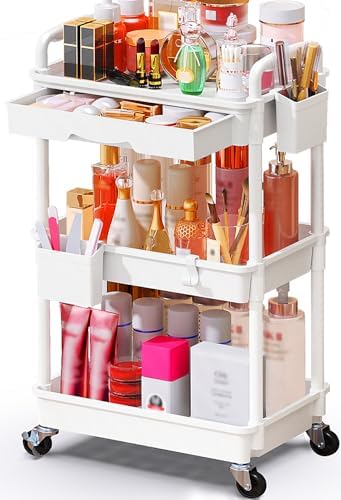
4. Use a Rolling Cart for Flexible Counseling Tools

A rolling cart is one of the most useful pieces for a small school counselor office.
It can hold your frequently used tools without taking over your desk or shelves. It can also move with you if you run groups, visit classrooms, share office space, or need supplies in different parts of the school.
You might use a rolling cart for:
- Feelings cards
- Coping skill cards
- Small-group materials
- Fidgets
- Art supplies
- Journals
- Stickers
- Calm-down tools
- Books
- Tissues
- Visual timers
- Mini whiteboard supplies
Try organizing the cart by purpose.
Top shelf: daily check-in tools
Middle shelf: calming tools and fidgets
Bottom shelf: group materials or art supplies
Use small containers inside the cart so it does not become a cluttered pile. Clear bins, pencil cups, and labeled pouches can keep everything easy to find.
A cart also lets you hide materials when they are not needed. You can roll it beside your desk during planning, beside the chair during sessions, or into a closet at the end of the day.


5. Create a Mini Calm-Down Shelf

A small school counselor office may not have room for a full calm corner, but it can almost always have a mini calm-down shelf.
This could be one shelf, one basket, one drawer, or one section of your rolling cart.
Include a small number of tools students can use during big feelings:
- Breathing cards
- Feelings chart
- Quiet fidgets
- Visual timer
- Grounding cards
- Drawing paper
- Student journals
- Smooth stones
- Sensory bottle
- Coping strategy cards
- Noise-reducing headphones
The key is to keep the selection limited.
Too many tools can create more stimulation, especially for students who are already overwhelmed. A few familiar options are better than a basket overflowing with novelty items.
You can rotate tools monthly or seasonally, but keep the core routine the same: notice the feeling, choose a tool, use it safely, and return when ready.
This type of mini reset space is especially helpful for back-to-school season, when students are still adjusting to routines, teachers, peers, and expectations.
6. Choose a Soft and Limited Color Palette
Color can make a small office feel either peaceful or visually crowded.
You do not need to repaint the walls to create a calm color palette. You can use small accessories to bring the room together.
Choose two neutral colors and one soft accent color.
Calming combinations for school counselor offices include:
- Cream, light wood, and sage green
- Warm beige, white, and dusty blue
- Soft gray, cream, and muted teal
- Tan, natural wood, and pale peach
- White, jute, and soft olive
- Light gray, warm brown, and muted mustard
Repeat the same colors in your baskets, frames, pillow covers, rug, bulletin board border, and labels. This makes even budget-friendly items look more cohesive.
Try to avoid too many bright colors in the counseling space. Colorful tools are fine, especially for children, but the background of the room should feel grounding.
The office can still feel warm and child-friendly without being overstimulating.
7. Hide Visual Clutter With Baskets and Bins
Small offices need storage that hides clutter quickly.
Baskets and bins are not just decorative. They protect the calm feeling of the room by giving everything a home.
Useful storage categories include:
- Art supplies
- Fidgets
- Social skills games
- Small-group cards
- Books
- Puppets or play materials
- Paperwork
- Extra tissues
- Seasonal materials
- Calm-down tools
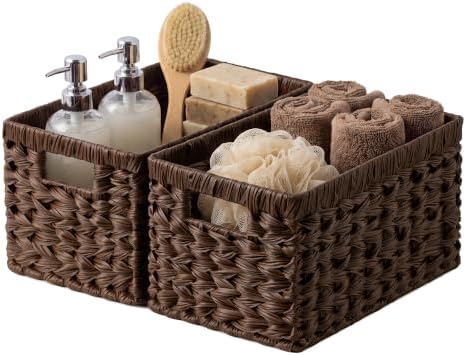
Choose containers that match or coordinate. A few matching woven baskets or fabric bins can make a shelf feel organized even if the materials inside are varied.
Labels are especially helpful because they make it easier to clean up quickly between students or groups. Use simple labels such as “Feelings Cards,” “Fidgets,” “Drawing Tools,” “Group Games,” and “Teacher Forms.”
If students use the materials independently, add picture labels for younger children.
A small office does not need more storage. It needs smarter storage.

8. Use Warm Lighting When School Rules Allow
Lighting changes the emotional tone of a room quickly.
Many school offices have bright fluorescent lighting that can feel harsh, especially for students who are anxious, tired, overstimulated, or emotionally overwhelmed.
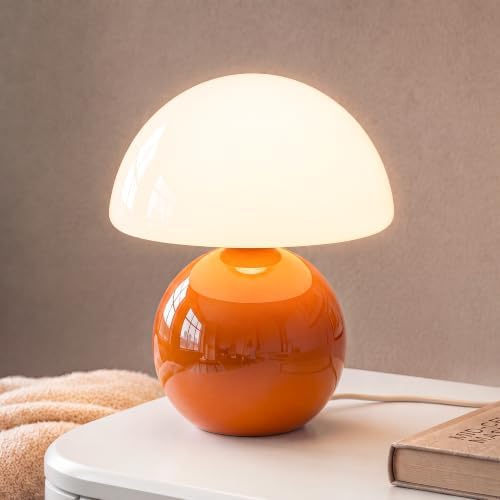
If your school allows it, add one warm light source.
Options include:
- Cordless table lamp
- Battery-operated lantern
- Clip-on lamp
- Warm LED desk light
- Small shaded lamp
- Fairy lights inside a clear container
Always follow your school’s fire, safety, electrical, and supervision rules. If lamps are not allowed, you can still soften the space with fabric textures, warm-toned decor, a rug, and calming visuals.
If you can use a lamp, place it near the student seating area rather than your desk. This gently shifts the focus from paperwork to connection.
Small lighting changes can make the office feel less clinical and more emotionally welcoming.


9. Make Your Desk Less Dominant
In many small school counselor offices, the desk naturally becomes the center of the room.
It holds your computer, forms, calendar, notes, phone, files, coffee mug, and ten things you meant to organize yesterday. But when students enter the room, a cluttered desk can unintentionally set the emotional tone.
Try to make the student area the visual focus instead.
You can do this by:
- Placing the student chair in the calmest corner
- Turning your desk slightly away from the doorway
- Keeping only daily essentials on the desk
- Using vertical file holders
- Moving paperwork into drawers or bins
- Placing a plant, frame, or lamp near the student area
- Keeping confidential papers out of sight
A simple desk system can help:
Today: what needs attention now
This Week: follow-up forms, group plans, teacher requests
Secure: confidential documents and student records
The more organized your desk feels, the easier it is to shift between counseling, crisis support, paperwork, and meetings.
10. Add Student-Friendly Wall Visuals Without Overcrowding
Wall visuals can be very helpful in a school counselor office, but too many posters can make a tiny room feel chaotic.
Choose visuals that students can actually use.
Strong options include:
- Feelings chart
- “What can I talk to the counselor about?” poster
- Breathing strategy poster
- Coping skills menu
- Friendship repair steps
- Problem-solving steps
- Grounding exercise
- “Big feelings are welcome here” sign
- “You belong here” sign
For small offices, one main bulletin board or one small gallery wall is usually enough.
You can use simple frames, clipboards, or a small cork board to keep visuals neat. Rotate them seasonally instead of keeping every poster up all year.
A helpful back-to-school wall might include:
- What the counselor helps with
- How to ask for help
- What to do when I feel overwhelmed
- A few encouraging statements about belonging and trying again
Keep language simple, warm, and age-appropriate.
11. Use Behind-the-Door Storage
Behind-the-door storage is often overlooked, but it can be a lifesaver in a tiny school counselor office.
Use it for supplies you need often but do not want visually taking over the room.
Ideas include:
- Over-door organizer for fidgets
- Hooks for bags or lanyards
- Hanging file pockets
- Clear shoe organizer for supplies
- Clipboards
- Small-group materials
- Extra headphones
- Calm-down cards
- Art materials
Just be careful not to overload it. If the door becomes visually crowded, it can make the room feel smaller.
Use matching pouches or labeled pockets to keep it calm and functional.
This is especially helpful if you share your office or need to reset the room quickly after sessions.

12. Create a Portable Office Kit for Shared Spaces
Some school counselors do not have a consistent office.
If you move between classrooms, share a room, or use whatever space is available, a portable counseling kit can help you create consistency for students even when the location changes.
Use a sturdy tote bag, rolling crate, caddy, or small suitcase-style organizer.
Include:
- Feelings cards
- Coping cards
- Visual timer
- Small notebook
- Pens and pencils
- Quiet fidgets
- Mini whiteboard
- Tissues
- Calm-down cards
- Student check-in forms
- A few favorite books
- Clipboard
- Stickers or encouragement notes
A portable kit helps you bring the same emotional structure into different spaces. Students may not always have the same room, but they can still recognize the tools, language, and routines.
This also works beautifully for school social workers, school psychologists, behavior specialists, and counselors serving multiple buildings.
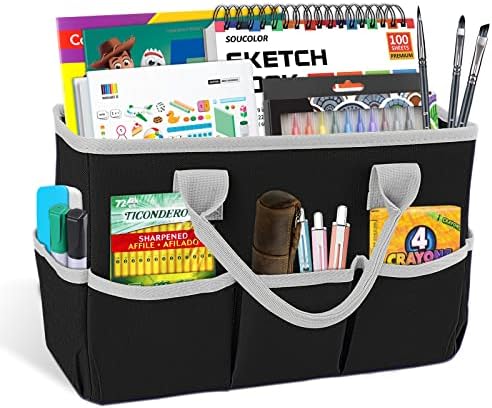
- Best Organization Solution: Features big storage space for teacher’s stationery, books, papers, pens, crafts, arts, make…
- Lots of Small Storage Along: Includes 5 small pockets outside the main compartment, used to organize small tools for qui…
- Well Made Construction: Art tote bag is made from durable polyester 600D with 2 carry-away handles that are suitable for…
Shop the Small Counselor Office Setup
A small office works best when every purchase solves a real problem. Instead of buying random decor, think in categories.
For Comfort
- Compact accent chair
- Floor cushion
- Washable rug
- Soft pillow cover
- Lightweight throw blanket
- Storage ottoman
For Organization
- Rolling utility cart
- Woven baskets
- Fabric storage cubes
- Wall file holders
- Floating shelves
- Over-door organizer
- Label maker
- Lidded containers
For Student Support
- Feelings cards
- Calm-down cards
- Visual timer
- Quiet fidgets
- Noise-reducing headphones
- Student journals
- Smooth stones
- Breathing prompt cards
For Atmosphere
- Cordless lamp
- Simple frames
- Faux plant or low-maintenance real plant
- Small bulletin board
- Neutral wall art
- Warm-toned decor accents
This section is a natural place to add affiliate links because readers are often actively looking for practical items to recreate the space.
Keep the list curated. A small counselor office should feel supportive, not overfilled.
Small School Counselor Office Checklist
Use this checklist to quickly evaluate your office before students return.
Comfort
- One welcoming student seat
- Soft rug or mat
- Tissues within reach
- Calm lighting if allowed
- Comfortable adult seating
Organization
- Hidden storage for supplies
- Secure storage for confidential documents
- Labels for frequently used materials
- Clear desk workflow
- Rolling cart or portable kit if needed
Student Support
- Feelings chart
- Coping skill cards
- Quiet fidgets
- Visual timer
- Drawing or reflection supplies
- Calm-down tools
Visual Environment
- Soft color palette
- Limited wall visuals
- One welcoming sign
- Minimal clutter
- Open space where possible
Function
- Easy movement in and out
- Clear seating arrangement
- Materials within reach
- Space can reset quickly
- Room feels welcoming from the doorway
If you only have time for one change, start by clearing visual clutter. A tidy, intentional room almost always feels calmer, even before you add anything new.
Common Mistakes to Avoid in a Small Counseling Office
Too Many Themes
A small office does not need a theme on every wall. Choose one visual style and keep it consistent.
Too Many Fidgets
Fidgets are helpful only when students know how to use them and when they do not become distracting. Keep a small selection and rotate as needed.
Overcrowded Shelves
Open shelves can quickly become visual noise. Use baskets, bins, and empty space.
Desk-Centered Layout
If every chair faces your desk, the space may feel too formal. Try creating a small conversation area instead.
Strong Scents
Avoid essential oils, sprays, candles, or strong air fresheners in school counseling spaces. Scent can be overwhelming, triggering, or restricted by school policies.
Decor That Looks Pretty but Does Not Help
Pretty decor is fine, but in a small office, function matters more. Choose items that support comfort, regulation, privacy, storage, or connection.
Final Thoughts
A small school counselor office does not need to feel like a limitation.
With the right setup, a tiny room can become one of the most supportive spaces in the school.
It can be the place where a student catches their breath before returning to class. The place where a friendship problem becomes easier to untangle. The place where a child learns a new coping strategy. The place where a teacher stops in for support. The place where big feelings are met with calm instead of chaos.
You do not need a large budget.
Start with one comfortable seat. Add a small rug. Clear the desk. Use baskets. Create a mini calm-down shelf. Choose soft colors. Put the tools students need within reach.
A small office can still feel warm, organized, and emotionally safe when every item is chosen with care.
And sometimes, that small, imperfect room becomes exactly what a student needs: a quiet place to feel seen, supported, and ready to begin again.

About the Author
Hi, I’m Eve, a former school counselor with a master’s degree in School Psychology and a passionate advocate for children and families navigating sensory challenges. As a mom of children with sensory sensitivities, I deeply understand the journey special-needs parents face, and I dedicate myself to researching and sharing practical solutions to help children thrive and feel comfortable in their bodies. My goal is also to empower counselors, therapists, and psychologists with creative strategies and supportive resources to enrich their everyday practice. When I’m not writing or exploring new therapeutic approaches, you’ll find me spending quality time with my family and continually seeking inspiration from everyday moments.

