Mental Health Education

How to Turn Daily Routines Into Brain Training for Self-Control

This post may contain affiliate links, including Amazon and selected partner links. If you make a purchase through these links, I may earn a small commission at no extra cost to you.I only recommend tools and resources that genuinely support children’s emotional development and make everyday routines easier for parents, teachers, and counselors. Self-control isn’t […]

How to Turn Daily Routines Into Brain Training for Self-Control Read More »
Impulsivity vs. Hyperactivity: How to Tell the Difference and Support Your Child

Parents and teachers often use the words “impulsive” and “hyperactive” interchangeably, but they aren’t the same thing. While both can affect attention, behavior, and learning, impulsivity and hyperactivity look different, and they require different kinds of support. Understanding the difference helps families, teachers, and counselors respond with strategies that actually work. What Is Impulsivity? Impulsivity

Impulsivity vs. Hyperactivity: How to Tell the Difference and Support Your Child Read More »

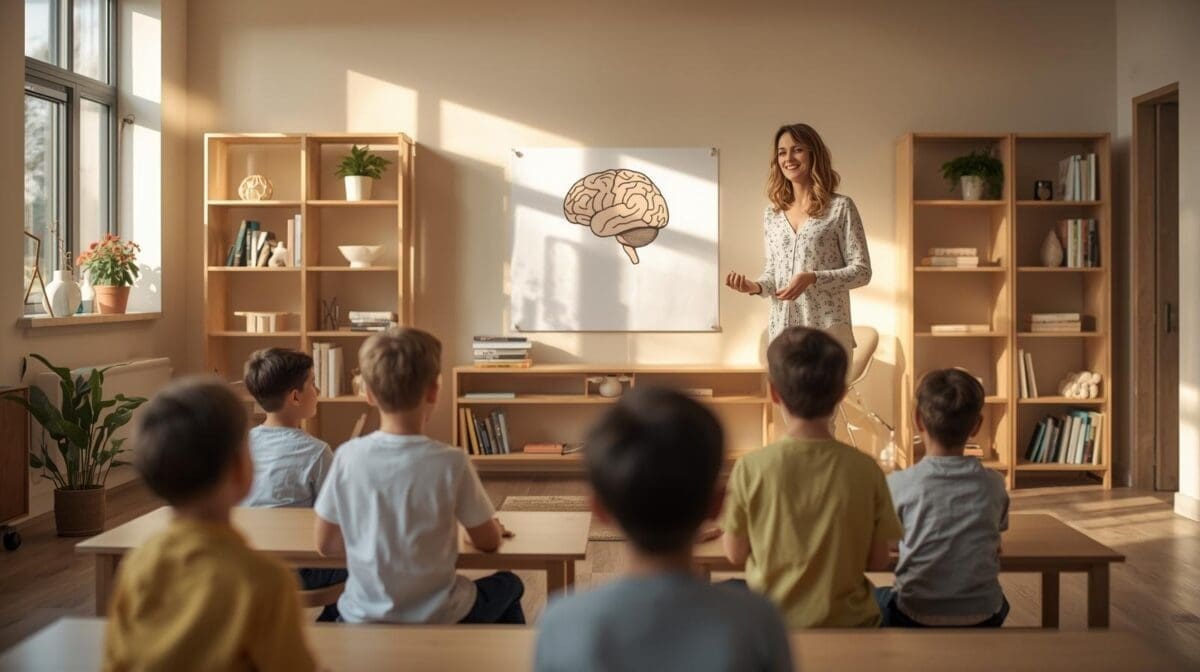
Brain Training for Kids: 7 Everyday Activities to Strengthen Self-Control

Just like muscles get stronger with exercise, the brain builds self-control through practice. Kids don’t learn emotional regulation from a single lesson — they learn it through daily repetition in everyday routines. These seven brain training activities help children practice focus, patience, and self-regulation at home, in therapy, or in the classroom. They’re simple, practical,

Brain Training for Kids: 7 Everyday Activities to Strengthen Self-Control Read More »

The Brain Is Like a Muscle: How Repetition Builds Emotional Regulation in Kids

We often tell kids, “Practice makes perfect.” The same is true for their brains. Just like lifting weights builds muscle, repetition strengthens the brain’s ability to manage emotions. When children practice calming strategies over and over, their brains create stronger pathways for self-regulation. This article explains the science in simple terms — and gives parents,

The Brain Is Like a Muscle: How Repetition Builds Emotional Regulation in Kids Read More »

Storytelling & Role-Play Activities to Teach Empathy to Kids

Children naturally love stories and play — and both are powerful ways to teach empathy. By stepping into someone else’s shoes through storytelling and role-play, kids practice perspective-taking, compassion, and emotional understanding in a way that feels engaging and fun. Here are storytelling and role-play activities that help children build empathy at home, in classrooms,

Storytelling & Role-Play Activities to Teach Empathy to Kids Read More »

Empathy Exercises for Teens: Building Connection and Understanding

Adolescence is a season of big feelings and rapid change. Friends become anchors, identity starts to crystallize, and social dynamics feel louder than ever. In the middle of it all, empathy—the ability to understand and share another person’s feelings—becomes a stabilizer. It helps teens communicate without escalation, navigate conflict with more grace, and build friendships

Empathy Exercises for Teens: Building Connection and Understanding Read More »

Winter Emotional Regulation Activities for Classrooms: Calm & Focus Ideas

Winter can be a magical season, but for many students it also brings restlessness, holiday stress, or mid-year fatigue. Classrooms can easily become overwhelmed with high energy and big feelings. That’s why building emotional regulation activities into your winter classroom routines is so powerful. These calming, mindful activities are simple, seasonal, and help kids develop

Winter Emotional Regulation Activities for Classrooms: Calm & Focus Ideas Read More »

Therapy Tools for Emotional Regulation: A Practical Guide for Counselors

Emotional regulation is one of the most important skills children and teens can learn in therapy. It’s not just about “calming down”—it’s about recognizing emotions, understanding triggers, and choosing healthier responses that fit the moment. In session, the right therapy tools for kids make abstract concepts concrete, playful, and memorable. This guide shares my favorite

Therapy Tools for Emotional Regulation: A Practical Guide for Counselors Read More »

Emotional Regulation Group Activities for Teens: Building Calm and Connection

Teenagers face intense emotions — pressure from school, friendships, identity, and independence. Without tools to manage these feelings, impulsivity and stress can easily take over. Group therapy and classroom SEL sessions are powerful ways to teach emotional regulation skills while helping teens feel connected. Here are engaging group activities for teens that build emotional awareness,

Emotional Regulation Group Activities for Teens: Building Calm and Connection Read More »

10 Halloween Party Ideas for Group Counseling Activities

Halloween isn’t just about costumes and candy — it can also be a meaningful opportunity for kids, teens, or even adults in counseling groups to practice social skills, teamwork, and emotional regulation. A well-planned Halloween gathering in a group counseling setting combines fun with therapeutic value, creating memories that also support mental health. Here are

10 Halloween Party Ideas for Group Counseling Activities Read More »

Scroll to Top