
Mental Health

Open journal with handwritten notes on a feminine desk with candlelight and dried flowers, symbolizing healing through writing.

How Writing Therapy Can Heal Your Heart (Part 1)

Healing often feels elusive. When we’re grappling with emotional pain—heartbreak, loss, stress, or anxiety—finding a path toward well-being can seem like navigating a labyrinth. Across history, human beings have turned to various methods for healing their psychic and emotional wounds: talk therapy, meditation, physical exercise, and, more recently, emerging fields like art therapy or music therapy. Among these, one particularly accessible and powerful tool stands out: writing therapy.

Writing therapy harnesses the simple yet profound act of putting pen to paper (or fingers to keyboard) to process emotions, discover hidden layers of ourselves, and ultimately foster healing. This practice can be formal, such as in a clinical setting with a trained therapist, or it can be pursued independently as a self-guided journey.

In this multi-part article, we will explore the rich tapestry of writing therapy: how it originated, the scientific research that underpins its benefits, practical techniques you can try on your own, and how it can lead to profound emotional healing—even when other methods have failed. By immersing yourself in these insights, you’ll find that writing therapy can become more than just a coping mechanism; it can be a transformative process that heals the heart.

How Writing Therapy Can Heal Your Heart (Part 1) Read More »

7 Therapeutic Writing Exercises to Reduce Stress and Anxiety

Stress and anxiety can often feel like an endless loop of overwhelming thoughts, making it difficult to focus, relax, or even breathe deeply. But what if there was a simple and effective way to break free from this cycle? Writing therapy offers a powerful tool to process emotions, declutter the mind, and regain a sense of control. Research shows that putting thoughts into words can reduce anxiety, lower stress hormones, and improve emotional regulation.

In this article, we’ll explore 7 therapeutic writing exercises that can help you relieve stress, reframe anxious thoughts, and cultivate a sense of inner peace. Whether you’re new to journaling or looking for deeper emotional insights, these exercises will guide you toward healing and self-discovery.

7 Therapeutic Writing Exercises to Reduce Stress and Anxiety Read More »

10 Life-Changing Expressive Writing Techniques for Mental Clarity and Emotional Healing

Picture this: You’re holding a pen, staring at a blank page, your emotions tangled in a web of confusion. But as you start to write—without judgment, without structure—you feel a shift. The knots begin to unravel, and your thoughts gain clarity. This is the magic of expressive writing, a therapeutic technique that allows you to process emotions, gain self-awareness, and experience profound mental clarity.

Unlike traditional journaling, expressive writing is not about recording daily events. Instead, it focuses on deep emotional exploration, helping you work through past experiences, anxiety, stress, and unresolved feelings. Backed by research, this technique has been shown to reduce stress, enhance mood, and even improve physical health. Let’s dive into 10 powerful expressive writing techniques you can incorporate into your daily routine.

10 Life-Changing Expressive Writing Techniques for Mental Clarity and Emotional Healing Read More »

Writing Therapy for Anxiety: How to Release Your Worries on Paper

The Power of Writing Therapy for Anxiety Imagine this: It’s late at night, and your mind is racing. Thoughts swirl around—some logical, some irrational, all of them overwhelming. You try to relax, but the more you resist, the stronger your anxious thoughts become. Now, picture reaching for a journal, opening it, and spilling those thoughts

Writing Therapy for Anxiety: How to Release Your Worries on Paper Read More »

Writing Therapy: How Journaling Can Rewire Your Brain for Positivity

Imagine sitting with a warm cup of tea, a journal open in front of you, and a mind swirling with thoughts. Some are messy, some are hopeful, and some feel like tangled knots of worry. But as you start to write, something shifts. Your words flow onto the page, transforming emotions into sentences, and suddenly, your mind feels just a little bit lighter. This is the magic of writing therapy—an evidence-backed practice that helps rewire your brain for positivity, self-awareness, and emotional healing.

In this article, we’ll explore how writing therapy can shift your mindset, backed by science and actionable steps to help you integrate therapeutic journaling into your daily routine.

Writing Therapy: How Journaling Can Rewire Your Brain for Positivity Read More »

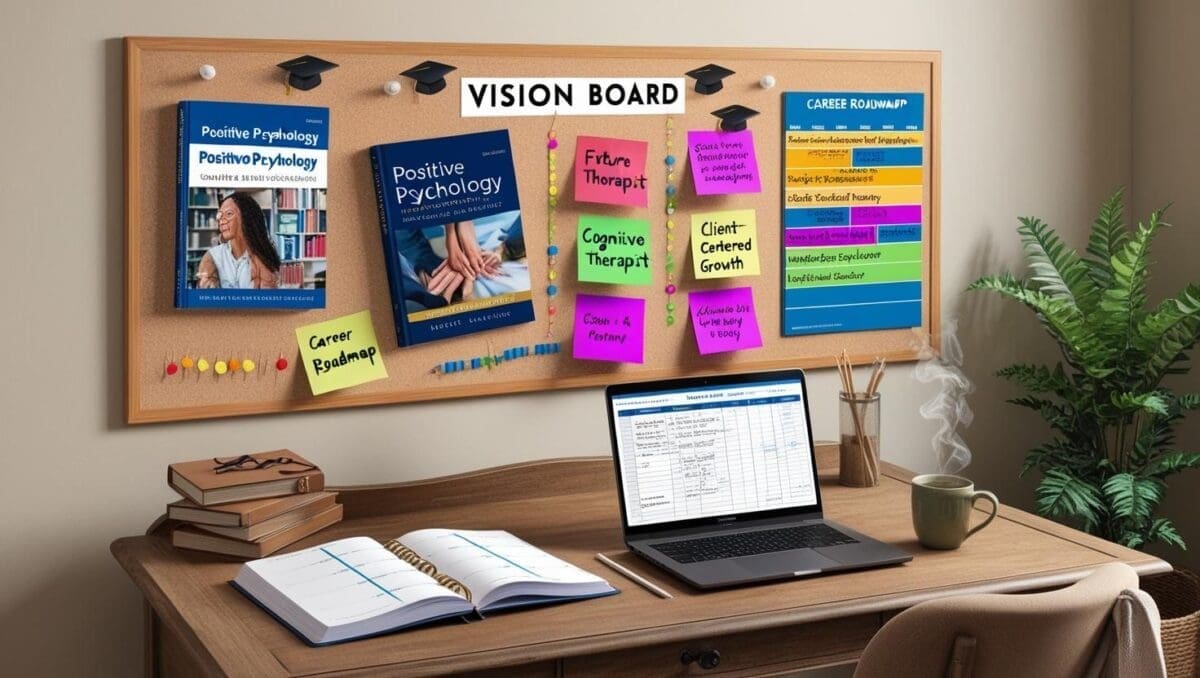
Psychology career planning space with vision board, planner, and motivational quotes designed to inspire goal-setting and professional growth.

Visualizing Success: Creating a Roadmap to Your Psychology Career Goals

As a psychology student, it’s easy to get overwhelmed by the vast knowledge and skills you need to master. Whether you’re pursuing a career as a clinical psychologist, researcher, or counselor, the journey can sometimes feel daunting. But what if you could break down those massive, long-term goals into smaller, manageable steps? In this article,

Visualizing Success: Creating a Roadmap to Your Psychology Career Goals Read More »

Easy DIY Therapy Tools You Can Make on a Budget: A Guide for New Counselors

Starting your career as a counselor can be both exciting and challenging. One of the biggest hurdles new counselors face is building their toolkit of effective resources, especially when there’s not a large budget to work with. But here’s the good news: you don’t need a lot of money to create impactful, hands-on tools that

Easy DIY Therapy Tools You Can Make on a Budget: A Guide for New Counselors Read More »

The Best Gifts for 3-6-Year-Old Kids with ADHD: Engaging, Fun & Focus-Boosting Ideas

Your child bounces excitedly as they unwrap their gift, eyes wide with wonder. It’s not just any toy—it’s something that truly captivates them. Within moments, they’re engaged, exploring, and using up their boundless energy in a productive way. No frustration, no boredom—just pure joy.

For parents of kids with ADHD, finding gifts that are both fun and functional can be a challenge. You want something that keeps their attention, helps regulate their energy, and supports their sensory and cognitive development. That’s exactly what this guide is all about—picking gifts that work with, not against, your child’s unique brain.

Let’s dive into the best gifts for 3-6-year-old kids with ADHD that will encourage focus, movement, creativity, and relaxation.

The Best Gifts for 3-6-Year-Old Kids with ADHD: Engaging, Fun & Focus-Boosting Ideas Read More »

Therapist performing Brain Gym exercise in a calm wellness space, with supporting tools like exercise charts and a relaxation journal.

Brain Gym for Anxiety: Movement-Based Techniques for Calming the Mind

In our fast-paced world, anxiety has become a common challenge affecting individuals of all ages. While traditional methods like therapy and medication are beneficial, incorporating physical movement can offer immediate relief and long-term benefits. Brain Gym, a program developed by educators Paul and Gail Dennison, utilizes simple movements to enhance brain function and reduce stress.

Brain Gym for Anxiety: Movement-Based Techniques for Calming the Mind Read More »

DIY Brain Gym Exercise Board: A Fun Way to Boost Cognitive Skills

Introduction: Why a Brain Gym Exercise Board? Have you ever wished for a fun, hands-on way to improve focus, coordination, and learning? A Brain Gym Exercise Board is an excellent tool for both kids and adults. This DIY project enhances cognitive function, fine motor skills, and creativity. Whether you’re a parent, teacher, or therapist, this

DIY Brain Gym Exercise Board: A Fun Way to Boost Cognitive Skills Read More »

Scroll to Top