
Children are never too young to start learning about values — the ideas and beliefs that guide our choices and relationships. While teens may explore values through deep reflection, younger kids benefit from hands-on activities and worksheets that make values simple, fun, and concrete.
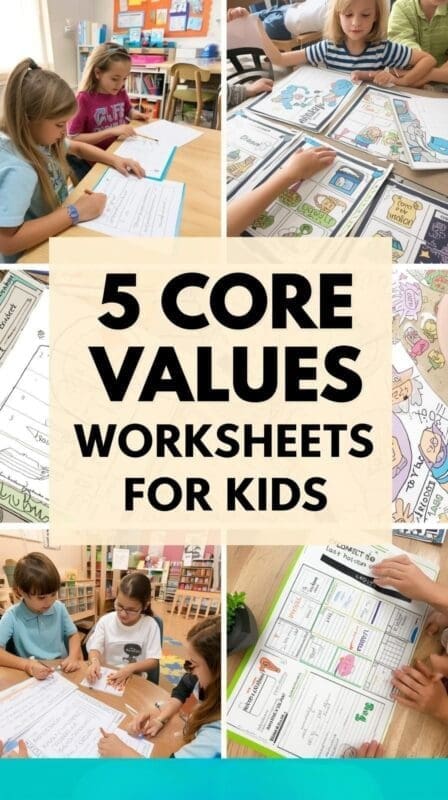
These core values worksheets for kids can be used at home, in counseling, or in classrooms to introduce concepts like kindness, honesty, and responsibility in age-appropriate ways.
Why Teach Core Values to Kids?
- Builds Character: Values provide a foundation for making thoughtful choices.
- Encourages Empathy: Kids learn to consider how their actions affect others.
- Supports SEL Goals: Identifying values strengthens self-awareness and emotional regulation.
- Creates Consistency: Shared language between school and home reinforces positive behavior.
1. My Top 3 Values Worksheet
How it works:
- Provide a list of simple values with icons (kindness, honesty, respect, teamwork).
- Ask kids to circle or color their top 3.
- Follow up with: “How do you show this value?”
Why it helps: Gives kids a starting point for identifying what matters most.
2. Value Match Coloring Page
How it works:
- Create coloring sheets with scenes (sharing toys, telling the truth, helping a friend).
- Kids color the scenes and match them to values.
Why it helps: Makes abstract ideas visual and concrete.
3. “I Show This Value When…” Worksheet
How it works:
- Write a value at the top (e.g., kindness).
- Kids draw or write a way they show that value in daily life.
Why it helps: Connects values to real-life actions.
4. Family Values Tree Worksheet
How it works:
- Kids write family values (love, respect, teamwork) on leaves and add them to a tree.
- Parents or siblings can join in.
Why it helps: Encourages family conversations about shared values.
5. Classroom Values Pledge Worksheet
How it works:
- As a group, brainstorm class values (respect, listening, teamwork).
- Kids sign or decorate a worksheet “pledge” to follow them.
Why it helps: Builds community and accountability.
Tips for Counselors & Teachers
- Use simple visuals and words for younger children.
- Pair worksheets with discussion or role-play for deeper understanding.
- Display completed worksheets in the classroom or office to reinforce lessons.
Final Thoughts
Core values worksheets help kids learn that choices reflect what we believe in. By making activities fun and hands-on — from coloring pages to family values trees — children begin to understand the foundations of character, kindness, and responsibility.
For more resources, explore my guides on Exploring Core Values with Teens and Storytelling & Role-Play Activities to Teach Empathy.

About the Author
Hi, I’m Eve, a former school counselor with a master’s degree in School Psychology and a passionate advocate for children and families navigating sensory challenges. As a mom of children with sensory sensitivities, I deeply understand the journey special-needs parents face, and I dedicate myself to researching and sharing practical solutions to help children thrive and feel comfortable in their bodies. My goal is also to empower counselors, therapists, and psychologists with creative strategies and supportive resources to enrich their everyday practice. When I’m not writing or exploring new therapeutic approaches, you’ll find me spending quality time with my family and continually seeking inspiration from everyday moments.