
Self-control isn’t built in a single counseling session — it develops through everyday repetition. The good news? Parents and teachers don’t need fancy tools to strengthen self-regulation in kids. Daily routines like mealtime, bedtime, and homework can become powerful brain training opportunities.
Here’s how to use ordinary family and classroom routines to help children practice self-control and emotional regulation.
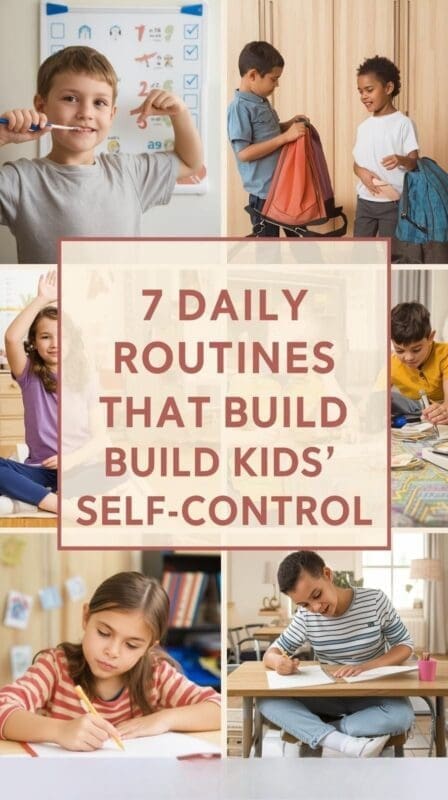
1. Mealtime: Practicing Patience
How it works:
- Encourage kids to wait until everyone is served before starting to eat.
- Use conversation starters to stretch attention spans and reduce rushing.
Why it helps: Builds delay of gratification and teaches kids to wait their turn.
2. Bedtime: Reflection & Wind-Down
How it works:
- End the day with 5 minutes of calm reflection: “What went well today?”
- Add breathing or reading as part of the nightly ritual.
Why it helps: Trains consistency, reflection, and emotional closure for the day.
3. Homework Time: Focus Intervals
How it works:
- Set a timer for 15 minutes of work followed by a short break.
- Gradually increase focus intervals.
Why it helps: Builds sustained attention and persistence.
4. Morning Routine: Planning Ahead
How it works:
- Let children check off steps: brushing teeth, packing backpack, choosing clothes.
- Encourage them to prepare one thing the night before.
Why it helps: Reinforces organization and executive function skills.
5. Chores: Responsibility Training
How it works:
- Assign age-appropriate chores like setting the table or watering plants.
- Praise effort and consistency, not just results.
Why it helps: Builds responsibility, accountability, and follow-through.
6. Playtime: Structured Choice
How it works:
- Offer two play options and let the child choose.
- Encourage them to commit to the choice for a set amount of time.
Why it helps: Strengthens decision-making and reduces impulsive switching.
7. Transitions: Practicing Pausing
How it works:
- Use simple cues (a bell, song, or breathing exercise) when switching activities.
- Teach kids to pause before moving on.
Why it helps: Builds the habit of stopping and thinking before acting.
Final Thoughts
Daily routines are hidden opportunities for brain training in self-control. With small tweaks to mealtime, bedtime, and homework rituals, parents and teachers can help kids practice patience, reflection, and responsibility. Over time, these everyday reps create stronger self-regulation — one routine at a time.
For more ideas, explore my guides on Brain Training Activities for Kids and Mindfulness for Impulsive Kids.

About the Author
Hi, I’m Eve, a former school counselor with a master’s degree in School Psychology and a passionate advocate for children and families navigating sensory challenges. As a mom of children with sensory sensitivities, I deeply understand the journey special-needs parents face, and I dedicate myself to researching and sharing practical solutions to help children thrive and feel comfortable in their bodies. My goal is also to empower counselors, therapists, and psychologists with creative strategies and supportive resources to enrich their everyday practice. When I’m not writing or exploring new therapeutic approaches, you’ll find me spending quality time with my family and continually seeking inspiration from everyday moments.