
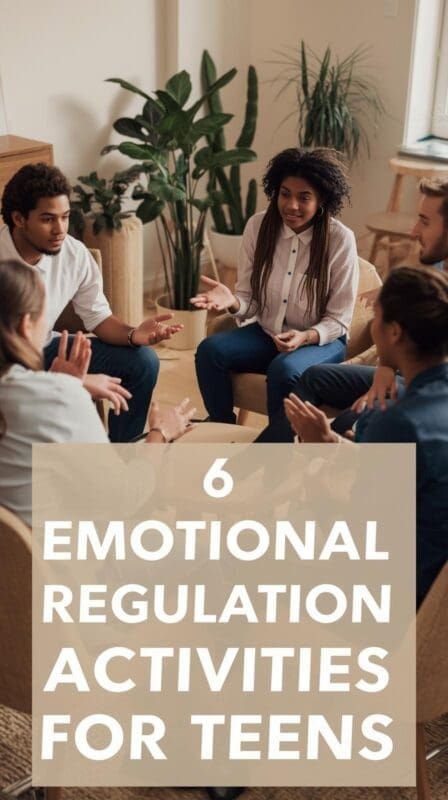
Teenagers face intense emotions — pressure from school, friendships, identity, and independence. Without tools to manage these feelings, impulsivity and stress can easily take over. Group therapy and classroom SEL sessions are powerful ways to teach emotional regulation skills while helping teens feel connected.
Here are engaging group activities for teens that build emotional awareness, self-control, and peer support.
1. Emotion Charades — Teen Edition
How it works:
- Write complex emotions (overwhelmed, proud, disappointed, hopeful).
- Teens act them out while peers guess.
Why it helps: Expands emotional vocabulary and fosters empathy.
2. Stress Thermometer Circle
How it works:
- Draw a thermometer scale from calm to stressed.
- Teens place themselves on the scale with sticky notes.
- Share strategies that help move “down the thermometer.”
Why it helps: Normalizes stress levels and encourages peer learning.
3. Guided Breathing with Visualization
How it works:
- Lead the group through “box breathing” (inhale 4, hold 4, exhale 4, hold 4).
- Add calming imagery like sitting by a lake or walking in autumn woods.
Why it helps: Provides practical coping techniques for real-life stress.
4. Role-Play Real-Life Scenarios
How it works:
- Teens act out situations like a fight with a friend, exam stress, or peer pressure.
- Group discusses what strategies could help in the moment.
Why it helps: Connects regulation skills to realistic challenges.
5. Journaling with Music
How it works:
- Play calming instrumental music.
- Give prompts like “Write about a time you calmed yourself down successfully.”
Why it helps: Reflection deepens self-awareness and provides safe expression.
6. Group Gratitude Wall
How it works:
- Teens add sticky notes of gratitude to a shared board.
- At the end, reflect on how gratitude shifts perspective.
Why it helps: Builds positivity and reduces stress.
Final Thoughts
Teens thrive when given tools to name emotions, practice coping strategies, and share with peers. Group activities like charades, role-plays, and gratitude walls create supportive spaces where emotional regulation feels safe and empowering.
For more resources, explore my guides on Impulsivity in Teens and Exploring Core Values with Teens.

About the Author
Hi, I’m Eve, a former school counselor with a master’s degree in School Psychology and a passionate advocate for children and families navigating sensory challenges. As a mom of children with sensory sensitivities, I deeply understand the journey special-needs parents face, and I dedicate myself to researching and sharing practical solutions to help children thrive and feel comfortable in their bodies. My goal is also to empower counselors, therapists, and psychologists with creative strategies and supportive resources to enrich their everyday practice. When I’m not writing or exploring new therapeutic approaches, you’ll find me spending quality time with my family and continually seeking inspiration from everyday moments.