When Halloween Becomes a Lesson in Feelings
Halloween isn’t just about candy and costumes — it’s a season of color, imagination, and emotional energy. The air feels charged; classrooms buzz with excitement, and even the calmest kids can become a little wilder than usual. I’ve learned that this season, full of sensory stimulation, can also become a beautiful opportunity for mindfulness and emotional growth.
In counseling sessions and classrooms, I use Halloween crafts as more than decorations. They’re creative invitations for kids to explore feelings, regulate energy, and practice kindness — all while laughing and creating something spooky and fun.
So, gather your glue, glitter, and a little bit of calm. Here are 15 Halloween SEL crafts that help children express emotions, find focus, and feel proud of what they create.
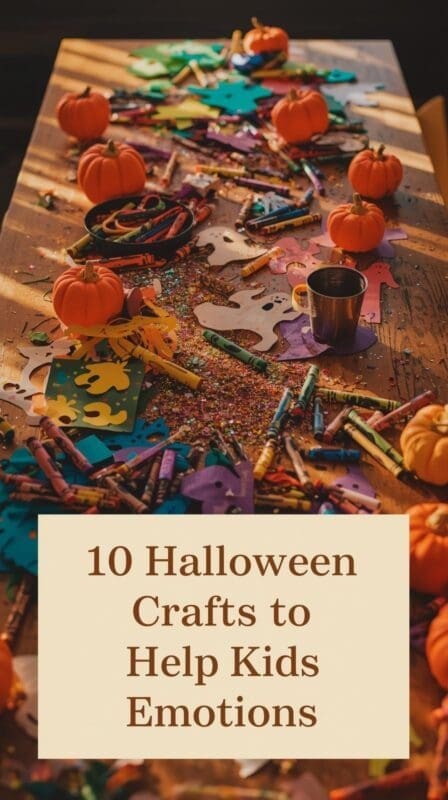
1. Monster Stress Balls
There’s something delightfully silly about squishing a monster’s face until it scrunches up in your hand. Kids love it — and meanwhile, their nervous systems are getting a reset.
How to make it: Fill balloons with flour or cornstarch, then tie and decorate with googly eyes, yarn hair, and funny faces.
Why it helps: Squeezing stress balls releases physical tension and builds emotional self-soothing skills. When I bring these into session, even anxious children start giggling within minutes — laughter and regulation often arrive together.
2. Pumpkin Breathing Cups
This one turns deep breathing into a game. Kids decorate paper cups like pumpkins, then use straws to blow feathers or pom-poms across the table.
I like to frame it as “Pumpkin Power Breaths” — strong, slow, and steady. They practice breath control without even realizing it.
Why it helps: Encourages mindfulness, slow exhalation, and regulation of the nervous system. Perfect for transitions between activities.
This is how you can decorate cups:
And this is how breathing cups works:
3. Calm-Down Glitter Jars (Halloween Edition)
Few things capture Halloween magic like swirling glitter. Fill jars with water, glitter glue, orange or purple food coloring, and tiny bat or ghost confetti.
I tell kids it’s a “Mind Potion.” When they shake the jar, the glitter whirls like thoughts on a busy day — and when it settles, so do we.
Why it helps: Visual mindfulness teaches patience, stillness, and emotional awareness. Watching the glitter settle helps kids name and regulate big feelings.
4. Bat Wing Breathing Wands
Breathing can be hard to teach abstractly, but when you give kids something to hold and move, it clicks. Cut felt or paper bat wings, attach to a straw, and have children raise the “bat” as they inhale and lower it as they exhale.
I call them “Bat Wands of Calm.” The motion gives the breath rhythm, and even high-energy groups find focus fast.
Why it helps: Combines movement and mindfulness — a tactile way to regulate excitement and anxiety.
5. Emotion Masks
Paper plates, markers, and imagination — that’s all you need for one of the best conversations about feelings you’ll ever have. Kids create masks showing different emotions: a happy ghost, a sad pumpkin, an angry monster.
Then comes the magic: role-play. “What would your happy ghost say?” “What helps your angry monster calm down?”
Why it helps: Builds emotional literacy, empathy, and self-expression through creative play.
6. Spider Web Yarn Art
When I first introduced this craft, the room went completely silent — just little fingers weaving black yarn across paper plates, creating webs of focus. Add a small paper spider with a feeling word on its back: “hopeful,” “tired,” “excited.”
Why it helps: Weaving promotes fine motor control, concentration, and calm. Naming emotions helps children notice feelings without judgment.
7. Pumpkin Emotion Faces
Cut orange circles from felt or paper and let kids build pumpkin faces using eyes, eyebrows, and mouths in different shapes.
I like to ask, “Which pumpkin matches how you feel today?” Sometimes a child who can’t find words will point to a “worried pumpkin” instead — a simple but powerful bridge to communication.
Why it helps: Visualizes emotion recognition, strengthens vocabulary, and builds empathy.
8. Ghostly Breathing Bags
A classroom favorite for its silly simplicity: draw ghost faces on white paper lunch bags. Kids take a slow, deep breath, blow into the bag, and then gently press the air out.
When I do this activity, laughter always follows the first puff of air. Then the breathing naturally slows — regulation through play.
Why it helps: Teaches breath control, release, and awareness of body sensations.
9. Worry Stone Painting
Collect smooth stones and paint them with Halloween hues — orange, black, silver — or calming symbols like stars, moons, or waves. Add affirmations like “I am safe” or “I can breathe.”
Kids love the sensory process: the cool stone, the brush strokes, the slow drying time. It’s art that invites patience.
Why it helps: Provides grounding through touch and visual focus. Worry stones can later become pocket tools for self-soothing.
10. Haunted House Journals
Fold and staple black construction paper into mini haunted houses. Inside, kids write or draw their feelings, dreams, or daily reflections.
One of my students once drew a ghost labeled “My Worry,” floating away toward a bright window. It was a moment of storytelling as healing.
Why it helps: Journaling supports self-awareness and gives children a private space to process emotions safely.
11. Skeleton Yoga Puppets
Make skeletons from cardstock, attach with paper fasteners, and pose them into yoga shapes: tree pose, downward dog, star.
We call them “Mindful Skeletons.” Kids mimic the poses, giggling as they balance — playful movement becomes mindful presence.
Why it helps: Combines body awareness, emotional regulation, and physical coordination.
12. Magic Potion Calm-Down Bottles
This craft turns mindfulness into pure wonder. Mix water, glitter, sequins, and food coloring in small bottles. Label them “Potion of Peace,” “Bravery Brew,” or “Confidence Elixir.”
Kids shake, watch, and breathe as the sparkles fall. I often end a session by letting each child choose a bottle to “carry calm” home.
Why it helps: Encourages visualization and creative language for emotional regulation.
13. Trick-or-Treat Gratitude Bags
Amid candy and excitement, gratitude can get lost. This craft brings it back. Kids decorate treat bags and slip inside notes labeled “family,” “friends,” “my dog,” “my teacher.”
Later, they can open the bag and read their notes like candy for the soul.
Why it helps: Promotes gratitude, reflection, and emotional balance after stimulating activities.
14. Floating Ghost Balloons
Draw ghost faces on white balloons and play gentle “balloon volleyball.” The goal? Keep the ghosts floating as long as possible — together.
The laughter that follows always resets group energy. Movement channels excitement while teamwork builds connection.
Why it helps: Encourages cooperation, regulation through physical play, and shared joy.
15. Friendly Frankenstein Affirmation Boards
Cut green rectangles for faces and black strips for “hair.” Inside speech bubbles, children write affirmations like “I am brave,” “I can try again,” or “I am kind.”
When displayed, the wall looks like a chorus of friendly Frankensteins cheering kids on.
Why it helps: Reinforces self-esteem and internal positive dialogue. Affirmations help kids reframe self-talk and build confidence.
🍬 From Spooky Fun to Emotional Growth
After a month of monster crafts and pumpkin faces, my favorite moment is when a child proudly holds up their project and says, “This one helps me calm down.” That’s when you know the play worked — the emotion found form, and the lesson landed softly.
Halloween crafts can do more than decorate classrooms; they can teach kids how to notice their feelings, regulate energy, and connect through creativity. Whether you’re a counselor guiding group sessions or a parent decorating your kitchen table, these activities invite children to practice emotional awareness in joyful, tangible ways.
So this season, lean into the glitter, the laughter, and the little messes — because behind every bat and pumpkin lies something bigger: the art of feeling.
🌾 Explore More Kid-Friendly SEL Activities
Fall SEL Activities for Preschoolers
Snowflake Mindfulness Crafts for Kids

About the Author
Hi, I’m Eve, a former school counselor with a master’s degree in School Psychology and a passionate advocate for children and families navigating sensory challenges. As a mom of children with sensory sensitivities, I deeply understand the journey special-needs parents face, and I dedicate myself to researching and sharing practical solutions to help children thrive and feel comfortable in their bodies. My goal is also to empower counselors, therapists, and psychologists with creative strategies and supportive resources to enrich their everyday practice. When I’m not writing or exploring new therapeutic approaches, you’ll find me spending quality time with my family and continually seeking inspiration from everyday moments.