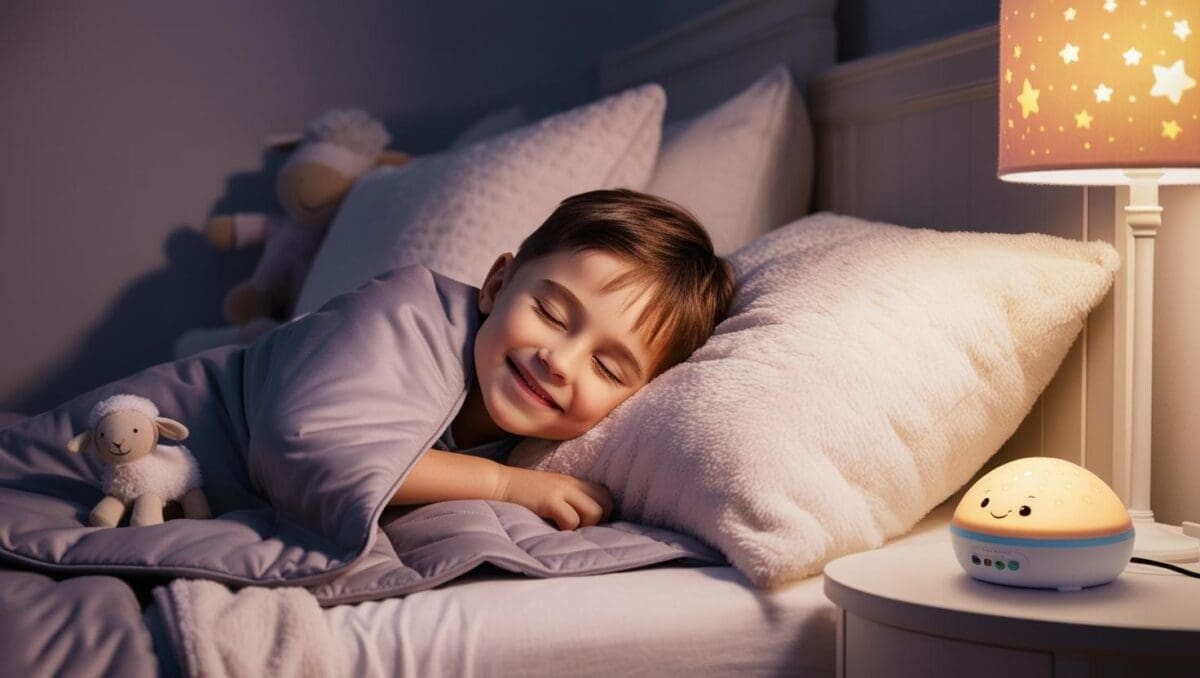
The New Year isn’t just a date on the calendar — it’s a gentle invitation to pause, reflect, and begin again.
For children, this season can become a soft doorway into emotional wellbeing. When life feels busy, a few simple New Year SEL crafts can slow everything down and give kids space to notice their feelings, remember meaningful moments, and imagine who they are becoming.
In counseling sessions, classrooms, and at my own kitchen table as a mother, I’ve seen how hands-on reflection activities turn “thinking about the year” into something kids can touch, color, and keep. These New Year reflection crafts for kids are designed to support nervous system regulation, stress reduction, and emotional intelligence through art, light, and mindful play.
Below you’ll find ten meaningful SEL New Year crafts that blend reflection with imagination. They work beautifully in therapy groups, school SEL activities, or cozy family evenings at home — and they fit naturally into your holiday routines without adding more pressure.
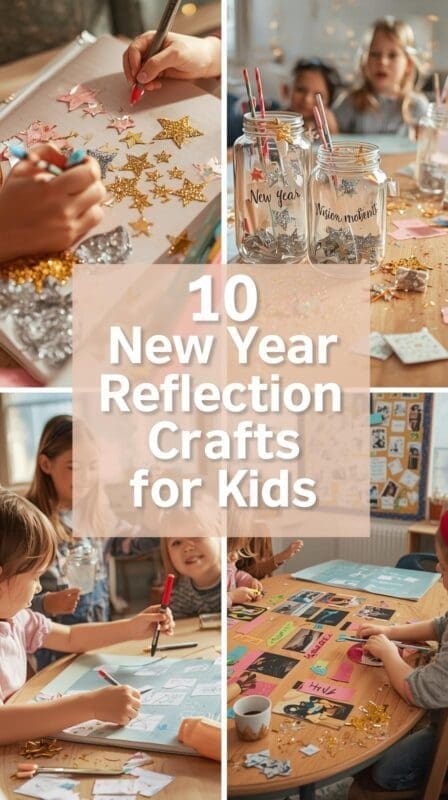
1. “My Year in Feelings” Wheel
Each month holds a different emotional story for a child — excitement, worry, boredom, pride, sadness, joy. The “Year in Feelings” wheel helps kids put those stories in order and see that all emotions belong, not just the comfortable ones.
This simple activity gently builds emotional intelligence and gives you a starting point for conversations about behavior regulation and coping skills.
How to make it
Draw or print a large circle and divide it into twelve slices, like a clock. Label each slice with a month of the year. Invite children to choose one main feeling for each month and represent it with a color, doodle, or small symbol.
January might be blue for “nervous and new,” June might be yellow for “happy and free,” and October might be orange for “busy and excited.” Younger kids can choose from a small feelings chart (happy, sad, mad, worried) while older kids can use more specific feeling words.
If a full year feels too much, create a “Four Seasons of Feelings” wheel with just winter, spring, summer, and fall. That version works beautifully for preschool SEL activities and shorter attention spans.
Counselor’s observation
As children color and talk, you often hear soft reflections: “That was when I started school,” or “That’s when our baby came.” These small comments open gentle doors into conversations about support, coping, and connection.
SEL connection
This craft supports emotional wellbeing by helping kids name and normalize their feelings. When they see all twelve slices together, it becomes a visual reminder that hard moments and joyful ones can sit side by side in a healthy nervous system.
2. “Gratitude Time Capsule”
Gratitude is a powerful mental health tool, but for kids it needs to feel concrete and playful. A New Year “Gratitude Time Capsule” turns gratitude into a treasure they get to rediscover in the future.
This activity fits beautifully into calm holiday routines at home or in the classroom, and it gently supports stress reduction and positive psychology.
How to make it
Provide each child with a small jar, sturdy envelope, or box. Let them decorate it with stickers, drawings, or washi tape so it feels special and personal.
Offer simple prompts on slips of paper and invite kids to write or draw their responses:
- “Something I learned this year…”
- “A person who helped me…”
- “A challenge I overcame…”
- “A moment when I felt proud…”
Once their slips are finished, children fold them and place them inside the container. Seal it together and label it “To open next New Year.”
Grounding moment
Before sealing the capsule, pause for a tiny mindfulness routine. Invite kids to place a hand on their heart and take three slow breaths: “Breathing in what I’m thankful for… breathing out what I’m ready to let go.” This supports nervous system regulation and helps their body remember the calm that comes with gratitude.
SEL connection
When children open their capsule a year later, they see how much emotional growth has happened. It’s a concrete way to show that even small steps and quiet moments matter for their mental wellness.
3. “Goal Garden” of Gentle Intentions
New Year’s resolutions can feel harsh or all-or-nothing, especially for sensitive kids. A “Goal Garden” focuses instead on gentle intentions — the kind that support emotional wellbeing and behavior regulation without pressure.
This craft is a lovely way to talk about intentional living, daily rituals, and the idea that change usually happens slowly, like plants growing over time.
How to make it
Cut out simple flower shapes and separate petals from colorful paper. On each petal, invite children to write or draw one intention for the new year. Encourage “inside goals” rather than performance goals:
- “I want to practice deep breaths when I feel mad.”
- “I will try to listen more carefully to my friends.”
- “I want to be kinder to myself when I make mistakes.”
Glue the petals around a flower center and attach each flower to a green stem. Arrange them on a bulletin board or poster titled “Our Growth Garden.” At home, you can place the garden near a family calendar or reading nook as a quiet reminder of your shared intentions.
Counselor tip
For kids who struggle with executive functioning skills, help them choose one very small, specific habit to “water” for a month at a time, instead of trying to change everything at once.
SEL connection
The Goal Garden reinforces positive psychology by highlighting strengths and values. Children learn that growth is a process, and that their choices, not their perfection, are what guide their emotional wellbeing.
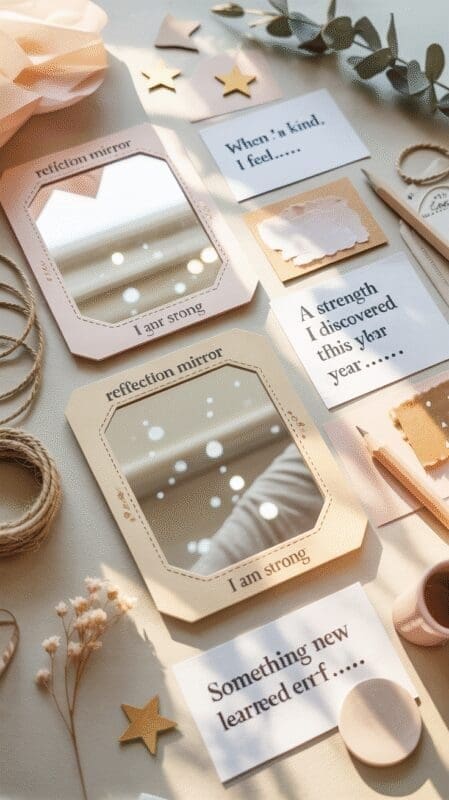
4. “Reflection Mirror” Collage
When children look into a mirror, they often spot what they don’t like first. The “Reflection Mirror” collage gently redirects their attention toward strengths, values, and inner qualities that support mental wellness.
It’s a beautiful activity for counseling sessions focused on anxiety support, self-esteem, or identity, and it fits well into broader SEL activities on self-awareness.
How to make it
Give each child a mirror-shaped outline on cardstock, or tape a small plastic mirror onto a paper frame. Around the “mirror,” invite them to write or collage words and images that reflect who they are becoming.
- “When I’m kind, I feel…”
- “Something new I learned about myself…”
- “A strength I discovered this year…”
You can offer a word bank with phrases like “curious,” “brave,” “gentle,” “creative,” or “good friend” to support kids who struggle to find positive language about themselves.
Sensory twist
Use metallic markers, silver foil, or glitter pens so their affirmations shine. The tactile, sparkly surface can be soothing for some children and naturally slows the pace into a mindfulness routine.
SEL connection
This craft strengthens emotional intelligence by helping kids recognize and name their inner strengths. Seeing their “mirror” each day can support behavior regulation, especially when they feel discouraged or overwhelmed.
5. “Intentions Lantern” for Calm Winter Evenings
Winter often brings darker days, busier schedules, and tired bodies. An “Intentions Lantern” can become a small grounding ritual in the evening — a way to settle the nervous system and bring a cozy home atmosphere into the New Year.
This craft pairs beautifully with mindful bedtime routines or a quiet check-in after busy holiday gatherings.
How to make it
Wrap tissue paper, parchment, or vellum around a glass jar or sturdy plastic cup. Secure it with tape or glue. On the outside, children write intention words for the year ahead: “Patience,” “Kindness,” “Rest,” “Bravery,” “Focus.”
Place an LED tea light inside and darken the room. Invite everyone to look at the glowing words together and take a few slow breaths. You can gently ask, “Which word do you want to carry with you into tomorrow?”
SEL connection
The lantern becomes a visual reminder of their values and hopes. Over time, lighting it can become a simple mindfulness routine that signals, “It’s time to slow down, breathe, and let the day soften.”
6. “Kindness Clock” Daily Ritual
The “Kindness Clock” turns empathy into a playful, predictable part of the day. Instead of waiting for “teachable moments” after conflict, you’re building small, proactive rituals of care.
This is a wonderful tool for classrooms and families who want to support behavior regulation and social skills without constant nagging.
How to make it
Give each child a paper clock template. Instead of numbers, write a small act of kindness in each space, such as:
- 1 o’clock – “Say thank you to someone who helped you.”
- 3 o’clock – “Offer to share or take turns.”
- 5 o’clock – “Give a genuine compliment.”
- 8 o’clock – “Help tidy a shared space.”
Children can decorate the clock face with stars, hearts, or small drawings of people they care about. In a group setting, you might create one large “class kindness clock” and move the hands together as acts of kindness are completed.
SEL connection
This craft supports emotional wellbeing by making kindness concrete, scheduled, and fun. It also strengthens executive functioning skills as children remember and carry out small tasks through the day.
Counselor’s note
Over time, many children begin to suggest their own kindness ideas or ask to repeat a favorite one. That’s a sign that internal motivation — not just external reward — is taking root.
7. “Letters to My Future Self”
This classic activity helps children connect their past, present, and future selves. It’s especially powerful for older kids who are starting to ask deeper questions about identity, choices, and change.
Writing to a future self is a gentle way to practice self-compassion, goal setting, and emotional awareness all at once.
How to make it
Offer simple stationery, folded paper booklets, or notecards. Invite children to write a letter to “Future Me,” including both honest reflections and hopeful encouragement:
- “Right now I’m proud of…”
- “This year was hard because…”
- “Next year, I hope you remember…”
- “If you’re having a hard day when you read this, I want you to know…”
For children who struggle with writing, you can help by scribing their words, using sentence starters, or encouraging comic-style drawings and speech bubbles.
Seal each letter in an envelope labeled “To open next New Year.” Keep them in a safe place so they truly feel like a special secret between the child and their future self.
SEL connection
When children read their letters later, they see that their worries, hopes, and strengths have changed — and that growth often happens quietly. This can be very grounding for anxious kids who feel “stuck.”
8. “Mindful Memory Mosaic”
Not every child finds it easy to talk about their year in words. The “Mindful Memory Mosaic” allows them to tell their story through color, images, and texture instead — which can feel safer for many kids.
This activity blends creativity with gentle mindfulness routines and works especially well for visual thinkers or children who become overwhelmed by direct questions.
How to make it
Provide magazines, printed photos, colored paper, and small scrap materials. Invite children to cut or tear out images that represent meaningful moments from the year: “When I learned something new,” “When I helped someone,” “When I felt brave,” “When I felt calm.”
They glue the pieces onto a sheet of paper, creating a mosaic of their year. Encourage them to pause, breathe, and silently remember each moment as they place it on the page.
Group variation
In a classroom or group setting, you can place all of the mosaics together in the shape of a heart, circle, or spiral on the wall. This creates a shared “memory gallery” that children can visit when they want connection or comfort.
SEL connection
The mosaic highlights strengths, courage, and connection rather than just achievement. It supports emotional wellbeing by reminding children that they are more than their grades, behaviors, or difficult days.
9. “Growth Mindset Fireworks”
Fireworks feel like celebration, which makes them a perfect metaphor for growth mindset. This craft helps kids see that mistakes and effort can lead to bright, beautiful changes in their lives.
It’s a wonderful way to talk about positive psychology and how the brain can grow through practice and patience.
How to make it
Give children dark-colored paper and bright chalk, oil pastels, or paint pens. Invite them to draw bursts of fireworks across the page. Inside each burst, they write or dictate a growth mindset statement, such as:
- “When I fail, I can try again.”
- “I can learn from mistakes.”
- “I am still worthy when something is hard.”
- “This year, I’ll be kinder to myself.”
You can play gentle music while they work to support nervous system regulation and keep the energy calm but playful.
SEL connection
These fireworks visually anchor the idea that effort, rest, and support all contribute to growth. Kids can hang their artwork somewhere visible as a reminder when school or friendships feel challenging.
10. “New Year Mind Jar”
The “New Year Mind Jar” is a classic grounding tool for children and adults. It gives a visual explanation of how thoughts and feelings can swirl — and how they can slowly settle when we pause and breathe.
It’s a beautiful way to support nervous system regulation and mindfulness routines all year long, not just in January.
How to make it
Fill a clear jar or plastic bottle with water, glitter, and a small amount of clear glue or glycerin. Let children choose glitter colors that match how they feel going into the New Year: calming blue, hopeful gold, shimmering silver.
Secure the lid tightly with glue or tape. Label the jar “My Mind in the New Year” and invite children to decorate the outside with calming words such as “Breathe,” “Pause,” or “I am safe.”
How to use it
When a child is overwhelmed, invite them to gently shake the jar and watch the glitter swirl. Explain that the glitter is like their thoughts and feelings when they are upset. As they watch the glitter slowly settle, practice slow breathing together and notice what happens in their body.
SEL connection
The Mind Jar supports emotional wellbeing and self-regulation by pairing a concrete image with a calming routine. Over time, many children begin to reach for the jar on their own — a beautiful sign of growing emotional intelligence.
Helpful tools for New Year SEL crafts
To make these projects easy to repeat, you can create a small “New Year Reflection Basket” with calming products and helpful tools. Include child-safe scissors, colored paper, metallic markers, glue sticks, stickers, small jars with lids, LED tea lights, and a few favorite washi tapes.
Keeping everything together in one place turns these crafts into simple daily rituals instead of one-time events. You can also tuck in a kids’ mindfulness journal or printable reflection pages so older children can extend the activities into quiet writing time.
In a therapy office or classroom, storing these therapeutic resources in a labeled basket — “Reflection Station” or “Calm Craft Corner” — helps children know exactly where to go when they need a gentle nervous system regulation break.
Creating a cozy reflection corner
If you have space, consider setting up a small reflection corner with a soft rug, a few cushions, a lantern, and a low shelf for finished crafts. This cozy home atmosphere signals safety and rest, not punishment.
Over time, kids begin to associate this spot with grounding practices, mindfulness routines, and supportive conversations — not just art supplies. It becomes a living reminder that emotional wellbeing matters in your home, classroom, or office.
Closing Reflection: Awareness, Gratitude, and Hope
As adults, we often rush into the New Year with long lists of goals and productivity habits. Children invite us into a different rhythm — one where growth is slow, playful, and rooted in emotional wellbeing rather than perfection.
These New Year reflection crafts are not about making something pretty for the fridge. They are about presence: noticing feelings, honoring memories, practicing gratitude, and choosing gentle intentions for the year ahead.
When we create space for mindful play and simple SEL activities, we show children that they don’t have to be “better” to be loved. They can be fully themselves — curious, messy, growing — and we will walk beside them as their nervous system learns new ways to feel safe, calm, and connected.
For More SEL Inspiration
If you’d like to keep exploring emotional regulation and reflection with children, you may also enjoy:
Fall SEL Activities for Preschoolers — cozy, play-based ideas that build emotional intelligence through stories, movement, and nature.
The Brain Is Like a Muscle: Emotional Regulation for Kids — a kid-friendly explanation of how the brain grows with practice, plus practical tools to support behavior regulation at home and school.
Q&A: New Year Crafts, Mindfulness, and Emotional Wellbeing
To support your planning as a parent, teacher, or counselor, here are some common questions about using New Year reflection crafts as gentle mental health tools.
1. How often should we do New Year reflection crafts?
You can do them as a single special session, or spread them out over a few weeks. What matters most for emotional wellbeing is building small, consistent routines — like a weekly reflection craft or a Sunday “calm corner” activity — rather than trying to do everything at once.
2. Can these activities really help with stress reduction and nervous system regulation?
Yes, especially when paired with slow breathing, soft voices, and unhurried time. The repetitive motions of cutting, coloring, gluing, and watching glitter settle can serve as grounding practices that help the nervous system move from “fight-or-flight” into a calmer state.
3. Which crafts are best for kids with high anxiety?
The Mind Jar, Intentions Lantern, and Mindful Memory Mosaic are often the most regulating for anxious kids. They offer clear visual focus and don’t require a lot of talking, which can lower pressure while still supporting emotional processing.
4. How can I adapt these for children with limited writing skills?
Use drawing, stickers, picture symbols, or dictate-and-draw instead of long sentences. You can scribe their words, offer simple sentence starters, or focus on colors and shapes that represent feelings. The goal is connection and emotional expression, not perfect spelling.
5. Can these crafts be part of a school-wide SEL plan?
Absolutely. Many teachers use the Goal Garden, Kindness Clock, or Memory Mosaic as shared hallway displays that anchor their SEL activities. They create a visual culture of emotional intelligence, kindness, and growth that all students can see.
6. How do New Year crafts fit into meaningful holiday routines at home?
You might choose one or two favorite crafts to repeat every year as gentle traditions — perhaps writing “Letters to My Future Self” on New Year’s Eve, or lighting the family Intentions Lantern on the first quiet evening of January. When repeated, these small rituals become part of your family’s story of connection and emotional wellbeing.
7. What if my child doesn’t want to talk while crafting?
That’s perfectly okay. Many children regulate best when they are allowed to work quietly. You can offer occasional soft questions, but there is no need to push conversation. Often, words come later — in the car, at bedtime, or during another gentle moment.
8. Are there specific mental health tools I should keep nearby?
A simple feelings chart, calm-down cards, or a few tactile fidgets can be very helpful. These therapeutic resources give children more options when big feelings appear during reflection, and they support behavior regulation alongside the crafts themselves.
9. How will I know if these activities are making a difference?
Look for small signs in daily life: a child pausing to take a breath before reacting, asking to use their Mind Jar, talking about a feeling with more precise words, or remembering an intention from their Goal Garden. These quiet shifts are often the clearest signs that nervous system regulation and emotional intelligence are growing.
10. What if our year has been very hard?
If your year has included grief, illness, or major stress, you can still use these crafts — just more gently. Focus on safety, comfort, and small moments of hope. It is completely okay to acknowledge the hard parts while also making room for gratitude, support, and tiny sparks of joy.

About the Author
Hi, I’m Eve, a former school counselor with a master’s degree in School Psychology and a passionate advocate for children and families navigating sensory challenges. As a mom of children with sensory sensitivities, I deeply understand the journey special-needs parents face, and I dedicate myself to researching and sharing practical solutions to help children thrive and feel comfortable in their bodies. My goal is also to empower counselors, therapists, and psychologists with creative strategies and supportive resources to enrich their everyday practice. When I’m not writing or exploring new therapeutic approaches, you’ll find me spending quality time with my family and continually seeking inspiration from everyday moments.