
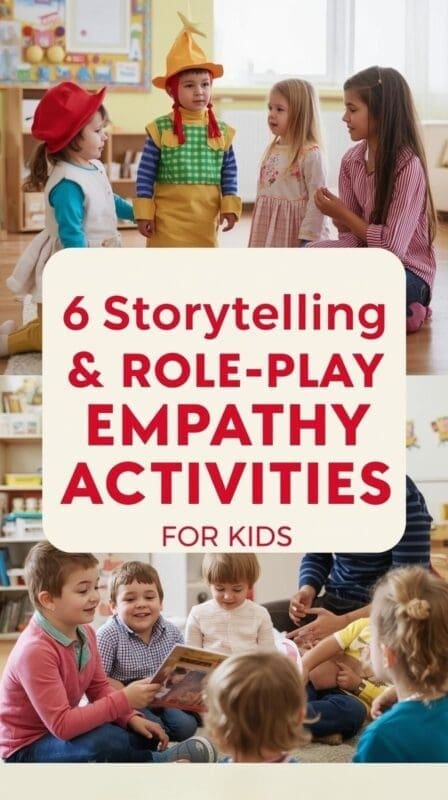
Children naturally love stories and play — and both are powerful ways to teach empathy. By stepping into someone else’s shoes through storytelling and role-play, kids practice perspective-taking, compassion, and emotional understanding in a way that feels engaging and fun.
Here are storytelling and role-play activities that help children build empathy at home, in classrooms, or in counseling sessions.
1. Puppet Role-Plays
How it works:
- Use puppets to act out everyday conflicts (sharing toys, waiting turns).
- Kids suggest what each puppet might feel and how to solve the problem kindly.
Why it works: Safe, playful distance makes it easier for kids to discuss emotions.
2. Storytime Reflection Questions
How it works:
- After reading a story, pause to ask:
- “How do you think this character felt?”
- “What could the other character have done to help?”
Why it works: Builds empathy by linking literature to real-life feelings.
3. Perspective-Taking Skits
How it works:
- Small groups create short skits showing a problem from two perspectives (e.g., the child who dropped the toy and the one who wanted it).
Why it works: Shows kids that situations can feel very different depending on the role.
4. “Feelings Switch” Game
How it works:
- One child acts out a situation (like losing a crayon).
- Another child jumps in and continues the story, switching perspectives.
Why it works: Encourages flexibility in seeing multiple viewpoints.
5. Draw the Character’s Feelings
How it works:
- After storytelling, ask kids to draw what the character felt inside (colors, shapes, faces).
Why it works: Makes invisible emotions more concrete and creative.
6. Counselor Role-Play
How it works:
- One child pretends to be a “mini counselor.”
- The “client” shares a pretend problem.
- The counselor practices listening and suggesting kind responses.
Why it works: Teaches active listening and supportive communication.
Final Thoughts
Stories and role-play activities give children the chance to practice empathy in action. By imagining what characters feel, solving problems through puppets, and acting out perspectives, kids learn that every person’s experience matters.
For more activities, explore my guides on Empathy Activities for Kids and Emotional Regulation Activities for Kids.

About the Author
Hi, I’m Eve, a former school counselor with a master’s degree in School Psychology and a passionate advocate for children and families navigating sensory challenges. As a mom of children with sensory sensitivities, I deeply understand the journey special-needs parents face, and I dedicate myself to researching and sharing practical solutions to help children thrive and feel comfortable in their bodies. My goal is also to empower counselors, therapists, and psychologists with creative strategies and supportive resources to enrich their everyday practice. When I’m not writing or exploring new therapeutic approaches, you’ll find me spending quality time with my family and continually seeking inspiration from everyday moments.