Your child’s eyes light up as they tear open the wrapping paper — it’s more than a toy; it’s a bridge to calm, confidence, and curiosity. You can almost hear the rustle of paper and the spark of joy in their laughter — that full-body, contagious kind of joy that fills the whole room.
For parents of kids with ADHD, these moments matter deeply. A gift that fits their rhythm isn’t just entertaining; it can help them focus, self-regulate, and feel seen for who they truly are. When you find something that channels energy rather than fights against it, playtime transforms into progress.
As both a parent and a counselor, I’ve learned that the best ADHD gifts blend fun with function. They engage the senses, encourage movement, and nurture the nervous system — all while letting your child explore freely and safely.
This guide shares the most thoughtful gifts for kids with ADHD between ages 3–6 — toys that calm busy minds, fuel creativity, and support focus in joyful, developmentally appropriate ways.
This article contains affiliate links. If you make a purchase through these links, I may earn a small commission at no extra cost to you. Your support helps me keep creating helpful content. Thank you for supporting eveyou.eu!

11. Sensory Toys for Emotional Regulation
Their small hands dive into the cool, grainy texture of kinetic sand. Shoulders drop. Breathing slows. The room feels quieter, softer — as if time itself has taken a deep breath.
For children with ADHD, sensory play isn’t a luxury; it’s a regulatory tool. Tactile input (touch and texture) helps calm the nervous system, decrease overstimulation, and anchor attention back to the present. When their senses are balanced, emotions often follow.
Top Sensory-Friendly Gift Ideas:
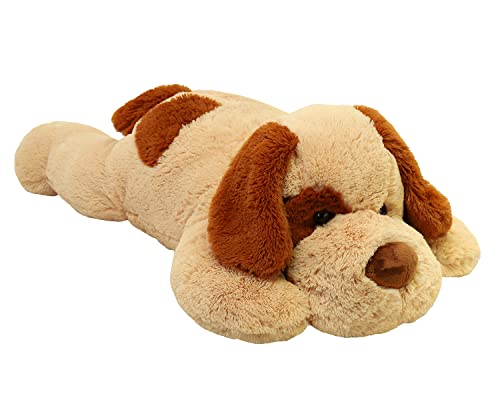
- Weighted stuffed animals: Gentle pressure provides proprioceptive input that soothes and organizes the brain.
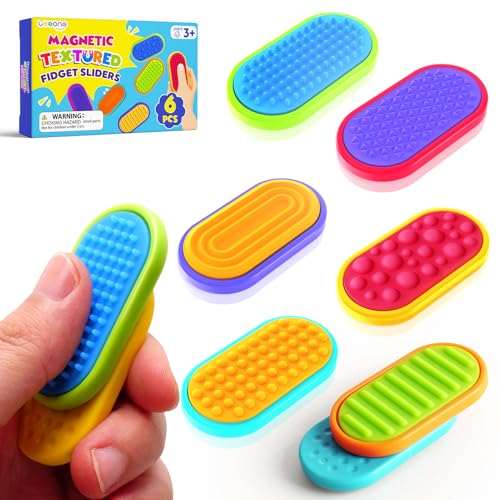
- Fidget tools (spinners, poppers, or stress balls): Perfect for redirecting restless energy in a focused way.
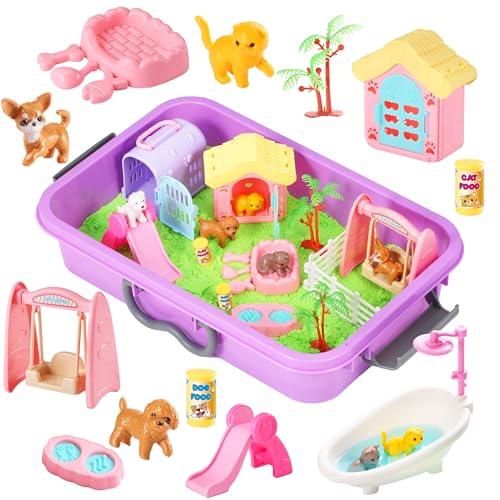
- Kinetic sand or Play-Doh: Builds fine motor skills while offering sensory feedback that eases anxiety.
- Water beads or sensory bins: Immersive play that quiets mental noise and increases attention span.
How to use them:
Create a “calm corner” at home — a small basket with sensory toys, soft lighting, and quiet music. Encourage your child to visit this space before transitions or after overstimulating activities.
Parent reflection: Even five minutes of calm sensory play can shift the energy of an entire afternoon.

Transitional Reflection
Once sensory needs are met, movement becomes easier to manage. Think of it as helping your child’s body reset — their muscles release tension so their mind can focus again.
2. Movement & Energy-Boosting Gifts
The living room turns into a playground of motion — bouncing, balancing, climbing. Your child’s laughter fills the air as energy finds its rhythm instead of chaos.
Kids with ADHD often store kinetic energy that needs release. Movement toys channel that energy in structured, safe, and joyful ways. Physical play boosts dopamine and serotonin, helping kids regulate mood and focus better afterward.
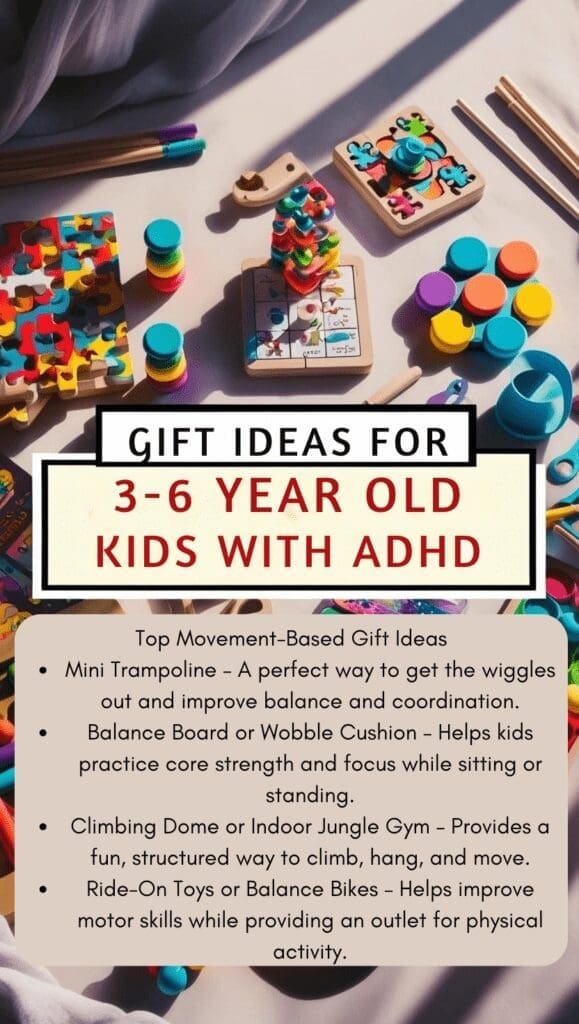
Top Movement-Based Gift Ideas:
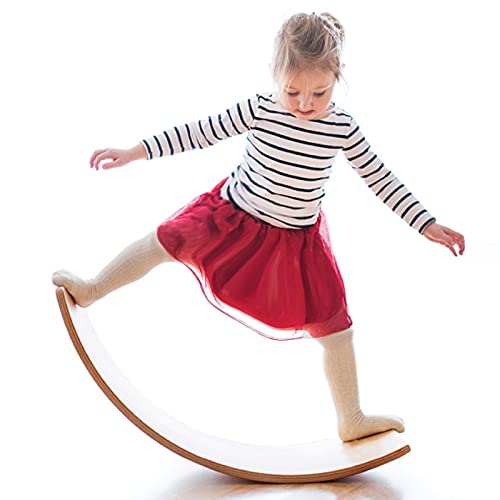
- Mini trampoline: Excellent for vestibular stimulation and core strength. Jumping provides deep sensory input that calms the body.
- Balance board or wobble cushion: Strengthens coordination while teaching stillness through subtle movement.
- Climbing dome or indoor jungle gym: Builds body awareness and confidence in safe, contained ways.
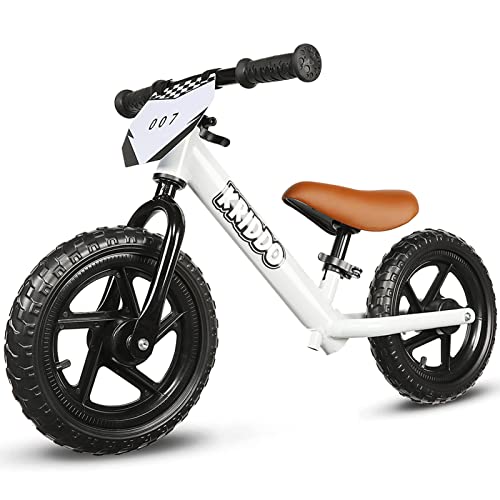
- Ride-on toys or balance bikes: Develop motor planning and give independence a healthy outlet.
How to use them:
At home, set up an “energy zone.” Before quiet play or homework, spend 10–15 minutes jumping, balancing, or pedaling. It’s not a reward — it’s regulation.
Therapist insight: Physical play primes the brain for focus by increasing oxygen flow and dopamine release.


Transitional Reflection
Movement is the language of ADHD. Once kids feel safe to move, they can begin to focus. Stillness doesn’t always come from stopping — sometimes it comes from releasing what’s built up inside.
3. Focus-Enhancing & Quiet Time Gifts
The hum of concentration fills the room. Small fingers fit magnetic tiles together, brows furrowed, a spark of pride in every click. For a child with ADHD, even short bursts of sustained focus are victories worth celebrating.
These focus toys for ADHD strengthen attention, working memory, and frustration tolerance in gentle, play-based ways.
Top Focus-Friendly Gift Ideas:
- Magnetic building blocks: Encourage visual-spatial skills and persistence.
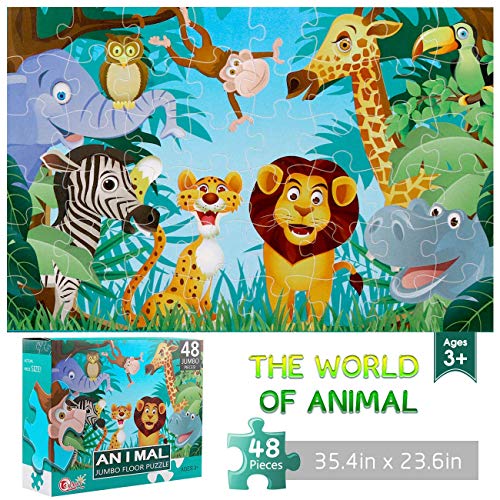
- Large-piece puzzles: Provide structured challenge without overwhelm.
- Interactive storybooks or audiobooks: Engage imagination while allowing movement or rest.
- Short board games (Candy Land, Memory): Practice turn-taking and patience in a low-pressure way.


How to use them:
Set up a “focus nook” — a cozy rug or bean bag, soft lighting, and a small timer. Encourage independent play by starting with five minutes and gradually increasing.
Reflection: Attention is a muscle — play strengthens it best when children feel curious, not pressured.
Transitional Reflection
Once your child learns to enjoy moments of calm focus, creativity naturally blooms. Their imagination — once scattered — finds form and expression through art, sound, and story.
4. Creative Outlets for Expression
Paint-stained fingers, rhythmic drumming, giggles that echo down the hall — creativity is pure freedom for kids with ADHD. When energy meets imagination, confidence grows.
Creative play activates multiple brain regions at once, supporting emotional regulation and cognitive flexibility. It gives kids a safe outlet for self-expression when words fall short.
Top Creative Gift Ideas:
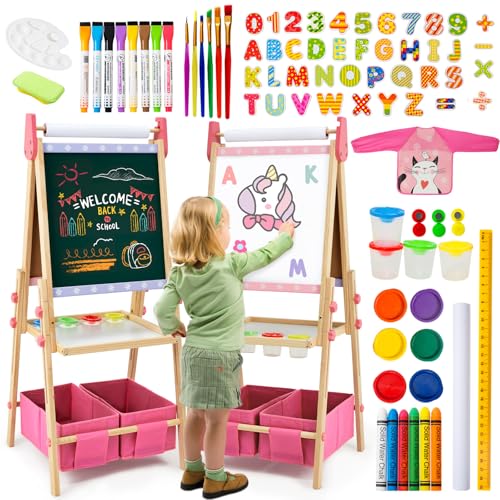
- Washable paints and art supplies: Freedom to explore color and movement without perfectionism.
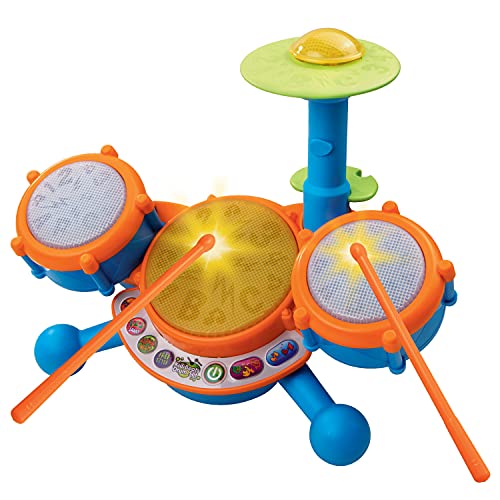
- Musical instruments (bongo drums, xylophone, mini keyboard): Transform restlessness into rhythm.
- Pretend-play kits (doctor sets, dress-up costumes, play kitchen): Encourage empathy, storytelling, and social skills.
How to use them:
Create a “yes space” for art and pretend play — somewhere mess and noise are welcome. Let your child mix, bang, and imagine.
Parent insight: When children feel free to create, they’re not just expressing themselves — they’re practicing emotional self-trust.

Transitional Reflection
After big energy and big creativity, the body craves calm. Building a gentle bridge from excitement to rest helps children close the loop — so the day ends peacefully instead of abruptly.
5. Sleep & Relaxation Gifts
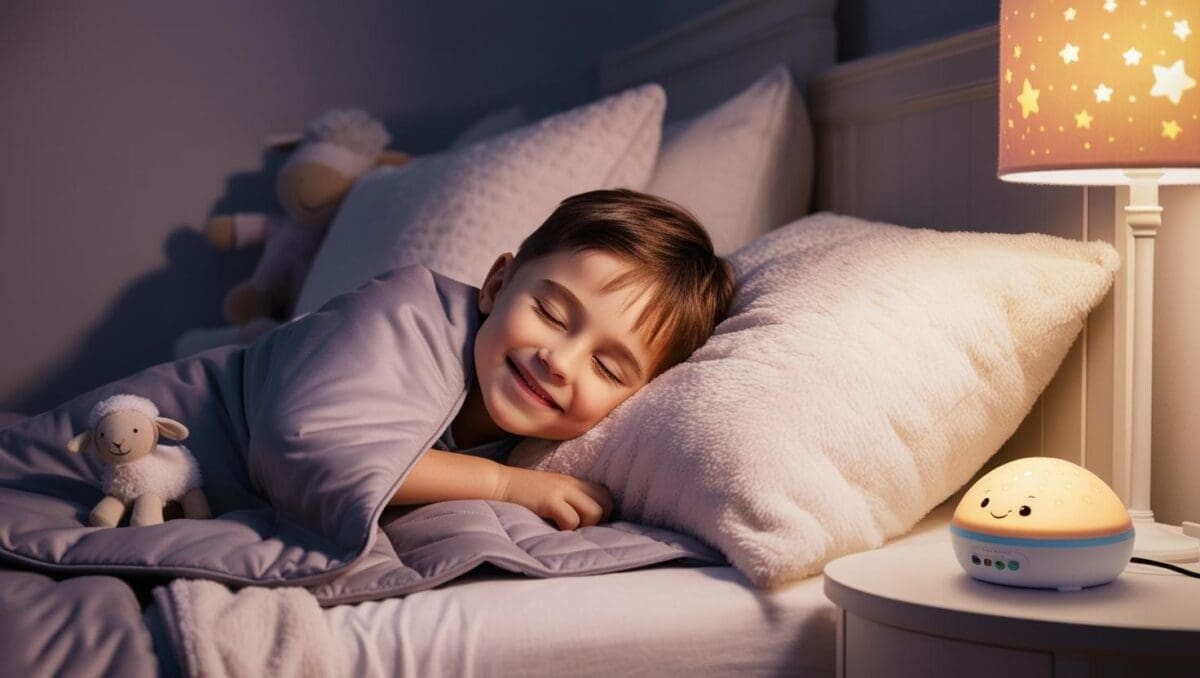
The lights dim, soft music hums, a weighted blanket rests gently across small shoulders. You watch your child’s breathing slow, their restlessness fading into calm.
Sleep struggles are common for children with ADHD. Their nervous systems take longer to wind down, making transitions to rest difficult. The right bedtime tools can help signal safety and relaxation.
Top Sleep-Enhancing Gift Ideas:
- Glow-in-the-dark stars or nightlight projector: Provides gentle visual focus to ease anxiety.
- White noise machine or calming music player: Masks distractions, supporting deeper sleep.
- Cozy weighted blanket: Delivers deep pressure stimulation that mimics a comforting hug.


How to use them:
Build a nightly “wind-down basket” — the same soft items each evening: plush toy, blanket, nightlight. Consistency helps the brain associate these cues with rest.
Reflection: Rest isn’t just physical recovery — it’s emotional repair. A well-rested child can self-regulate, connect, and learn with greater ease.
The Science Behind ADHD Play
When a child with ADHD moves, touches, or creates, something powerful happens inside their brain. Movement and sensory input increase dopamine — the neurotransmitter linked to focus, motivation, and joy.
ADHD brains don’t have a deficit of attention; they have a deficit of regulation. Play helps bridge that gap. Through sensory-motor integration, children learn to coordinate their bodies and emotions simultaneously.
Therapist insight: “When a child moves, touches, and creates, their brain releases dopamine — the chemical that supports motivation and attention.”
Hands-on, multisensory play strengthens neural pathways responsible for executive function — planning, organization, and impulse control. Simply put, play is the most natural form of therapy for the ADHD brain.
Choosing the Right Gift
You don’t have to get it perfect. The best gifts aren’t the trendiest; they’re the ones that meet your child where they are — curious, active, or seeking calm.
Key things to consider:
✅ Engagement: Does it hold their interest long enough to encourage persistence?
✅ Movement: Can it safely channel their natural energy?
✅ Sensory support: Does it soothe or stimulate appropriately?
✅ Skill-building: Will it strengthen focus, creativity, or emotional awareness?
Parent reflection:
For my son, the weighted plush became a bedtime comfort that quieted his racing mind. For another family, it might be the balance bike that transforms morning chaos into joyful movement. The right toy is one that brings relief — to both of you.
How to Create a Supportive Play Space
Instead of scattering toys across the house, create intentional “zones” that match different regulation needs.
- Movement Corner: A safe area for jumping, climbing, or balancing.
- Quiet Nook: Soft lighting, weighted plushies, sensory toys.
- Creativity Table: Art supplies, puzzles, or building blocks ready to go.
These spaces teach children that their needs have a place — movement, focus, and rest are all welcome parts of who they are.
Therapist tip: Labeling zones visually (with colors or pictures) helps young kids learn to choose what they need independently — a powerful early self-regulation skill.
Final Thoughts
At the end of the day, the best gifts don’t come from ads or trends — they come from love and understanding. You know your child’s needs better than anyone. Trust that.
Whether it’s a weighted blanket that helps them unwind or a trampoline that lets them soar, these gifts aren’t just toys — they’re bridges to peace, focus, and joy. Every moment of calm play, every spark of laughter, is a reminder: your child’s energy isn’t a flaw to fix; it’s a strength to guide.

About the Author
Hi, I’m Eve, a former school counselor with a master’s degree in School Psychology and a passionate advocate for children and families navigating sensory challenges. As a mom of children with sensory sensitivities, I deeply understand the journey special-needs parents face, and I dedicate myself to researching and sharing practical solutions to help children thrive and feel comfortable in their bodies. My goal is also to empower counselors, therapists, and psychologists with creative strategies and supportive resources to enrich their everyday practice. When I’m not writing or exploring new therapeutic approaches, you’ll find me spending quality time with my family and continually seeking inspiration from everyday moments.