
This post may contain affiliate links, including Amazon Associate links. If you make a purchase through these links, I may earn a small commission at no extra cost to you.
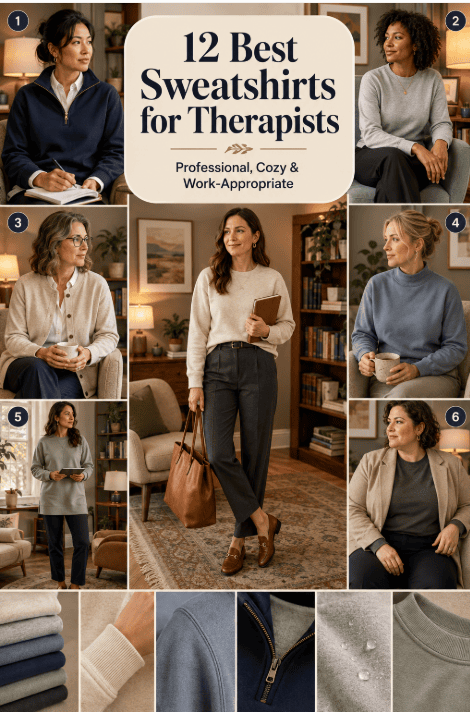
Some therapy offices are inexplicably cold. Others feel comfortable in the morning but become chilly by the final session of the day. Add a long schedule, paperwork, school hallways, floor-based activities, or hours spent sitting in one position, and a soft sweatshirt starts to feel far more appealing than a stiff blouse or structured jacket.
The challenge is finding a sweatshirt that feels cozy without looking like loungewear.
A sweatshirt for therapy work needs to do more than look attractive in a product photo. It should maintain its shape while you are seated, allow comfortable movement, layer without becoming bulky, and remain appropriate for the clients and setting in which you work.
A private practice therapist may want a structured neutral crewneck that resembles a relaxed sweater. A school counselor may need something washable enough for busy student-facing days. A child therapist may prioritize movement and easy care, while a telehealth therapist may care most about the neckline and how the color appears on camera.
The best sweatshirt is therefore not one universal style. It is the one that suits your particular workday.
In this guide, “best” means selected according to practical criteria: professional appearance, comfort, washability, versatility, fabric quality, and suitability for different counseling environments.
Who This Guide Is For
This guide is designed for:
- Therapists working in private practice
- School counselors
- Psychologists and social workers
- Child and play therapists
- Counseling interns
- Community-based helping professionals
- Telehealth therapists
- Anyone building a comfortable but professional therapist wardrobe
The sweatshirt styles below are categories rather than claims about one specific brand. That allows you to choose according to your budget, workplace dress code, climate, and personal style.
Quick Picks by Work Setting
Need a quick place to begin? These are the most useful sweatshirt styles for common therapy settings.
Best for private practice: A structured neutral crewneck with clean seams and substantial fabric.

Best for school counselors: A washable classic crewneck or quarter-zip that works with chinos and supportive shoes.

Best for child therapists: A durable French-terry sweatshirt with practical sleeves and easy-care fabric.

Best for telehealth: A polished quarter-zip or mock-neck sweatshirt that frames the face neatly on camera.
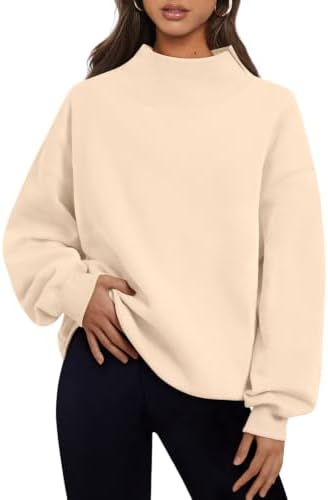
Best for very cold offices: A fleece-lined crewneck that leaves enough room for a lightweight base layer.

Best for flexible layering: A cardigan-style sweatshirt that can be removed easily between sessions.

Best for casual Fridays: A subtle counselor-themed crewneck paired with structured trousers or dark denim.

Best for a small capsule wardrobe: A plain oatmeal, navy, charcoal, or muted green crewneck that coordinates with several bottoms.
What Makes a Sweatshirt Work-Appropriate?
A higher price does not automatically make a sweatshirt suitable for professional use. The details matter more than the label.
Fabric That Holds Its Shape
Look for medium-weight cotton blends, French terry, smooth fleece, ponte-inspired sweatshirt fabric, or tightly knit materials.
Very thin sweatshirts often collapse around the neckline, cling to the body, or lose their shape after washing. Extremely thick fleece may feel warm but can become bulky beneath a coat or blazer.
A useful middle-weight sweatshirt should drape cleanly, recover after stretching, and remain comfortable while you sit.
A Neat Neckline
The neckline is particularly important because it remains close to the face during conversations and telehealth sessions.
A traditional crewneck, shallow V-neck, mock neck, or structured quarter-zip usually looks more polished than a wide, stretched, or deeply scooped neckline.
Check the collar after washing. Ribbing that quickly becomes loose can make the entire sweatshirt appear worn.
Appropriate Sleeve Length
Sleeves should allow comfortable movement without constantly covering your hands.
This is especially important for school counselors and child therapists who use art materials, write with students, move objects, or participate in activities. A cuff that stays in place can be more practical than an excessively long, loose sleeve.
Quiet, Minimal Hardware
Large zippers, metal pulls, decorative toggles, and loose drawstrings can create sound or movement during quiet sessions.
This does not mean every zipper should be avoided. A simple quarter-zip can be an excellent professional layer. The hardware should simply feel discreet rather than sporty or distracting.
Washability
A beautiful sweatshirt is not practical if you are afraid to wash it.
Professionals working in schools, community settings, or child therapy may need clothing that tolerates frequent cleaning. Check whether the fabric requires hand washing, shrinks easily, or attracts lint.
A simpler washable sweatshirt may serve you better than a delicate premium option.
Fit While Seated
Always consider how the sweatshirt looks and feels when you sit down.
Does the neckline shift? Does the waistband rise sharply? Do the sleeves bunch under your arms? Does the fabric create excessive volume around your waist?
Therapy work often involves extended sitting, so the seated fit matters more than how the sweatshirt looks for a few seconds in front of a mirror.
For a deeper look at the connection between clothing and professional presence, read how therapist clothing affects client perception.
1. Structured Neutral Crewneck
Best for: Private practice and general client-facing work

A structured crewneck is the most versatile choice for therapists who want sweatshirt comfort without an obviously athletic appearance.
Look for a smooth outer finish, defined shoulder seams, a reinforced neckline, and fabric substantial enough to maintain its silhouette. Oatmeal, navy, charcoal, muted brown, deep green, cream, and dusty blue are easy to combine with professional wardrobe pieces.
Wear it with tailored ankle trousers, a midi skirt, loafers, or clean minimal sneakers. A small front tuck can create shape when the sweatshirt is slightly relaxed.
The main trade-off is that highly structured fabric may feel less soft than traditional fleece. For a lower-cost alternative, choose a plain midweight crewneck and style it with polished trousers rather than buying a premium “workwear” sweatshirt.
2. Lightweight French-Terry Sweatshirt
Best for: Mildly cool offices and year-round layering
French terry has small loops on the inside rather than a thick brushed fleece lining. It is usually lighter, more breathable, and easier to layer.
This makes it useful for therapists who feel chilly while seated but do not need heavy winter warmth. It also works well beneath relaxed blazers, trench coats, and lightweight jackets.
Choose a French-terry sweatshirt with a neat neckline and minimal branding. Pair it with straight-leg trousers or chinos for a simple everyday outfit.
The limitation is that lightweight fabric can show wrinkles more easily. If you want more structure, look for a cotton blend rather than a very soft, thin version.
3. Polished Quarter-Zip
Best for: Telehealth, consultations, and changing temperatures
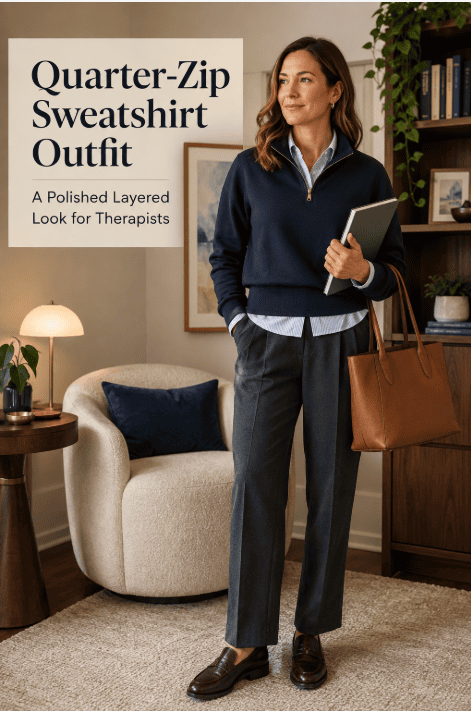
A quarter-zip offers more visual structure than a standard sweatshirt. The collar frames the face, while the zipper allows you to adjust the neckline throughout the day.
For professional use, choose minimal branding, a simple zipper pull, and fabric that lies smoothly around the shoulders. Avoid styles that look strongly connected to athletic uniforms unless that suits your workplace culture.
A navy or charcoal quarter-zip looks polished with camel or black trousers. A cream, muted green, or soft blue option can create a warmer, more approachable appearance.
The main drawback is that some zippers feel cold against the skin or make noise when moved. Check the hardware and inner zipper guard before buying.
4. Fleece-Lined Crewneck
Best for: Genuinely cold therapy offices
When your office is cold enough that a thin layer does not help, a fleece-lined crewneck can be worthwhile.
Choose a style with warmth concentrated in the fabric rather than excessive volume in the sleeves and waistband. A slightly relaxed fit leaves space for a cotton base layer without creating a bulky silhouette.
Dark neutrals often look more refined in thick fleece because shadows and folds are less visible. Pair the sweatshirt with structured trousers and streamlined shoes to balance the cozy texture.
Fleece can trap heat once the room warms up, so it may not be ideal for therapists who move frequently between spaces. A removable cardigan-style layer may be more practical in that situation.
5. Cardigan-Style Sweatshirt
Best for: Therapists who need an easy removable layer
A sweatshirt cardigan combines the softness of casual clothing with the practicality of a cardigan or light jacket.
Look for clean edges, minimal ribbing, discreet pockets, and simple buttons or a quiet zipper. Avoid overly athletic detailing if you plan to wear it during client sessions.
Layer it over a plain T-shirt, lightweight blouse, fitted mock neck, or simple shell. It works with trousers, dark jeans where permitted, and midi skirts.
Its greatest advantage is flexibility. You can remove it without pulling clothing over your head or disturbing your hair.
The trade-off is that open-front styles can sometimes look less structured. A version with a defined collar, hem, or front closure tends to feel more professional.
6. Shorter Sweatshirt for High-Rise Trousers
Best for: Petite professionals and balanced proportions
A shorter sweatshirt can reduce the excess fabric that sometimes gathers around the hips when you wear traditional-length crewnecks.
The ideal style ends near the top of a high-rise waistband without exposing the stomach. Pair it with pleated trousers, wide-leg pants, or a high-waisted skirt.
Look for a firm waistband that stays flat rather than curling upward. A substantial fabric also helps the sweatshirt fall cleanly.
This silhouette may not suit professionals who prefer more coverage while sitting or working on the floor. In that case, a regular-length crewneck with a small front tuck can create a similar proportion.
7. Longline Sweatshirt
Best for: Floor work and professionals who prefer additional coverage
A longline sweatshirt can be useful for child therapists, school counselors, and anyone who frequently sits on the floor or moves between different working positions.
Choose a style designed as a longline top rather than simply purchasing a standard sweatshirt several sizes too large. Side slits, a slightly longer back, clean seams, and a stable neckline can create a more intentional shape.
Pair it with ponte trousers, slim structured pants, or straight-leg bottoms. Thin leggings may make the outfit feel more like loungewear unless your workplace is extremely casual.
The limitation is that long tops can shorten the visual line of the legs. A tonal outfit or slightly higher-waisted trousers can help create balance.
8. Subtle Counselor Graphic Crewneck
Best for: School events, casual Fridays, and child-focused practices
A counseling-themed sweatshirt can feel friendly and community-oriented, but the message deserves careful consideration.
Small embroidery, understated typography, a simple mental-health symbol, or a school-specific design is often easier to wear than a large slogan.
Avoid messages that minimize distress, make jokes about diagnoses, assume how clients should feel, or position the wearer as someone who can “fix” every problem. Even well-intentioned wording may not feel right for every client.
Pair a graphic sweatshirt with neutral chinos, tailored trousers, or dark clean denim. Let the design remain the only casual focal point.
A plain crewneck is the more versatile alternative if you are unsure whether a message-based design suits your setting.
9. Smooth Crewneck for Blazer Layering
Best for: Therapists moving between casual sessions and formal meetings
A sweatshirt under a relaxed blazer can create a modern outfit that feels both comfortable and considered.
The sweatshirt should be lightweight enough to sit smoothly beneath the jacket. Look for flat seams, moderate sleeves, and minimal ribbing around the shoulders.
Pair the combination with straight-leg trousers, dark denim if appropriate, or a simple midi skirt. Gray beneath navy, cream beneath camel, and black beneath a subtle checked blazer are reliable combinations.
This style is useful when you have team meetings, consultations, presentations, or first appointments within an otherwise relaxed workday.
Avoid thick fleece or oversized sleeves beneath fitted blazers. If layering feels bulky, a sweatshirt-inspired knit top may be the better purchase.
10. Polished Sweatshirt Set for Telehealth
Best for: Work-from-home therapy days
A coordinated sweatshirt set can make home-based work feel easy, but obvious tracksuits may appear overly casual on camera.
Look for matching or tonal separates with clean lines: a structured crewneck paired with straight or wide-leg pull-on trousers rather than cuffed athletic joggers.
The top matters most visually. Choose a neckline that sits neatly and a color that contrasts gently with your chair and background. Navy, muted burgundy, forest green, soft blue, and warm oatmeal often photograph well.
Remember to check the outfit while seated and under your usual lighting. Some fabrics reflect light or reveal texture differently on camera.
A lower-cost alternative is to combine a sweatshirt you already own with polished pull-on trousers in a similar color.
11. Washable Sweatshirt for Child Therapists
Best for: Play therapy, creative activities, and frequent cleaning
Child therapists often need clothing that allows movement and can tolerate art materials, sensory activities, and floor sitting.
Choose a washable cotton blend with practical cuffs, a stable neckline, and enough room across the shoulders. Mid-tone colors may conceal small marks better than pure white or very dark fabrics that show lint.
Avoid decorative beads, loose ties, delicate embroidery, and long sleeves that need constant adjustment.
The ideal sweatshirt should allow you to participate without worrying about damaging your clothes. An inexpensive, durable crewneck may be more useful than a premium fabric that requires careful maintenance.
Style it with washable chinos, ponte trousers, or comfortable structured pants rather than athletic leggings to preserve a professional overall impression.
12. School-Friendly Crewneck or Quarter-Zip
Best for: School counselors and student-facing professionals
School counselors need clothing that can move between individual sessions, classroom lessons, hallways, staff meetings, and unexpected tasks.
A classic crewneck or quarter-zip works well because it offers warmth without requiring complicated styling. Choose a school-appropriate color, washable fabric, and a fit that allows easy movement.
Pair it with chinos, straight-leg trousers, dark jeans when permitted, loafers, or clean supportive sneakers. School-branded sweatshirts can work especially well on spirit days.
Check that drawstrings, sleeves, and zippers do not interfere with writing, activities, or materials.
For more setting-specific ideas, read how to create a cozy yet professional wardrobe for school counselors.
When a Sweatshirt May Not Be the Best Choice
A sweatshirt can be useful, but it is not necessary for every workplace or occasion.
A lightweight cardigan may be better when you need to remove layers frequently. A fine-knit sweater can feel more appropriate in highly formal private practices. A blazer may suit interviews, presentations, legal meetings, or formal consultations.
In warm climates, a sweatshirt may be too heavy to justify purchasing. A long-sleeved knit top or cotton overshirt can provide a similar visual effect with less warmth.
You may also decide that a message-based counselor sweatshirt is unnecessary. A plain neutral layer usually offers more versatility and is less likely to distract from client interactions.
The goal is not to own every style in this guide. It is to identify the one or two categories that solve a real problem in your wardrobe.
A Simple Therapist Sweatshirt Capsule
You do not need a large collection to create variety.
A small capsule could include:
- One structured neutral crewneck
- One lighter French-terry sweatshirt
- One quarter-zip or cardigan-style layer
- Black or charcoal trousers
- Camel, olive, or brown trousers
- One midi skirt
- Dark straight-leg jeans
- Loafers or ankle boots
- Clean supportive sneakers
- One collared shirt
- One relaxed blazer
These pieces can create numerous outfits without requiring a separate sweatshirt for every day of the week.
For more wardrobe planning, explore the Eveyou guide to building a professional and feminine capsule wardrobe for psychologists and counselors.
Final Thoughts
The best sweatshirt for a therapist is not necessarily the trendiest, thickest, or most expensive option.
It is the sweatshirt that fits your setting, remains comfortable through a long day, coordinates with the clothing you already own, and helps you feel present rather than preoccupied with what you are wearing.
For many therapists, a structured neutral crewneck will be the most versatile choice. School counselors may get more use from a washable classic style, while child therapists may prioritize movement and easy care. Telehealth professionals may prefer a quarter-zip that frames the face neatly on camera.
Start with the problem you need to solve. Is your office cold? Do you need a washable layer? Are you trying to look polished without wearing a blazer every day?
Once you know the answer, choosing the right sweatshirt becomes much simpler.
For additional styling inspiration, visit professional outfit ideas for therapists and the broader style guide for mental health professionals.

About the Author
Hi, I’m Eve, a former school counselor with a master’s degree in School Psychology and a passionate advocate for children and families navigating sensory challenges. As a mom of children with sensory sensitivities, I deeply understand the journey special-needs parents face, and I dedicate myself to researching and sharing practical solutions to help children thrive and feel comfortable in their bodies. My goal is also to empower counselors, therapists, and psychologists with creative strategies and supportive resources to enrich their everyday practice. When I’m not writing or exploring new therapeutic approaches, you’ll find me spending quality time with my family and continually seeking inspiration from everyday moments.

