
This post may contain affiliate links, including Amazon Associate links. If you make a purchase through these links, I may earn a small commission at no extra cost to you.
A beautifully organized child’s room can unravel remarkably quickly.
The carefully folded clothes migrate to the floor. The backpack disappears beneath a blanket. One missing shoe delays the entire morning, and the labeled toy containers gradually become a complicated puzzle that nobody wants to solve.
For a child with ADHD, this does not necessarily mean they are careless, lazy, or unwilling to cooperate. ADHD may involve difficulty organizing or finishing tasks, remembering everyday routines, resisting distractions, and keeping track of belongings. Children can experience these challenges in very different ways, so a system that works beautifully for one family may feel impossible for another.
The goal of ADHD-friendly kids’ room organization is not to create a room that remains Pinterest-perfect every day. It is to make ordinary tasks easier to begin, understand, and complete.
That may mean placing the laundry hamper where clothes actually land rather than where it looks most attractive. It may mean using one open basket for building toys instead of six small containers. It may mean keeping school supplies visible, while storing visually busy collections behind closed doors.
The best organization system is not the most detailed one. It is the one your child can use during a rushed morning, an exhausted evening, or a difficult transition.
These 17 practical ideas will help you create a supportive room with fewer steps, clearer routines, and realistic expectations.

Can Room Organization Help a Child With ADHD?
An organized environment cannot treat or cure ADHD. It can, however, reduce some of the practical demands surrounding everyday activities.
The American Academy of Pediatrics recommends helping a child organize their room at a level they can realistically manage. It describes routines, lists, predictable places for belongings, and limited choices as forms of temporary support or “scaffolding” that can be adjusted as the child develops greater independence.
The CDC similarly suggests creating routines, keeping schoolbags, clothing, and toys in predictable places, offering only a few choices, using brief directions, and breaking complicated tasks into shorter steps.
In practical room design, this often means:
- Fewer decisions
- Fewer physical steps
- Fewer categories
- More visible cues
- Predictable locations
- Shorter cleanup sequences
- Adult support where it is still needed
It is also important to remember that not every organizational challenge indicates ADHD. Sleep problems, anxiety, learning difficulties, and other concerns can sometimes resemble aspects of ADHD. Parents concerned about a child’s attention, behavior, or daily functioning should discuss those concerns with a qualified healthcare provider.
Start With Friction, Not Storage Containers
Before purchasing bins, shelves, labels, or a new desk, spend several days observing the room.
Where do clothes usually land?
Which belongings are repeatedly lost?
At what point does cleanup stop?
Which cupboard is almost never opened?
Does your child forget about toys they cannot see, or become overwhelmed when everything is visible?
The answers will reveal more than an attractive room inspiration photo ever could.
Choose one recurring difficulty to solve first. Perhaps school mornings are delayed by missing socks. Perhaps art supplies cover the desk, leaving no room for homework. Perhaps the toy system has so many categories that cleanup becomes a negotiation.
Changing one high-friction area is more useful than reorganizing the entire bedroom in a single weekend.
1. Create a Visible Drop Zone Near the Door

Give frequently carried belongings an obvious place to land as soon as your child enters the room.
A simple drop zone might include:
- One low hook for a backpack
- One hook for a jacket
- A small tray for glasses or a watch
- A basket for items that must return to school
- A designated place for shoes
Place the station close to the doorway rather than across the room. The fewer steps between entering the room and putting something away, the easier the routine may be to repeat.
Avoid turning the drop zone into a complete command center with ten hooks, several drawers, and multiple decorative signs. Begin with the two or three belongings that disappear most often.
A low row of wall hooks may be useful, but an inexpensive freestanding hook, an over-the-door organizer, or even one sturdy basket can serve the same purpose.
2. Use Open Bins for Frequently Used Belongings

Lidded boxes look wonderfully tidy, but they add extra steps:
- Find the correct box.
- Remove the lid.
- Put the item inside.
- Replace the lid.
- Return the box.
For toys, clothing, and supplies used every day, an open bin may be easier.
Choose containers with wide openings that allow the child to drop items inside without carefully arranging them. Open cube baskets, low plastic bins, book baskets, and soft fabric containers can all work.
Reserve lidded storage for:
- Toy rotation
- Seasonal clothing
- Sentimental items
- Infrequently used craft supplies
- Collections that create too much visual distraction
Open storage does not need to mean that everything is visible. A few generous baskets can create a visually calmer room than dozens of tiny transparent containers.

- Open Access Design: Featuring a trapezoid open-front design, these closet bins keep contents visible and easy to reach, …
- Easy to Move: Three sewn-in canvas handles provide balanced support, allowing easy lifting or sliding from any direction…
- Everyday Organization: Open-front shelf baskets organize toys, seasonal clothes, blankets, towels, bags, and spare beddi…

- INCLUDES SIX CUBES: Keep your home tidy and organized with this set of six cloth storage cubes
- EASY PORTABILITY: Each collapsible fabric storage cube comes with one sewn-in fabric handles.
- STURDY YET LIGHTWEIGHT: Made from lightweight yet durable fabric, these cube storage bins offer both strength and breath…
3. Organize Belongings Into Broad Categories

Adults often create extremely detailed organization systems because they enjoy knowing exactly where every object belongs.
A child may experience those same categories as a long sequence of decisions.
Instead of separating every type of small toy, try broader labels such as:
- Building toys
- Figures and animals
- Cars and vehicles
- Pretend play
- Art supplies
- Puzzles and games
The right number of categories depends on your child’s age, interests, and ability to maintain the system. Begin broadly. You can always divide a category later if one bin becomes genuinely difficult to use.
A system is not failing because a dinosaur and a toy horse share the same container. It is working when the child can understand where both belong.

- For Home and Small Business: Prints 3/4″ – 2″ wide labels; ideal for home organization (storage box, bottle, jar, food c…
- Versatile App Editing Function: Easily add images from your phone or tablet; customize your labels with 30+ fonts, 50+ f…
- Enhanced Image Quality: The App delivers precise image processing capabilities, resulting in a high-resolution and clear…
4. Combine Picture Labels With Simple Words
Labels reduce the need to remember an invisible storage plan.
For younger children, emerging readers, or children who respond more easily to visual information, combine a clear picture with one or two words. A photograph of the child’s actual belongings may be more recognizable than a decorative icon.
Keep labels simple and consistent. Avoid ornate fonts, crowded graphics, and long explanations.
Useful labels might include:
- Clothes
- Books
- Art
- Cars
- School
- Keep
- Put away later
Attach the label where the child naturally looks: on the front of the basket rather than on the lid, inside a drawer rather than high above it, or directly beside the hook.
You can print labels, create them from adhesive paper, or let your child draw their own. Participation may help the system feel like something created with them rather than imposed on them.
5. Put the Laundry Hamper Where Clothes Actually Come Off
A hamper placed in a beautiful corner is not useful if clothes are always removed beside the bed.
Observe where your child changes and place an open hamper within easy reach. Removing the lid can make the task faster. A wide opening is often easier than a tall, narrow basket requiring careful aim.
For children who struggle to separate clothing, begin with one hamper rather than a detailed laundry-sorting system.
A second small basket may be useful for clothes that are not clean enough to return to the drawer but are suitable to wear again. This prevents the chair, floor, or bed from becoming the unofficial “not quite dirty” zone.
The simplest possible goal is:
Clothing goes into one of two places: the drawer or the basket.
6. Build a School Launch Station

A school launch station holds everything needed to leave the house.
It may be inside the bedroom, in the hallway, or near the family entrance. The exact location matters less than using the same location consistently.
Include only the essentials:
- Backpack
- Homework folder
- Library book
- Water bottle
- Activity bag
- Shoes or outdoor clothing
The CDC recommends keeping schoolbags and other regular belongings in the same place each day so children are less likely to lose them.
Prepare the launch station the evening before whenever possible. The morning task then becomes “take the prepared backpack” rather than “remember, locate, pack, and check six separate things.”
7. Create a Simple Morning Clothing Station
A full wardrobe can present too many choices during a rushed morning.
Try preparing a small selection of clothing in advance. Depending on the child’s age, this might be:
- One complete outfit placed in an open basket
- Two outfits from which the child can choose
- A hanging weekday organizer
- A drawer reserved for school clothing
- A small basket containing socks and underwear
The CDC advises limiting choices when too many options are overwhelming, such as offering a choice between two outfits rather than asking an entirely open-ended question.
Avoid preparing five highly detailed outfits if maintaining the organizer creates more work than it saves. The purpose is to make dressing easier, not to create another system parents must manage perfectly.
8. Keep Everyday Items Visible and Occasional Items Closed Away
Some children forget about belongings that disappear behind doors. Others find it difficult to focus when the room displays every toy, book, decoration, and school supply at once.
A balanced room can use visibility selectively.
Keep visible:
- The current bedtime book
- Everyday clothing
- A few favorite toys
- The backpack
- The current school project
- Regular calming items
Store out of sight:
- Seasonal clothing
- Extra bedding
- Toy collections not currently in rotation
- Overflow art materials
- Sentimental objects
- Rarely used games
This creates fewer competing visual cues without requiring the room to become sterile or colorless.
The ideal balance is individual. Observe whether your child uses visible items more successfully or becomes distracted by them, then adjust.
9. Rotate Toys Instead of Displaying Everything
Toy rotation reduces the number of items a child must scan, choose from, and eventually put away.
Place a manageable selection in the room and store the rest in labeled containers elsewhere. Rotate items according to interest rather than following a rigid calendar.
You might keep available:
- One building activity
- One pretend-play set
- Several books
- One puzzle or game
- A small selection of figures
- Basic art supplies
This does not require buying a special rotation system. Existing storage boxes, a closet shelf, or under-bed containers may be enough.
Do not rotate away a deeply comforting object simply because it no longer fits the visual plan. Function and emotional meaning matter more than creating a perfectly styled shelf.
10. Divide the Room Into Clear Activity Zones
A small bedroom can still have recognizable zones.
Possible areas include:
- Sleeping
- Dressing
- Play
- Reading
- Schoolwork
- Quiet reset time
A zone does not need separate furniture. A rug can define the play area. One lamp and a small basket can create a reading corner. A wall organizer beside the desk can establish the homework zone.
Clear zones help reduce the question, “Where should I do this?”
They can also make cleanup more concrete. Instead of asking the child to organize the entire room, you can begin with one area: “Let’s reset the reading corner.”
For more ideas about arranging spaces around safety, creativity, and emotional needs, see these child therapy room decor ideas.
Keep Safety Ahead of Aesthetics
Anchor tall or top-heavy furniture according to the manufacturer’s instructions, keep tempting objects away from the tops of dressers, and choose storage that is stable for the child’s age and behavior. The U.S. Consumer Product Safety Commission recommends securing furniture to the wall to reduce tip-over risks.
In rooms used by younger children, cordless window coverings are the safest option, and furniture should be positioned away from accessible window cords.
11. Create a Flexible Homework Station

A perfectly silent bedroom desk is not automatically the best place for every child with ADHD.
Some children need a low-distraction environment. Others work more effectively near a parent, with quiet background sound, while standing, or in a space with a little household activity. The American Academy of Pediatrics notes that there is no single ideal homework environment for every child with ADHD.
Rather than investing immediately in a complete desk setup, test several options:
- A bedroom desk
- The kitchen table
- A small table near a parent
- A standing-height surface
- A portable lap desk
- A homework caddy that moves between rooms
Keep essential materials together in one portable container:
- Pencils
- Eraser
- Scissors
- Glue
- Highlighters
- Calculator
- Charger
- Current homework folder
The goal is to reduce the number of times the child must leave the task to find another supply.
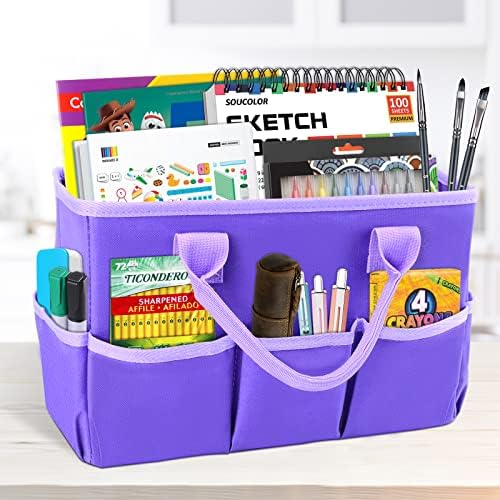
- Best Organization Solution: it has big storage space for teacher’s stationery, books, papers pens, crafts, arts, make-up…
- Lots of Small Storage Along: except the big storage, there are 5 small pocket outside along, used to organize small tool…
- Well Made: Art tote bag is made from durable polyester 600D, 2 Carry-away handles are good for travel! Nice design
12. Use a Short Visual Cleanup Sequence
“Clean your room” contains many separate tasks but does not explain where to begin.
Create a visual sequence with three or four concrete steps:
- Clothes into the hamper
- Toys into bins
- Books onto the shelf
- School items at the launch station
Use photographs, drawings, or simple words depending on your child’s age.
Keep the sequence visible where cleanup normally begins. A long checklist containing every possible room task may be just as overwhelming as having no list at all.
The CDC recommends clear, brief directions and breaking complicated tasks into shorter steps.
Once the short sequence becomes familiar, you can add an occasional task such as emptying the wastebasket or changing bedding. Do not require the child to master the entire room at once.
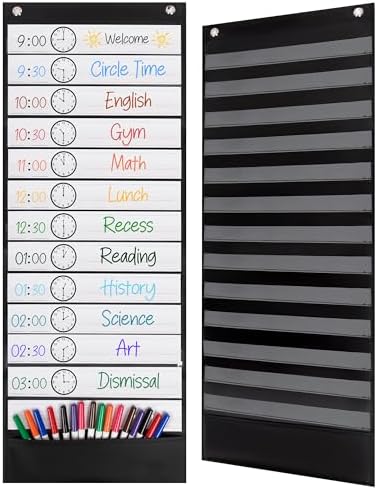
- Effortless Organization – Upgrade your learning space with our pocket chart for classroom—professionally displaying stud…
- Ultra-Durable – Our visual schedule is made from durable polyester and features sturdy stitching, ensuring longevity and…
- Hang it Anywhere – The daily schedule is ultra-light, making it easy to carry and allowing you to take it anywhere. Its …

- Comprehensive Set for Classroom Management: our kit includes 5 push lights that emit white glow, as well as a colorful v…
- Well Sized for Your Needs: these tap lights, with a diameter of about 2.8 inches, are ideal for using by students, makin…
- Quality Craftsmanship for Longevity: we prioritize quality, these button lights we offer are made of sturdy plastic, wha…
13. Make the First Step Obvious
Starting is often harder than continuing.
Instead of repeating “Please clean your room,” point to one immediate and visible action:
- Put the red shirt into the hamper.
- Place all books beside the shelf.
- Carry the backpack to its hook.
- Put the blocks into this basket.
- Clear everything from the bed.
Once the first action is complete, give the next one.
This is not about doing everything for the child. It is about temporarily making the sequence visible when the child cannot yet hold the full plan in mind.
Keep instructions neutral and specific. Avoid turning a difficult organizational moment into a character judgment.
“Your room is a disaster” gives the child shame but no useful starting point.
“Let’s begin with the clothes” provides direction.
14. Add One Temporary Reset Basket
Every room contains objects that do not have an obvious home.
Without a plan, these items may remain on the floor because deciding where they belong interrupts the entire cleanup process.
Use one modest-sized reset basket for:
- Objects that belong in another room
- Items that need repair
- Papers requiring a parent’s attention
- Unfinished projects
- Belongings that do not yet have a category
The basket is a temporary holding place, not permanent storage. Choose a regular time to empty it together, perhaps once or twice a week.
Keep the basket small. A giant container can become a hidden version of the original clutter.
15. Balance Open Storage With Visually Quiet Storage
ADHD-friendly does not automatically mean that every belonging should be visible.
Open storage is helpful when visibility supports memory and access. Closed storage is helpful when too many visible items make it difficult to focus or settle.
A balanced room might use:
- Open baskets for current toys
- A closed dresser for clothing
- A visible school station
- A closed container for craft overflow
- Open shelves for favorite books
- Under-bed storage for rotated toys
Color can remain part of the room without covering every surface. Choose a few stronger colors for bedding, bins, artwork, or the play area, then keep the sleep and homework zones somewhat quieter.
A child’s room should still feel personal and joyful. The goal is not to remove every visual detail, but to make the important cues easier to notice.
16. Create a Calm, Uncluttered Bedside Setup
Bedtime can become more difficult when the area around the bed is crowded with toys, school materials, laundry, and stimulating electronics.
Keep only the most useful items near the bed:
- One or two books
- A water bottle
- A comfort object
- A soft light
- Necessary nighttime items
- A small basket for morning essentials, when helpful
Move active play materials and schoolwork away from the immediate sleep area when the room allows.
A calm setup does not need to be beige or minimal. It simply needs to make the function of the space clear: this is where the body begins to slow down.
A soft basket, dimmable lamp, or bedside shelf may help, but the most meaningful change may be removing unnecessary items rather than purchasing something new.

- 【Safety & Squishy Multi-Use Lamp】WANIDEA The Led Lamp for Bedroom Elevate Your Space with the Modern Elegance of Our Dim…
- 【Easy to Switch Between Candlelight Modes】Candlelight Mode Has an Effect That Mimics the Flickering Effect of a Real Can…
- 【Nice Companion for Little Kids】Ideal as a Gift for Boys and Girls, This Cute Charming Vintage Candle Night Light Adds a…

- 【Upgraded Sensory Activity Board for Hands-On Play】This sensory activity board features colorful bendable strings and a …
- 【Build Fine Motor Skills & Hand-Eye Coordination】Designed for growing toddlers, this fine motor toy helps strengthen fin…
- 【Food-Grade Silicone, Soft & Easy to Clean】Made with food-grade silicone strings that feel soft, flexible and comfortabl…
17. Use a Five-Minute Family Reset
A short, supported reset is often more realistic than waiting until the room requires a long and emotionally charged cleanup.
Set a timer for five minutes and work beside your child. Choose one clear goal:
- Clear the floor
- Prepare the school station
- Put clothing away
- Reset the play area
- Empty the temporary basket
The adult may initially provide substantial help. Over time, the balance can change as the child becomes more familiar with the routine.
Keep the reset predictable and finite. When the timer ends, stop or deliberately agree on one additional minute rather than allowing the task to expand without warning.
Notice and name what the child completed:
- You put every school item in the launch station.
- You kept going even when you could not find a place for that project.
- The floor is clear enough to walk through now.
Small, reachable goals and positive feedback are consistent with behavior-management guidance for children with ADHD.
How to Organize a Small ADHD-Friendly Kids’ Room
A small room does not need more miniature containers. It needs fewer systems doing more useful work.
Prioritize:
- Wall hooks rather than additional floor furniture
- Under-bed storage for occasional items
- One narrow bookcase instead of several small shelves
- A portable homework caddy
- A storage bench when seating is genuinely needed
- Broad categories rather than many containers
- One visible school station
- Toy rotation to reduce the number of items in the room
Use vertical storage carefully and keep frequently used belongings within the child’s reach. Do not place attractive toys or daily items on top of furniture if the child may be tempted to climb for them. Anchor appropriate furniture securely.
Before adding another storage unit, consider whether removing, rotating, or relocating items would solve the problem more effectively.
Common ADHD Kids’ Room Organization Mistakes
Creating Too Many Categories
A detailed system may look impressive but require too many decisions. Begin with broader groups.
Buying Containers Before Identifying the Problem
Storage cannot solve an unclear routine. First determine what is being lost, avoided, or left unfinished.
Hiding Every Belonging
Some children need visible reminders. Use closed storage selectively rather than automatically.
Leaving Everything Visible
Too many competing items can make it difficult to notice the most important cue. Keep daily essentials visible and reduce unnecessary visual competition.
Expecting Independent Maintenance Too Soon
A child may understand the system but still need prompts, shared cleanup, or visual support.
Turning Organization Into a Moral Issue
A messy room does not mean the child does not care. Focus on what the system is asking the child to remember and do.
Changing the Entire Room at Once
Large transformations can feel exciting to an adult and destabilizing to a child. Begin with one routine or zone.
Prioritizing Appearance Over Safety
Secure furniture, manage cords, choose age-appropriate containers, and maintain clear pathways before considering decorative styling.
Shop by the Problem You Need to Solve
You do not need every ADHD organization product shown online. Choose items only after identifying the difficulty.
When Belongings Are Constantly Lost
Useful options may include:
A basic hook may solve the problem as effectively as a large entryway system.
When Cleanup Feels Too Complicated
Consider:
- Wide open bins
- Picture labels
- One reset basket
- Cube storage with broad categories
Avoid purchasing numerous small containers unless your child already succeeds with detailed sorting.
When School Mornings Are Chaotic
Possible supports include:
- A hanging clothing organizer
- Two-outfit baskets
- A visual morning checklist
- An open school launch station
- A visual timer
These tools should make the existing routine clearer rather than add another routine to manage.
When the Room Is Visually Overwhelming
Consider:
- Closed storage for occasional items
- Toy rotation containers
- Simple bedding
- Matching or coordinated baskets
- One visually quiet sleep area
The solution may involve displaying fewer belongings rather than buying more organizers.
When Homework Supplies Wander
A portable caddy may be more useful than a full desk organizer, especially when homework happens in different locations.
A Gentle Room Reset Plan for Parents
Begin with one week of observation.
Then choose one problem and make one small change:
Week one: Create the backpack and jacket drop zone.
Week two: Move the hamper to the place where clothing lands.
Week three: Replace detailed toy categories with broader bins.
Week four: Introduce a four-step cleanup sequence.
Invite your child to help choose labels, container colors, and locations. Their preference may not always produce the most magazine-ready room, but it can reveal what they are actually able and willing to use.
Review the system after several weeks.
Ask:
- Is the item easier to find?
- Does cleanup require fewer reminders?
- Is the child using the system at least some of the time?
- Is the system creating more work for the family?
- Does any step need to be removed?
Organization should remain adjustable. A system that stops working is information, not failure.
Final Thoughts
An ADHD-friendly kids’ room does not need to be perfectly tidy, highly specialized, or filled with expensive products.
It needs to make the next step easier to see.
A backpack hook can reduce the search before school. An open hamper can remove one decision at bedtime. Broad toy categories can make cleanup feel possible. A short visual sequence can turn “clean your room” into four understandable actions.
Most importantly, the room should support the child without communicating that they are a problem to be organized.
Keep expectations realistic. Offer help without shame. Change one friction point at a time, and remember that a room can be functional even when it looks lived in.
The most successful system is not the one that photographs perfectly. It is the one that helps your child move through real life with a little less confusion and a little more confidence.
For additional ideas about creating supportive child-centered spaces, explore sensory room design principles for counselors and adapt the relevant concepts thoughtfully for your home.

About the Author
Hi, I’m Eve, a former school counselor with a master’s degree in School Psychology and a passionate advocate for children and families navigating sensory challenges. As a mom of children with sensory sensitivities, I deeply understand the journey special-needs parents face, and I dedicate myself to researching and sharing practical solutions to help children thrive and feel comfortable in their bodies. My goal is also to empower counselors, therapists, and psychologists with creative strategies and supportive resources to enrich their everyday practice. When I’m not writing or exploring new therapeutic approaches, you’ll find me spending quality time with my family and continually seeking inspiration from everyday moments.

