
There is a particular kind of school-morning chaos that many parents know well.
The homework folder is still on the kitchen table. The water bottle has disappeared. A permission slip is crumpled beneath three old worksheets, and the child who was certain everything was packed suddenly remembers that today is library day.
It is easy to interpret these moments as carelessness. But keeping a school backpack organized requires a surprising number of skills. A child has to remember what they need, sort different types of belongings, notice what is missing, plan for the next day, and repeat the same process while transitioning between home and school.
That is a lot to manage, especially for younger children and students who find organization, attention, or multi-step routines difficult.
Good backpack organization for kids is not about filling a bag with more containers. It is about creating a simple system in which every important item has one predictable place.
The products in this guide can help reduce loose papers, missing supplies, and rushed searches. You do not need all 15. Start with the part of the routine that causes the most frustration, then choose the tools that make that step easier for your child to see and complete.
This post may contain affiliate links, including Amazon Associate links. If you make a purchase through these links, I may earn a small commission at no extra cost to you.

Why Some Children Struggle to Keep Their Backpacks Organized
An organized backpack may look like a simple goal, but it involves several different abilities.
A child needs to:
- remember which materials are needed;
- decide where each item belongs;
- move papers between school and home;
- keep track of belongings during transitions;
- recognize when something is missing;
- pack the bag in the correct order;
- repeat the routine consistently.
When one of those steps breaks down, the backpack can quickly become a collection of loose papers, forgotten lunch containers, broken pencils, and mystery objects from several weeks ago.
The problem may also be the backpack system itself.
A bag with one deep, dark compartment makes it difficult to see what is inside. Six nearly identical pouches can create more confusion rather than less. A checklist hidden in a kitchen drawer will not help when the child is packing beside the front door.
Instead of asking only, “Why does my child keep forgetting things?” it may be more useful to ask:
- Is the item easy to see?
- Does it have one consistent location?
- Can my child open and close the container independently?
- Is the routine simple enough to remember?
- Is the reminder visible at the moment it is needed?
Products cannot replace practice or adult support. However, the right backpack organization tools can make the expected routine more visible and manageable.

Start With a Simple Four-Zone Backpack System
Before buying organizers, divide the backpack into four basic zones.
1. Schoolwork zone
This area holds:
- homework;
- notebooks;
- school notices;
- reading logs;
- folders;
- library books.
2. Supply zone
This is the home for:
- pencils;
- erasers;
- markers;
- scissors;
- calculators;
- small classroom tools.
3. Personal zone
This may include:
- tissues;
- hygiene items;
- a small comfort object;
- lip balm;
- an emergency clothing item.
4. Daily-use zone
This area holds things that move in and out of the bag every day, such as:
- lunch;
- water bottle;
- school ID;
- keys;
- device and charger.
These categories should remain broad. Most children do not need a separate container for every tiny item.
A useful rule is:
Every important item should have one predictable home, and the child should be able to tell you where that home is.
15 Backpack Organization Products That Make School Days Easier

1. A Backpack With a Wide Main Opening
A narrow backpack opening can hide folders, pencil cases, and small items at the bottom of the bag. A wide-opening or clamshell-style backpack allows the child to see more of the contents at once.
This can be especially helpful for children who regularly empty the entire backpack while searching for one item.
Best for: children who lose belongings inside deep backpack compartments.
Look for:
- a light-colored interior;
- smooth, easy-to-hold zippers;
- a structured shape;
- two or three useful sections;
- an opening that stays wide while packing.
Avoid choosing the largest possible backpack. Too much unused space often becomes a place for unnecessary objects to collect.

- KIDS BACKPACK FOR SCHOOL & DAYCARE: Sized for toddlers, preschoolers, and kindergartners ages 3 and up – the right fit f…
- SPACIOUS 12L CAPACITY: Measures 14.4″x10.4″x5.9″ – roomy enough for a tablet, water bottle, snacks, school folders, and …
- SCHOOL READY ORGANIZATION: A padded tablet sleeve, large zip-closure front pocket, zip stash pocket, and two expandable …
2. A Backpack With a Structured Base
A backpack that collapses as soon as it is placed on the floor can be frustrating to pack. A structured base helps the bag remain upright while the child adds folders, lunch, and supplies.
This can also keep papers from bending beneath heavier items.
Best for: children who pack at a desk, school cubby, locker, or entryway station.
Look for:
- a flat base;
- lightweight structure;
- reinforced bottom fabric;
- enough stability to stand without being rigid or heavy.
3. A Removable Backpack Organizer Insert
A removable organizer can turn a simple one-compartment bag into several visible sections.
It may be useful when a child already owns a backpack they like but needs clearer divisions for schoolwork, technology, and personal supplies.
Best for: older elementary and middle-school students who understand basic categories.
Skip it when: the insert makes the backpack crowded, heavy, or difficult to close.
Choose an organizer with a small number of clearly different pockets rather than many narrow compartments.

Products That Keep School Papers From Disappearing
4. One Brightly Colored Homework Folder
A single, highly visible homework folder is often more effective than a complicated binder system.
The folder can have two sides:
- Bring Home
- Return to School
For younger children, add a simple picture cue. For older students, choose a color that is easy to identify quickly.
Best for: homework, reading logs, teacher notes, and permission slips.
Look for:
- durable plastic;
- two pockets;
- a color that stands out;
- easy-to-read labels;
- a slim design that fits the backpack comfortably.
The goal is to create one obvious place for papers that move between home and school.
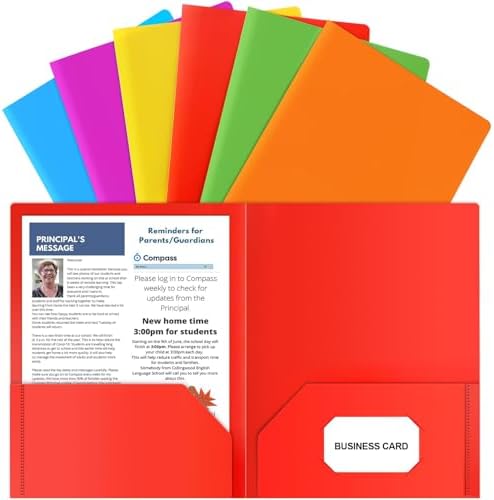
- 【MULTI-COLORED POCKET FOLDERS】This set of pocket folders has 6 different colors: blue, purple, yellow, red, green, orang…
- 【STANDARD LETTER SIZE】The two pocket folder with pockets measures 9.4″ x 11.5″; used to hold standard letter paper. Plas…
- 【WEAR-RESISTANT AND DURABLE MATERIAL】The pocket folder is made of high-quality polyethylene material, which is wear-resi…
5. An Expanding File Folder
An expanding folder can help students who carry papers for several subjects or move between multiple classrooms.
Each section can be labeled by subject, day, or purpose.
For example:
- math;
- language arts;
- science;
- homework;
- forms for home.
Best for: middle-school students and children who manage several paper categories.
Skip it when: the child is already overwhelmed by too many divisions. In that case, begin with one homework folder and add categories only when needed.
6. A Waterproof Document Pouch
Some papers need extra protection. A slim waterproof pouch can keep permission forms, reading logs, projects, and important notices from becoming wet, torn, or crumpled.
It can also create a clear location for papers that need a parent’s attention.
Best for: important documents that should not be mixed with daily worksheets.
Look for:
- a transparent or partially transparent front;
- easy zipper closure;
- flexible material;
- a size that fits standard school papers without folding.

- [Premium Quality Mterial] Durable PP material plastic envelope folder, The envelope folder size is 13.25 x 9.25 inches p…
- [Colorful Transparent Envelopes] 6 assorted colors: transparent blue, green, yellow, purple, pink and red. It’s easy to …
- [Design with Snap Button and Label Pocket] clear document bag with snap button good for office, Plastic Envelopes have a…
Products That Organize Small School Supplies

7. A Transparent Pencil Case
When children cannot see what is inside a pencil case, they may assume an item is missing and begin searching through the entire backpack.
A transparent or mesh pencil pouch makes the contents easier to check without emptying everything.
Best for: daily writing tools.
Keep the contents simple:
- two or three pencils;
- one eraser;
- one pen if needed;
- a small sharpener;
- a highlighter.
The pencil case does not need to hold every art supply the child owns.
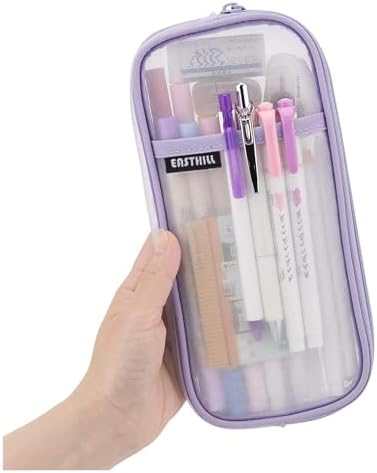
- Lightweight and Transparent Design: Weighing only 1.76 ounces, this pencil case features a transparent design that allow…
- Compact Size and Storage: Measuring 9.45 x 4.72 x 0.98 inches, this pencil case has a medium capacity storage of 50 mill…
- Multi-Purpose Use: Not only can this pencil case be used to store pens and pencils, but it can also be repurposed as a t…
8. Two or Three Color-Coded Zipper Pouches
Color-coded pouches work best when each one has a distinct purpose.
For example:
- blue for school supplies;
- green for chargers and technology;
- yellow for personal items.
Avoid creating a rainbow of six or seven categories. The system should reduce decisions rather than create more of them.
Best for: children who carry several groups of small items.
Look for:
- different colors;
- sturdy zippers;
- washable fabric;
- labels or tag loops;
- sizes that are easy to distinguish by touch.
9. A Small Charger and Cable Organizer
Students who carry a tablet, laptop, headphones, or calculator may need a dedicated technology pouch.
Without one, cables often become tangled, damaged, or buried beneath books.
Best for: middle-school students, older children, and students carrying school technology.
Include only essential items:
- charging cable;
- wall plug;
- earbuds or headphones;
- small cleaning cloth;
- approved adapter if needed.
Before buying, check whether the school expects chargers to travel between home and classroom.
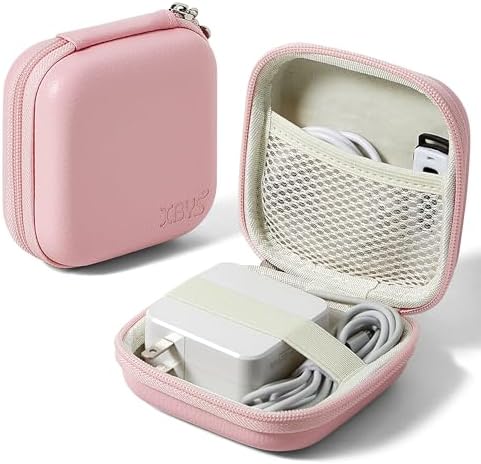
- Lightweight and Portable: Our travel charger case measures 4.4 x 4.4x 1.7 inches, ultra-lightweight design, doesn’t take…
- High-quality Materials: This laptop accessory storage bag is made of thickened waterproof EVA material. It is drop-proof…
- Shock Protection: The interior of the Macbook power bank case is made of encrypted fleece material, which can well prote…
Products That Make Frequently Forgotten Items Easier to Notice

10. An Internal Key Clip or Short Key Leash
Keys, school IDs, bus cards, and small cases easily disappear inside a backpack.
A short internal leash or carabiner gives them one consistent attachment point.
Best for: older students carrying house keys, locker keys, identification, or transport cards.
Choose a short attachment that stays inside the backpack. Avoid long dangling cords that could catch on objects or become a distraction.
11. A Highly Visible, Leak-Resistant Water Bottle
A water bottle is more likely to be remembered when it is easy to identify.
Choose a color or pattern that stands out from the child’s other belongings, and add a durable name label.
Look for:
- a secure, leak-resistant lid;
- an easy-to-clean opening;
- a size the child can carry comfortably;
- a shape that fits the backpack’s exterior pocket;
- a handle that is easy to grasp.
A bottle that repeatedly falls out of the side pocket is not a good fit, even when the bottle itself is popular.

- We got you parents! This 16-ounce, perfect for kids insulated stainless-steel water bottle with a FreeSip spout and push…
- Patented FreeSip spout designed for either sipping upright through the built-in straw or tilting back to swig from the s…
- Protective push-to-open lid keeps spout clean; convenient carry loop doubles as a lock
12. A Lunchbox That Attaches to the Backpack
Some children remember the backpack but leave the lunchbox on the kitchen counter, in the classroom, or beside the front door.
A lunchbox that clips securely to the backpack can reduce the number of separate items the child has to carry.
Best for: younger students and children managing several items during arrival and dismissal.
Check that the attachment is:
- easy for the child to open;
- secure enough for daily movement;
- positioned so it does not swing heavily;
- compatible with the backpack.
A reusable lunch bag with a short handle can also be attached using a sturdy clip, provided the school allows it.
Visual Reminders for Backpack Organization
13. A Laminated Backpack Checklist
A packing checklist supports the step that is often hardest: remembering several items at once.
For younger children, use pictures. For older children, use short words.
A basic daily checklist might include:
- homework folder;
- lunch;
- water bottle;
- pencil case;
- library book;
- device;
- charger;
- jacket.
Keep special items in a separate section so the daily list remains short.
Best for: children who know how to pack but forget one or two recurring items.
Place the checklist where packing happens. A checklist attached to the refrigerator is less useful when the backpack is kept beside the front door.
14. A Dry-Erase Checklist Tag
A reusable dry-erase tag can be attached inside the backpack or placed on the family’s school station.
It allows a parent or child to add temporary reminders such as:
- return permission slip;
- bring sports clothes;
- take class project;
- pack library book.
Best for: changing schedules and special school days.
Look for:
- a simple layout;
- a secure attachment;
- an easy-to-clean surface;
- enough space for only a few priorities.
A long list can quickly become background noise. Use the tag for the most important items only.

- Size: Large plastic shipping tag size 100*65 mm/3.94*2.56in, overall length 250mm/9.8in. Package includes 100pcs blank l…
- Writable and Stickable: The blank hanging tags has large space to write, print or adhesive labels with the information a…
- Easy to use: The big label ties tags is single used and self-locking design. Each tamper proof security seal tags is equ…
15. A Private Contact Tag
A backpack label can help a lost bag return to its owner, but personal information should not be displayed openly.
Choose a luggage-style tag that keeps the contact card covered.
Include only the information necessary according to your child’s age and situation, such as:
- first name;
- parent’s phone number;
- school name if appropriate.
Avoid placing a full home address on the outside of a child’s backpack.
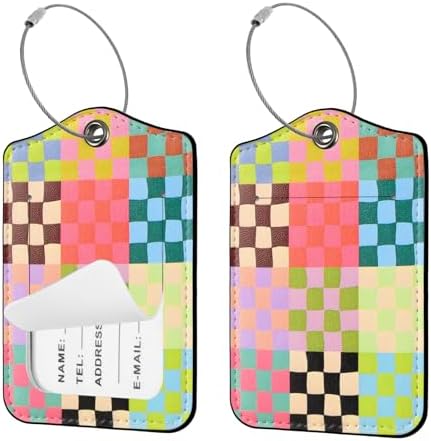
- Exquisite Design:The checkered luggage tag pattern design is lively and vivid.The unique pattern makes your luggage more…
- Good-quality Materials:Our checkered luggage tags are made of good-quality PU leather,carefully sewn with extremely high…
- Privacy Protection: The luggage tag with a privacy cover fully conceals your information,preventing your privacy from be…
The Five Backpack Organization Products I Would Buy First
A child does not need every product in this guide.
For a simple, effective starting system, I would choose:
- A well-sized backpack with a wide opening
- One bright homework folder
- A transparent pencil case
- A leak-resistant water bottle that fits the side pocket
- A laminated packing checklist
Together, these five products address the most common difficulties:
- seeing what is inside;
- keeping papers together;
- locating small supplies;
- remembering a daily essential;
- checking the bag before leaving.
Shop the Basic Backpack Organization Setup
- Wide-opening school backpack
- Durable homework folder
- Transparent pencil case
- Leak-resistant water bottle
Begin with the basic setup and add another organizer only when it solves a specific problem.
Three Backpack Setups for Different Needs
Simple Elementary School Setup
For a younger child, use:
- structured backpack;
- one homework folder;
- transparent pencil case;
- attached lunchbox;
- picture checklist.
Keep the number of categories low. Younger children are more likely to use a system they can understand at a glance.
Middle-School Organization Setup
For a student moving between subjects, consider:
- multi-compartment backpack;
- expanding file folder;
- charger pouch;
- clear supply case;
- dry-erase checklist tag.
The backpack should have enough structure to separate schoolwork from technology without becoming bulky.
Sensory-Conscious Backpack Setup
Some children are bothered by heavy bags, stiff straps, noisy zipper pulls, scratchy fabric, or objects moving loosely inside the backpack.
A sensory-conscious setup may include:
- a lightweight backpack;
- padded adjustable straps;
- smooth zipper pulls;
- fewer loose objects;
- headphones stored in a protective case;
- one discreet comfort or regulation pouch.
Sensory tools should be chosen according to the child’s preferences and the school’s rules. Not every child benefits from the same item, and more tools are not always better.
How to Set Up the Backpack With Your Child
A system is more likely to work when the child helps create it.
Step 1: Empty the Backpack Completely
Remove:
- old food containers;
- broken pencils;
- outdated papers;
- wrappers;
- toys that do not belong at school;
- supplies the child no longer uses.
Starting with an empty backpack makes the new system easier to understand.
Step 2: Sort Belongings Into Four Categories
Use the four backpack zones:
- schoolwork;
- supplies;
- personal items;
- daily-use items.
Step 3: Let Your Child Help Choose Each Item’s Home
Ask questions such as:
- Where would this folder be easiest to find?
- Which pocket should hold your water bottle?
- Where should your charger go?
- Which pouch is easiest to recognize?
A child is more likely to remember a system they can explain.
Step 4: Add Simple Labels
Use words, pictures, or colors based on the child’s age.
Avoid labeling every small pocket. Label the major categories only.
Step 5: Practice Packing and Unpacking
Ask your child to:
- find the homework folder;
- remove the pencil case;
- return the water bottle;
- locate the checklist;
- place each item back in its home.
This reveals whether the system is actually easy to use.
Step 6: Photograph the Finished Backpack
Take one clear photo of the organized bag.
The image can serve as a visual model when the child resets the backpack later.
Create a Five-Minute Evening Backpack Reset
A short evening routine is often more effective than a rushed morning search.
Try this order:
- Remove the lunch container and water bottle.
- Place school papers in the family inbox.
- Return finished homework to the correct folder.
- Remove rubbish and unnecessary objects.
- Restock pencils or supplies only when needed.
- Check the next day’s schedule.
- Add special items.
- Place the packed backpack near shoes and outerwear.
The routine does not need to be perfect. It needs to be predictable.
For younger children, complete the reset together. Gradually transfer one step at a time as the child becomes more independent.
Common Backpack Organization Mistakes
Adding Too Many Pouches
Containers can help, but too many create another layer of searching.
Each pouch should have a clear and necessary purpose.
Choosing an Oversized Backpack
A larger backpack is not always easier to organize. Extra space may collect unnecessary books, old papers, and objects the child does not need.
It can also become uncomfortably heavy.
Creating a Complicated Color System
Color coding works only when the child remembers what each color means.
Two or three categories are usually enough.
Organizing the Backpack Without the Child
A perfectly arranged system may fail when the child does not understand it.
Include the child in decisions and practice using the setup together.
Buying Organizers Without Removing Clutter
A new pouch cannot solve a backpack filled with old worksheets, dried markers, wrappers, and unused supplies.
Regularly remove what no longer belongs.
Expecting Immediate Independence
Children may need reminders, visual cues, and adult support while learning the routine.
The goal is not to stop helping overnight. It is to make the steps clear enough that the child can gradually do more independently.
When Your Child Still Forgets Important Items
Even a well-organized backpack will not eliminate every forgotten book, water bottle, or worksheet.
When the same problem continues, look at where the routine is breaking down.
Ask:
- Is the checklist visible at the right moment?
- Is the bag too full?
- Does the child know which items travel every day?
- Is packing happening when everyone is tired or rushed?
- Are home and school using different systems?
- Does the child need one instruction at a time?
- Would a final reminder from the teacher help?
- Is the item difficult to carry, open, or return?
Persistent organization difficulties are not proof that a child is lazy. Some children need more direct instruction, repetition, environmental support, or collaboration between home and school.
When the problem significantly interferes with learning or daily functioning, consider discussing it with the child’s teacher, school counselor, or another relevant professional.
Printable Backpack Checklist for Kids
You can copy this list into a note, print it, or turn it into a laminated card.

Daily Backpack Checklist
- Homework folder
- Pencil case
- Lunch
- Water bottle
- School device
- Charger
- Jacket or outerwear
Check on Special Days
- Library book
- Sports clothes
- Instrument
- Permission slip
- Class project
- Special activity supplies
- Medication managed according to school procedures
For younger children, replace words with simple pictures.
A Better System, Not a Perfect Backpack
The goal of backpack organization for kids is not to create a perfectly styled bag that never becomes messy.
It is to help the child know:
- what belongs in the backpack;
- where each item goes;
- what needs to come home;
- what must return to school;
- how to check the bag before leaving.
Start with one point of frustration.
When papers disappear, begin with a bright homework folder. When small items are constantly lost, add one transparent pouch. When mornings are filled with repeated reminders, place a short checklist where the child packs.
A few thoughtful tools, paired with a consistent routine, can make school mornings feel calmer without expecting the child to manage everything alone.
Choose the simplest system that solves the problem your family actually has—and allow it to grow with your child.

About the Author
Hi, I’m Eve, a former school counselor with a master’s degree in School Psychology and a passionate advocate for children and families navigating sensory challenges. As a mom of children with sensory sensitivities, I deeply understand the journey special-needs parents face, and I dedicate myself to researching and sharing practical solutions to help children thrive and feel comfortable in their bodies. My goal is also to empower counselors, therapists, and psychologists with creative strategies and supportive resources to enrich their everyday practice. When I’m not writing or exploring new therapeutic approaches, you’ll find me spending quality time with my family and continually seeking inspiration from everyday moments.

