
This post may contain affiliate links, including Amazon Associate links. If you make a purchase through these links, I may earn a small commission at no extra cost to you.
December can make a classroom feel completely different.
There are concerts, parties, altered schedules, substitute teachers, gift exchanges, special activities, louder hallways, anticipation, tired children, and plenty of conversations about what will happen over winter break.
Some students love every minute of it.
Others enjoy Christmas and still find the changes exhausting.
And some children may experience worry, disappointment, sensory overwhelm, family stress, grief, or simply very big feelings during a season that adults often expect to be cheerful.
A thoughtful Christmas calm corner can give students a familiar place to pause, notice what they need, choose a strategy, and ask for support without turning the corner into another brightly decorated holiday display.
The key is keeping the function of the calm corner more important than the Christmas theme.
A few paper snowflakes, a warm lamp, a December feelings check-in, and a seasonal coping menu may be enough.
You do not need a miniature Christmas tree surrounded by twenty sensory toys.
Below are 17 Christmas calm corner ideas for school counselors, elementary classrooms, and child-focused spaces, including practical setup ideas, inexpensive DIY options, and a few useful products that can remain in the corner long after Christmas is over.
If you are designing a regulation space from the beginning, Eveyou’s Sensory Room Design for Counselors offers a broader guide to planning the room itself.

What Is a Christmas Calm Corner?
A Christmas calm corner is simply an existing classroom or school-counseling calm space given a temporary December layer.
The basic purpose should remain unchanged.
A useful calm corner may help a child:
- notice what they are feeling
- identify what they need
- access a familiar strategy
- reduce unnecessary stimulation
- request adult support
- take an appropriate pause
- return to the classroom or activity when ready
The Christmas theme is secondary.
Think of it as:
evergreen calm-corner foundation + small December additions
rather than:
Christmas decor + a few coping tools added afterward.
That distinction makes the space easier to use and much easier to transition back into January.
17 Christmas Calm Corner Ideas

1. Start With a Winter Base Instead of Decorating Everything for Christmas
Begin with elements that can remain after December:
- cream
- muted green
- soft blue
- warm wood
- winter branches
- stars
- snowflakes
- simple textured storage
Then add only a few Christmas-specific pieces.
For example, you might use a forest-green cushion all winter and add two paper Christmas stars during December.
After the holidays, remove the stars and keep the rest.
This approach saves money, reduces storage, and prevents the calm corner from looking visually empty when Christmas decorations come down.
If you want an even more winter-focused setup, your existing DIY Winter Sensory Corner for Therapy Offices or Classrooms can serve as the January companion to this article.
2. Use One Small Warm Light Source
Christmas lights are tempting, but a calm corner does not need flashing LEDs wrapped around every wall.
One small lamp can create enough seasonal warmth.
A cordless lamp is especially useful in classrooms where outlets are limited or cords would create a trip hazard.
Look for:
- adjustable brightness
- stable base
- warm-light option
- simple controls
- a design without flashing effects
One current Amazon example is the O’Bright rechargeable portable table lamp:
View the O’Bright rechargeable table lamp on Amazon
A regular table lamp you already own works perfectly well too.
The goal is not to make the room dark. Students still need enough light to see, move safely, read visual supports, and transition back to class.
3. Create a Christmas Feelings Check-In

Add a small feelings board using ornaments, stars, mittens, or Christmas-light shapes.
For example:
excited
worried
tired
frustrated
happy
lonely
overwhelmed
calm
Let students point to one or two.
The ability to choose two feelings matters.
A child can be excited about winter break and worried about being away from school.
They can love Christmas and feel exhausted by the noise.
They can enjoy seeing relatives while missing someone who will not be there.
The goal is not to make every December emotion merry.
4. Add a December Coping Skills Menu
Instead of covering the wall with fifteen calming strategies, display a short choice menu.
Try four categories:
Move
stretch
walk
wall push
movement break
Make
draw
write
color
build
Pause
sit quietly
look at a book
use a familiar sensory item
Ask
talk to the counselor
ask the teacher for help
request clarification
tell an adult what happened
A calm corner becomes more useful when children can recognize different kinds of needs rather than being given one universal strategy.
5. Add One Comfortable Floor Cushion
The calm corner needs somewhere to sit, but it does not need to become a pillow mountain.
One floor cushion or low seat is often enough.
Look for something:
- washable
- easy to move
- appropriately sized
- supportive enough for short use
- simple enough not to dominate the corner
If you already have a cushion, use it.
A Christmas-themed pillow that gets stored eleven months of the year is rarely essential.
For more ideas on creating child-friendly spaces without overcrowding them, see Child Therapy Room Decor Ideas.
6. Make Christmas Breathing Cards
Create three or four simple seasonal breathing cards.
Examples:
Smell the Cocoa
Breathe in gently as if smelling warm cocoa.
Breathe out comfortably.
Trace the Star
Slowly trace around a five-point star, pairing movement with easy breathing.
Snowflake Pause
Trace one branch of a snowflake at a time.
Christmas Light Breath
Move your finger from one paper light to the next while breathing at a comfortable pace.
Avoid presenting breathing as something that must immediately remove anger, fear, or distress.
It is simply one possible strategy.
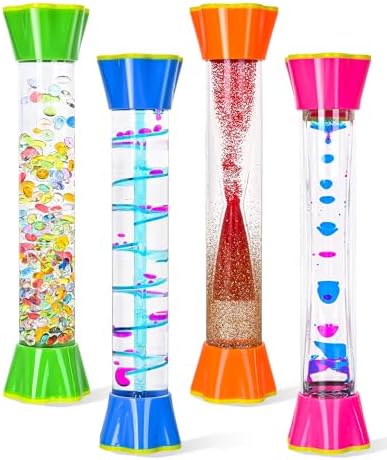
7. Keep a Small Basket of Quiet Fidgets
A calm corner does not need a giant bin of twenty-seven sensory toys.
Start with two or three options.
Look for tools that are:
- quiet
- durable
- easy to clean
- age appropriate
- simple to replace
- genuinely interesting to your students
One ready-made option is the hand2mind Sensory Fidget Tubes:
View hand2mind Sensory Fidget Tubes on Amazon
But a small smooth stone, reusable putty, or another familiar classroom tool may work just as well.
The important question is not:
“Is this a calming toy?”
It is:
“Do the children using this space actually find this useful?”
8. Use a Visual Timer Carefully
A visual timer can help some students understand:
“This is a short break, and I can see roughly how much time remains.”
That can be especially useful when a school uses a calm corner as a brief regulated pause rather than an indefinite escape from classroom activities.
A recognizable option is the Time Timer MOD visual timer:
View the Time Timer MOD on Amazon
However, timers are not universally calming.
Watching time disappear may make some children more anxious or rushed.
Use the timer when it clarifies the routine for that student—not because every calm corner is supposed to have one.
9. Add a “What Do I Need Right Now?” Choice Board
A child may know they feel bad without knowing what would help.
A simple visual board can offer choices such as:
quiet
movement
space
help
water
drawing
talking
something for my hands
This is more useful than expecting every student to independently remember a long list of coping strategies while already upset.
For younger students, use icons.
For older elementary students, keep the design simple and less childish.
10. Make a Christmas Worry Box
Use a small box decorated with winter paper, stars, evergreen shapes, or subtle Christmas details.
Students can write:
Something I am worried about
Then add a second prompt:
What does this worry need?
Possible answers:
- I can do something about it.
- I need information.
- I need someone to help.
- I cannot know the answer yet.
- I want someone to listen.
That second step is important.
The goal is not to put worries in a box and pretend they have disappeared.
For more school-age emotional-learning ideas, see Mental Health Awareness Activities for Upper Elementary Students.
11. Add a Winter Feelings Book Basket
Books can be useful in a calm corner when they match the children and the purpose of the space.
You might include stories about:
- feelings
- friendship
- mistakes
- worry
- disappointment
- family changes
- kindness
- winter
- Christmas
Do not replace every regular feelings book with a Christmas book.
A child who enters the space in distress may prefer something familiar.
Keep the seasonal selection small and rotate it rather than adding another overflowing basket.
12. Create a Snowflake Strengths Display
Cut several large paper snowflakes.
Write one strength on each:
creative
kind
persistent
curious
brave
thoughtful
funny
helpful
Then include blank snowflakes.
A student can choose:
“A strength I used today…”
For example:
“Persistent — I kept working even though math was hard.”
Specific examples make a strengths activity more meaningful than simply surrounding the child with positive words.
13. Add One Simple Visual Sensory Tool
A sensory bottle, slow-moving visual tube, or another simple visual item can provide something neutral to look at during a pause.
The hand2mind fidget tubes linked above can also serve this role if they fit your students.
But avoid filling the corner with:
- spinning lights
- flashing toys
- loud electronic tools
- several moving visual objects at once
A regulation space can become surprisingly stimulating when every tool is displayed simultaneously.
Choose a few.
Rotate if necessary.
14. Offer Noise-Reducing Hearing Protection When It Is Already Useful
December often brings:
- assemblies
- holiday music
- crowded hallways
- parties
- concerts
- altered classroom routines
Some children already use hearing protection during loud environments.
If that is part of a child’s existing support plan or known preference, keeping access to an appropriate pair may be useful.
One Amazon option is Alpine Muffy Kids hearing protection:
View Alpine Muffy Kids hearing protection on Amazon
Do not add hearing protection simply because a calm-corner checklist says you need it.
Fit, comfort, age, individual preference, and school expectations matter.
And it should not be used to avoid every ordinary sound automatically.
15. Include a Movement Option for Children Who Do Not Need Stillness
A common mistake is assuming every child regulates best by sitting quietly.
Some children may prefer:
- wall pushes
- stretching
- carrying something
- a short walk
- standing movement
- a brief active-seating option
If you use an active seat elsewhere in the room, one example available on Amazon is the Gaiam Kids Stay-N-Play balance ball:
View the Gaiam Kids Stay-N-Play balance ball on Amazon
I would not automatically place a bouncing seat inside a tiny calm corner.
For some students, a separate movement spot may work better.
The broader lesson is important:
regulation does not always look quiet.
16. Keep the Main Regulation Surface Clear
Christmas decor has a tendency to occupy every flat surface.
The calm corner table or shelf still needs to function.
Avoid filling it with:
- miniature Christmas trees
- figurines
- ornament bowls
- snow globes
- decorative signs
- garland
- seasonal trinkets
if those objects leave no room for the materials students actually use.
A simple rule:
Decorate vertically. Keep useful surfaces functional.
Paper stars on the wall take up no working space.
A small garland above the area may be enough.
The coping cards, drawing materials, timer, and student choice board should remain easier to reach than the Christmas decorations.
17. Plan the January Transition Before You Decorate
This is one of the easiest ways to avoid wasting money.
Separate the calm corner into three layers.
Everyday Layer
Keep all year:
- seating
- feelings tools
- coping menu
- timer if useful
- fidgets
- books
- storage
Winter Layer
Keep through January or February:
- deep green
- cream
- snowflakes
- stars
- warm lighting
- winter textures
Christmas Layer
Remove after December:
- ornaments
- explicitly Christmas wording
- Santa imagery
- Christmas trees
- holiday-specific prompts
This means you are not rebuilding the corner from zero on the first Monday back in January.
What Should Actually Be in a Christmas Calm Corner?
A useful calm corner does not need an enormous shopping list.
Think in terms of five functions.
1. Notice
Help the student identify what is happening.
Useful options:
- simple feelings chart
- body-signal visual
- Christmas feelings check-in
2. Choose
Give a manageable number of options.
For example:
- draw
- move
- pause
- use a sensory item
- ask for help
3. Pause
Provide a usable physical space.
That could simply mean:
- cushion
- chair
- small rug
- reduced visual clutter
4. Ask
Make adult support visible as an option.
A card might say:
“I need help.”
or:
“Can I talk to someone?”
Not every difficult situation should be solved independently.
5. Return
A calm corner should also have a way back into the classroom.
For example:
When I am ready, I can:
- return to my seat
- ask what I missed
- finish one next step
- check in with the teacher
The goal is not to make a child remain in the corner until they appear perfectly calm.
If You Only Buy Five Calm Corner Essentials
If you are starting from scratch, I would prioritize function before Christmas decor.
1. Comfortable Seat or Cushion
Useful every season.
2. Simple Storage Basket
Keeps materials contained and reduces visual clutter.
3. Visual Choice Board
This can be DIY and costs almost nothing.
4. One or Two Carefully Chosen Tools
For example:
hand2mind Sensory Fidget Tubes on Amazon
5. A Timer Only If Your Students Benefit From One
For example:
Everything else can be added gradually.
That is much more practical than buying a pre-made “calm corner kit” containing ten products your students may never use.
How to Make a Christmas Calm Corner on a Budget
You can create most of the December theme with paper.
Try:
- paper snowflakes
- paper Christmas lights
- cardstock coping cards
- printed feelings icons
- recycled gift boxes for storage
- a paper worry box
- construction-paper strengths ornaments
Then use the same everyday:
- cushion
- storage
- books
- sensory tools
- timer
you already own.
A calm corner should not require a seasonal shopping budget every month.
If your broader goal is a lower-cost counseling or child-therapy environment, Child Therapy Room Decor Ideas offers more ideas for balancing function, creativity, and room design.
Christmas Calm Corner for a School Counseling Office
A school counselor may use the corner differently from a classroom teacher.
In an office, it could support:
- brief individual check-ins
- transitions before or after a counseling group
- choosing a coping strategy
- drawing while talking
- waiting for a caregiver
- decompressing after a difficult school event
You may need fewer visual prompts because you can guide the activity directly.
A simple setup might be:
floor cushion + small lamp + feelings cards + drawing materials + two sensory choices
That can be enough.
Christmas Calm Corner for a Classroom
A classroom calm corner needs more explicit expectations because many students may use it.
Teach the routine before a child is upset.
For example:
- Notice that you need a pause.
- Signal or follow the classroom procedure.
- Choose one option.
- Use the space for the agreed routine.
- Return or ask for support.
Do not assume children know what a visual timer, fidget, breathing card, or feelings chart is for simply because the item is sitting in the corner.
The environment is only part of the system.
What a Christmas Calm Corner Should Not Become
A Punishment Area
Avoid:
“Go sit in the calm corner until you can behave.”
If the space becomes associated with punishment or public removal, students may understandably stop experiencing it as supportive.
A Place Children Must Become Calm
Regulation does not always mean complete calm.
A child may leave the space still disappointed but better able to continue.
A Christmas Display
If students are staring at blinking lights, touching hanging ornaments, rearranging decorations, and digging through seasonal trinkets, the decor may have overtaken the purpose.
A Sensory Toy Store
More tools do not automatically create a better regulation space.
An Avoidance Zone
A calm corner should not become a place where a child indefinitely escapes every difficult academic or social task.
Support, accommodations, problem-solving, and gradual return may still be necessary.
Christmas Calm Corner Ideas for Different Ages
Kindergarten–Grade 2
Keep it visual.
Use:
- emotion faces
- 3–4 coping choices
- drawing
- simple movement
- snowflake or ornament feelings check-ins
Grades 3–5
Add:
- mixed feelings
- coping choice menus
- worry sorting
- strengths
- asking for support
- visual timer when appropriate
For more SEL ideas for this age group, see Mental Health Awareness Activities for Upper Elementary Students.
Middle School
Make the space visually quieter.
Use:
- neutral winter colors
- simple seating
- discreet sensory options
- journal or paper
- headphones where appropriate
- short choice menu
- less childish emotional vocabulary
Older students may prefer a reset space or quiet corner rather than a “calm-down corner.”
How to Make the Space Inclusive During Christmas
Not every student celebrates Christmas.
Some love the holiday.
Some celebrate another holiday.
Some celebrate very little.
Some associate December with loss, family conflict, financial stress, or changes in where they spend school break.
You do not need to remove every Christmas reference from a Christmas calm-corner article.
But the actual school space can remain flexible.
Use:
- snowflakes
- stars
- evergreen
- winter colors
- lights
- kindness
- feelings
- coping
- support
as the foundation.
Then add Christmas-specific pieces according to the setting and community.
The purpose of the calm corner is supporting students—not requiring them to participate in a particular seasonal mood.
Shop This Christmas Calm Corner
If you want to add a few practical items rather than buying a complete kit, these are the categories I would prioritize:
Visual Timers


Quiet Sensory Tools


Children’s Hearing Protection


Soft Cordless Lighting


Optional Movement Seating


You do not need all five.
A child who benefits from quiet may not want movement seating.
A child who dislikes visual countdowns may not benefit from the timer.
A student who does not need hearing protection does not need earmuffs because they appear on a calm-corner checklist.
Choose tools because they fit the children using the space.
Frequently Asked Questions
What should be in a Christmas calm corner?
Start with a comfortable place to sit, a simple feelings check-in, a short coping-choice menu, access to adult support, and one or two familiar regulation tools. Christmas decorations should remain secondary.
How do I decorate a calm corner for Christmas?
Use a winter foundation such as muted green, cream, snowflakes, stars, and warm light. Add only a few Christmas-specific elements so the corner remains visually manageable and can transition easily into January.
What are good calm-corner tools for a classroom?
Possible tools include drawing materials, feelings visuals, visual timers, quiet fidgets, books, simple movement choices, and hearing protection when already appropriate for a student. No single tool works for every child.
Should a calm corner have a timer?
A timer can clarify how long a classroom break is expected to last, but it is not essential. For some students, a visible countdown may create additional pressure. Use it according to the individual child and classroom routine.
Are sensory toys necessary in a calm corner?
No. A calm corner can work with very few materials. Drawing, movement, asking for help, sitting quietly, or reading may be more useful than sensory products for some students.
Should a calm corner be used when a child misbehaves?
A calm corner should not simply become a renamed punishment or timeout space. Teach students how and when to use the space as part of a supportive classroom routine.
How do I change a Christmas calm corner for January?
Remove Christmas-specific items such as ornaments, Christmas trees, and holiday wording. Keep winter colors, snowflakes, stars, warm lighting, seating, coping visuals, and everyday regulation tools.
Final Thoughts
A useful Christmas calm corner does not need to look spectacular.
In fact, if the corner becomes the most visually exciting place in the classroom, you may have decorated away some of its usefulness.
Keep the foundation familiar.
Add one warm light.
A few winter details.
A feelings check-in that makes room for excited, worried, tired, frustrated, and happy.
A short menu of things a child can actually do.
A way to ask for help.
And enough empty space for the child to use the corner rather than simply look at it.
December can already contain plenty of stimulation.
Your calm corner does not need to compete.
It can be the quieter part of the room that still acknowledges the season—and then transitions naturally into winter when January arrives.

About the Author
Hi, I’m Eve, a former school counselor with a master’s degree in School Psychology and a passionate advocate for children and families navigating sensory challenges. As a mom of children with sensory sensitivities, I deeply understand the journey special-needs parents face, and I dedicate myself to researching and sharing practical solutions to help children thrive and feel comfortable in their bodies. My goal is also to empower counselors, therapists, and psychologists with creative strategies and supportive resources to enrich their everyday practice. When I’m not writing or exploring new therapeutic approaches, you’ll find me spending quality time with my family and continually seeking inspiration from everyday moments.

