
This post may contain affiliate links, including Amazon Associate links. If you make a purchase through these links, I may earn a small commission at no extra cost to you.
Some of the loveliest Christmas crafts are the ones children can actually make themselves.
Not the ornament that requires an adult to carefully reposition every piece. Not the project that needs twelve specialty supplies. And definitely not the craft where twenty children are expected to produce twenty identical Pinterest-perfect results.
These DIY Christmas ornaments for kids are intentionally more flexible.
Children can fill a clear ornament with gratitude notes, make a paper snowflake that shows their strengths, create a tiny kindness chain, build a friendship ornament from beads, or turn scraps of tissue paper into a colorful reflection of their year.
And because this is Eveyou, there is an optional social-emotional learning layer too.
An ornament can provide an easy starting point for talking about feelings, coping strategies, supportive people, friendship, hopes, or something a child feels proud of.
But the craft does not need to become a therapy assignment.
A child can make a gratitude ornament and share every note.
They can make one and keep the notes private.
Or they can ignore the original prompt halfway through and create something completely different.
That flexibility matters.
Below are 15 homemade Christmas ornament ideas for classrooms, school counseling groups, therapy activities, and family craft time, with low-cost alternatives and practical suggestions for adapting them by age.
For even more ideas, start with 21 Christmas Ornament Ideas for Kids That Build Emotional Awareness.

What Are Easy DIY Christmas Ornaments for Kids?
The easiest DIY Christmas ornaments use a small number of materials and leave room for children to personalize the result.
Good classroom-friendly options include:
- cardstock ornaments
- paper snowflakes
- clear plastic fillable ornaments
- tissue-paper ornaments
- photo ornaments
- paper chains
- ribbon ornaments
- wooden shapes
- collage ornaments

- ◆ COMPLETE DIY ORNAMENT KIT – Includes 50pcs 4-inch wood ornament blanks, 50pcs 16-inch long jute twines, and 50pcs 8-in…
- ◆ UNLEASH YOUR CREATIVITY – These wooden ornaments for crafts are perfect for painting projects, Christmas signs, kids’ …
- ◆ PREMIUM WOOD – Made from high-quality natural wood with precision laser cutting and polished edges. Each wooden discs …
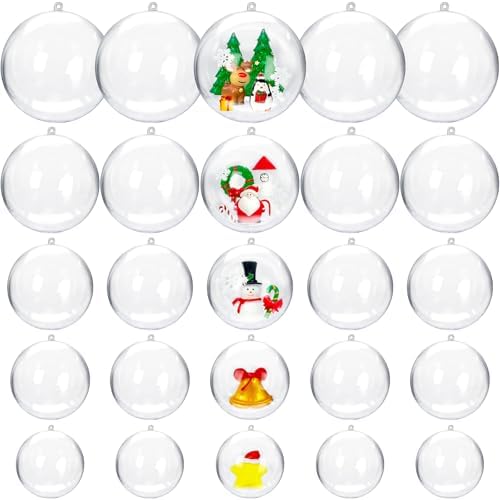
- Package Content:You will receive 25 clear plastic balls,including 5 different sizes,there are five balls of each size,an…
- Different Size:The 5 different sizes are:diameter 1.18″ (3cm),diameter 1.57″ (4cm),diameter 1.97″ (5cm),diameter 2.36″ (…
- Premium Material:Our fillable balls are made of sturdy and durable plastic,non-toxic and odorless,not easy to chip or br…
For SEL activities, the ornament can represent an emotion, strength, coping skill, gratitude, friendship, support person, memory, or hope.
The emotional meaning should remain optional.
The ornament is a creative prompt—not something adults should interpret or diagnose.
Simple Supplies for Homemade Christmas Ornaments
You do not need all of these supplies.
Choose according to the crafts you plan to make:
- cardstock
- clear plastic fillable ornaments
- tissue paper
- ribbon or cord
- washable markers
- colored pencils
- glue sticks
- child-safe scissors
- stickers
- printed photos
- craft beads for appropriate ages
- wooden ornament blanks
- paper strips
- magazines or printed pictures for collage
For classroom use, plastic fillable ornaments are much more practical than glass.
One current option is a set of clear plastic fillable ornaments in several sizes.
View clear fillable Christmas ornaments on Amazon
For projects that need a sturdy flat base, unfinished wood slices with predrilled holes are another reusable option.
View unfinished wooden ornament blanks on Amazon
Paper is still the easiest and cheapest alternative.
A cardstock circle with ribbon through the top is a perfectly good Christmas ornament.
15 DIY Christmas Ornaments for Kids With an SEL Twist
1. Clear Feelings Color Ornament

Cut several colors of paper into thin strips or small pieces.
Ask:
“If today had colors, which colors would you put inside?”
Children place their chosen pieces into a clear ornament.
They might choose:
- one color
- two contrasting colors
- a rainbow
- lots of tiny pieces
- one large piece
- colors they simply like
Do not provide a universal chart such as:
red = angry
blue = sad
unless the child already uses an established visual system.
Instead ask:
“What does your color mean to you?”
Or let the ornament remain unexplained.
This activity pairs particularly well with the more structured Christmas Feelings Check-In With Ornaments.
2. Two Feelings Paper Ornament

Cut a large ornament shape from cardstock and fold it gently down the middle.
One side represents one feeling.
The other represents another.
A child might create:
excited + nervous
happy + tired
proud + worried
calm + disappointed
They can use:
- colors
- drawings
- stickers
- words
- patterns
The important idea is that children do not always experience emotions one at a time.
December especially can contain excitement and stress at the same time.
3. Gratitude Fillable Ornament

Cut narrow paper strips and invite children to add things they appreciate.
Examples might include:
my dog
my friend
Grandma
soccer
our reading corner
pancakes
Fold or roll the papers and place them inside a clear ornament.
You can add one gratitude note or fill the entire ornament over several days.
For a classroom, consider creating one shared gratitude ornament rather than expecting children to publicly reveal every personal response.
For more seasonal reflection ideas, see Eveyou’s Mindful Advent Calendar.
4. Coping Skills Scroll Ornament
This uses the same clear ornament in a different way.
Write simple coping options on narrow strips of paper.
Examples:
- draw
- stretch
- ask for help
- listen to music
- take a short break
- read
- move
- talk to someone
- sit somewhere quieter
Roll each strip into a tiny scroll.
Children can choose only the strategies that fit them.
That matters.
A coping ornament containing fifteen adult-selected strategies is less useful than one containing three things the child might realistically try.
The strips can also be made from plain paper and tied together with ribbon if you do not have fillable ornaments.
5. Strengths Snowflake Ornament
Cut a paper snowflake or use a cardstock snowflake shape.
Write one strength on each branch.
Examples:
creative
curious
persistent
kind
funny
thoughtful
brave
Then ask:
“When have you used one of these?”
That follow-up moves the activity beyond simply collecting positive adjectives.
A child might say:
“I was persistent when my LEGO tower kept falling down.”
That concrete example makes the strength more meaningful.
6. Support People Circle Ornament
Cut several circles in decreasing sizes from paper or cardstock.
Place the child—or an imaginary character—in the center.
Around that circle, add people they could approach.
For example:
- caregiver
- teacher
- counselor
- grandparent
- coach
- trusted relative
Attach the circles together and add ribbon at the top.
For a classroom activity where personal disclosure may not be appropriate, create a support network for a fictional character instead.
Then ask:
“Who could this character ask for help?”
7. Friendship Bead Ornament
Thread craft beads onto ribbon, cord, or another age-appropriate base.
Each bead can represent something that helps friendship.
For example:
listening
fun
honesty
apologizing
respect
taking turns
giving space
Children can choose a color for each idea.
Or they can simply choose beads they like and talk about friendship while they work.
Safety note
Beads and other small craft pieces are not appropriate for every age or child. Use age-appropriate materials and avoid small loose parts where mouthing or swallowing is a concern.
For younger groups, replace beads with large paper circles threaded onto ribbon.
8. Mini Kindness Paper Chain Ornament
Cut thin paper strips.
Write one small kindness action on each:
Invite someone.
Listen.
Help clean up.
Say thank you.
Ask before taking something.
Notice when someone wants space.
Glue the strips into a tiny paper chain.
Loop ribbon through the top and hang it as an ornament.
This can become a whole-class project too.
Each child contributes one link, and the class creates one shared kindness chain for the tree.
9. Worry + Next Step Ornament
Fold a cardstock ornament like a small card.
On the inside left, write:
Something I’m worried about
On the right:
What might help?
Possible responses include:
- ask someone
- find more information
- make a plan
- wait until I know more
- tell someone what happened
- get support
Children can also complete the activity for a fictional character.
This distinction is important because children should not have to disclose personal worries during a public Christmas craft.
10. Comfortable Place Collage Ornament
Cut a large cardstock ornament.
Provide:
- magazine pictures
- printed images
- colored paper
- markers
- stickers
Ask children to create a small collage representing somewhere they feel comfortable.
It might show:
- nature
- bedroom
- library
- family home
- couch
- pet
- quiet corner
Then ask:
“What do you like about this kind of place?”
Possible answers might include:
It’s quiet.
My family is there.
Nobody rushes me.
I can be outside.
The conversation can give adults insight into what kinds of environments the child prefers without asking them to make the craft deeply personal.
11. Self-Kindness Heart Ornament
Cut a heart from cardstock or felt.
Add one short phrase a child could say to themselves after something goes wrong.
Examples:
I can try again.
I can ask for help.
Mistakes happen.
I’m allowed to feel disappointed.
I don’t have to do everything perfectly.
Children can decorate the rest with:
- stickers
- small paper shapes
- drawings
- ribbon
- patterns
Keep the phrases realistic.
Children do not need to replace every difficult emotion with an overly positive statement.
12. My Year in Colors Tissue-Paper Ornament
This is the no-paint companion to the My Year in Colors idea from 17 Christmas Ornament Painting Ideas for Kids.
Tear tissue paper into small pieces.
Children can choose colors representing:
- different parts of their year
- memories
- seasons
- people
- feelings
- favorite experiences
They can glue the pieces onto cardstock or place lightweight paper inside a clear ornament.
Some children will give every color a meaning.
Others will create a pattern because they like how it looks.
Both approaches belong in the activity.
13. Memory Photo Ornament
Choose a photo connected to a positive or meaningful memory.
This might be:
- family photo
- classroom picture
- pet
- school event
- trip
- friend
- child’s artwork
Place the photo on cardstock and create a simple frame around it.
Add:
2026
or:
A Memory I Want to Keep
This can work beautifully as an end-of-year project.
However, classroom teachers should think carefully about access to photos and family circumstances. A drawing can always replace a photograph.
14. Hope Star Ornament
Cut a large star from cardstock.
Ask children to complete:
“Next year, I hope…”
A hope can be:
I hope I make a new friend.
I hope I learn to swim.
I hope I spend more time outside.
I hope school feels easier.
I hope we get a dog.
It does not need to become a SMART goal.
The point is reflection and possibility, not performance planning.
This also creates a natural bridge into New Year Reflection Crafts for Kids.
15. Classroom Community Ornament Garland
Give each student one cardstock ornament.
Use a shared prompt such as:
Something our class does well
or:
Something that helps our classroom feel welcoming
Possible responses:
- helping
- laughing together
- creativity
- listening
- including people
- trying again
- teamwork
Attach the ornaments to a long ribbon or string.
The finished garland becomes a Christmas classroom decoration without displaying children’s private emotional information.
After Christmas, remove the explicitly seasonal pieces and keep the strengths or community messages if they still feel useful.
Which DIY Christmas Ornament Is Best for Your Group?
Not every ornament works equally well in every setting.
Preschool and Early Elementary
Keep the construction simple.
Good choices:
- feelings colors
- tissue-paper ornament
- simple heart
- gratitude drawing
- large paper snowflake
Use larger materials and fewer small pieces.
Grades 3–5
Try:
- gratitude fillable ornament
- coping scroll
- strengths snowflake
- worry + next step
- hope star
- friendship ornament
Children at this age can often connect the visual craft with a more nuanced reflection prompt.
School Counseling Groups
Good options include:
- coping scrolls
- support circles
- two feelings ornament
- self-kindness hearts
- hope ornaments
Keep personal sharing optional.
Whole-Class SEL
Choose prompts that are safer to display publicly:
- gratitude
- kindness
- classroom strengths
- friendship
- hopes
- community
Personal worries or emotional check-ins deserve more privacy.
Clear, Paper or Wooden Ornaments: Which Should You Choose?
You do not need all three.
Clear Fillable Ornaments
Best for:
- gratitude notes
- coping skills strips
- feelings colors
- hopes
- small paper messages
Advantages: visually interesting and reusable as a craft format.
Trade-off: more expensive than cardstock and may involve small pieces.
Use plastic rather than glass when breakage would be a concern.
See the clear fillable ornament set on Amazon
Paper or Cardstock
Best for:
- large classrooms
- younger children
- low budgets
- fast-prep activities
Advantages: inexpensive, easy to cut, easy to draw on, no breakage.
Trade-off: less durable.
For most school SEL activities, this may actually be the most practical material.
Wooden Ornament Blanks
Best for:
- take-home keepsakes
- counseling groups
- permanent classroom sets
- older children
Advantages: sturdy and attractive.
Trade-off: more expensive and less necessary for one-time activities.
The verified Amazon option linked below consists of unfinished predrilled wood slices intended for ornament and craft projects.
View wooden craft ornament blanks on Amazon
A Note About Paint Pens
You do not need paint markers for most activities in this article.
Ordinary markers work beautifully on cardstock.
However, if you combine these projects with your painted ornament activities, a fine paint-marker set can be useful for adding names, words, faces, and small details to suitable craft surfaces.
The current POSCA listing describes the markers as water-based opaque paint markers designed for multiple surfaces.
View POSCA fine paint markers on Amazon
Best for: older children, adult prep, or detailed designs.
Simpler alternative: ordinary washable markers on paper ornaments.
How to Use DIY Christmas Ornaments in School Counseling
You do not need to announce:
“Today we are doing an emotional regulation activity.”
Place several craft options and prompt cards on the table.
For example:
Something that helps me
Someone who supports me
Something I am proud of
A feeling I have had recently
A hope for next year
Let the child choose.
Painting, cutting, folding, or filling an ornament can give the conversation somewhere to go without requiring constant direct eye contact.
And if the child decides to make a snowman instead of finishing the SEL prompt?
That does not automatically mean the activity failed.
Sometimes engaging in the shared activity is enough.
How Teachers Can Use Homemade Ornaments for SEL
For classrooms, I would organize the activity around choice rather than disclosure.
Create four or five prompt cards:
Gratitude
Something I appreciate.
Strength
Something I am good at or learning.
Kindness
Something that helps people feel included.
Hope
Something I hope for next year.
Community
Something our class does well.
Students choose one.
That creates variety without asking everyone to publicly describe difficult emotions.
For broader classroom emotional-learning ideas, see Mental Health Awareness Activities for Upper Elementary Students.
How to Make the Activity More Inclusive
Not every child celebrates Christmas.
Most of these activities can become winter or year-end crafts by changing the shape.
Instead of ornaments, use:
- stars
- snowflakes
- mittens
- circles
- winter trees
- paper tags
A Hope Star works without Christmas.
A Strengths Snowflake works throughout winter.
A My Year in Colors circle works anywhere.
The SEL prompt is more important than the holiday shape.
Common Mistakes With DIY Feelings Ornaments
Making Every Craft Personal
Give children fictional and general options too.
Displaying Private Feelings Publicly
A classroom Christmas tree does not need to announce which student is worried, lonely, or sad.
Use strengths, hopes, gratitude, and community themes for public displays.
Interpreting the Artwork
Ask:
“Tell me about it.”
Do not assume colors, symbols, or design choices have a particular psychological meaning.
Using Too Many Materials
Five simple supplies are easier to manage than twenty-five specialty products.
Focusing on the Finished Ornament
A child’s crooked paper chain or oddly shaped star does not need adult correction.
Expecting the Craft to “Calm” Every Child
Crafting is enjoyable for many children.
It can also be frustrating, boring, or overstimulating for others.
Provide another way to participate when appropriate.
How to Create a Low-Cost Ornament SEL Station
For a very simple station, you need only:
- cardstock
- markers
- scissors
- glue
- ribbon
- prompt cards
Put the prompts in the center:
A feeling
A strength
Something that helps
Something I appreciate
A hope
Students choose one ornament shape and one prompt.
That is enough.
You could add clear ornaments or wooden blanks for selected activities, but the emotional-learning value does not increase because the supply list becomes more expensive.
Frequently Asked Questions
What are easy DIY Christmas ornaments for kids?
Easy homemade ornaments include cardstock ornaments, paper snowflakes, gratitude fillable ornaments, tissue-paper ornaments, photo ornaments, kindness paper chains, hope stars, and clear ornaments filled with colored paper or written messages.
How can homemade Christmas ornaments be used for SEL?
Children can use ornaments to represent feelings, gratitude, strengths, coping skills, friendships, supportive people, memories, or hopes. The SEL value comes from the optional prompt and conversation rather than from the craft itself.
What ornaments work best for classroom crafts?
Cardstock is inexpensive and easy for large groups. Clear plastic ornaments work well for activities involving notes or colored paper. Wooden blanks are useful when you want a sturdier take-home keepsake.
Are clear fillable ornaments suitable for classroom activities?
Plastic fillable ornaments can work well for activities involving gratitude slips, coping strategies, or colored paper. Consider the children’s ages, the size of loose materials, and supervision needs. Avoid fragile glass ornaments when breakage would create a hazard.
What can children put inside clear Christmas ornaments?
Ideas include gratitude notes, coping-strategy strips, colored tissue paper, hopes, strengths, small drawings, or kind messages.
Can these ornaments be used with children who do not celebrate Christmas?
Yes. Replace ornament shapes with snowflakes, stars, circles, winter trees, or year-end reflection tags while keeping the same activity prompt.
Do children have to talk about the meaning of their ornament?
No. Sharing should remain optional. A child can participate in the craft without explaining personal feelings or experiences to the group.
Final Thoughts
The most useful DIY Christmas ornaments for kids do not require an elaborate craft closet.
A piece of cardstock can hold a strength.
A paper snowflake can become a reminder of something a child feels proud of.
A clear ornament can collect gratitude notes.
A tiny paper chain can hold acts of kindness.
And a simple star can carry a hope into the New Year.
The SEL part does not come from making the ornament perfect—or even from making it particularly “therapeutic.”
It comes from giving children another way to represent an idea that might otherwise stay abstract.
Offer a prompt.
Give them materials.
Stay curious.
Let sharing remain optional.
And then leave enough room for the activity to remain what children often need it to be:
a Christmas craft they enjoyed making.

About the Author
Hi, I’m Eve, a former school counselor with a master’s degree in School Psychology and a passionate advocate for children and families navigating sensory challenges. As a mom of children with sensory sensitivities, I deeply understand the journey special-needs parents face, and I dedicate myself to researching and sharing practical solutions to help children thrive and feel comfortable in their bodies. My goal is also to empower counselors, therapists, and psychologists with creative strategies and supportive resources to enrich their everyday practice. When I’m not writing or exploring new therapeutic approaches, you’ll find me spending quality time with my family and continually seeking inspiration from everyday moments.

