
The first weeks of school can look exciting from the outside: fresh notebooks, a new backpack, carefully chosen clothes, and the promise of a new beginning.
For an anxious child, however, the same season may feel full of uncertainty.
They may worry about separating from you, finding the correct classroom, knowing when lunch begins, making a mistake in front of others, coping with a noisy cafeteria, or asking an unfamiliar adult for help. Some children describe these worries clearly. Others show them through stomachaches, tears, irritability, repeated questions, sleep difficulties, or sudden resistance to school.
A thoughtfully prepared school anxiety backpack toolkit can give a child a few familiar supports to reach for during difficult moments. It might contain a small photo of home, a visual schedule, a discreet sensory tool, or a card that helps the child ask for assistance when words feel hard to find.
The goal is not to fill the backpack with every calming product available. Most children need only three to five carefully chosen items that match the situations they genuinely find difficult.
These tools cannot treat anxiety by themselves. What they can do is make the school day feel more predictable, support communication, offer sensory comfort, and remind a child of coping strategies they have already practiced with a trusted adult.
For a broader routine-based approach, you may also find this guide to creating calm back-to-school routines helpful.
This post may contain affiliate links, including Amazon Associate links. If you make a purchase through these links, I may earn a small commission at no extra cost to you.
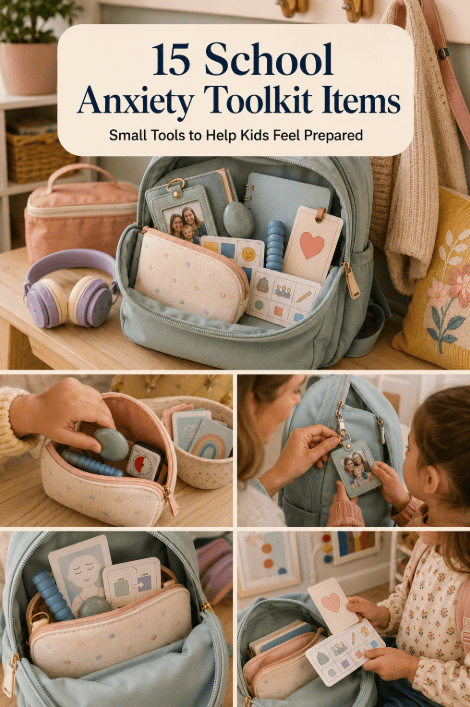
What Is a School Anxiety Backpack Toolkit?
A school anxiety toolkit is a small collection of comforting, sensory, visual, or communication tools that a child can access during the school day.
You may also see it described as:
- an anxiety kit for school;
- a school coping kit;
- a portable calm-down pouch;
- a backpack regulation kit;
- an emotional support pouch for school.
The most practical version fits inside one ordinary pencil pouch or a designated backpack pocket. It should not become another large collection the child has to carry, organize, and remember.
Every item should have a specific purpose.
A visual schedule can support a child who worries about what comes next. A family photo may help with separation. Noise-reducing headphones can make a planned high-noise situation more manageable. A help card may give a child a way to communicate when anxiety makes speaking difficult.
The toolkit works best when the child knows:
- what each item is for;
- when it may be used;
- where it will be stored;
- which adult can help;
- what happens if the tool is not enough.
Before You Buy Anything, Identify the Difficult Moment
It is tempting to buy a large collection of sensory toys, affirmation cards, and calming products. A smaller toolkit is usually easier for a child to understand and use.
Begin by asking when the anxiety is most likely to appear.
If separation is the hardest part
The child may need:
- a small photo of home;
- a familiar pocket token;
- a visual outline of the school day;
- a reminder of when you will return;
- the name of a trusted adult.
If noise or sensory overload is the main problem
The child may benefit from:
- noise-reducing headphones;
- one quiet tactile tool;
- a grounding card;
- a water bottle;
- a planned quiet place.
If asking for help feels difficult
Consider:
- a help card;
- a feelings check-in card;
- a small journal;
- a card naming the adult they can approach;
- a simple script they have practiced.
If transitions create anxiety
Useful tools may include:
- a mini visual schedule;
- a first-then card;
- a visual timer;
- one breathing prompt;
- a brief grounding routine.
If the child fears mistakes
They may need:
- a first-step card;
- a reminder that work does not have to be perfect;
- a help card;
- a small notebook;
- one practiced coping statement.
Choose the problem first. Then choose the product.
Speak With the School Before Sending the Toolkit
Before placing headphones, sensory tools, timers, or personal objects in the backpack, speak with the teacher or school counselor.
Ask:
- Which items are allowed?
- Where will the toolkit be kept?
- When may the child use it?
- Can the child access it independently?
- How can the child signal that they need help?
- Who will respond?
- Are there safety concerns with small items?
- How will the child return to the classroom activity?
This step matters because a quiet fidget can be mistaken for a toy, a timer may disrupt the class, and headphones may not be appropriate in situations where the child needs to hear instructions.
The child should also understand that the toolkit is not a punishment or a reward. It is simply a collection of supports that can help them through a difficult moment.
15 Helpful Items for a School Anxiety Backpack Toolkit
You do not need every item on this list. Select the few options that suit your child’s age, preferences, school rules, and actual needs.
1. A Soft Zippered Coping Pouch
Start with one pouch that holds the entire toolkit.
A soft pencil case usually works better than a bulky plastic container. It fits naturally among school supplies, remains discreet, and keeps small tools from becoming scattered throughout the backpack.
Look for a pouch with:
- a smooth, quiet zipper;
- washable fabric;
- one or two simple sections;
- enough room for three to five tools;
- a color the child can recognize quickly.

- Extra Big Capacity & Easy Access: This pencil case has ample space for up to 100 pens or other necessities such as highl…
- Multiple Compartments for Easy Storage: The dedicated pencil box has multiple compartments. 1 main compartment (with 3 m…
- Wide Opening & Portable Handles Design: The front zipper compartment adopts a full zipper structure, the pencil pouchcan…
A large pouch may encourage you to keep adding items. A compact one naturally limits the toolkit to what is useful.
Browse soft zippered pencil pouches for a school coping kit.
2. A Covered Family Photo Holder
A small photograph can reassure a child who worries about separation or misses home during the day.
Instead of sending a loose photo, place it inside:
- a covered keychain;
- a small photo wallet;
- a laminated folding card;
- a private photo tag attached inside the backpack.
A covered design allows the child to look at the image without displaying it to classmates.
Pair the photo with a simple message:
“This reminds you that we are thinking about you and that we come back after school.”

A photo should support the child’s ability to remain at school, rather than become part of an endless reassurance routine.
See covered family photo keychains and holders..
For another gentle connection idea, read about pocket hugs and small painted reminders that help children feel secure.
3. A Small Transition Object
A transition object is a small item that creates a sense of connection between home and school.
It could be:
- a wooden heart;
- a smooth token;
- a soft fabric keychain;
- a matching bracelet;
- a small object chosen together.
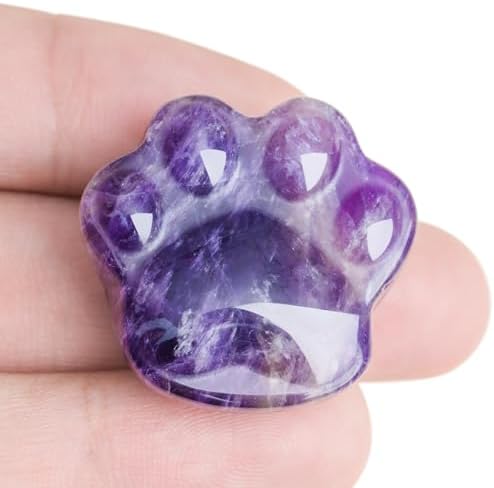
- 【Calming Cat Design & Healing Power】Crafted into an adorable cat paw shape, this natural healing crystal combines soothi…
- 【Harness Natural Energy for Mind-Body Harmony】Align with the vibrations of authentic healing crystals known for their st…
- 【Perfect Anxiety Companion & Pocket-Sized Serenity】Designed as a functional worry stone, its smooth texture and ergonomi…
Choose something quiet, durable, and inexpensive enough that losing it would not become another source of distress.
The most practical option stays attached inside the backpack. The child can touch it briefly without carrying it throughout the classroom.
Browse small wooden pocket-hug tokens.
4. A Mini Visual Schedule
Children often feel less anxious when they can see the basic shape of the day.
A portable visual schedule might show:
- arrival;
- morning lesson;
- snack or break;
- lunch;
- afternoon activity;
- home.
Younger children may prefer pictures, while older children may want simple written words.
Avoid including every tiny part of the day. The schedule should offer orientation, not become another long list to manage.
Look for portable cards that are:
- laminated;
- easy to rearrange;
- attached to a ring;
- simple enough to scan quickly;
- consistent with the school schedule.
Shop portable visual schedule cards for children.

5. A Reusable First-Then Card
A first-then card reduces a large or uncertain moment to two visible steps.
For example:
- First enter the classroom, then check the schedule.
- First finish the first question, then ask for help.
- First put away the backpack, then greet the teacher.
- First complete the transition, then use the quiet corner.
This can be particularly helpful when thinking about the entire school day feels overwhelming.
Choose a reusable first-then board, or make a small laminated card and write on it with a dry-erase marker.
The card should clarify sequence. It does not always need to promise a treat or reward.

- Package Contents: you will receive 1 set of front and backplates, including 2 front and backplates, 1 instruction card, …
- Product Size: the front and back panels and instruction cards are about 9.06 x 7.09 inches/ 23 x 18 cm in size, the 66 g…
- Crafted with quality materials, this set guarantees sturdy and repeated use; Whether applied in classrooms or at home, t…
6. A Compact Visual Timer
Some children become anxious when adults say “soon,” “in a minute,” or “almost finished.” A visual timer makes passing time easier to see.
It may help a child understand:
- how long a task will last;
- when a transition will happen;
- how much break time remains;
- how long they need to wait.
Look for:
- silent operation;
- optional rather than automatic sound;
- simple controls;
- a protective cover;
- a compact design.
Ask the teacher whether a personal timer is appropriate. In some classrooms, it may work better for the teacher to keep a shared visual timer available.
Browse silent visual timers for children.

- [Time Management]: The 60-minute countdown timer shows time passing in a clear and colorful way. The rainbow dial makes …
- [Easy to Use]: Just turn the knob to set the countdown, and the rainbow disk will gradually disappear as time passes—sim…
- [Silent Mode & No Ticking]: Operates silently without ticking sounds, ideal for classrooms, libraries, or study spaces. …
7. A Quiet, Discreet Fidget
A classroom fidget should occupy the hands without demanding constant visual attention.
Useful options may include:
- a soft resistance ring;
- a marble-in-mesh fidget;
- a textured strip;
- a silent silicone finger tool;
- a smooth handheld object.
Look for something that:
- makes no sound;
- has no loose parts;
- fits inside one hand;
- can be cleaned;
- does not roll away;
- does not look like a highly stimulating toy.
Try it at home first. Ask the child to use it while listening to a short story or completing a calm activity. Some children focus better with a tactile tool; others become more distracted.
Explore quiet classroom fidgets.

- New Design Fidgets for Kids Stress Reduce: Through repetitive flipping and diverse sensory stimulation at your fingertip…
- Quiet Fidgets for Focus: Are you looking for fidget items to improve focus? Here it is. This flipping sensory toy allows…
- Premium Material & Durable: These flip stress cubes feature an integrated molding process that effectively prevent loose…
8. A Smooth Worry Stone
A worry stone is a small, smooth object a child can rub with a thumb.
The stone becomes more useful when it is paired with a specific practiced action:
“When you touch the stone, feel your feet on the floor and breathe out slowly.”
Choose a lightweight stone, wooden token, or soft silicone version with smooth edges.
Avoid very small objects for younger children, heavy stones, sharp surfaces, or products with wording that the child may find embarrassing.
Browse worry stones for children.

- 🌿 A Little Pocket Hug for Tough Days — This cute worry stone is designed to comfort anxious minds and heavy hearts. A sm…
- 💗 Calming Anxiety Relief in Your Hands — Smooth and soothing to touch, this stress relief stone helps ease anxiety, redu…
- 🎁 Thoughtful “Thinking of You” Gift — A perfect emotional support gift for friend, daughter, sister, or bestie. Ideal fo…
9. Noise-Reducing Headphones
Cafeterias, assemblies, buses, hallways, and scraping classroom chairs can feel painfully intense for some children.
Noise-reducing headphones may soften the sound without completely blocking awareness of the environment.
Look for:
- comfortable padding;
- adjustable sizing;
- a lightweight folding design;
- a protective storage case;
- an appropriate level of noise reduction.

- Efficient Hearing Protection:Designed specifically for children aged 6+ yrs, JUSTRVN Kids Ear Plugs are made from soft s…
- Customized Fit and Comfort:Equipped with 3 sizes of silicone ear tips (XS,S,M), these kids concert ear protection plugs …
- Multi-Scenario Applicability:JUSTRVN Kids Ear Plugs are versatile and suitable for a wide range of activities. Use them …
Headphones should usually be connected to a specific plan. For example, the child may use them during assemblies or in the cafeteria rather than wearing them throughout the entire day.
Shop noise-reducing headphones for children.
School counselors creating a broader quiet space may also find these sensory room design ideas for regulation and healing useful.
10. A Small Sensory Texture Tool
Some children naturally rub their sleeves, touch fabric edges, or look for soft textures when worried.
A small tactile item may offer the same input in a portable form.
Possible options include:
- a fleece square;
- a satin ribbon tab;
- a ribbed fabric patch;
- a textured silicone strip;
- a soft sensory keychain.

- 【48 Unique Designs】Discover 48 stunning and exclusive designs encompassing 12 different themes, from adorable animals to…
- 【2 Different Surface Patterns】Enjoy sensory stickers with two tactile surface designs – classic gravel touch and stronge…
- 【Waterproof and Multifunctional】 Our anxiety stickers are waterproof, tear-resistant, and stretch-resistant. They are ve…
Let the child choose the texture. Something that feels calming to one child may feel irritating to another.
Choose washable materials without loose beads, sequins, or threads.
Browse discreet sensory texture strips and tools.
11. One Breathing Prompt Card
A worried child may not be able to follow the general instruction to “take a deep breath.” A visual card provides a familiar sequence.
The card might show:
- smelling a flower and blowing out a candle;
- tracing a line while breathing in and out;
- slowly breathing in, pausing, and breathing out longer;
- tracing each finger with the opposite hand.
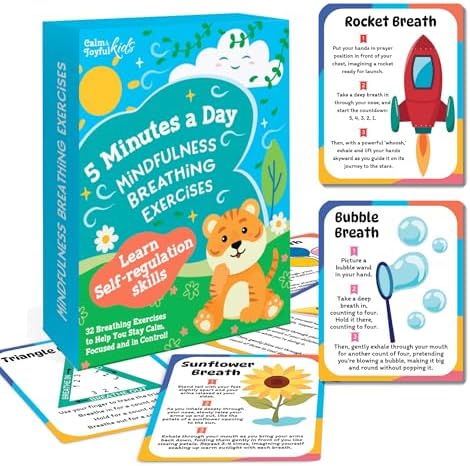
- Help Kids Manage Big Emotions & Stay Focused: When words don’t work, breathing activities help kids release energy, rese…
- Make Mornings & Bedtime Easier: No more fights over getting ready or winding down; breathing exercises help kids wake up…
- A Must Have for SEL Lessons & Counseling: Suitable for special education classrooms, counseling offices, or group activi…
Choose one or two techniques rather than a deck of dozens. Too many choices can make a stressful moment feel more complicated.
Most importantly, practice the breathing activity when the child is already calm. The card should remind them of a familiar skill rather than introduce a completely new one.
Shop breathing exercise cards for children.
For a hands-on way to begin talking about worries at home or in counseling, try this paper worry monster anxiety activity.
12. A Grounding Prompt Card
Grounding directs the child’s attention away from frightening predictions and toward what is happening in the present moment.
A short grounding card might say:
- Feel both feet on the floor.
- Name three things you can see.
- Notice one sound.
- Press your hands together.
- Find one object that feels steady.
Keep the instructions brief. The child should not need to complete a long exercise in front of classmates.
Browse grounding and coping cards for children.
13. A Feelings Check-In Card
Some children know they feel uncomfortable but cannot explain what is happening.
A feelings card can provide:
- a few clear emotion faces;
- a simple intensity scale;
- words such as calm, worried, sad, angry, or overwhelmed;
- a body outline for showing where the feeling is noticed.
Choose a card with a limited number of options. A detailed feelings wheel may be useful during counseling, but it can feel overwhelming in the middle of a stressful school moment.
The card is most effective when adults know how to respond. Pointing to “very worried” should lead to a predictable next step.
See feelings check-in and emotion cards for children.
For older elementary children, these mental health awareness activities can help normalize conversations about feelings and support.
14. A Help Card
Some children need assistance but cannot speak easily when they are anxious.
A small help card might say:
- I need help.
- I do not understand what to do.
- I need a quiet moment.
- Can I speak to my teacher?
- Can I visit the school counselor?
The child can show or hand over the card.
Before adding it to the toolkit, agree with the school on:
- who receives the card;
- what happens after it is shown;
- where the child goes;
- how long the break lasts;
- how the child returns to the activity.
You can create your own laminated card or browse simple communication and help cards for children.
15. A Mini Journal
Some children communicate more easily through writing than speaking.
A small notebook can give them space to record:
- what they are worried about;
- what happened before the feeling grew;
- what they need help with;
- one next step;
- a message for a trusted adult.
Useful prompts include:
- Right now I feel…
- I need help with…
- The smallest next step is…
- The adult I can ask is…
- Something that helped before was…
Choose a notebook that is light, discreet, and easy to open. Journaling should remain optional rather than becoming another assignment.
Discuss privacy clearly. The child should know who is allowed to read the notebook and when.
Browse small journals for children.
The Best Five-Item School Anxiety Toolkit to Start With
Most children do not need 15 separate tools.
A simple starter kit could include:
- One soft zippered pouch
- One connection item, such as a photo or pocket token
- One practiced coping card
- One communication tool, such as a help card
- One sensory item chosen by the child
This combination supports connection, coping, communication, and sensory comfort without creating clutter.
Shop the Basic Toolkit
- Soft zippered coping pouch
- Covered family photo keychain
- Breathing and coping cards
- Quiet classroom fidget
- Portable visual schedule
Add another item only when it addresses a clearly identified need.
How to Introduce the Toolkit Before School
Do not place several unfamiliar products in the backpack on the first school morning and expect the child to use them independently.
Let the child help choose
Offer two or three suitable options.
Ask:
- Which texture feels most comfortable?
- Which pouch would be easiest to find?
- Would you rather use a help card or write in a notebook?
- Does this tool feel useful or embarrassing?
- Where should it stay?
A tool the child dislikes is unlikely to help, no matter how well reviewed it is.
Practice during a calm moment
Role-play a realistic situation:
“Imagine the lunchroom is louder than you expected. What could you do first?”
The child might identify their headphones, grounding card, or trusted adult.
Give every item one clear job
The worry stone may mean “feet on the floor and one slow breath.” The help card may mean “show this to the teacher.” The family photo may mean “home is still there, and we reunite after school.”
Clear associations reduce the number of decisions the child has to make while anxious.
Decide where the kit will stay
Possible locations include:
- the front backpack pocket;
- the child’s desk;
- a classroom calm area;
- a cubby;
- the school counselor’s office.
The best storage location is the one the child can reach at the right time.
For the rest of the bag, connect this kit to a simple backpack organization system for forgetful kids so the coping pouch does not become buried beneath school supplies.
Review the Toolkit Regularly
During the first few weeks, check the pouch once a week.
Remove:
- products the child never uses;
- tools that have become distracting;
- duplicate items;
- damaged cards;
- objects that are difficult to access;
- items that no longer match the school plan.
Ask the child:
- Which item helped?
- Which item was difficult to use?
- Could you reach the pouch?
- Did you know which adult to ask?
- Is there something you want to remove?
A useful school anxiety toolkit often becomes smaller over time.
What the Toolkit Cannot Replace
A portable coping kit may support a child, but it cannot replace:
- a trusting relationship with school staff;
- predictable routines;
- gradual practice with difficult situations;
- appropriate classroom support;
- communication between home and school;
- professional care when anxiety significantly affects daily life.
Consider seeking additional support when anxiety regularly leads to school refusal, vomiting, panic-like episodes, severe sleep disruption, persistent physical complaints, or an inability to participate in ordinary school activities.
A pediatrician, school counselor, psychologist, or another qualified professional can help explore what is contributing to the difficulty and develop a broader plan.
The backpack toolkit should be one practical part of that support—not the entire solution.
A Small Toolkit Can Make School Feel More Predictable
The best school anxiety backpack toolkit is not the one with the greatest number of products. It is the one the child understands, accepts, and can use with support from trusted adults.
Begin with the moment that feels hardest.
For separation anxiety, choose one meaningful connection item and a visual reminder of the school day. For sensory overload, agree on when a quiet tactile tool or headphones can be used. For speaking anxiety, create a help card and identify exactly who will respond.
A few familiar tools will not remove every worry. They can, however, help a child remember:
- I know what happens next.
- I have something I can try.
- I know who can help me.
- Home is still there.
- This difficult moment will pass.
That is far more useful than carrying a backpack full of products the child does not understand or use.

About the Author
Hi, I’m Eve, a former school counselor with a master’s degree in School Psychology and a passionate advocate for children and families navigating sensory challenges. As a mom of children with sensory sensitivities, I deeply understand the journey special-needs parents face, and I dedicate myself to researching and sharing practical solutions to help children thrive and feel comfortable in their bodies. My goal is also to empower counselors, therapists, and psychologists with creative strategies and supportive resources to enrich their everyday practice. When I’m not writing or exploring new therapeutic approaches, you’ll find me spending quality time with my family and continually seeking inspiration from everyday moments.

