
Is it strange that my school counselor toolkit contains both tissues for tears and sneakers for hallway sprints?
Because during the first week of school, I am everywhere. Greeting new students. Checking in with teachers. Walking nervous children to class. Answering “Can I talk to you?” notes. Helping with friendship worries, morning tears, schedule changes, and the kind of big feelings that seem to arrive before the first bell has even finished ringing.
By the third day of school, even the calmest adults can start wishing for a reset button.
That is exactly why back-to-school calm corners can be so helpful.
Not as a punishment. Not as a place to send a child away. Not as a pretty Pinterest corner that no one knows how to use.
A good calm corner is a small, predictable space where students can pause, regulate, and return to learning with more support. It gives children a place to practice emotional regulation before emotions become too big to manage in the middle of the room.
And the best part? A classroom calm corner does not need to be expensive.
With a small rug, a few calming visuals, a basket of sensory tools, and clear routines, you can create a calm-down space that feels warm, practical, and ready for the school year.
This post may contain affiliate links, including Amazon and selected partner links. If you make a purchase through these links, I may earn a small commission at no extra cost to you.

What Is a Classroom Calm Corner?
A classroom calm corner is a small, designated space where students can go for a short regulation break.
It may include a chair, floor cushion, soft rug, feelings chart, breathing cards, fidgets, noise-reducing headphones, calming books, or a visual timer. The goal is not to remove the student from the classroom emotionally. The goal is to help the student notice what is happening in their body, use a coping strategy, and return when they are ready.
For back-to-school season, calm corners are especially helpful because students are adjusting to:
- New teachers
- New classmates
- New routines
- More noise and stimulation
- Separation from caregivers
- Academic expectations
- Friendship changes
- Uncertainty about where they belong
A calm corner gives students a simple message: big feelings are allowed here, and we have tools to help.
A Calm Corner Is Not a Punishment Corner
This is the most important part.
A calm corner should never feel like “time out,” public shame, or a place where students are sent because adults are frustrated.
Instead, introduce it as a learning tool.
You might say:
“Everyone has moments when their body feels too full, too fast, too worried, or too upset. This space is here to help us pause, breathe, and choose what our body needs so we can return to learning.”
That small shift matters. When the space is framed as supportive, students are more likely to use it before they reach the point of meltdown, shutdown, or conflict.
Why Calm Corners Work Best When They Are Simple
A calm corner does not need to look like a therapy office, sensory room, or cozy reading loft.
In fact, overly decorated calm corners can become distracting. Too many fidgets, bright posters, lights, textures, and choices can overwhelm the very students who need a quieter space.
The best classroom calm corners usually have five simple elements:
- A clear boundary
- A comfortable place to sit
- A few calming tools
- Easy-to-understand visuals
- A routine for returning to class
Think “small and usable,” not “perfect and expensive.”
A four-square-foot nook, the side of a bookshelf, a repurposed reading corner, or a portable crate can work beautifully.
Shop the Calm Corner Essentials
You can create many calm corner pieces with free printables and classroom supplies, but a few thoughtful purchases can make the space easier to use and maintain.
- Washable classroom rug or small sensory mat
- Floor cushion or small child-friendly chair
- Visual timer
- Noise-reducing headphones for kids
- Soft fidget toys
- Storage baskets or clear bins
- Calm-down cards or breathing prompt cards
- Feelings chart
- Laminating sheets or dry-erase sleeves
- Battery-operated lamp or warm clip-on light, if allowed by school policy
- Weighted lap pad, only if appropriate and approved for your setting
- Calming picture books about emotions
1. Start With a Soft, Clear Boundary
A calm corner should feel separate enough to signal, “This is a reset space,” but open enough that it still feels safe and supervised.
You can create a boundary with:
- A small rug
- A bookshelf
- A low divider
- A curtain panel, if allowed
- A corner of the classroom
- A taped floor outline
- A cozy mat beside a shelf
- A portable crate that can move to different spaces
The boundary helps students understand where the calm corner begins and ends. It also helps the rest of the class recognize that this space has a specific purpose.
For small classrooms, a rug may be enough. Choose something washable, low-pile, and easy to clean. A soft texture can help the space feel different from the rest of the classroom without becoming visually busy.
2. Choose Seating That Feels Safe, Not Distracting

A calm corner needs one simple place to sit.
That might be:
- A floor cushion
- A beanbag-style chair
- A small child-sized chair
- A soft mat
- A classroom stool
- A folded blanket
- A small bench
- A thrifted accent chair for older students
Avoid anything so exciting that students want to visit just because it feels like a reward. The seating should feel comforting, not like a playground attraction.
For younger students, floor cushions or a small rug often work well. For upper elementary students, a chair and small side table may feel more respectful and less babyish. For middle school students, keep the space subtle: a simple chair, a visual timer, a few coping cards, and headphones may be enough.
A 4-square-foot nook or repurposed coat closet works fine—think “small therapy office idea” instead of Pinterest-perfect reading loft.
3. Add a Small Calm-Down Basket
A calm-down basket is one of the easiest ways to make the space functional.
Instead of filling it with random toys, choose tools by purpose.

Squeeze Tools
These are helpful for students who need pressure or hand movement.
Ideas:
Trace Tools
These are helpful for students who need slow, repetitive movement.
Ideas:
- Finger labyrinth cards
- Breathing shape cards
- Sandpaper letters or textured cards
- A laminated infinity loop for finger tracing
Focus Tools
These are helpful for students who need something quiet to look at or hold.
Ideas:
Think Tools
These help students name what is happening.
Ideas:
Use labels with words and icons so emerging readers, multilingual learners, and younger students can use the basket independently.
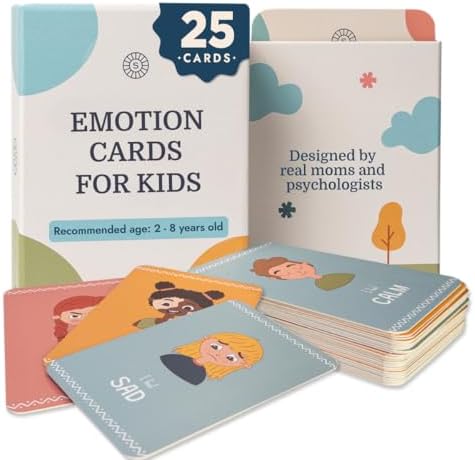
- 25 Emotion Cards for Kids – Includes 25 emotions flash cards for kids with expressive, colorful illustrations that help …
- Essential Skill Development: Build emotional intelligence with emotion flash cards for toddlers; this big feelings deck …
- Child-Safe Design: Crafted from high-quality materials, this feelings flash cards deck is safe & durable for toddlers; r…

- 【Complete Set】This colorful feelings pocket cards for classroom includes 36 feelings pockets (9 designs, 4 each) and 36 …
- 【Social Emotional Learning Tool】Designed for social emotional learning chart activities, this set comes with 2 large “to…
- 【Engaging Visual Aid】This toddler emotions chart helps children recognize and express their emotions. With 36 pockets an…
4. Use Visuals That Teach Regulation

A calm corner should not just be pretty. It should teach.
The best visuals are simple enough for a student to use when they are already upset.
Consider adding:
- “How Do I Feel?” chart
- “What Does My Body Need?” chart
- Breathing steps
- Grounding prompt
- Coping choices
- Return-to-class routine
- “Ask for help” reminder
- “Feelings are not bad” affirmation
Instead of covering the wall with ten posters, choose three strong visuals.
A helpful calm corner wall might include:
- Name your feeling
- Choose a calming tool
- Take three breaths
- Return when ready
This gives students a path instead of just a place.
5. Add Gentle Lighting Only If It Is Safe and Allowed
Many classrooms rely on bright overhead lighting, which can feel intense for some students. A small warm light can make a calm corner feel softer, especially during the first weeks of school when the environment is already full of stimulation.
Good options may include:
- Battery-operated lamp
- Clip-on warm light
- Small lantern
- Fairy lights inside a clear container
- Light-up timer
- Soft desk lamp
Always check your school’s safety rules before using lamps, cords, batteries, or plug-in lighting. If extra lighting is not allowed, you can still create softness with neutral colors, a small rug, and calming visuals.

- – CUTE MUSHROOM BUNNY FAIRY DESIGN: Adorable cartoon mushroom house with cute bunny shape builds warm and whimsical bedr…
- – EASY TAP CONTROL & 3-LEVEL DIMMABLE: Soft BPA-free silicone lamp cover supports simple tap operation, easy for kids’ s…
- – 30/60 MIN AUTO-OFF TIMER FUNCTION: Built-in auto-off timer avoids all-night power consumption, saves battery life and …
6. Keep the Color Palette Calm and Classroom-Friendly
Back-to-school decor can get loud quickly. Bright borders, bold patterns, neon labels, and crowded walls may look cheerful, but they can also make a calm corner feel visually busy.
Try choosing two or three colors and repeating them throughout the space.
Calm classroom color combinations:
- Sage green, cream, and light wood
- Soft blue, white, and beige
- Warm gray, muted yellow, and natural textures
- Dusty teal, cream, and tan
- Pale peach, sage, and soft white
You do not have to redecorate the whole classroom. Just keeping the calm corner visually consistent can make the space feel more intentional.
7. Create a Portable Calm Kit for Shared Spaces
Not every teacher has room for a permanent calm corner. Some classrooms are tiny. Some school counselors serve multiple grade levels. Some teachers move between rooms.
A portable calm kit can be just as useful.
Use a basket, rolling cart, caddy, or small crate and include:
- Visual timer
- Feelings cards
- Breathing cards
- Two or three fidgets
- Noise-reducing headphones
- Small notebook
- Pencil
- Mini clipboard
- Calm-down strategy cards
- Soft item or grounding object
This kit can travel to a hallway alcove, counseling office, library corner, resource room, or quiet classroom area.
For more ideas that connect calming tools with child-friendly spaces, add an internal link to your article on Waiting Room SEL Tools.
Calm Corner Supplies Worth Buying
If you want to add stronger affiliate value to this article, this is the section where it makes the most sense. Readers who arrive from Pinterest are often looking for practical ideas they can recreate quickly.
Visual Timer
A visual timer helps students understand that the calm corner is a short break, not an escape from learning. It reduces the need for repeated verbal reminders and supports independence.
Best for: classrooms where students need clear time boundaries.

- Simple Concept: As time passes, the rainbow disk of visual timer disappears counterclockwise; It is interesting and supe…
- Easy to Use: By turning the center knob clockwise, the rainbow disk can be adjusted to the desired time duration, then t…
- No Ticking and Mute Function: No ticking when the kids timer is working, ideal for sound-sensitive environments; 3 alert…
Noise-Reducing Headphones
Noise-reducing headphones can help students who feel overwhelmed by classroom sound, transitions, lunchroom noise, assemblies, or group work.
Best for: sensory-sensitive students, loud classrooms, shared spaces, or calm kits.
Washable Rug
A small washable rug creates a visual and physical boundary. It also makes the calm corner feel intentional without requiring furniture.
Best for: classrooms with tile floors, small spaces, or younger students.
Fidget Set
A small fidget set can be useful when it includes quiet, non-distracting tools. Avoid loud, flashy, or toy-like items that pull attention away from regulation.
Best for: students who calm through movement or hand pressure.
Storage Baskets
Baskets make calm corner tools easy to find and easy to reset. Choose matching or neutral bins to reduce visual clutter.
Best for: teachers who want the space to stay tidy with minimal effort.
Calm-Down Cards
Calm-down cards give students specific ideas when they cannot think clearly. Cards might include breathing, stretching, grounding, drawing, asking for help, or taking a water break.
Best for: students who need step-by-step options.
Feelings Chart
A feelings chart helps students name what they are experiencing. Keep it simple and age-appropriate.
Best for: early elementary students, counseling groups, and classrooms building emotional vocabulary.
Laminating Sheets or Dry-Erase Sleeves
These make printables last longer and allow students to reuse check-in sheets, breathing maps, or reflection prompts.
Best for: teachers who want low-cost, reusable materials.
Budget-Friendly Calm Corner Setup Under $30
Here is a simple version you could build with discount-store, thrifted, or already-owned items.
The $30 Calm Corner Plan
- Small rug or mat: $5–$10
- Basket or bin: $2–$5
- Printed feelings chart: free or low cost
- Printed breathing cards: free or low cost
- Stress ball or soft fidget: $2–$5
- Small notebook and pencil: $2
- Visual timer: $5–$10
- Soft pillow or cushion: thrifted or already owned
You can make this even cheaper by using classroom supplies, donated baskets, printable visuals, and a chair you already have.
The goal is not to build a perfect corner. The goal is to build a predictable place for practicing calm.
How to Teach Students to Use the Calm Corner
A calm corner only works when students know how to use it.
Do not wait until a child is crying, yelling, refusing work, or hiding under a desk to introduce the space. Teach it during a calm moment, just like you would teach lining up, turning in homework, or using classroom materials.
A Simple Mini Lesson
You can introduce the calm corner in 10 minutes.
Say:
“Sometimes our brains and bodies need a short break. This does not mean we are in trouble. It means we are practicing how to notice our feelings and choose a strategy. This is our calm corner. We use it to pause, breathe, and get ready to return.”
Then model the routine:
- Point to the feelings chart.
- Name a feeling.
- Choose one tool.
- Use the timer.
- Return to the group.
You might model it with a simple example:
“I am feeling frustrated because my pencil broke. I am going to sit in the calm corner, take three breaths, squeeze the stress ball, and come back when the timer is done.”
Then let students practice when they are not upset.
Practice makes the space feel normal. Normal makes it easier to use when feelings are actually big.
Calm Corner Rules That Keep the Space Helpful
The rules should be simple, visible, and positively worded.
Try:
- One person at a time.
- Use quiet tools.
- Choose one strategy.
- Stay for the timer.
- Return when ready.
- Ask for help if you still feel stuck.
For some classrooms, two students may be allowed if the calm corner is used for peer support or conflict repair. For most spaces, one student at a time is easier to manage.
Avoid rules that sound harsh, such as “Do not play,” “Do not waste time,” or “Do not go there to avoid work.” Instead, teach what the space is for.
What to Include by Grade Level
Kindergarten to Grade 2
Younger students need concrete, visual, and body-based tools.
Include:
- Feelings faces
- Picture-based coping cards
- Soft fidgets
- Stuffed animal or soft item
- Breathing visuals
- Short timer
- Drawing paper
- Simple “I feel” cards
Keep choices limited. Three tools may be enough.
Grades 3 to 5
Upper elementary students often need more privacy and dignity.
Include:
- Feelings chart with more emotion words
- Coping strategy cards
- Journal prompts
- Visual timer
- Quiet fidgets
- Noise-reducing headphones
- Problem-solving card
- Return-to-class reflection sheet
This age group often appreciates tools that do not feel too childish.
Middle School
Middle school calm corners should feel subtle and respectful.
Include:
- Small seating area
- Neutral visuals
- Breathing or grounding cards
- Headphones
- Journal cards
- Stress ball or putty
- Timer
- Calm pass or reset card
Avoid babyish language. Use words like reset, pause, regulate, reflect, and return.
Counselor-Teacher Collaboration Tips
A calm corner becomes more effective when teachers and counselors use similar language.
As a school counselor, you can support teachers by offering:
- A one-page calm corner routine
- A short classroom lesson
- Printable coping cards
- A list of appropriate tools
- A reset pass system
- A simple referral form for follow-up
- A monthly check-in to see what is working
Try a Morning Check-In System
Students can quietly indicate how they are feeling with a private check-in system. This might be a sticky note, card, folder, or digital form.
Keep it simple and confidential.
The goal is not to collect data for the sake of data. The goal is to notice who may need support before the day becomes harder.
Use a Quick Counselor Follow-Up Form
Teachers can use a short form when a student repeatedly needs the calm corner, seems distressed, or may benefit from a counselor check-in.
Possible fields:
- Student name
- Date
- What happened before the break?
- What strategy did the student use?
- Did the student return to learning?
- Is counselor follow-up requested?
This helps the counselor see patterns without requiring long emails during the school day.
What to Avoid in a Calm Corner
A calm corner should feel supportive, not overstimulating or punitive.
Avoid:
- Too many fidgets
- Strong scents or essential oils
- Unsupervised enclosed spaces
- Public behavior charts connected to the corner
- Sending students there in anger
- Using the space as a consequence
- Items that are loud, messy, or hard to sanitize
- Posters with too much text
- Tools students have not been taught to use
- Expecting the calm corner to replace individualized support plans
A calm corner is one part of a larger support system. Some students may need individualized strategies, counseling support, special education services, behavior plans, or collaboration with families and outside providers.
How to Maintain the Calm Corner
A calm corner needs a simple reset routine or it quickly becomes a messy bin of broken fidgets and wrinkled papers.
Try this weekly rhythm.
Monday: Quick Visual Check
Look for clutter, missing tools, or items that need replacing.
Wednesday: Sanitize and Reset
Wipe down fidgets, headphones, timer, and seating surfaces according to school guidelines.
Friday: Review What Students Used
Notice which tools helped and which became distracting. Remove anything that is not serving the purpose.
Once a month, rotate one or two items to keep the space fresh without making it overly exciting.
Grab Your Free Calm-Corner Starter Kit
Final Thoughts
Final Thoughts
A back-to-school calm corner does not need to be expensive, elaborate, or Pinterest-perfect.
It needs to be clear, respectful, and taught with care.
A small rug, a basket of calming tools, a few visual prompts, and a predictable routine can give students a place to practice one of the most important school skills: noticing what they feel and learning what helps.
For teachers, it can reduce the pressure to solve every big feeling in the middle of instruction.
For school counselors, it can become a bridge between classroom support, emotional regulation lessons, and early intervention.
And for students, it can offer something beautifully simple during a busy school day:
A place to pause.
A place to breathe.
A place to begin again.


About the Author
Hi, I’m Eve, a former school counselor with a master’s degree in School Psychology and a passionate advocate for children and families navigating sensory challenges. As a mom of children with sensory sensitivities, I deeply understand the journey special-needs parents face, and I dedicate myself to researching and sharing practical solutions to help children thrive and feel comfortable in their bodies. My goal is also to empower counselors, therapists, and psychologists with creative strategies and supportive resources to enrich their everyday practice. When I’m not writing or exploring new therapeutic approaches, you’ll find me spending quality time with my family and continually seeking inspiration from everyday moments.


Hello!
Love your calming corner ideas. In the first picture the posters are shown hanging from a wooden rod? Love this!
Can I ask where you found these?
Thank you!