
The first weeks of school can feel exciting, hopeful, awkward, overwhelming, and a little bit scary—all at the same time.
A child may look perfectly fine while quietly wondering: Where will I sit at lunch? What if I do not know anyone? What if I get in trouble? What if I miss my mom? What if everyone else already knows what to do?
That is why back-to-school counseling activities matter. They give children a gentle, low-pressure way to name what they are feeling, build connection with peers, and practice what to do when big feelings show up at school.
Whether you are a school counselor, teacher, child therapist, or parent supporting a child through a new school year, these activities can help make the transition feel more predictable and emotionally safe.
This post may contain affiliate links, including Amazon and selected partner links. If you make a purchase through these links, I may earn a small commission at no extra cost to you.

Why Back-to-School Counseling Activities Matter
The first days of school are not only about learning schedules, classroom rules, and names. Children are also trying to understand the social world around them.
They are noticing who feels familiar, where they fit, whether adults feel safe, and what happens when they make a mistake or need help.
Simple social-emotional learning activities can support this adjustment by helping children:
- recognize and name emotions
- build trust with adults and peers
- practice asking for help
- learn calming strategies before they need them
- feel more prepared for unfamiliar routines
- see that other children have worries too
- build a stronger sense of belonging
The goal is not to force every child to talk about their feelings on the first day. The goal is to create many small moments that quietly communicate: You are welcome here. You are allowed to need support. You do not have to figure everything out alone.
How to Use These Back-to-School Counseling Activities
You do not need to use all 25 activities at once.
A helpful first-month rhythm might include:
- one brief emotional check-in activity
- one relationship-building activity
- one coping-skill or problem-solving activity
- one simple reflection activity at the end of the week
Many of these ideas can be used in classroom lessons, small counseling groups, lunch bunch groups, individual counseling sessions, morning meetings, calm corners, or at home.

- Paper
- Social Emotional Learning Classroom Décor: Check-in on your students’ well-being with Carson Dellosa’s 46-piece We Stick…
- SEL Curriculum: Perfect for your calm down corner or circle time, help your students build essential social-emotional sk…

- Emotion Identification Tool: these feelings emotions flashcards feature 54 vibrant monster expressions covering a full s…
- Durable and Portable Learning Kit: the emotion flashcards measure 3 x 4.7 inches; These laminated cards are waterproof f…
- Dual-sided Educational Design: side A presents 54 vivid monster faces for intuitive emotion recognition, while Side B pr…
1. The “How Am I Walking In Today?” Check-In
Place several feeling cards, faces, colors, or simple words near the entrance to your counseling office or classroom.
Invite children to point to, choose, or place a small clip next to the feeling that best matches how they are arriving.
You might include choices such as:
- excited
- nervous
- tired
- curious
- shy
- calm
- worried
- happy
- unsure
This works especially well because it does not require children to explain themselves publicly. It gives you a gentle opening to notice who may need extra connection.
A child who chooses “worried” does not necessarily need a long conversation right away. A quiet “I noticed you picked worried. I am glad you are here” can be enough to help them feel seen.
2. My Safe People at School Map
Give children a simple worksheet with a small outline of a school building or a blank page titled: “People Who Can Help Me at School.”

Ask them to draw or write the names of adults they can go to when they need help. This might include:
- their teacher
- school counselor
- classroom aide
- principal
- nurse
- librarian
- coach
- lunch supervisor
- trusted family member
For younger children, use simple stick figures or photos of key school staff when possible.
This activity helps children turn the vague idea of “asking for help” into a real, practical plan.
3. The Back-to-School Worry and Help Plan
Give each child two sections on a page:
Something I might worry about at school:
Something that could help me:
Examples might include:
- “I worry I will not know where to go.”
- “I can ask my teacher or look at the visual schedule.”
- “I worry that no one will play with me.”
- “I can ask someone, ‘Can I join you?’ or tell an adult I need help.”
- “I worry I will miss home.”
- “I can carry a small comfort token, take a few slow breaths, and remember when I will see my family again.”
This activity helps children understand that worries are allowed, but they do not have to face them without a plan.
4. School Tour Bingo
Create a simple bingo-style sheet with school locations, people, and routines children may need to know.
Squares could include:
- find the nurse’s office
- find the library
- find the bathroom near your classroom
- find the cafeteria
- find the playground
- meet the school counselor
- spot a quiet place where you can take a break
- find the office
- learn where backpacks go
This is especially helpful for kindergarteners, new students, children changing schools, and students who feel anxious about unfamiliar routines.
Turn the tour into a small adventure rather than a serious lesson. Familiarity can make a large school building feel much less intimidating.
5. “What I Wish My Teacher Knew” Cards
Invite children to complete one or more sentence starters privately:
- “I learn best when…”
- “Something that helps me feel calm is…”
- “I can feel nervous when…”
- “I am really good at…”
- “I want my teacher to know that…”
- “One thing I hope happens this year is…”
Children can choose whether they want to share their cards. This activity should never become a requirement to disclose something personal.
For counselors, this can offer valuable information about support needs, friendship concerns, learning preferences, and emotional triggers early in the year.

- PRESCHOOL & CLASSROOM EMOTIONAL LEARNING TOOL: This Feelings Chart is a complete preschool teacher supply designed to su…
- KINDERGARTEN CALM DOWN CORNER ESSENTIAL: Perfect for calm down corner and classroom behavior support, this emotion chart…
- SOCIAL EMOTIONAL LEARNING & SPECIAL EDUCATION SUPPORT: Designed for social emotional learning (SEL) activities, this vis…
6. Name, Feeling, and Favorite Thing Circle
This is a simple first-week activity for younger children or groups that need an easy, low-pressure introduction.
Each child shares:
- their name
- one feeling they have about school
- one favorite thing
For example: “I am Noah. I feel a little nervous. My favorite thing is dinosaurs.”
The group can then repeat the child’s name together: “Welcome, Noah.”
It takes only a few minutes, but it creates an early sense of recognition and inclusion.
7. The “I Can Be Brave” Badge

Invite children to create a paper badge, sticker, or small card that says:
I can be brave when…
Children can finish the sentence with their own goal:
- “I can be brave when I walk into my classroom.”
- “I can be brave when I try a new game.”
- “I can be brave when I ask for help.”
- “I can be brave when I make a mistake.”
Avoid presenting bravery as “not being scared.” Instead, explain that bravery means taking a helpful step even when a feeling is uncomfortable.

- Package Information: you will get 54 pieces of blank award ribbon cutouts, 9 colors, each color has 6 pieces; Sufficient…
- Widely Applicable: our paper ribbon awards can be given as rewards for good behavior, and they can be applied to decorat…
- 9 Colors: our flower shape ribbon awards classroom decorations are designed in 9 colors, with flower appearance, in line…
8. Find Someone Who…
Create a simple sheet with friendly prompts such as:
- Find someone who likes drawing.
- Find someone who has a pet.
- Find someone who likes the same color as you.
- Find someone who enjoys building things.
- Find someone who likes to read.
- Find someone who has a favorite snack you would like to try.
This is a useful school counseling icebreaker because it gives children a reason to approach one another without needing to invent a conversation from scratch.
For shy children, offer the option to complete the activity with a partner or adult support.
9. Common Ground Corners
Label four areas of the room with simple choices, such as:
- cats / dogs
- drawing / building
- outdoors / indoors
- sweet snacks / salty snacks
- books / games
Ask children to move to the corner that fits their answer. Then invite them to notice who chose the same thing.
This activity naturally creates small moments of connection. It also helps children see that friendship often begins with simple shared interests.
10. Friendly Question Cube

Create a soft paper cube with simple questions on each side:
- What is something you enjoy?
- What are you looking forward to this year?
- What makes you laugh?
- What is a food you love?
- What is something you are good at?
- What is one thing that helps you feel calm?
Children roll the cube and answer the question. This works beautifully in lunch bunch groups, small counseling groups, and first-week classroom circles.
Keep questions light at first. Children are more likely to open up after they feel safe and know what to expect.

- 📦 Complete Set & Size: Includes 1 red foam dice measuring 5.9 inches on each side, designed as a large learning cube wit…
- 🧩 DIY Pocket Design: Each face features a transparent pocket, making this classroom dice ideal for inserting prompts, wo…
- 🟠 Soft & Quiet Foam Material: Made from lightweight, durable soft foam, this foam dice is easy to toss, gentle to handle…
11. The “Same Here” Activity
Read a series of neutral statements and invite children to raise a hand, hold up a card, or take one small step forward if the statement feels true for them.
Try statements like:
- “I felt excited about school this morning.”
- “I felt nervous about school this morning.”
- “I like making new friends.”
- “Sometimes I need quiet time.”
- “I like to know what is going to happen next.”
- “I miss summer a little bit.”
- “I like when adults explain things clearly.”
This activity helps children see that they are not the only ones having complicated feelings about the start of school.
12. Classroom Friendship Recipe

Give children a large paper bowl, pot, or recipe card. Ask them to brainstorm ingredients for a kind classroom or group.
Their “recipe” might include:
- one cup of listening
- two spoons of kindness
- a sprinkle of patience
- a big scoop of including others
- a dash of saying sorry
- plenty of taking turns
Display the finished recipe in the classroom or counseling space. Revisit it when friendship problems arise later in the year.
13. Compliment Chain
Give each child a paper strip. Invite them to write or draw a kind observation about someone in the group.
Examples:
- “You helped me find my seat.”
- “You are good at drawing.”
- “You smiled at me.”
- “You shared with me.”
- “You made the game fun.”
Connect the strips into one long paper chain. Explain that a welcoming school community is built through many small choices, not one perfect big gesture.
For younger children, adults can write down the child’s words for them.
14. The New Student Welcome Kit Challenge
In small groups, ask children to imagine a new student is arriving tomorrow.
What would that student need to feel more comfortable?
Invite groups to create a simple welcome kit with ideas such as:
- a map of the school
- names of helpful adults
- a kind note
- a lunch buddy invitation
- a visual schedule
- favorite playground games
- a “you can sit with us” card
This activity builds empathy while also helping current students reflect on what makes them feel safe.
15. Body Clues of Big Feelings
Draw a simple outline of a child’s body on paper. Ask children where they notice feelings in their body.
They might draw or write:
- butterflies in the stomach
- hot cheeks
- tight shoulders
- shaky hands
- fast heartbeat
- heavy eyes
- wiggly legs
Teach children that body clues are not “bad.” They are signals that can help us notice when we may need a break, a coping strategy, movement, water, or support from an adult.
16. Coping Skills Practice Stations

Set up three to five simple stations around the room. Each station teaches one calming or grounding strategy.
Examples include:
Breathing station:
Practice smelling a pretend flower and blowing out a pretend candle.
Movement station:
Try wall pushes, chair stretches, or slow animal walks.
Drawing station:
Draw a place where you feel peaceful.
Sensory station:
Explore a quiet fidget, soft fabric square, or textured grounding object.
Kind words station:
Choose a helpful thought, such as “I can take one step at a time.”
The key word is practice. Children are more likely to use a skill when they have tried it during a calm moment first.
17. Make a Calm-Down Plan Card
Create a small card children can keep in a desk, backpack, calm-down kit, or counseling folder.
It can include:
When I feel upset at school, I can:
- take five slow breaths
- ask for a drink of water
- use my quiet fidget
- ask for a short break
- talk to a trusted adult
- draw for a few minutes
- use a calming phrase
- ask for help with the problem
Let children choose three strategies that feel realistic for them. A plan works better when it is personal and simple.
18. Calm Corner Tour and Practice

Do not wait until a child is dysregulated to explain the calm corner.
During the first week, introduce it calmly. Show children:
- where it is
- what tools are available
- how long they may stay
- how to ask to use it
- what respectful use looks like
- how they know they are ready to return
Then let children practice visiting the space for one or two minutes when they are already calm.
This makes the calm corner feel like a supportive tool, not a punishment area.
19. Back-to-School Story Stones

Create or use simple picture stones with images such as:
- a school bus
- backpack
- classroom
- lunch tray
- playground
- teacher
- friend
- worried face
- brave heart
- helping hand
Invite children to pick a few stones and tell a story about a child’s first day of school.
You can ask gentle follow-up questions:
- “What do you think this child is feeling?”
- “What might help next?”
- “Who could this child talk to?”
- “What could a friend do?”
Story stones are especially helpful for children who communicate more comfortably through play, pictures, and storytelling than direct questions.
You can read on how to make your own back to school story stones here and how to make them without painting it – here.

- 【Size & Quantity】You will get 100 pcs of large natural rocks about 2-3 inches for painting. Simetufy bulk natural painti…
- 【Easy for Painting】Drawing and designing these rocks is easy and enjoyable. You may have your craftwork in your home and…
- 【Widely Used】 These rocks for painting can be used in a flower pot, garden, painting rocks, and kindness. Perfect DIY ro…

- [Ready to Use: No Shaking, No Pressing] Unlike traditional valve-action markers that require constant pumping, our upgra…
- [Dual Tip Versatility: Dot & Fine Tip] Experience the best of both worlds with our dual tip paint markers. Use the flexi…
- [Premium Ink: Waterproof & Quick-Dry] Our acrylic pens feature premium, high-pigment ink that is waterproof and UV-resis…
20. My School Day Comic Strip
Give children a four- or six-box comic strip template. Ask them to draw a typical school day:
- arriving at school
- morning activity
- lunchtime
- recess
- a hard moment
- going home
Then invite them to add one helpful coping step to the “hard moment” box.
This activity can reveal the times of day that feel most difficult for a child. It also helps children mentally rehearse routines before they happen.
21. The “What Could I Do?” Problem-Solving Game
Write common school situations on cards:
- “I cannot find anyone to play with.”
- “Someone takes my place in line.”
- “I forget what the teacher said.”
- “I feel worried at recess.”
- “A friend does not want to play the same game.”
- “I spill something in the cafeteria.”
- “I make a mistake in class.”
Read one card at a time and ask the group to brainstorm helpful choices.
You can guide children toward a simple problem-solving sequence:
- Pause.
- Notice the feeling.
- Think of two choices.
- Choose a safe and respectful next step.
- Ask for help when needed.
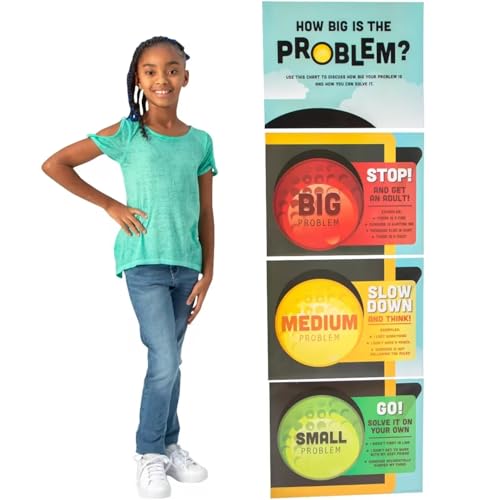
- Includes: 4 pcs. per set
- SUBJECT-SPECIFIC DECOR: Outline key concepts with our wall cutouts and posters. Ease learning with visual reminders!
- CLASSROOM RULES: Use this classroom wall decoration to highlight classroom expectations in a visually appealing way.
22. The Trusted Adult Scavenger Hunt
For younger children, create picture cards representing trusted adults at school. Invite children to match each person to their role.
For example:
- nurse → helps when your body does not feel well
- counselor → helps with feelings, friendship, worries, and problem-solving
- teacher → helps you learn and understand classroom routines
- librarian → helps you find books and use the library
- principal → helps keep the school safe
This activity is simple but powerful. Children often ask for help more easily when they understand who does what.
23. Lunch Bunch Conversation Cards
The first weeks of school are a wonderful time for small, low-pressure lunch groups.
Use conversation cards with prompts such as:
- What is one thing you liked about summer?
- What is one thing you hope happens this school year?
- What is a game you like to play?
- What makes someone a good friend?
- What is something you are learning to do?
- What is one thing that can make school feel easier?
Keep lunch bunch groups small, welcoming, and predictable. The goal is not to make children perform socially. It is to give them repeated chances to feel comfortable around peers.

- WHAT’S IN THE BOX: Meet the Tales Teens Edition Conversation Deck: a curated set of 150 fun and relatable conversation s…
- SPECIALLY CRAFTED FOR TEENS: This card games deck features questions written with teen life in mind, covering school, fr…
- EASY & VERSATILE TO USE: Whether you’re hosting a sleepover, road trip, classroom activity, family dinner, or casual han…
24. The “Brave Moment” Reflection
At the end of the week, ask children to complete this sentence:
One brave thing I did this week was…
Their answer may be small:
- “I walked into school.”
- “I talked to someone new.”
- “I raised my hand.”
- “I asked for help.”
- “I tried the cafeteria food.”
- “I stayed at school when I missed home.”
This activity teaches children to notice effort rather than only outcomes. A child does not need to have a perfect week to have shown courage.
25. The Hopeful Year Time Capsule
Invite children to place a few small reflections into an envelope, jar, or decorated folder to revisit later in the year.
Include prompts such as:
- “I hope I learn…”
- “I hope I make a friend who…”
- “I want to feel more…”
- “One thing I want adults to know about me is…”
- “A kind thing I want to do this year is…”
Revisit the time capsule during winter break, spring, or the final weeks of school. It can become a beautiful reminder of how much children have grown.
Tips for Supporting Anxious or Shy Children During Back-to-School Activities
Not every child will want to speak in front of a group, share personal worries, or jump into an icebreaker.
A supportive activity always includes options.
Try offering children choices such as:
- drawing instead of writing
- pointing instead of speaking
- sharing with one trusted adult instead of the group
- participating with a partner
- passing on a question
- using feeling cards instead of explaining aloud
- completing an activity over several sessions
Avoid forcing disclosures or treating quietness as a problem to fix. Some children need more time to observe, settle, and feel safe before participating fully.
When a Child Needs More Than a First-Week Activity
Back-to-school nerves are common. However, some children may need more individualized support when distress is intense, ongoing, or significantly affecting attendance, sleep, eating, learning, friendships, or daily functioning.
A school counselor, teacher, parent, or caregiver can work together to create a more personalized support plan. This may include predictable check-ins, visual routines, a school arrival plan, access to a trusted adult, gradual exposure to difficult situations, or collaboration with outside mental health professionals when appropriate.
The most important message for children is simple:
You do not have to feel ready for everything at once. You only need support for the next small step.
Final Thoughts
The best back-to-school counseling activities do not need to be elaborate.
Often, the most meaningful support comes from simple experiences: being greeted by name, seeing a familiar routine, learning where to go for help, discovering one shared interest with a peer, or practicing what to do when a worry shows up.
Those small moments can make a new school year feel less like a huge unknown and more like a place where a child belongs.

About the Author
Hi, I’m Eve, a former school counselor with a master’s degree in School Psychology and a passionate advocate for children and families navigating sensory challenges. As a mom of children with sensory sensitivities, I deeply understand the journey special-needs parents face, and I dedicate myself to researching and sharing practical solutions to help children thrive and feel comfortable in their bodies. My goal is also to empower counselors, therapists, and psychologists with creative strategies and supportive resources to enrich their everyday practice. When I’m not writing or exploring new therapeutic approaches, you’ll find me spending quality time with my family and continually seeking inspiration from everyday moments.

