
This post may contain affiliate links, including Amazon and selected partner links. If you make a purchase through these links, I may earn a small commission at no extra cost to you.

I only recommend tools and resources that genuinely support children’s emotional development and make everyday routines easier for parents, teachers, and counselors.
Self-control isn’t something children suddenly “learn” during one counseling session or classroom lesson. It’s built quietly, day by day, through repetition, modeling, and small everyday moments that often go unnoticed.
And here’s the part many parents and teachers find relieving: you don’t need complicated systems, expensive tools, or perfectly structured programs.
The most powerful brain training for self-control is already happening in your daily routines.
Mealtimes. Bedtime. Transitions. Homework. Even small moments like putting on shoes or waiting in line.
When we intentionally shape these moments, they become practice spaces for emotional regulation, patience, and decision-making.
In this guide, you’ll learn how to gently transform everyday routines into meaningful opportunities for building self-control—without pressure, overwhelm, or unrealistic expectations.
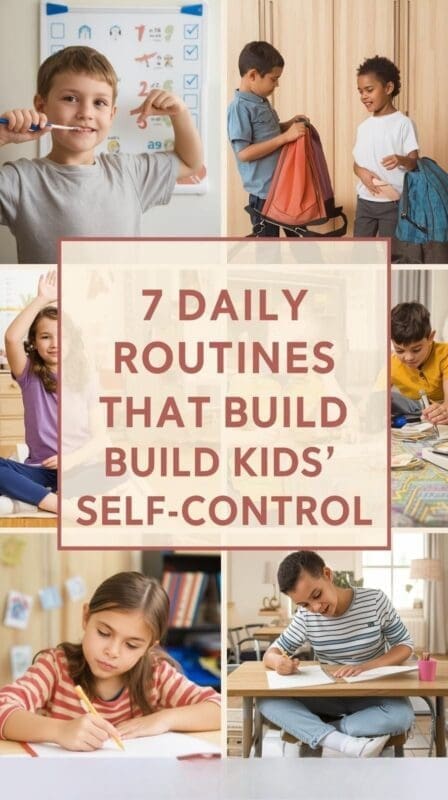
Why Daily Routines Are So Powerful for Self-Control
Children don’t develop regulation skills through lectures—they develop them through experience.
Repetition builds neural pathways. Predictability builds safety. Small challenges build resilience.
When a child practices waiting, pausing, choosing, or finishing a task over and over again, their brain slowly strengthens the systems responsible for:
- impulse control
- attention regulation
- emotional flexibility
- planning and follow-through
This is what we often call “executive functioning”—and it grows best in real-life contexts, not artificial ones.
That’s why routines are so powerful. They are consistent, familiar, and emotionally meaningful.
1. Mealtime: Practicing Patience and Social Awareness
Mealtime is one of the most natural ways to teach self-control—and it happens every single day.
How to use it intentionally:
- Encourage children to wait until everyone is served before eating
- Introduce simple turn-taking during conversation
- Use slow-paced conversation starters instead of rushed eating
- Model calm pacing rather than urgency
Why it works:
Waiting—even for a short moment—builds delay of gratification, one of the strongest predictors of long-term self-regulation.
It also teaches children to notice others, not just their own needs.
Gentle tip:
Start small. If full waiting feels too hard, begin with:
“Let’s all take one breath together before we start.”
That moment alone is powerful brain training.
2. Bedtime: Reflection and Emotional Closure
Bedtime is often underestimated, but it’s one of the most emotionally meaningful parts of a child’s day.
It’s a natural moment for slowing down, processing, and integrating experiences.
How to use it intentionally:
- Ask simple reflection questions:
“What was your favorite part of today?”
“What was something hard?” - Add calming rituals like reading or soft music
- Practice slow breathing together
- Keep the tone gentle and predictable
Why it works:
Reflection strengthens emotional awareness, while routines build consistency and security.
Children learn that feelings can be noticed, named, and safely held.
Make it even more supportive:
If your child struggles with big emotions, keep questions light and optional. The goal is safety—not pressure.
3. Homework Time: Building Focus and Persistence
Homework can easily turn into a power struggle—but it can also become one of the best spaces to practice sustained attention.
How to use it intentionally:
- Use short focus intervals (10–15 minutes depending on age)
- Follow with predictable breaks
- Gradually extend focus time over weeks
- Celebrate effort, not perfection
Why it works:
Children learn that focus is not about being “naturally good” at something—it’s about practicing staying with a task.
This builds mental stamina and reduces avoidance.
Practical example:
Try saying:
“We’re practicing staying with things—even when they feel a little hard.”
That reframes homework from pressure into growth.

- How Are We Different – Our routine chores chart is designed with a double-sided felt board to provide more room for cust…
- Easy To Use: Our handy chart makes it easy to manage daily activities for the entire day…and help kids transition from o…
- Useful Daily Activity Cards: The 109 unique schedule cards have pictures or icons for each subject, along with the word….
4. Morning Routine: Strengthening Planning and Independence
Mornings can feel rushed—but they are actually rich with opportunities for executive function development.
How to use it intentionally:
- Use visual or verbal checklists
- Let children complete steps independently
- Encourage preparing one item the night before
- Allow small choices (clothes, breakfast order, etc.)
Why it works:
Planning ahead builds organization skills, while completing steps builds confidence and autonomy.
Children begin to feel capable—not controlled.
Small shift that makes a big difference:
Instead of reminding repeatedly, ask:
“What’s the next step on your list?”
This supports thinking instead of dependency.

- Interesting Rainbow Pattern Design: LIORQUE visual timer is a perfect timer for classroom or as a kitchen timer for cook…
- Practical Ways to Improve Efficiency: The passage of time is visible, like an hourglass, making it easy to understand fo…
- Extremely Easy to Use: Simply turn the knob to adjust the time. Turn it clockwise to increase time and counterclockwise …
5. Chores: Practicing Responsibility and Follow-Through
Chores are one of the most overlooked tools for building self-control.
They’re not just about helping at home—they’re about learning to start, continue, and finish something.
How to use them intentionally:
- Assign simple, consistent tasks
- Match chores to developmental level
- Focus on effort and consistency
- Avoid over-correcting or perfection pressure
Why it works:
Chores build responsibility, accountability, and task completion skills.
These are core foundations of self-regulation.
Emotional insight:
Children who feel trusted with responsibility often show more self-control—not less.
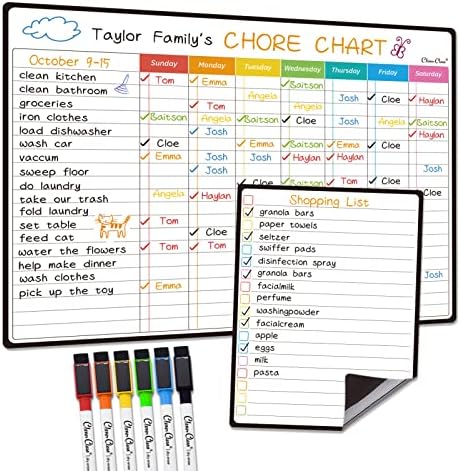
- Magnetic chore chart – Teach responsibility with our 14.5″x11″ magnetic chore chart. It features 20 lines to track chore…
- Multifunctional list board – This set comes with a 6.5″x8.5″ list board that offers 18 lines. Use it as a notes section,…
- Fine-point markers included – We also provide 6 extra-fine point markers with different colors, so you may use your own …
6. Playtime: Practicing Decision-Making and Commitment
Playtime might seem “free,” but it’s actually a powerful space for learning how to choose and stay with a decision.
How to use it intentionally:
- Offer 2–3 options instead of unlimited choices
- Encourage children to stick with their choice for a set time
- Support problem-solving instead of switching quickly
Why it works:
Limiting choices reduces overwhelm and strengthens decision-making skills.
Committing to an activity builds impulse control.
Helpful language:
“You chose this—let’s see what you can create with it.”
This gently encourages persistence.
7. Transitions: Learning to Pause Instead of React
Transitions are often the hardest part of a child’s day.
Moving from one activity to another requires flexibility, which is a core self-regulation skill.
How to use transitions intentionally:
- Use consistent cues (bell, song, timer, phrase)
- Give warnings before transitions
- Add a pause moment (deep breath, stretch, countdown)
Why it works:
Transitions teach children to shift attention, manage frustration, and pause before acting.
These are critical real-life regulation skills.
Simple routine:
“1 minute left → deep breath → switch.”
That pattern becomes internalized over time.
Common Mistakes to Avoid
Even with the best intentions, some approaches can unintentionally reduce the effectiveness of these routines.
Try to avoid:
- Expecting immediate results
- Turning routines into pressure-filled tasks
- Over-correcting small mistakes
- Giving too many instructions at once
- Skipping consistency
Self-control develops slowly. It’s built through repetition, not perfection.
Adapting for Different Ages
Not every routine works the same way for every child.
Younger children (3–6 years):
- Keep instructions simple
- Use visuals and modeling
- Focus on short routines
Elementary age (7–10 years):
- Add reflection and independence
- Introduce simple responsibility
- Practice longer focus intervals
Older children (11+):
- Encourage planning and self-monitoring
- Allow more ownership of routines
- Use routines for goal-setting
How This Connects to Emotional Regulation
Self-control is not just about behavior—it’s deeply connected to emotional safety.
When children feel:
- safe
- understood
- not constantly corrected
They are far more likely to develop regulation skills.
If you want to go deeper into emotional development and activities, you might also explore:
- https://eveyou.eu/fostering-mental-health-awareness-engaging-activities-for-upper-elementary-school-students
- https://eveyou.eu/creative-craft-ideas-to-help-children-express-anger
These complement routine-based learning with emotional expression and awareness.
Final Thoughts: Small Moments Build Strong Skills
The most meaningful part of this approach is that nothing extra needs to be added to your day.
You’re not creating new systems—you’re simply noticing and shaping what’s already there.
A pause before eating.
A question before sleep.
A choice during play.
A breath before transition.
These small moments might seem simple—but repeated over time, they become powerful.
Self-control isn’t built in big breakthroughs.
It’s built in quiet, everyday repetitions—one routine at a time.
FAQ: Self-Control and Daily Routines
How long does it take to see improvement in self-control?
Self-control develops gradually. You may notice small changes within a few weeks, but long-term growth happens over months and years of consistent practice.
What if my child resists routines?
Start small and keep it predictable. Resistance often decreases when routines feel safe, simple, and not overly controlled.
Do I need to follow all routines perfectly?
No. Consistency matters more than perfection. Even one or two intentional routines can make a meaningful difference.
Can these routines help children with impulsivity or ADHD?
Yes. Routine-based repetition is especially helpful for children who need extra support with regulation and executive functioning.

About the Author
Hi, I’m Eve, a former school counselor with a master’s degree in School Psychology and a passionate advocate for children and families navigating sensory challenges. As a mom of children with sensory sensitivities, I deeply understand the journey special-needs parents face, and I dedicate myself to researching and sharing practical solutions to help children thrive and feel comfortable in their bodies. My goal is also to empower counselors, therapists, and psychologists with creative strategies and supportive resources to enrich their everyday practice. When I’m not writing or exploring new therapeutic approaches, you’ll find me spending quality time with my family and continually seeking inspiration from everyday moments.