Have you ever asked a child, “How are you feeling?” only to hear “I don’t know”?
For many children, emotions feel confusing, overwhelming, and difficult to explain. They may recognize that something feels wrong inside their body, but they do not yet have the vocabulary or self-awareness to describe it.
This is where a feelings thermometer can be incredibly helpful.
A feelings thermometer is a simple visual tool that helps children identify the intensity of their emotions before those emotions become overwhelming. Instead of thinking about feelings as simply “good” or “bad,” children learn that emotions exist on a scale.
A child might discover:
- “I’m not furious yet—I’m just a little frustrated.”
- “I’m starting to feel worried.”
- “My body feels like I’m at an 8 out of 10.”
- “I need a calming strategy before I reach a 10.”
This simple shift can make a tremendous difference in emotional regulation, self-awareness, communication, and behavior.
In this guide, you’ll learn:
- how to make a DIY feelings thermometer
- how to use it at home, in classrooms, and therapy settings
- why it works from a child development perspective
- practical strategies for helping children build emotional awareness
If you’re new to teaching emotional awareness, start with our pillar guide:
Feelings and Emotions Activities for Kids That Actually Help Emotional Regulation
https://eveyou.eu/feelings-and-emotions-activities-for-kids-that-actually-help-emotional-regulation/
What Is a Feelings Thermometer?
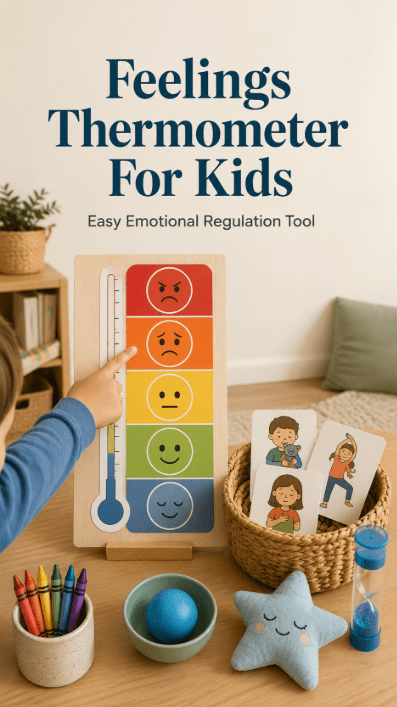
A feelings thermometer is a visual scale that helps children identify how strongly they are experiencing an emotion.
Instead of simply asking:
“Are you angry?”
A thermometer encourages children to think:
“How angry am I?”
This helps children recognize emotional escalation before emotions become overwhelming.
Most feelings thermometers use a scale from:
- 1–5
- 1–10
- color zones
- emotion faces
- visual images
The exact design matters less than helping children understand that emotions grow gradually.
Just like a temperature thermometer measures heat, a feelings thermometer measures emotional intensity.
Why Children Need Help Measuring Emotions
Young children often experience emotions physically before they understand them mentally.
For example:
A child may feel:
- tight muscles
- clenched fists
- stomach aches
- racing heart
- fast breathing
But they may not recognize these sensations as:
- frustration
- anxiety
- disappointment
- excitement
Many emotional outbursts happen because children notice emotions only after reaching a breaking point.
A feelings thermometer teaches children to recognize earlier warning signs.
Over time they begin noticing:
- “My shoulders feel tense.”
- “My stomach feels funny.”
- “My heart is beating fast.”
- “I’m moving from a 3 to a 6.”
This awareness is one of the foundations of emotional regulation.
The Psychology Behind Feelings Thermometers
One of the most important emotional skills children develop is called self-monitoring.
Self-monitoring means noticing:
- what you’re feeling
- how strongly you’re feeling it
- how your body is responding
- what might help
Children are not born with this skill.
It develops gradually through repeated experiences and guidance from adults.
Feelings thermometers support:
Emotional Awareness
Children learn to identify emotions before they become overwhelming.
Emotional Vocabulary
Children gain language for internal experiences.
Self-Regulation
Children begin recognizing when coping strategies are needed.
Communication Skills
Children can communicate feelings more clearly to adults.
Reduced Behavioral Escalation
Many emotional explosions can be prevented when children recognize emotional intensity early.
How to Make a DIY Feelings Thermometer
The best part is that you do not need expensive materials.
Materials Needed
- cardstock or construction paper
- markers
- scissors
- glue
- laminator (optional)
- Velcro dots or clothespin (optional)
Step 1: Draw the Thermometer
Create a large thermometer shape vertically on paper.
Divide it into sections.
You can use:
- 1–5 scale
- 1–10 scale
- color zones
For younger children, 5 levels are usually easier.
Step 2: Add Colors
Many children understand colors faster than numbers.
Example:
Green
- calm
- happy
- focused
Yellow
- frustrated
- worried
- excited
Orange
- upset
- overwhelmed
- angry
Red
- very upset
- exploding feelings
- loss of control
Step 3: Add Emotion Faces
Include pictures showing:
- calm
- slightly upset
- frustrated
- angry
- overwhelmed
Visual cues help children who are not yet strong readers.
Step 4: Add Coping Strategies
Next to each level, write:
Green
Keep doing what you’re doing.
Yellow
Take deep breaths.
Orange
Ask for help.
Red
Move to calm corner or use coping tools.
This teaches children that emotions and actions can work together.
Feelings Thermometer Example
Level 1
“I feel calm.”
Body signals:
- relaxed muscles
- slow breathing
Level 3
“I feel frustrated.”
Body signals:
- fidgeting
- louder voice
Level 5
“I feel overwhelmed.”
Body signals:
- crying
- yelling
- shutting down
The goal is helping children recognize what happens before reaching level 5.
How to Use a Feelings Thermometer at Home
Families often find that emotional conversations become easier with visual supports.
Morning Check-In
Ask:
“Where are you on your feelings thermometer today?”
This helps identify emotional needs before school.
After School Check-In
Children often carry emotional stress from the school day.
Ask:
“What number are you right now?”
This creates a simple conversation starter.
During Conflict
Instead of immediately correcting behavior, try:
“Can you show me where you are on your thermometer?”
This encourages reflection before problem-solving.
Bedtime Reflection
Ask:
“What number were you most of today?”
Children gradually become more aware of emotional patterns.
How Teachers Can Use a Feelings Thermometer in the Classroom
Feelings thermometers are especially useful in preschool and elementary classrooms.
Morning Meetings
Students place:
- clothespins
- magnets
- name cards
on the thermometer during arrival.
This gives teachers valuable information about student readiness.
Calm Corner Tool
Students can check their number before using regulation tools.
Small Group Discussions
Discuss:
- what different numbers feel like
- what helps at each level
Transition Times
Thermometers help children identify stress during:
- arriving at school
- returning from recess
- transitioning between activities
How School Counselors and Therapists Use Feelings Thermometers
Feelings thermometers are widely used because they provide a concrete way to discuss abstract emotional experiences.
They can be used to:
Explore Emotional Triggers
“What happened before you moved from a 3 to an 8?”
Identify Body Signals
“What did your body feel like at a 6?”
Build Coping Plans
“What helps when you reach a 5?”
Track Progress
Children often enjoy seeing how emotional awareness improves over time.
Pair the Thermometer With Coping Strategies
The most effective feelings thermometers do not stop at identifying emotions.
They also teach children what to do next.
Helpful Coping Strategies
Breathing Exercises
- flower and candle breathing
- bubble breathing
Sensory Supports
- fidgets
- weighted lap pads
- sensory bottles
Movement Activities
- wall pushes
- stretching
- animal walks
Calm Corner Tools
- books
- soft pillows
- visual calming cards
The thermometer becomes much more powerful when paired with actionable regulation tools.
Common Mistakes to Avoid
Using the Thermometer Only During Problems
Children should practice when calm as well.
Judging Emotions
There are no “bad” numbers.
The goal is awareness, not perfection.
Expecting Immediate Results
Emotional awareness develops slowly through repetition.
Ignoring Body Signals
Always connect emotions to physical sensations.
This helps children develop interoception and self-awareness.
Benefits of a Feelings Thermometer
Children who regularly use emotional check-in tools may gradually develop:
Better Emotional Vocabulary
Children learn more precise emotional language.
Improved Communication
Children can express needs earlier.
Greater Self-Awareness
Children recognize emotional escalation sooner.
Reduced Emotional Outbursts
Early recognition often leads to earlier intervention.
Stronger Emotional Regulation Skills
Children begin choosing coping strategies independently.
Increased Empathy
Children also become better at recognizing emotions in others.
Helpful Tools to Pair With a Feelings Thermometer
This post may contain affiliate links, including Amazon and selected partner links. If you make a purchase through these links, I may earn a small commission at no extra cost to you.
Helpful tools include:
- laminating sheets
- dry-erase markers
- emotion flashcards
- sensory bottles
- fidget toys
- calm corner posters
- breathing boards
- weighted lap pads
- emotion storybooks
These items can help reinforce emotional learning in practical ways.
Final Thoughts
A DIY feelings thermometer may look like a simple craft project, but it teaches one of the most important life skills children can develop: emotional awareness.
Children cannot regulate emotions they do not recognize.
When children learn to identify emotional intensity, notice body signals, and connect feelings to coping strategies, they begin building the foundation for lifelong emotional intelligence.
Whether you use a feelings thermometer at home, in a classroom, or in a counseling office, the goal is not to eliminate emotions.
The goal is to help children understand them.
And that understanding is often where emotional regulation begins.

About the Author
Hi, I’m Eve, a former school counselor with a master’s degree in School Psychology and a passionate advocate for children and families navigating sensory challenges. As a mom of children with sensory sensitivities, I deeply understand the journey special-needs parents face, and I dedicate myself to researching and sharing practical solutions to help children thrive and feel comfortable in their bodies. My goal is also to empower counselors, therapists, and psychologists with creative strategies and supportive resources to enrich their everyday practice. When I’m not writing or exploring new therapeutic approaches, you’ll find me spending quality time with my family and continually seeking inspiration from everyday moments.