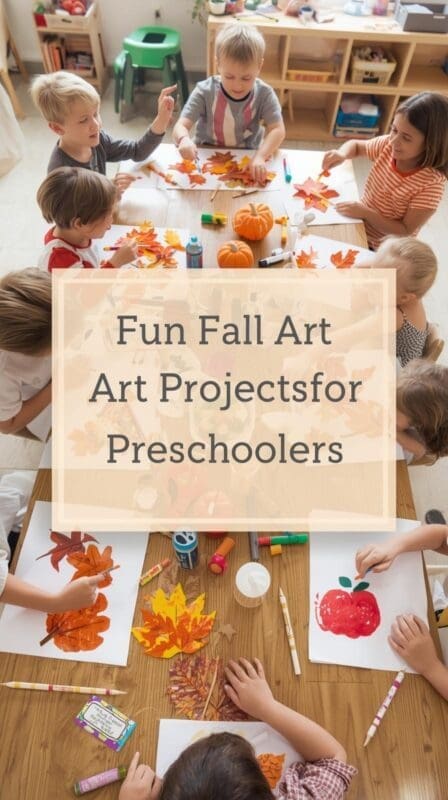
Fall is more than just pumpkins and pretty leaves — it’s a season of transition. For preschoolers, those changes can be exciting but also overwhelming. Art projects are a beautiful way to help children process big feelings while enjoying the cozy spirit of autumn.
When little ones glue, paint, or create, they aren’t just making crafts; they’re learning to name emotions, calm their bodies, and share their stories. For therapists, teachers, and parents, fall crafts provide the perfect opportunity to weave in emotional learning with seasonal fun.
Here are 15 fall art projects and preschool activities designed to support creativity and emotional expression.
This article contains affiliate links. If you purchase through these links, I may earn a small commission at no additional cost to you. I only recommend products I believe are useful, high-quality, and relevant for creating meaningful activities in counseling, classrooms, and at home.
1. Emotion Leaf Collage
Supplies Needed: Colorful paper leaves, pre-cut emoji faces (😊 😢 😡 😴 🤩), glue sticks, large sheet of paper
Estimated Time: 20 minutes
How to Do It:
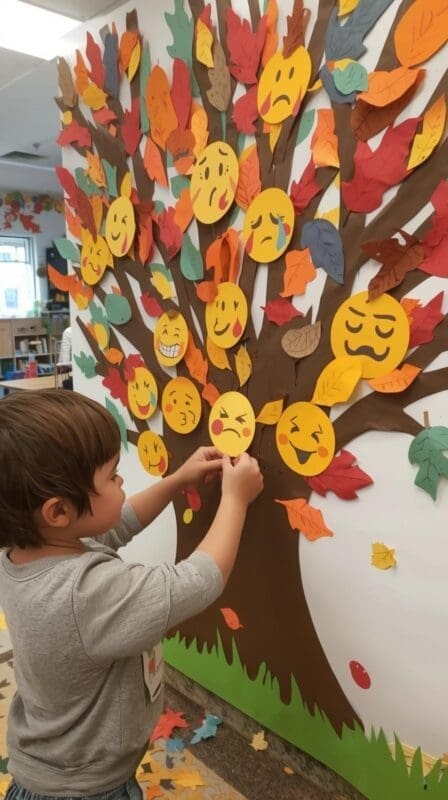
Give children paper leaves and emoji-style faces. They glue a face onto each leaf and then arrange them into a collage. Hang the finished pieces together as an “emotions tree.”
Reflection Questions:
“Do your feelings sometimes change like leaves on a tree?”
“Which leaf shows how you feel right now?”
“Was it easy or hard to choose a face for each leaf?”
Why it works: Young kids may not read yet, but emoji visuals make emotions easy to understand.
Tip: Hang the finished collages as an “emotions tree” in the classroom or therapy office.
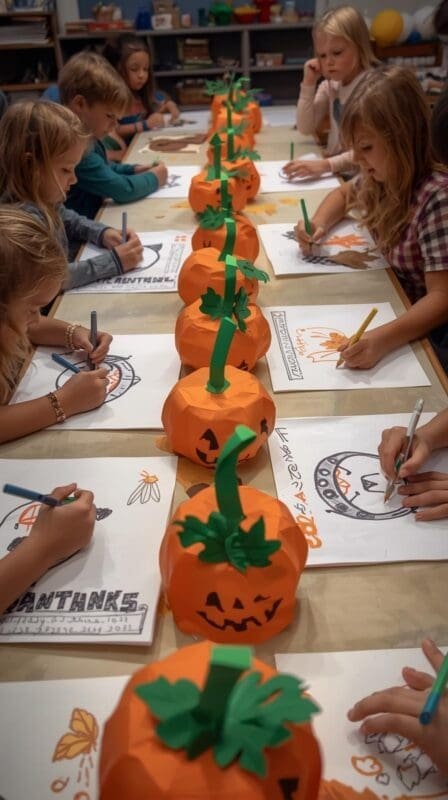
2. Gratitude Pumpkin Craft
Supplies Needed: Paper pumpkins, crayons/markers, string for display (optional)
Estimated Time: 15 minutes
How to Do It:
Children draw or dictate something they are thankful for on a pumpkin cutout. Combine all pumpkins to create a “gratitude patch” on the wall.
Reflection Questions:
“What happens if we make a habit of noticing good things?”
“What did you draw on your pumpkin, and why?”
“How do you feel when you think about something you’re thankful for?”
Therapeutic value: Builds emotional awareness and shifts focus toward positive feelings.
3. Acorn Painting
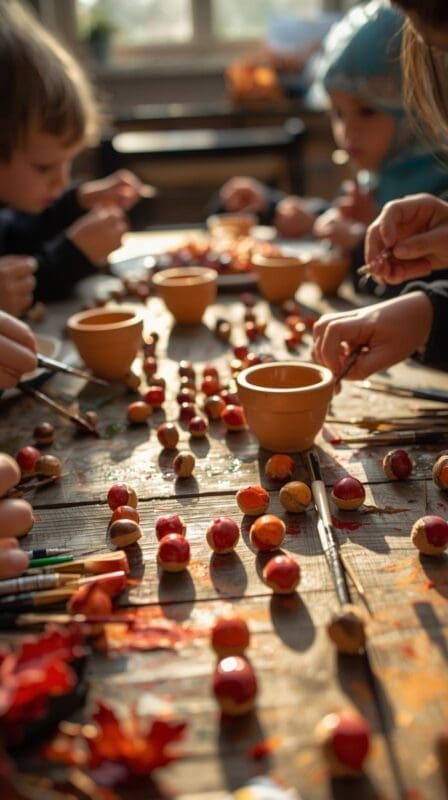
Supplies Needed: Acorns, tempera or acrylic paint, paintbrushes, drying tray
Estimated Time: 20 minutes
How to Do It:
Kids paint collected acorns in bright colors. Encourage them to link colors with emotions (red = angry, blue = calm, yellow = happy).
Reflection Questions:
“Do some feelings feel bigger, like brighter colors?”
“What color did you choose for happiness?”
“How does your painted acorn remind you of your feelings?”
Why it works: Helps preschoolers associate emotions with colors and practice naming them.
4. Feelings Scarecrows
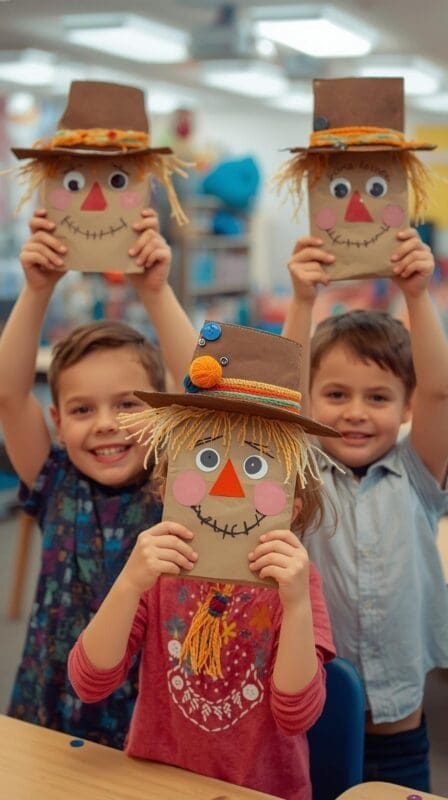
Supplies Needed: Paper bags, construction paper, markers, glue, scissors
Estimated Time: 30 minutes
How to Do It:
Children create scarecrow puppets by decorating paper bags. Add different facial expressions — happy, sad, silly, or worried. Use them in storytelling or role-play.
Reflection Questions:
“What do you do when you feel like your scarecrow?”
“What feeling does your scarecrow show most?”
“Can your scarecrow help you tell a story about a time you felt that way?”
Tip: Let children role-play scenarios with their scarecrow to practice emotional expression.
5. Pinecone Owls with Stories
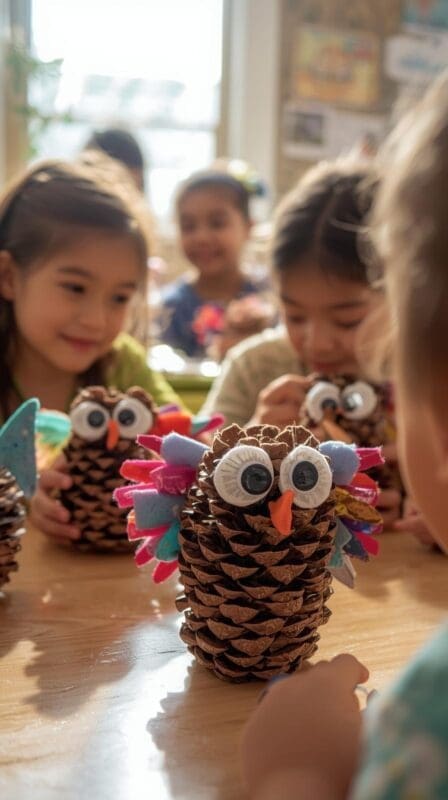
Supplies Needed: Pinecones, googly eyes, felt or paper for wings, glue
Estimated Time: 25 minutes
How to Do It:
Glue wings and eyes to pinecones to create owls. Children name their owl and share a “nighttime story” about it.
Reflection Questions:
“Does your owl feel the same feelings as you sometimes do?”
“What is your owl’s name?”
“What kind of story does your owl want to tell tonight?”
Therapeutic value: Storytelling builds narrative skills and encourages emotional sharing.
6. Fall Sensory Collage
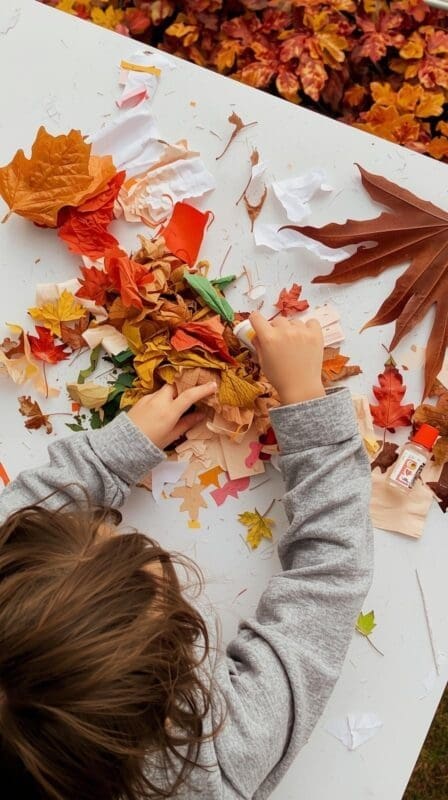
Supplies Needed: Fabric scraps, dried leaves, acorn caps, textured paper, glue, large paper backing
Estimated Time: 20 minutes
How to Do It:
Provide children with a variety of textures to glue into a fall scene. Focus on touch as much as appearance.
Reflection Questions:
“How do you feel when you touch your collage?”
“Which material felt soft, and which felt rough?”
“Did any textures remind you of feelings?”
Why it works: Sensory input helps kids regulate emotions and feel grounded.
7. Jack-O’-Lantern Emotion Faces
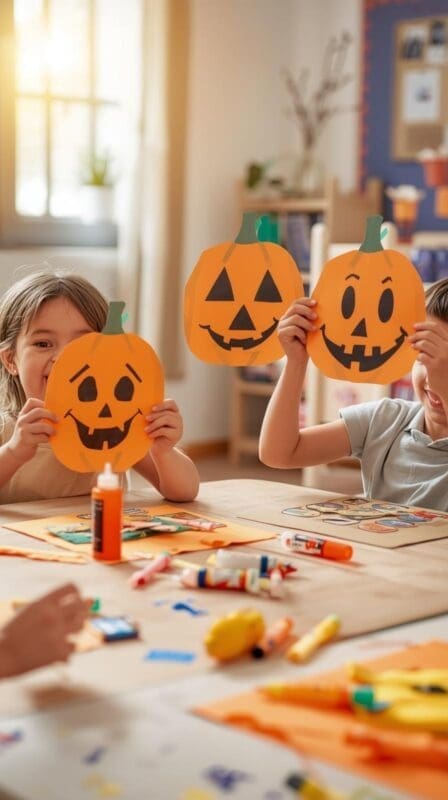
Supplies Needed: Pumpkin-shaped cutouts, mix-and-match paper eyes, mouths, eyebrows, glue
Estimated Time: 15 minutes
How to Do It:
Kids choose and glue face pieces to make jack-o’-lanterns with different emotions. Display them on a classroom wall.
Reflection Questions:
“What would help your pumpkin feel better if it’s sad or worried?”
“Which jack-o’-lantern matches how you feel today?”
“Can you think of a time you felt like your pumpkin?”
Therapeutic twist: Ask children to pick which pumpkin matches how they feel today.
8. Apple Print Art
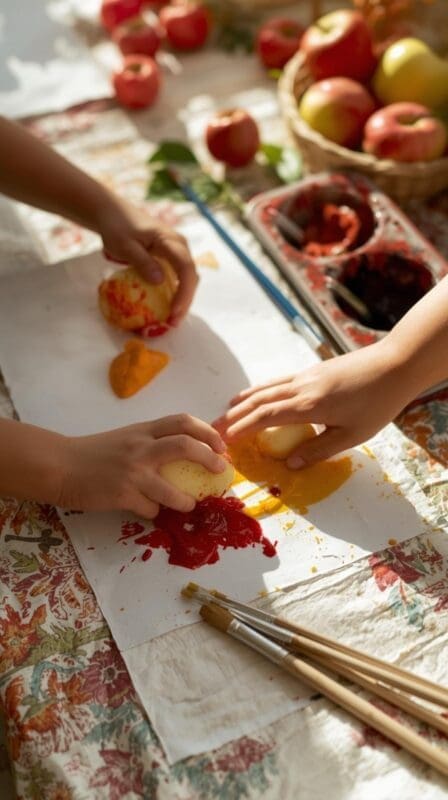
Supplies Needed: Apples (cut in half), paint, paper, trays for dipping
Estimated Time: 20 minutes
How to Do It:
Dip halved apples in paint and stamp them onto paper. Invite kids to assign each print to a feeling or memory.
Reflection Questions:
“How can art help us tell stories about feelings?”
“Which apple print looks happiest to you?”
“What memory did you think of when you stamped your apple?”
Skill: Combines fun motor activity with reflection.
9. Fall Story Stones
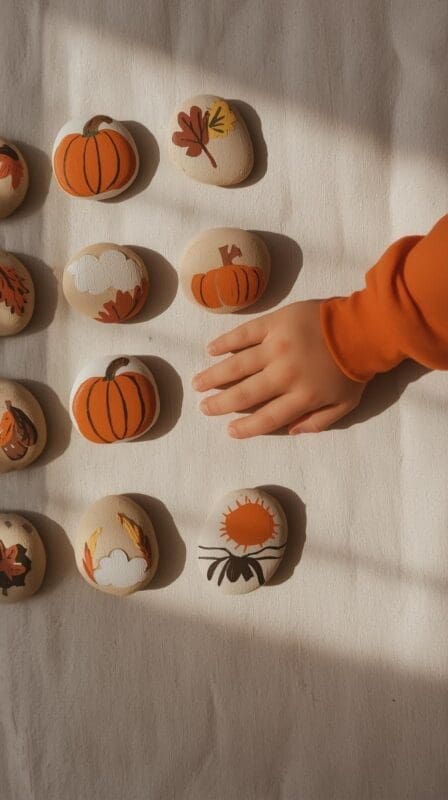
Supplies Needed: Smooth stones, acrylic paint or paint pens, sealer
Estimated Time: 30 minutes + drying time

- 【Size】- 40 Pcs 2-4 inches River Stones. The kindness rocks are great for rock art .This size range is perfect rocks for …
- 【Flat & Smooth】- Each painting rock is carefully selected, the surface is basically no depression, the side is not scrat…
- 【Kindness Rocks】- Rocks are painted as a social-emotional learning activity for kids is a viral trend where people, pain…
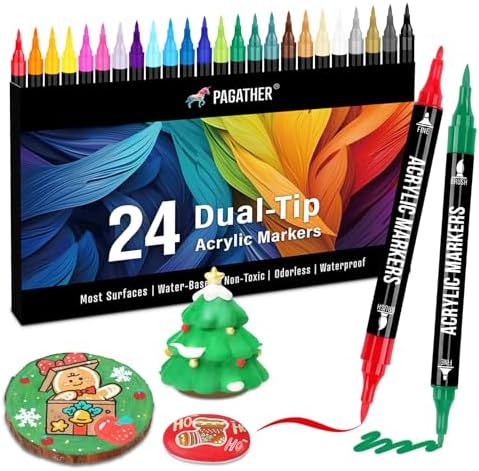
- 【Versatile Dual-Tip Design】: Unleash your creativity with our acrylic markers featuring a unique dual-tip design. The ex…
- 【Vibrant Color Explosion】: Explore a spectrum of 24 vibrant acrylic colors that cater to all your creative needs. Whethe…
- 【Precision and Consistency】: Achieve flawless and consistent ink flow in every stroke. The precision-engineered tips ens…
How to Do It:
Paint stones with autumn symbols like pumpkins, clouds, or leaves. Use them to build group stories.
Reflection Questions:
“How do our stories change when we add new stones?”
“Which stone did you pick, and why?”
“What feeling does your story stone remind you of?”
Why it works: Encourages children to express emotions through play and narrative.
10. Acorn Necklaces

Thread acorns onto yarn to make necklaces. Encourage kids to wear their necklace as a “calm-down tool” or symbol of strength.
Supplies Needed: Acorns, yarn or string, beads (optional), blunt needle (for threading)
Estimated Time: 20 minutes

- Quantity: Package includes 100 pcs Realistic Artificial Fall Acorns. These acorns feature natural acorn caps and are per…
- Color: The wooden acorns have a rich brown color with natural caps in an earthy tan shade. The caps may vary in size, be…
- Size: These faux acorns come in varying sizes, with an average width of 0.6″-1″ and a height of 0.8″-1.2″ from the top o…
How to Do It:
Help children thread acorns onto yarn to make necklaces. Explain that the necklace can be a “calm-down tool” or a symbol of their strength.
Reflection Questions:
- “How does it feel to wear something you made yourself?”
- “When might your necklace help you remember to stay calm?”
- “What does your necklace mean to you?”
Therapeutic value: Gives children a tangible comfort object they created themselves.
11. Rainbow Leaf Mandalas

Collect leaves in different colors and sizes. Arrange them in mandala patterns on the floor or paper.
Why it works: The repetitive act of arranging patterns calms anxious energy.
Supplies Needed: Collected leaves in multiple colors, large paper backing, glue
Estimated Time: 25 minutes
How to Do It:
Kids arrange leaves in circle patterns, layering colors and sizes into mandalas. Glue them down or photograph the pattern to preserve.
Reflection Questions:
- “What did you notice while arranging your leaves?”
- “How does making patterns help your body feel calm?”
- “Do you see a feeling in your mandala?”
12. Silly Ghost Puppets
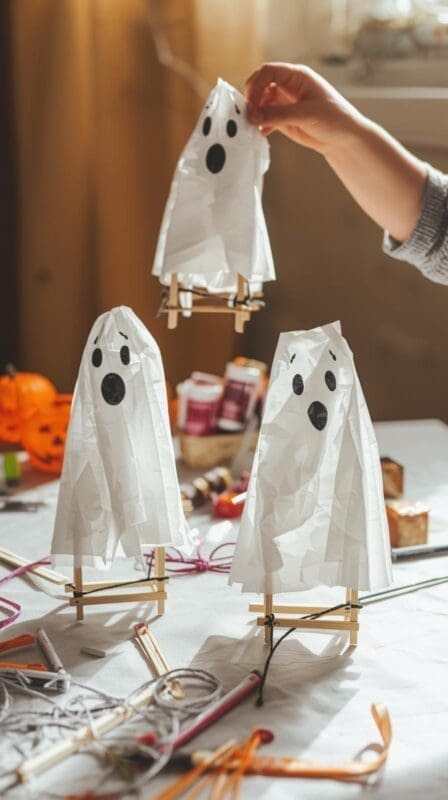
Make tissue-paper ghosts on popsicle sticks. Have kids act out silly, spooky stories.
Therapeutic twist: Playful puppetry lets kids express fears in a safe, humorous way.
Supplies Needed: Tissue paper, popsicle sticks, markers, string, glue
Estimated Time: 15 minutes
How to Do It:
Make tissue ghosts on sticks, then let kids act out funny or spooky stories.
Reflection Questions:
- “Was it fun to make your ghost silly or spooky?”
- “Can your ghost act out a feeling you’ve had?”
- “What helps you laugh when you feel a little scared?”
13. Fall Feelings Chart
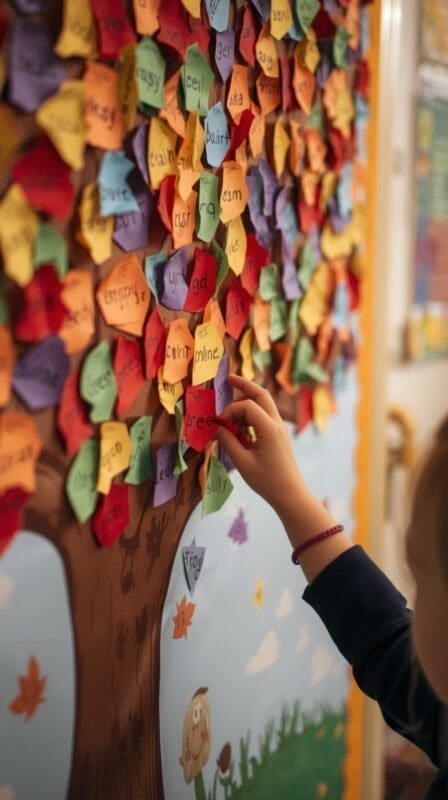
Draw a tree with branches and give children paper leaves. Each day, they pick a leaf with a feeling face to place on the tree.
Tip: Perfect as a morning check-in for classrooms or group therapy.
Supplies Needed: Large tree drawing, paper leaves, markers, tape or glue
Estimated Time: 15 minutes daily use
How to Do It:
Draw a tree. Each day, children pick a leaf with a face showing their feeling and attach it to a branch.
Reflection Questions:
- “Which feeling did you choose today?”
- “Did your leaf change since yesterday?”
- “What helps your leaf move from worried to calm?”

- 【Exquisite Size】 This product comes as a set of two pieces, each measuring 12 x 16 inches, and features a non-removable,…
- 【Versatile Applications】 Our mental health posters serve as excellent decorations for workspaces, therapy offices, couns…
- 【Ideal Decorative Gift】 Encourage emotional exploration and meaningful dialogue with our safe and supportive inspiration…
14. Pinecone Painting with Emotions
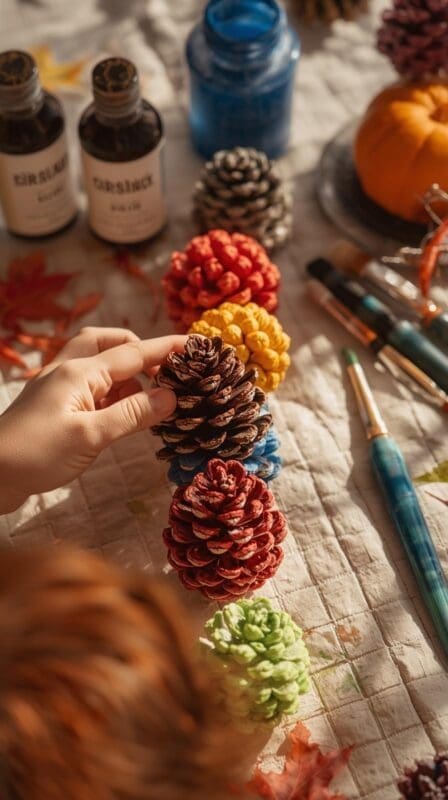
Provide paint in “emotion colors” (red = mad, yellow = happy, blue = calm). Kids paint pinecones to match their feelings that day.
Why it works: Externalizing emotions onto an object reduces intensity and builds awareness.
Supplies Needed: Pinecones, paint in “emotion colors,” brushes
Estimated Time: 20 minutes
How to Do It:
Provide paints in colors linked to emotions (red = mad, yellow = happy, blue = calm). Children paint pinecones to show how they feel today.
Reflection Questions:
- “What emotion color did you choose?”
- “Does painting your pinecone make that feeling feel lighter?”
- “Can your pinecone change colors if your feelings change?”

- Simple and Rustic Universal Ornaments: Pine cones have warm and natural charm, decorating with them is an easy way to br…
- Natural Pine Cones: All of the Christmas pine cones are picked directly from pine trees, truly safe and environmentally …
- Package Includes: You will get 40 pieces brown pinecones-10 x extra small pinecones (0.08″~1.2″/2cm~3cm), 10 x mini pine…
15. Autumn Gratitude Garland

Cut out leaf shapes, and on each, children draw something they’re grateful for. String them into a garland for the classroom or therapy space.
Therapeutic value: Gratitude practices foster resilience and a positive mindset.
Supplies Needed: Leaf cutouts, string or yarn, markers, clothespins or glue
Estimated Time: 20 minutes
How to Do It:
Children draw or write something they’re grateful for on each leaf. String leaves together to make a garland for the classroom or therapy office.
Reflection Questions:
- “What did you write on your gratitude leaf?”
- “How does it feel to see all our leaves together?”
- “Why do you think noticing gratitude makes us happier?”
Tips for Guiding Fall Art with Preschoolers
- Focus on the process, not the product. What children say and feel during the activity matters more than how the craft looks.
- Use natural materials. Leaves, acorns, and pinecones ground kids in the calming rhythms of nature.
- Integrate emotions. Ask open-ended questions: “How does your owl feel?” “What color matches your mood today?”
- Keep it simple. Preschoolers thrive with straightforward, sensory-rich activities.
FAQs
Q: Do I need special supplies for these projects?
No. Most use everyday materials like paper, paint, leaves, or pinecones.
Q: Can these activities be used in therapy?
Yes. They work beautifully as warm-ups in play therapy or group sessions, encouraging children to express emotions in a safe, creative way.
Q: How long do these projects take?
Most can be done in 15–30 minutes, making them ideal for preschool settings or short therapy activities.

About the Author
Hi, I’m Eve, a former school counselor with a master’s degree in School Psychology and a passionate advocate for children and families navigating sensory challenges. As a mom of children with sensory sensitivities, I deeply understand the journey special-needs parents face, and I dedicate myself to researching and sharing practical solutions to help children thrive and feel comfortable in their bodies. My goal is also to empower counselors, therapists, and psychologists with creative strategies and supportive resources to enrich their everyday practice. When I’m not writing or exploring new therapeutic approaches, you’ll find me spending quality time with my family and continually seeking inspiration from everyday moments.