
Bringing home a new baby is one of the biggest changes a young child can experience.
Before the baby arrives, many children are excited. They talk about becoming a big brother or sister. They imagine playing together, sharing adventures, and teaching the baby new things.
Then the baby comes home.
Suddenly, parents seem busier. The baby cries often. Routines change. Everyone is tired.
Many children discover that becoming a sibling is more complicated than they expected.
Alongside love and excitement, they may experience jealousy, frustration, sadness, confusion, worry, or disappointment. These feelings are completely normal, but they can be difficult for children to understand and express.
This is where story stones can help.
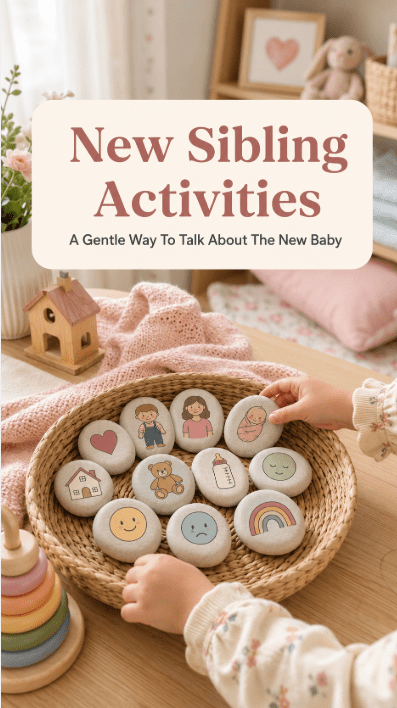
New baby story stones provide children with a safe, playful way to explore family changes, process big emotions, and tell stories about their experiences. Instead of talking directly about themselves, children talk about characters—and through those characters, they often reveal exactly what they are thinking and feeling.
In this article, you’ll learn how to create new baby story stones, how they support emotional development, and how to use them to help children adjust to life with a new sibling.
If you’re new to story stones, start with my complete guide: DIY Story Stones for Kids: How to Make and Use Storytelling Rocks for Social-Emotional Learning.
Why a New Baby Can Bring Big Feelings
Adults often focus on helping children feel excited about becoming a sibling. While excitement is certainly part of the experience, it is rarely the whole story.
Children often experience mixed emotions.
A child may love their baby sibling and feel jealous at the same time.
They may feel proud to be a big brother or sister while also missing the extra attention they used to receive.
These conflicting feelings can be confusing. Many children wonder whether it is okay to feel upset about changes when everyone else seems happy about the baby.
The truth is that adjusting to a new sibling is a major life transition.
Children may notice:
- less one-on-one time with parents
- changes to routines
- interrupted sleep
- increased family stress
- new expectations
The goal is not to eliminate these feelings.
The goal is to help children understand that all feelings are allowed and to give them healthy ways to express them.
Why Storytelling Helps Children Process Family Changes
Young children often struggle to talk directly about difficult emotions.
If you ask:
“Are you feeling jealous of the baby?”
Most children will say no—even when they are.
Not because they are being dishonest, but because they may not fully understand what they are feeling.
Stories create a safer path.
Instead of talking about themselves, children talk about a character.
For example:
“The fox is sad because his mommy is always feeding the baby fox.”
The story creates emotional distance while still allowing children to explore real experiences.
Storytelling helps children:
- identify emotions
- understand family changes
- develop empathy
- practice problem-solving
- build emotional vocabulary
How Story Stones Support Emotional Regulation
One of the most important emotional skills children develop is the ability to understand and manage their feelings.
This process doesn’t happen through lectures.
It happens through experiences.
When children tell stories, they naturally begin to think about:
- what a character feels
- why they feel that way
- what happens next
- what might help
These are the same mental skills involved in emotional regulation.
For example, a child might create a story about a rabbit who feels left out because everyone is paying attention to a baby bunny.
As the story unfolds, the child may imagine ways the rabbit receives comfort, asks for help, or reconnects with family members.
Without realizing it, they are practicing emotional problem-solving.
How to Make New Baby Story Stones
You only need a few supplies:
- smooth rocks
- acrylic paint
- paint pens
- clear sealant (optional)
Keep designs simple and easy to recognize.
Remember that the goal is storytelling—not artistic perfection.
20 New Baby Story Stones to Paint
Family Story Stones
Paint family members such as:
- mom
- dad
- baby
- older sibling
- grandparent
These stones become the main characters in children’s stories.
Feelings Story Stones
Paint simple emotion faces:
- happy
- proud
- excited
- worried
- jealous
- frustrated
- sad
- calm
These help children connect emotions to experiences.
Daily Life Story Stones
Paint familiar situations:
- bedtime
- stroller
- bottle
- toy
- family meal
These allow children to explore everyday challenges and routines.
Helper Story Stones
Create stones that represent support and coping skills:
- helping hand
- heart
- hug
- special parent time
- favorite activity
These stones encourage solution-focused storytelling.
Story Stone Activity: The Big Brother or Sister Story
Invite the child to choose:
- one sibling stone
- one baby stone
- one feeling stone
Ask:
“What is happening in their story today?”
Follow their lead.
Some children will create positive stories.
Others may introduce challenges.
Both are valuable.
The goal is to understand their perspective rather than guide them toward a specific answer.
Story Stone Activity: The Jealousy Story
Jealousy is one of the most common emotions after a new baby arrives, yet it is rarely discussed openly.
Create stories using:
- sibling stone
- baby stone
- jealous face stone
- helper stone
Ask:
“What happened?”
“What does the character wish would happen?”
“What helps them feel better?”
This helps normalize difficult emotions while encouraging healthy coping strategies.
Story Stone Activity: Special Time Stories
Many children miss the one-on-one attention they had before the baby arrived.
Paint stones that represent:
- reading together
- baking
- playing outside
- cuddling
- talking
Invite children to create stories about special moments between parents and children.
These stories often reveal what children are missing and what helps them feel connected.
Story Stone Activity: Helping the Baby
Many children feel empowered when they can contribute.
Create stories about:
- helping with diapers
- singing to the baby
- choosing clothes
- making the baby laugh
These stories reinforce a child’s growing role within the family.
Story Stones for Therapists and School Counselors
Although new sibling adjustments happen at home, the emotions often show up elsewhere.
Children may display:
- increased frustration
- clinginess
- emotional outbursts
- difficulty focusing
Story stones provide a gentle way to explore these feelings in counseling sessions.
Counselors can use family-themed stones to:
- discuss family changes
- identify emotions
- explore coping strategies
- strengthen emotional awareness
Because the conversation centers around characters, children often feel safer sharing difficult experiences.
Reflection Questions
After storytelling activities, consider asking:
- How is the character feeling?
- Why do they feel that way?
- What changed for them?
- What helps them feel better?
- Has anything like this happened to you?
- What would you tell the character?
These questions encourage deeper emotional understanding without making children feel pressured.
Why New Baby Story Stones Work So Well
Children process major life transitions through play.
When a new sibling arrives, they need opportunities to explore what is happening, make sense of their emotions, and feel heard.
Story stones provide a simple but powerful way to do that.
They allow children to express complicated feelings safely, develop emotional awareness, and discover that all feelings—even difficult ones—are normal parts of growing and changing.
Final Thoughts
A new baby changes a family in beautiful ways.
It also creates challenges.
Children do not need to feel happy every moment about becoming a sibling. They simply need safe opportunities to understand and express what they are feeling.
New baby story stones help create those opportunities.
One painted rock at a time, children can tell stories about change, connection, frustration, love, and belonging—and in the process, learn that there is room for all of their feelings.

About the Author
Hi, I’m Eve, a former school counselor with a master’s degree in School Psychology and a passionate advocate for children and families navigating sensory challenges. As a mom of children with sensory sensitivities, I deeply understand the journey special-needs parents face, and I dedicate myself to researching and sharing practical solutions to help children thrive and feel comfortable in their bodies. My goal is also to empower counselors, therapists, and psychologists with creative strategies and supportive resources to enrich their everyday practice. When I’m not writing or exploring new therapeutic approaches, you’ll find me spending quality time with my family and continually seeking inspiration from everyday moments.