
There’s a very specific moment most parents recognize.
You’ve just handed your child chalk. They draw for a few minutes… maybe five… and then comes the familiar sentence:
“I’m bored.”
But here’s the secret most people miss:
Chalk becomes much more engaging when it turns into a game, not just drawing.
The moment you add movement, challenge, or imagination—kids stay longer, play deeper, and actually enjoy the experience.

These sidewalk chalk games for kids are designed to:
- keep kids engaged much longer
- combine movement + creativity
- support focus and self-regulation
- work for different ages
And best of all—they require almost nothing to set up.
This post may contain affiliate links. If you choose to purchase through these links, I may earn a small commission at no extra cost to you. I only recommend items I genuinely love.
1. Chalk Obstacle Course (The “Never Gets Old” Game)
If you try only one idea—make it this one.
Picture This
A long chalk path filled with instructions: jump, spin, hop, crawl—turning your sidewalk into a mini adventure course.
How to Set It Up
- Draw a path across your driveway or sidewalk
- Add instructions every few steps:
- jump 3 times
- spin in a circle
- hop like a frog
- Let kids add their own challenges
Why It Works
This game:
- burns energy
- builds coordination
- improves impulse control
It’s especially great for kids who need movement to stay focused.
You can pair this with ideas from:
https://eveyou.eu/summer-camp-activities-for-kids-fun-engaging-unforgettable-ideas-for-outdoor-adventures
“This turns your driveway into an adventure park in minutes”
2. Hopscotch Remix (More Fun Than the Original)
Hopscotch—but upgraded.
Picture This
A colorful grid where each square has a twist: clap, dance, spin, freeze.
How to Set It Up
- Draw a classic hopscotch grid
- Replace numbers with actions
- Add bonus squares like:
- “do a silly dance”
- “jump backwards”
Why It Works
This version:
- adds variety
- keeps kids engaged longer
- supports memory and attention
Pinterest hook:
“You’ll never play normal hopscotch again after this”
3. Chalk Target Game (Simple but Addictive)
Kids love aiming games—and this one is easy to set up.
Picture This
Circles drawn on the ground, each worth different points.
How to Set It Up
- Draw several circles or targets
- Assign points (10, 20, 50)
- Toss a small object (rock, beanbag)
Why It Works
This builds:
- focus
- coordination
- patience
And kids naturally want to improve their score.
“This simple game turns into a competition instantly”

- SIDEWALK CHALK ACTIVITY KIT: This kit includes 18 vibrant chalk sticks and 15 original games and activities that are per…
- WHAT’S INSIDE: 18 Colorful Chalk Sticks & 15 Waterproof Activity Cards
- OUTDOOR FUN: Swap screen time for sunshine and encourage kids to transform ordinary sidewalks into dazzling masterpieces…
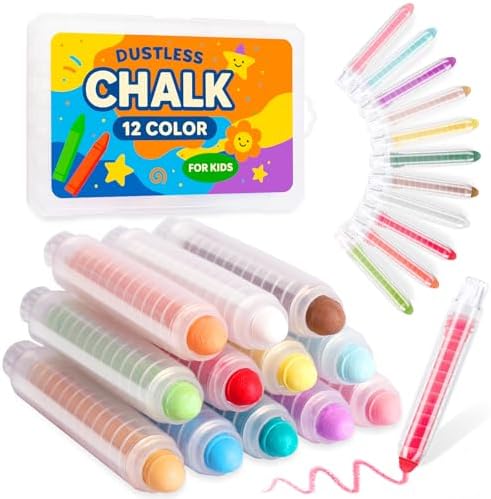
- 12 Bright Colors for Kids’ Creativity – This dustless chalk set includes 12 vibrant colors, giving children endless ways…
- Dustless & Safe for Kids – Our chalk comes with protective plastic holders to keep little hands clean. The low-dust form…
- Easy Grip, No Broken Pieces – Each chalk stick is stored in a twistable case, preventing breakage and keeping the chalk …
4. Emotion Jump Game (Play + Emotional Learning)
This one blends fun with something deeper.

Picture This
A row of faces—happy, angry, excited, calm—and kids jumping to match emotions.
How to Set It Up
- Draw different emotion faces
- Call out a feeling
- Kids jump to the correct one
Optional:
Ask “When do you feel this?”
Why It Works
It helps kids:
- recognize emotions
- express feelings safely
- build emotional awareness
For more ideas like this:
https://eveyou.eu/empathy-activities-for-kids
“A game that secretly teaches emotional intelligence”
5. Follow-the-Line Challenge (Surprisingly Hard, Surprisingly Fun)
Simple idea. Big engagement.
Picture This
A wavy chalk line kids must follow—without stepping off.
How to Set It Up
- Draw curved or zig-zag lines
- Add variations:
- walk slowly
- walk backwards
- balance on one foot
Why It Works
This improves:
- balance
- concentration
- body control
It’s especially good for younger kids.
Pinterest hook:
“This looks easy… until you try it”
6. Chalk Maze (The Quiet Focus Game)
Perfect when you want calmer play.
Picture This
A simple maze drawn on the ground, with twists, turns, and dead ends.
How to Set It Up
- Draw a maze with one exit
- Add challenges inside (jump, spin, pause)
Why It Works
Mazes:
- encourage problem-solving
- build patience
- slow kids down
“This keeps kids focused way longer than expected”
7. Alphabet Jump Game (Learning Through Movement)
Great for younger kids or preschoolers.
Picture This
Letters scattered across the sidewalk—kids jumping from one to another.
How to Set It Up
- Write letters randomly
- Call out:
- a letter
- a simple word
- Kids jump to the correct one
Why It Works
This supports:
- early literacy
- memory
- active learning
“Turn outdoor play into learning without kids noticing”
8. Chalk Treasure Hunt (Adventure Mode Activated)
This one turns chalk into a full experience.
Picture This
Arrows and clues drawn across the pavement leading to a hidden treasure.
How to Set It Up
- Draw arrows and symbols
- Add simple clues or riddles
- Hide a small reward
Why It Works
Kids love:
- mystery
- challenge
- movement
And this combines all three.
“This turns a normal afternoon into an adventure”
9. Shadow Drawing Game (Creative and Interactive)
Perfect for sunny days.
Picture This
Kids tracing shadows—of themselves, toys, or each other—then decorating them.
How to Set It Up
- Stand in sunlight
- Trace the shadow outline
- Fill with colors or patterns
Why It Works
This builds:
- creativity
- body awareness
- imagination
“This works only when the sun is out—and kids LOVE it”
10. Free Play Challenge (The Game That Unlocks Everything)
No instructions—just a challenge.
How It Works
Tell kids:
“Create your own chalk game.”
Why It Matters
This encourages:
- independence
- creativity
- problem-solving
And often leads to the most meaningful play.
“This simple prompt changes everything”
Simple Chalk Supplies That Make Games Easier
A few small additions can upgrade everything:
- Chunky chalk for better grip
- Chalk holders for mess-free play
- Beanbags or small toss items
- Spray bottle for creative effects
Keep this section light—ideal for optional affiliate links.

Final Thoughts
Kids don’t actually need more toys.
They need:
- ideas
- movement
- space to explore
Sidewalk chalk games give them all three.
And when play becomes active, creative, and slightly challenging… it lasts longer, feels better, and supports development in ways that go far beyond entertainment.

About the Author
Hi, I’m Eve, a former school counselor with a master’s degree in School Psychology and a passionate advocate for children and families navigating sensory challenges. As a mom of children with sensory sensitivities, I deeply understand the journey special-needs parents face, and I dedicate myself to researching and sharing practical solutions to help children thrive and feel comfortable in their bodies. My goal is also to empower counselors, therapists, and psychologists with creative strategies and supportive resources to enrich their everyday practice. When I’m not writing or exploring new therapeutic approaches, you’ll find me spending quality time with my family and continually seeking inspiration from everyday moments.

