
Spring has a way of softening everything.
The air changes. Windows open. Children seem to notice tiny things again — puddles, blossoms, birds, worms, wind, sunshine after rain. After the heaviness of winter, spring often feels like a quiet invitation to begin again.
That is exactly why I think spring is such a beautiful season for social-emotional learning.
When we pair spring themes with simple hands-on activities, children often open up in ways that feel natural and safe. A flower becomes a conversation about feelings. A seed becomes a symbol of patience. A butterfly becomes a reminder that change can feel slow, awkward, and still be meaningful. These are the kinds of crafts that can work beautifully in a classroom, counseling office, therapy setting, or at home.
If you are looking for spring SEL crafts for kids that feel creative, calming, and genuinely helpful, these ideas can support emotional vocabulary, self-awareness, kindness, mindfulness, and hope.
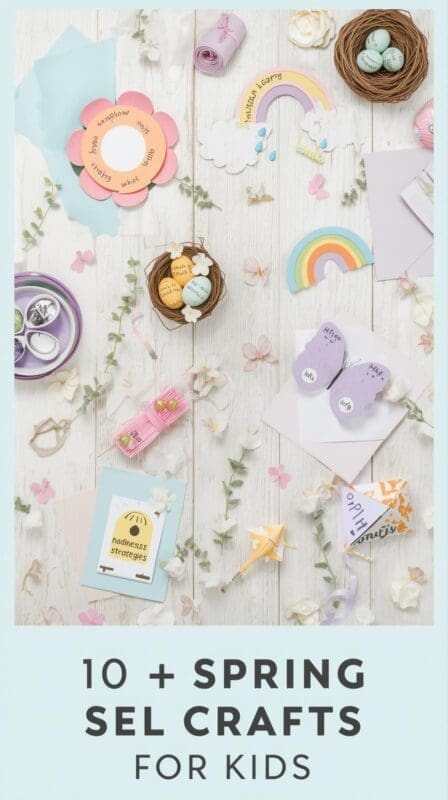
Why spring SEL crafts work so well
Spring is full of symbols children already understand intuitively. Growth. Change. Weather. Color. Small beginnings. Waiting for something to bloom.
That makes it easier to connect seasonal crafts with social-emotional themes in a way that does not feel forced or overly formal. Instead of asking children to sit down and “talk about emotions,” we can invite them to make, color, cut, glue, notice, and reflect. For many kids, that feels safer and more engaging.
Spring SEL crafts can help children:
- name and recognize emotions
- understand that feelings change over time
- practice calming and coping skills
- reflect on friendship and kindness
- build hope, patience, and resilience
- connect inner growth with the world around them
1. Feelings in Bloom flower craft
Flowers are one of the easiest spring symbols to turn into an emotional learning activity.
For this craft, give each child a large paper flower with several petals. On each petal, they can write or draw a different feeling. Younger children might use basic emotions like happy, sad, angry, scared, and calm. Older children can go deeper with words like frustrated, proud, nervous, disappointed, hopeful, lonely, excited, or overwhelmed.
The finished flowers can be bright and cheerful, but what matters most is the conversation that happens while children are creating them. Sometimes a child who does not want to “share feelings” directly will still quietly choose a color for worry, or tell you that one petal should be very big because that feeling shows up a lot lately.
This is a lovely way to normalize the idea that we can have many feelings at once. A child can feel excited and nervous. Proud and tired. Happy and left out. That is an important lesson.
Why it helps:
This spring SEL craft builds emotional vocabulary and helps children understand that feelings are varied, layered, and always changing.
2. After the Rain cloud and rainbow craft
This is one of my favorite spring social-emotional learning crafts because it gently teaches children that hard feelings do not last forever.
Children create a cloud with hanging raindrops. On the raindrops, they write difficult emotions, worries, or situations that feel hard right now. Then they add a rainbow underneath or beside the cloud. On each section of the rainbow, they write something that helps them cope, feel supported, or move forward.
The raindrops might say things like:
“I argued with a friend”
“I feel nervous before a test”
“I miss someone”
“I get mad when plans change”
The rainbow might include:
“deep breaths”
“talk to my teacher”
“hug my mom”
“draw quietly”
“take a break”
“remember I can try again”
This craft creates a beautiful visual message: hard moments are real, but support, skills, and hope exist too.
Why it helps:
It teaches emotional awareness and coping at the same time, helping children connect stress with concrete regulation tools.
3. Breathing butterfly craft
Butterflies are such a natural symbol for spring, and they work especially well in calming crafts.
Each child makes a butterfly and decorates the wings with calming tools or body-based coping strategies. You can write one strategy on each wing section, or keep it simple with drawings. Some children may want to add glitter, soft colors, or patterned wings, while others may prefer bold, bright butterflies.
Ideas to include on the wings:
- butterfly breaths
- stretch arms up high
- count to ten
- ask for help
- squeeze a pillow
- drink water
- sit in a cozy corner
- put a hand on your heart
You can also turn this into a movement activity by teaching children “butterfly breathing” before they begin. Have them cross their arms gently over the chest like butterfly wings and tap slowly while taking calm breaths.
Why it helps:
This spring SEL craft connects the beauty of seasonal imagery with practical nervous system support and self-regulation skills.
4. Kindness seed packets
Spring is the perfect season to talk about the idea that what we plant tends to grow.
For this craft, children decorate small paper seed packets. But instead of flower seeds, each packet is filled with “kindness seeds” — little slips of paper listing kind actions, caring words, or friendship choices. Children can either choose from prepared prompts or come up with their own.
Examples:
“invite someone to play”
“say thank you”
“help clean up”
“let someone go first”
“tell a friend one good thing about them”
“check on someone who looks sad”
Afterward, you can talk about how kindness works a little like gardening. We do not do one kind thing and suddenly have a whole garden. We practice small actions again and again. Over time, those small choices shape the way a classroom, family, or therapy group feels.
Why it helps:
It helps children understand that kindness is not only a feeling. It is something we practice, repeat, and grow.
5. Caterpillar to butterfly growth craft
This craft is especially meaningful for children who need encouragement around mistakes, effort, or slow progress.
Children begin by making a caterpillar. On each body segment, they write something they are still learning, something that feels hard, or a small challenge they are working through. Then they create butterfly wings and write strengths, supports, or encouraging thoughts that can help them grow.
The caterpillar might include:
“I am learning to wait”
“I am learning to calm down”
“I am learning to read harder words”
“I am learning to be brave”
The butterfly wings might say:
“I can keep trying”
“growth takes time”
“I can ask for help”
“I am getting stronger”
“mistakes help me learn”
This is a beautiful craft for spring counseling sessions, growth mindset lessons, or end-of-term reflection.
Why it helps:
It helps children reframe struggle as part of development instead of proof that they are failing.
6. My safe nest craft
Not every spring symbol has to be bright and energetic. Nests are gentle, grounding, and emotionally rich.
For this activity, children create a paper nest using brown strips, tissue paper, yarn, or natural textures. Then they place eggs inside the nest. On each egg, they write or draw something that helps them feel safe, comforted, or cared for.
Some children may write:
“my grandma”
“my stuffed animal”
“quiet time”
“my teacher”
“my dog”
“reading in bed”
“my family”
“someone listening to me”
This craft often opens the door to meaningful conversations about emotional safety. It can help children identify the people, places, objects, and routines that help them feel more regulated and secure.
Why it helps:
It supports self-awareness and helps children build a personal understanding of safety, support, and comfort.
7. Gratitude umbrella craft
Rainy spring days can be surprisingly cozy, and umbrellas make a lovely gratitude symbol.
Children create a large umbrella shape divided into sections. In each section, they write or draw something they appreciate. You can guide this by categories such as people, places, daily comforts, strengths, and favorite moments.
Some children will naturally choose big things, while others will notice tiny details:
“my brother”
“warm soup”
“my pink blanket”
“playing outside”
“my teacher smiled at me”
“when the sun comes out after rain”
That is part of what makes gratitude crafts so meaningful. They gently train attention. They help children notice what is steady, comforting, and beautiful, even during stressful seasons.
Why it helps:
This spring SEL craft strengthens gratitude, emotional perspective, and the ability to notice positive supports in everyday life.
8. Friendship bouquet craft
Friendship skills can feel abstract until children can see them in a more concrete way.
For this activity, children create a bouquet of flowers. Each flower represents one friendship skill. On the petals or flower centers, they write words like listening, sharing, including, apologizing, taking turns, encouraging, being honest, and respecting space.
You can make this more reflective by asking questions while children work:
Which friendship skill is easiest for you?
Which one feels hard sometimes?
What makes a friendship feel safe and kind?
What helps repair a friendship after conflict?
This craft works especially well in spring when classroom groups are often preparing for transitions, outdoor activities, and more peer interaction.
Why it helps:
It turns social skills into something visual and memorable while encouraging reflection on healthy relationships.
9. Pull the worry weeds garden craft
Some children respond really well to metaphors, especially when talking about anxiety or repetitive worries.
In this craft, each child creates a paper garden. Flowers or vegetables represent things that help them feel strong, calm, or happy. Weeds represent worries, upsetting thoughts, or emotional habits that get in the way. The child can choose whether to glue the weeds lightly so they can be “pulled,” or simply place them around the garden scene.
Worry weeds might include:
“what if I mess up”
“what if nobody plays with me”
“I get scared when things change”
“I think I’m not good enough”
Healthy garden supports might include:
“my breathing tools”
“talking to someone”
“being kind to myself”
“practice”
“rest”
“taking one step at a time”
This activity is especially good for children who need help externalizing worry instead of feeling swallowed by it.
Why it helps:
It gives anxious thoughts a concrete shape and helps children imagine emotional care as something active and possible.
10. Hope kite craft
A kite feels like such a perfect spring image because it holds both movement and possibility.
Children design a kite and decorate the tail with strips of paper. On the kite itself, they write hopes, goals, or things they want to keep growing in themselves. On the tail pieces, they can add encouraging words, reminders, or small next steps.
Examples:
“I want to be braver”
“I want to keep trying in math”
“I want to be kinder when I’m upset”
“I want to make a new friend”
“I want to believe in myself more”
This is a lovely craft to use at the start of spring, after a school break, or during a transition period when children need something forward-looking.
Why it helps:
It supports hope, goal-setting, and resilience while helping children focus on small, encouraging movement rather than perfection.
How to make spring SEL crafts feel more meaningful
The craft itself matters, but the reflection around it matters even more.
A simple activity becomes powerful when children are invited to pause, notice, and connect meaning to what they are making. That does not mean every craft needs to turn into a long discussion. In fact, some of the best moments come from one gentle question asked at the right time.
You might ask:
- Which part of this craft feels most like you today?
- What color matches this feeling?
- What helps this feeling get softer?
- What do you want to grow more of this spring?
- What helps you feel safe, calm, or included?
- What is one kind thing you could plant this week?
These questions help move the activity from “cute spring project” into true social-emotional learning.
Tips for using spring SEL crafts in a classroom, counseling office, or home
If you want these spring crafts for kids to feel calming instead of chaotic, it helps to keep the setup simple.
Offer limited material choices if children get overwhelmed easily. Use soft music if that supports regulation. Consider beginning with a very short breathing or noticing activity before the craft starts. In counseling or therapy settings, let the child lead the symbolism when possible. If they want their flower to represent mixed feelings or their nest to hold both comfort and sadness, that is meaningful information.
It also helps to remember that not every child will want to share out loud. Some will express more through color, texture, and images than through words. That still counts. Sometimes the safest emotional learning happens quietly.
Final thoughts on spring SEL crafts for kids
Spring reminds us that growth is often slow before it is visible.
That is one reason I love this season so much in emotional learning work. Children do not need dramatic breakthroughs to be growing. Sometimes growth looks like naming one feeling more clearly than before. Sometimes it looks like asking for help. Sometimes it looks like noticing what makes them feel safe, or practicing one small act of kindness again and again.
These spring SEL crafts for kids give us gentle ways to support that process.
They are creative, seasonal, and easy to adapt, but most importantly, they help children put shape and color to inner experiences that can otherwise feel confusing or hard to express. And sometimes that is where healing, confidence, and connection begin.
FAQs about spring SEL crafts for kids
What are the best spring SEL crafts for younger children?
Simple activities like feelings flowers, gratitude umbrellas, and kindness seed packets work especially well for younger children because they are visual, concrete, and easy to explain.
How do spring SEL crafts support emotional development?
They help children identify feelings, reflect on experiences, practice coping strategies, and build social skills through hands-on, low-pressure activities.
Can these spring SEL crafts be used in counseling sessions?
Yes. Many of these ideas work beautifully in school counseling, child therapy, small groups, and one-on-one emotional support sessions because they make abstract feelings easier to explore.
What supplies are best for spring social-emotional learning crafts?
Basic supplies like colored paper, scissors, glue, markers, crayons, yarn, tissue paper, and printable templates are usually enough. Natural materials can also add a calming sensory element.
Are spring SEL crafts useful in classrooms too?
Absolutely. These crafts work well for classroom morning meetings, SEL lessons, calm-down corners, friendship units, seasonal bulletin boards, and transition periods during spring.

About the Author
Hi, I’m Eve, a former school counselor with a master’s degree in School Psychology and a passionate advocate for children and families navigating sensory challenges. As a mom of children with sensory sensitivities, I deeply understand the journey special-needs parents face, and I dedicate myself to researching and sharing practical solutions to help children thrive and feel comfortable in their bodies. My goal is also to empower counselors, therapists, and psychologists with creative strategies and supportive resources to enrich their everyday practice. When I’m not writing or exploring new therapeutic approaches, you’ll find me spending quality time with my family and continually seeking inspiration from everyday moments.