This post may contain affiliate links, including Amazon Associate links. If you make a purchase through these links, I may earn a small commission at no extra cost to you.
There are workdays when a structured blazer feels exactly right. Then there are days filled with back-to-back sessions, paperwork, school corridors, floor-based activities, and an office air conditioner that seems determined to recreate winter.
On those days, a soft sweatshirt can feel much more appealing.
The difficulty is finding a therapist sweatshirt outfit that feels comfortable without looking as though you dressed for a quiet Sunday at home. Traditional hoodies and oversized crewnecks are wonderfully cozy, but they can quickly appear too casual when combined with joggers, worn sneakers, or an overly loose silhouette.
The good news is that a sweatshirt does not automatically make an outfit unprofessional. The overall impression depends on the fabric, fit, color, message, and the pieces you wear with it.
A simple crewneck paired with tailored trousers can look modern and intentional. A quarter-zip worn over a collared shirt can feel polished while still allowing you to move easily. Even an oversized sweatshirt can work when the rest of the outfit adds enough shape and structure.
These cozy therapist sweatshirt outfit ideas are designed for therapists, counselors, psychologists, social workers, school counselors, interns, and other helping professionals who want to feel warm, approachable, and put together throughout the workday.
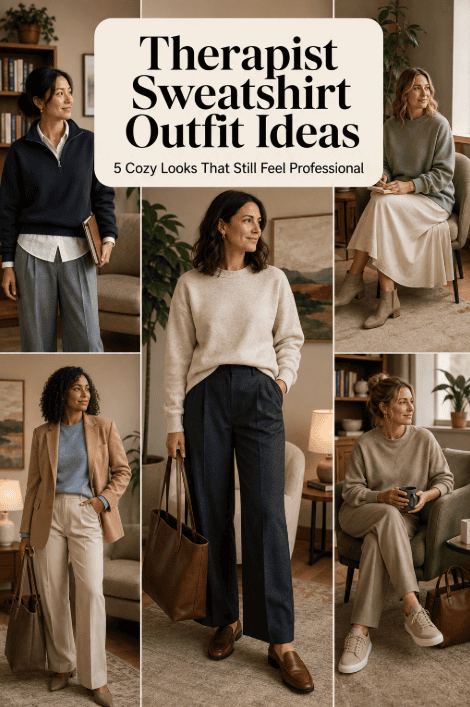
Can Therapists Wear Sweatshirts to Work?
In many settings, yes. A sweatshirt can be appropriate for work when it suits your workplace, client population, and daily responsibilities.
A school counselor may have more flexibility on spirit days, casual Fridays, or days spent moving between classrooms. A child therapist may need clothing that allows comfortable movement, floor sitting, and easy washing. Telehealth therapists may be able to wear softer outfits as long as the upper half looks neat on camera.
A formal private practice, hospital, or corporate environment may require more structure. In these settings, choose sweatshirt styles that resemble knitwear rather than athletic clothing. Look for clean seams, substantial fabric, simple necklines, and muted colors.
It is also worth considering the emotional tone of your clothing. Professional attire does not need to feel distant, but it should generally support the sense of steadiness and care you want to create. Eveyou’s guide to how therapist clothing affects client perception explores this balance in more detail.
The goal is not to follow one universal dress rule. It is to create an outfit that feels appropriate for the environment while allowing you to stay comfortable and present.
How to Make a Sweatshirt Look Professional
Before choosing an outfit, use one simple formula:
Combine one relaxed piece with at least one structured piece.
If your sweatshirt is loose, wear it with tailored trousers, a straight skirt, or a fitted layer underneath. If your trousers are wide and relaxed, choose a sweatshirt with a neater shoulder line or a slightly shorter length.
A few details can also change the entire impression.
Choose smooth, substantial fabric rather than thin material that quickly loses its shape. Keep the neckline neat, especially for telehealth or client-facing appointments. Avoid excessive distressing, oversized logos, loud slogans, or graphics that could distract from the conversation.
Neutral shades such as oatmeal, charcoal, navy, cream, soft brown, forest green, dusty blue, and muted burgundy are easy to combine with professional wardrobe pieces. They also tend to feel calmer than neon colors or highly contrasting prints.
Finally, pay attention to condition. A simple sweatshirt can look polished when it is clean, unpilled, and well-shaped. An expensive sweatshirt can look careless when the cuffs are stretched or the fabric is visibly worn.
1. Neutral Crewneck Sweatshirt With Tailored Ankle Trousers

A neutral crewneck is one of the easiest sweatshirt styles to bring into a professional wardrobe.
Choose a sweatshirt in oatmeal, light gray, navy, soft taupe, or muted sage. Pair it with ankle-length trousers in black, charcoal, camel, or chocolate brown. Complete the outfit with loafers, ballet flats, or clean leather-look sneakers.
The tailored trousers create structure, while the sweatshirt softens the overall impression. A neat front tuck can also define the waist without making the outfit feel rigid.
This combination works especially well for private practice therapists, counseling interns, social workers, and professionals working in relaxed office environments.
Look for a crewneck with a smooth finish, reinforced neckline, and enough weight to hold its shape. Styles with dropped shoulders can work, but avoid versions that are so oversized that the sleeves constantly cover your hands.
2. Oversized Sweatshirt With a Straight Midi Skirt

An oversized sweatshirt outfit can still look intentional when you balance the volume with a clean, simple skirt.
Choose a straight or gently flowing midi skirt rather than a very full silhouette. A satin, knit, denim, or structured cotton skirt can all work, depending on your workplace. Pair the outfit with ankle boots, loafers, or minimal sneakers.
Slightly push up the sleeves and use a small front tuck if the sweatshirt is long. This reveals more shape and prevents the outfit from looking heavy.
For a calm fall palette, combine a cream sweatshirt with an olive skirt, a charcoal sweatshirt with a black skirt, or a soft blue sweatshirt with warm gray.
This is a useful formula for therapists who want comfort but still enjoy feminine professional outfits.
3. Quarter-Zip Sweatshirt With Straight-Leg Trousers
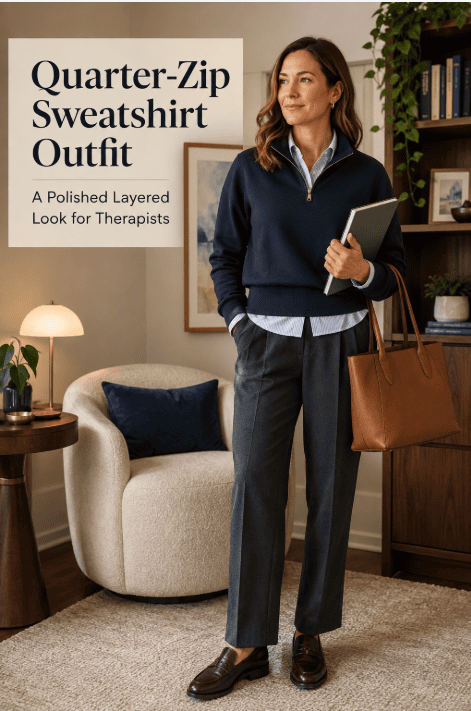
A quarter-zip is an ideal middle ground between a sporty sweatshirt and a traditional sweater.
Choose one with minimal branding, quiet hardware, and a collar that sits neatly whether the zip is open or closed. Wear it with straight-leg trousers and a fitted cotton T-shirt or lightweight mock neck underneath.
The collar adds visual structure around the face, which can be especially helpful during telehealth sessions. It also gives you an adjustable layer for offices where the temperature changes throughout the day.
A navy quarter-zip with camel trousers creates a classic professional look. For something softer, try cream with warm gray or dusty green with black.
Finish with loafers, simple ankle boots, or clean sneakers, depending on your setting.

4. Crewneck Sweatshirt Layered Over a Collared Shirt
Layering a collared shirt underneath a sweatshirt is one of the quickest ways to make it look more polished.
Allow the collar to show above the neckline and leave a small amount of the shirt visible below the sweatshirt hem. Crisp white is classic, but pale blue, soft striped cotton, and warm beige can feel less formal.
Pair the layers with tailored trousers, dark straight-leg jeans, or a midi skirt. Add loafers or sleek sneakers.
The key is choosing a sweatshirt that is roomy enough for the shirt without becoming bulky. A medium-weight crewneck with a slightly relaxed fit usually works best.
This outfit feels appropriate for professional development days, consultations, team meetings, and office days when you want to look thoughtful without wearing a blazer.
5. Monochromatic Sweatshirt and Wide-Leg Trouser Outfit
Dressing in similar colors can make relaxed clothing look more refined.
Start with a sweatshirt and wide-leg trousers in closely related shades. You might combine a cream sweatshirt with oatmeal trousers, a charcoal top with dark gray pants, or a muted brown sweatshirt with chocolate trousers.
The pieces do not need to match perfectly. Slight differences in tone and texture often make the outfit more interesting.
Choose trousers with a defined waistband and a fabric that drapes rather than clings. The sweatshirt should end near the waistband or be easy to tuck lightly at the front.
A tonal outfit creates a long, calm visual line and can look elegant even when every individual piece feels comfortable. Add a structured tote, simple jewelry, and polished shoes to complete the look.
6. Sweatshirt With Dark Straight-Leg Jeans
Dark jeans can work in many counseling environments, particularly on casual days or in less formal private practices.
Choose jeans in a clean dark wash without distressing, frayed hems, or dramatic fading. Pair them with a high-quality sweatshirt in cream, navy, burgundy, forest green, or soft gray.
Loafers, ankle boots, and understated sneakers all work with this combination. Add a structured belt or simple crossbody bag if you want more definition.
This outfit is especially practical for professionals who move between office work and community-based responsibilities. It is comfortable enough for a long day but still feels considered.
Before wearing jeans, check your workplace expectations. If denim feels slightly too casual, replace it with navy chinos or ponte trousers for a similar level of comfort.
7. Soft Sweatshirt With a Satin Midi Skirt
A satin midi skirt can instantly elevate a simple sweatshirt.
The contrast is what makes this outfit work: the sweatshirt adds softness and approachability, while the skirt introduces movement and polish. Choose a skirt in a subdued color such as bronze, navy, black, plum, or olive rather than a very shiny fabric.
A slightly shorter crewneck works well because it allows the skirt’s waistband to remain visible. You can also use a small front tuck.
Wear the outfit with ankle boots for fall, loafers for the office, or clean sneakers for a more relaxed counseling environment.
Keep accessories understated. The mix of textures already provides enough interest, so a simple pendant, small earrings, or a structured work bag is usually all you need.
8. School Counselor Sweatshirt With Chinos and Clean Sneakers
School counselors often need outfits that can handle hallways, classrooms, student meetings, floor activities, and unexpected schedule changes.
A soft crewneck paired with chinos creates a comfortable but school-appropriate base. Choose tapered or straight chinos in navy, olive, tan, or black. Add clean supportive sneakers or loafers.
A school-branded sweatshirt can work for spirit days, but keep the rest of the outfit simple. On ordinary days, consider a plain sweatshirt or one with a subtle positive message that aligns with your school’s expectations.
Avoid very long sleeves, loose drawstrings, or embellishments that could become inconvenient during activities.
For more outfit formulas designed around school settings, see how to create a cozy yet professional wardrobe for school counselors.
9. Shorter Sweatshirt With High-Rise Trousers
A shorter sweatshirt can create a flattering, balanced silhouette without exposing the stomach.
Look for a style that ends around the top of a high-rise waistband. Pair it with pleated trousers, wide-leg pants, or straight-leg work pants.
This combination works particularly well for petite professionals or anyone who finds that traditional sweatshirts create too much fabric around the hips. The shorter length defines the waist while maintaining full coverage.
Choose a substantial fabric so the sweatshirt hangs neatly rather than curling upward. A crewneck or mock-neck design usually looks more professional than a cropped athletic hoodie.
Complete the outfit with loafers, ankle boots, or pointed flats. A long coat or relaxed blazer can add another structured layer during colder months.
10. Longline Sweatshirt With Slim Structured Pants
If you prefer more coverage, try a longline sweatshirt with slim trousers or thick ponte pants.
The sweatshirt should look like an intentional tunic rather than an oversized athletic top. Side slits, a slightly longer back, clean seams, and a firm neckline can help.
Pair it with narrow but structured pants rather than thin leggings. Add ankle boots, loafers, or sleek sneakers.
This formula can be useful for child therapists who spend time on the floor or professionals who want a comfortable outfit for administrative days. It provides movement and coverage without requiring multiple layers.
Keep the color palette simple. A charcoal longline sweatshirt with black pants, or a warm beige top with dark brown trousers, feels calm and cohesive.
11. Subtle Graphic Counselor Sweatshirt With Neutral Bottoms
A counselor-themed sweatshirt can be cheerful and community-building, especially in a school or child-focused setting. The message, however, should be chosen carefully.
Look for designs that are warm and encouraging without making promises, jokes, or statements that might feel uncomfortable to a client. Small embroidery, understated typography, or a simple symbol is often easier to style than a large multicolored graphic.
Pair the sweatshirt with neutral trousers, dark jeans, or a solid midi skirt. Let the graphic remain the main visual feature and keep accessories quiet.
This type of outfit may work best for awareness days, school events, casual Fridays, counseling department activities, or staff development days rather than every client-facing situation.
12. Sweatshirt Under a Relaxed Blazer
A blazer can transform a sweatshirt into a more structured work outfit.
Choose a crewneck that is thin enough to layer comfortably and a blazer with a slightly relaxed fit. The sweatshirt should sit flat beneath the jacket without bunching around the shoulders.
Combine the layers with straight-leg trousers, dark jeans, or a simple skirt. Neutral pairings work particularly well: gray beneath navy, cream beneath camel, or black beneath a checked blazer.
This is a practical option when you need to move between different levels of formality. You can wear the blazer for meetings, consultations, or initial appointments and remove it during paperwork or less formal sessions.
Avoid hooded sweatshirts under formal blazers unless your workplace has a distinctly creative or casual dress culture.
13. Soft Sweatshirt and Polished Jogger Alternative for Telehealth
For telehealth days, comfort matters, but a matching athletic tracksuit may not create the professional impression you want on camera.
Instead, pair a clean crewneck or quarter-zip with pull-on trousers that have a flat front, tapered leg, and substantial fabric. These provide the ease of joggers without obvious elastic cuffs or sporty detailing.
Choose a sweatshirt color that works well with your background and does not blend completely into your chair. Soft blue, burgundy, forest green, oatmeal, and navy are reliable options.
Pay particular attention to the neckline because it remains visible on camera. Check the outfit while seated rather than judging it only in a full-length mirror.
The result should feel relaxed enough for home while still appearing prepared and attentive.
14. Sweatshirt With Pleated Trousers and Loafers
Pleated trousers create a beautiful contrast with a simple crewneck sweatshirt.
Choose trousers with a high or mid-rise waistband and enough structure to hold the pleats. Tuck a small section of the sweatshirt into the front, then allow the rest to fall naturally.
Loafers make the combination feel especially polished, although flat ankle boots also work well in cooler weather.
For an elegant autumn outfit, try a muted burgundy sweatshirt with charcoal trousers, a cream sweatshirt with brown pants, or a navy top with camel trousers.
This formula is comfortable enough for a full day of sessions but refined enough for professional meetings. It is also easy to repeat with different colors, making it useful for a small therapist capsule wardrobe.
15. Cardigan-Style Sweatshirt With a Simple Base Outfit
A sweatshirt cardigan, zip-front knit, or soft structured jacket is a useful alternative for professionals who like the comfort of sweatshirt fabric but want more flexibility.
Wear it over a plain T-shirt, shell top, or lightweight blouse. Pair it with trousers, a midi skirt, or dark jeans.
Choose a version with clean edges, discreet pockets, and minimal hardware. Avoid bulky athletic zip-ups if your goal is a more professional look.
This layer is particularly practical for offices with unpredictable temperatures because it is easy to remove without disturbing your hair or neckline. It also allows you to keep a simple base outfit underneath.
A warm gray, navy, camel, or soft olive version can coordinate with many pieces already in your wardrobe.
How to Choose a Work-Appropriate Sweatshirt
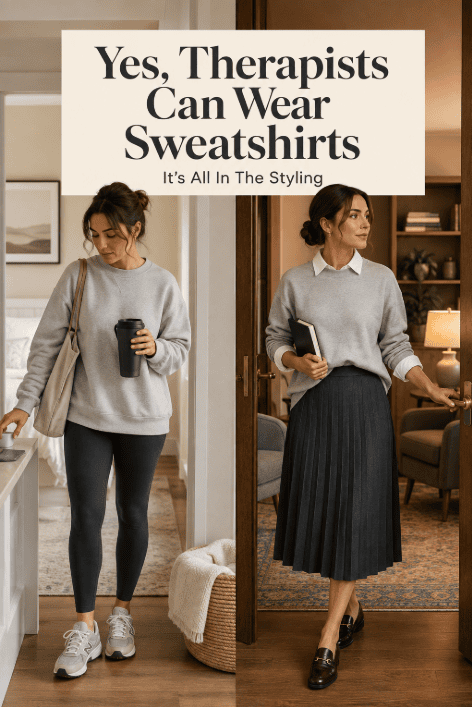
Not every sweatshirt needs to become part of your professional wardrobe. A few selection criteria can help you choose pieces that will be worn regularly rather than sitting unused in a drawer.
Look for Fabric That Holds Its Shape
Medium-weight cotton blends, smooth fleece, ponte-like sweatshirt fabric, and tightly knit French terry generally look neater than very thin material.
Check whether the cuffs recover after stretching and whether the waistband lies flat. Fabric that immediately wrinkles, twists, or clings may become frustrating during long workdays.
Pay Attention to Noise and Hardware
Large metal zippers, decorative toggles, and loose drawstring ends can create unnecessary movement or sound. This may be especially noticeable during quiet sessions or when working with sound-sensitive clients.
Simple construction is often the most versatile.
Choose the Right Amount of Ease
A sweatshirt should allow you to move, reach, sit, and breathe comfortably. It does not need to be tight to look professional.
At the same time, very oversized styles can become distracting when the sleeves cover your hands or the neckline shifts throughout the day. Consider sizing, shoulder placement, sleeve length, and how the sweatshirt looks while seated.
Consider Washability
Therapists working with children, school counselors, and community-based professionals may need clothing that can be washed frequently.
Check care instructions before buying. A beautiful sweatshirt that requires complicated maintenance may not suit a demanding workweek.
Be Selective With Messages
Words and graphics can carry more meaning in a counseling environment than they might in everyday life.
Avoid humor that minimizes distress, labels people, or assumes how someone should feel. When in doubt, choose a plain design or a subtle message that does not compete with the interaction.
Adapting Sweatshirt Outfits to Your Therapy Setting
The same sweatshirt may feel appropriate in one environment and too casual in another.
For adult private practice, prioritize refined fabrics, neutral colors, and structured trousers. A blazer, collared shirt, or polished shoe can raise the level of formality.
For child therapy, choose washable materials, practical sleeves, comfortable waistbands, and clothing that allows you to sit or move freely. Avoid delicate fabrics that make you hesitant to participate in play or creative activities.
For school counseling, combine comfort with school expectations. Chinos, simple sneakers, quarter-zips, and occasional school-branded sweatshirts can work well.
For telehealth, focus on the upper half of the outfit. Neckline, color, texture, and camera framing matter more than whether your trousers have a traditional waistband.
For broader guidance across different professional environments, visit the style guide for mental health professionals.
A Small Cozy Therapist Workwear Capsule
You do not need 15 different sweatshirts to create 15 outfits.
A practical capsule might include:
- One oatmeal or cream crewneck
- One navy, charcoal, or forest-green sweatshirt
- One polished quarter-zip
- One cardigan-style sweatshirt layer
- One pair of black or charcoal tailored trousers
- One pair of camel, olive, or brown trousers
- One midi skirt
- One pair of dark straight-leg jeans
- Loafers or ankle boots
- Clean supportive sneakers
- One collared shirt for layering
- One relaxed blazer
With this foundation, you can repeat the same comfortable pieces while changing the silhouette, color combination, or level of formality.
For a more complete approach, use Eveyou’s guide to building a professional and feminine capsule wardrobe for psychologists and counselors.
Final Thoughts on Therapist Sweatshirt Outfits
A professional therapist outfit does not have to be formal, expensive, or uncomfortable. It should suit your setting, support the practical demands of your day, and help you feel like yourself at work.
The easiest way to style a sweatshirt professionally is to balance it with intention. Add tailored trousers, a structured skirt, polished shoes, a collared layer, or a simple blazer. Choose fabrics that hold their shape and colors that coordinate easily with the rest of your wardrobe.
Most importantly, notice how the outfit feels while you are actually working. Can you sit comfortably? Can you move without adjusting your clothes? Does the outfit feel appropriate for the people and environment you serve?
When those pieces come together, a sweatshirt can be more than a casual fallback. It can become one of the most useful, comfortable, and repeatable parts of your therapist wardrobe.
For more inspiration, explore these professional outfit ideas for therapists.

About the Author
Hi, I’m Eve, a former school counselor with a master’s degree in School Psychology and a passionate advocate for children and families navigating sensory challenges. As a mom of children with sensory sensitivities, I deeply understand the journey special-needs parents face, and I dedicate myself to researching and sharing practical solutions to help children thrive and feel comfortable in their bodies. My goal is also to empower counselors, therapists, and psychologists with creative strategies and supportive resources to enrich their everyday practice. When I’m not writing or exploring new therapeutic approaches, you’ll find me spending quality time with my family and continually seeking inspiration from everyday moments.