
A cozy Christmas therapy office does not need to look like a holiday store. Warm light, soft texture, natural greenery, and a few familiar seasonal details can make the room feel welcoming while preserving the layout clients already know.
This guide focuses on the warm and layered side of Christmas therapy office decor. If you prefer a quieter, pared-back look, see the subtle minimalist Christmas therapy office guide. For a wider collection of styles, explore these 17 professional Christmas therapy office decor ideas.
Affiliate disclosure: This post may contain Amazon affiliate links. As an Amazon Associate, Eveyou may earn from qualifying purchases at no additional cost to you. Recommendations are included only where a product can help complete an idea in this guide.

What Makes a Christmas Therapy Office Feel Cozy?
Cozy design is created through layers rather than a large quantity of decorations. The room should still function as a professional setting, but its light, materials, and small seasonal moments can feel softer and more inviting.
- Warm, steady lighting: table lamps and small strings of warm-white lights feel gentler than flashing or color-changing displays.
- Touch-friendly texture: washable throws, soft pillow covers, baskets, wood, and felt add warmth without demanding attention.
- Natural shapes: evergreen branches, pinecones, dried oranges, and simple wreaths bridge Christmas and winter decor.
- Familiarity: keep seating, pathways, sensory tools, and therapeutic surfaces in their usual positions.
Choose a Warm, Cohesive Palette
Start with the colors already present in the office. Then add one deeper seasonal color and one warm accent. A focused palette keeps layered decor from becoming visually busy.
| Existing office colors | Cozy seasonal additions | Overall feeling |
|---|---|---|
| Beige, cream, light wood | Forest green and muted brass | Warm and classic |
| Blush, taupe, white | Deep berry and soft gold | Gentle and feminine |
| Sage, ivory, oak | Evergreen and natural brown | Organic and quiet |
| Navy, gray, walnut | Burgundy and warm white | Rich but professional |
1. Build a Warm Lighting Layer
Use the room’s normal overhead lighting when it is needed, then add a table or floor lamp to soften one conversation area. A short strand of steady warm-white lights can frame a shelf or small tree. Keep cords away from walking paths and make sure clients can request brighter lighting.
Helpful shortcut: browse warm-light table lamps for a therapy office on Amazon.
2. Create One Soft Seating Moment
Rather than changing every chair, style one guest seat with a washable throw and a removable pillow cover. Choose materials that are easy to launder and avoid bulky layers that change the support or accessibility of the seat. A small update can make the room feel seasonal without creating extra clutter.
Helpful shortcut: compare neutral Christmas pillow covers and cozy throws on Amazon.

3. Style a Small Tabletop Tree
A compact tree creates a recognizable focal point without taking over the room. Place it on a cabinet or side table, use a limited ornament palette, and leave the lower surface clear enough for everyday use. Felt, wood, paper, or fabric ornaments often work better than fragile glass in shared spaces.
4. Add an Evergreen Welcome at the Door
A simple evergreen or eucalyptus wreath can make the entrance feel cared for before a session begins. Check that it does not hide room numbers, required signs, viewing panels, or door hardware. If a wreath feels too formal, a small bundle of greenery tied with velvet ribbon offers a softer alternative.
Helpful shortcut: see natural-looking evergreen and eucalyptus wreaths on Amazon.
5. Use Baskets to Contain Seasonal Layers
A woven basket can hold an extra throw, seasonal books, or a small set of winter activity materials. It makes the cozy layer look intentional and gives everything a clear home when the room needs to be reset. Choose a basket that fits completely under a table or beside a chair rather than narrowing the walkway.
Helpful shortcut: browse woven blanket baskets for office storage on Amazon.

6. Bring in Natural Winter Texture
Use pinecones, bare branches, wood beads, dried citrus, or evergreen clippings in one contained arrangement. Natural materials add depth without relying on bright novelty decor. If you use collected materials, inspect and clean them first; artificial versions may be more practical in offices where shedding or sensitivities are a concern.
7. Create a Calm Holiday Reading Basket
Place a small selection of winter picture books, reflection journals, or coloring materials in a basket near the waiting or child area. Keep the selection inclusive: winter nature, kindness, light, rest, and togetherness can sit alongside explicitly Christmas titles. Rotate rather than overfill the basket so materials remain easy to see and return.
8. Replace One Piece of Art
Swap a single everyday print for a winter landscape, botanical evergreen illustration, or simple seasonal message in the room’s existing colors. Replacing one piece preserves visual continuity and is easier to reverse in January than creating a complete holiday gallery wall.

9. Make a Gratitude Branch Display
Place a sturdy branch in a weighted vase and add paper tags nearby. Clients who wish to participate can write a gratitude, hope, or supportive word and hang it on the branch. Participation should remain optional, and responses should not be displayed if they include identifying or private information. The same display can become a winter intentions tree after the holidays.
10. Add a Low, Steady Glow
Battery-operated LED candles can add a warm visual point to a high shelf or enclosed lantern without an open flame. Select steady rather than flickering modes if movement could be distracting, keep battery compartments inaccessible to children, and follow workplace rules for electrical and decorative items.
Helpful shortcut: compare warm-white battery-operated LED candles with timers on Amazon.
11. Frame One Shelf With a Simple Garland
A short evergreen, felt-ball, or wood-bead garland can connect a shelf display without covering books or therapeutic materials. Secure it so it cannot be pulled into a pathway. Leave negative space around the garland; the cozy feeling comes from texture and light, not from filling every available inch.
12. Plan a Winter Transition
Choose several elements that can remain after Christmas: the lamp, cream throw, woven basket, pinecones, bare branches, and winter landscape art. Remove the distinctly Christmas pieces first, then let the neutral winter layer carry the room into January. This reduces waste and makes the seasonal reset easier.
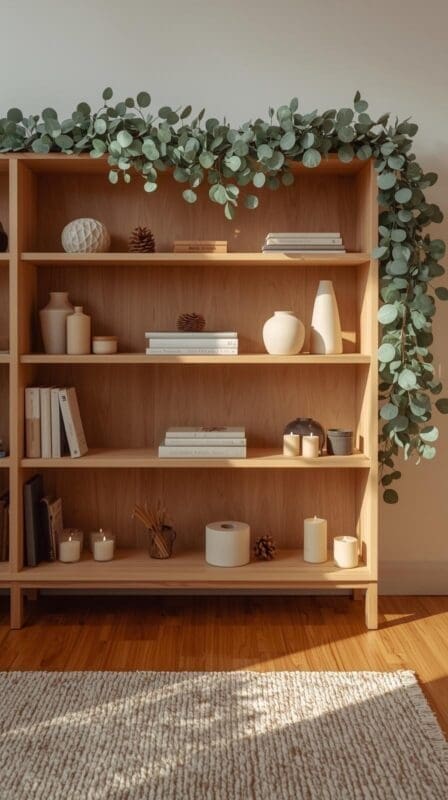
A Three-Zone Cozy Decorating Plan
- Entry: add one wreath or greenery bundle so the seasonal theme begins before the client enters.
- Conversation area: use one lamp, one washable textile, and a contained basket to create warmth where people sit.
- Visual focal point: style a small tree, shelf, or gratitude branch rather than decorating the entire room.
Stop after these three zones and observe the room from the doorway and each client chair. If signs, tools, pathways, or faces are harder to see, remove or reposition something.
What to Avoid in a Cozy Therapy Office
- Flashing lights, loud electronic decorations, and decorations that suddenly move or make sound.
- Strong fragrance. Scent can be uncomfortable or inaccessible for some clients, so visual and tactile atmosphere is usually easier to control.
- Too many pillows, blankets, or floor items that affect seating support, hygiene, or clear pathways.
- Religious assumptions. Christmas decor can coexist with inclusive winter elements and neutral alternatives.
- Therapeutic claims about decor. A cozy room can support comfort and familiarity, but decoration is not a treatment.
Explore Other Christmas Therapy Office Styles
For an earthy, relaxed room, explore boho Christmas therapy office decor. For nostalgic layers, see the vintage Christmas therapy office guide. Each page keeps a distinct visual direction so you can choose the one that fits your existing office.
Frequently Asked Questions
How can I make a therapy office cozy for Christmas on a small budget?
Begin with one lamp, a washable throw you already own, collected pinecones or branches, and a small paper garland. Concentrating the materials in one seating area often looks more intentional than spreading inexpensive decorations across the entire room.
How much Christmas decor is appropriate in a counseling office?
There is no universal number. Use enough to establish one coherent seasonal layer while keeping pathways, signs, work surfaces, and therapeutic materials fully functional. Three decorated zones are usually a practical limit to test first.
What if some clients do not celebrate Christmas?
Combine Christmas details with broader winter materials such as evergreen, stars, warm light, nature art, and neutral textiles. Avoid assuming participation and keep an undecorated or lower-stimulation option available where practical.
Can cozy decor stay up after the holidays?
Yes. Lamps, neutral throws, baskets, pinecones, winter landscapes, and simple greenery can remain through January. Remove distinctly Christmas ornaments, wording, and ribbon first.
Final Thoughts
A cozy Christmas therapy office is built through thoughtful layers: warmer light, touchable texture, natural materials, and one or two seasonal focal points. Keep the room familiar, make participation optional, and choose pieces that are easy to clean, store, or carry into winter. The result can feel festive and personal without interfering with the work the space needs to support.

About the Author
Hi, I’m Eve, a former school counselor with a master’s degree in School Psychology and a passionate advocate for children and families navigating sensory challenges. As a mom of children with sensory sensitivities, I deeply understand the journey special-needs parents face, and I dedicate myself to researching and sharing practical solutions to help children thrive and feel comfortable in their bodies. My goal is also to empower counselors, therapists, and psychologists with creative strategies and supportive resources to enrich their everyday practice. When I’m not writing or exploring new therapeutic approaches, you’ll find me spending quality time with my family and continually seeking inspiration from everyday moments.

