
A good winter work dress can simplify a cold-weather morning: one main piece, a warm layer, practical footwear, and fewer separates to coordinate. For school counselors, therapists, psychologists, and other helping professionals, the best option should suit the workplace, allow comfortable movement, and work with shoes and layers you already own.
These winter work dresses for counselors range from sweater dresses to structured A-line styles. Each idea includes a practical styling formula and a fit check, so you can adapt it to a school, clinic, private practice, or office dress code.
Affiliate disclosure: This post contains Amazon affiliate links. As an Amazon Associate, Eveyou may earn from qualifying purchases at no additional cost to you. Product selection, sizing, availability, and prices can change; check the current listing before ordering.

What Makes a Winter Dress Work-Appropriate?
Start with your actual day rather than a social-media outfit. Consider the building temperature, travel between locations, floor-based work, standing during groups, and any written clothing requirements.
- Comfortable movement: sit, reach, walk, and use stairs without repeatedly adjusting the garment.
- Practical length: choose a hem that remains comfortable in your usual seated positions.
- Layering room: allow space for a thin base layer, cardigan, or blazer without pulling.
- Fabric behavior: check whether the knit clings, becomes sheer when stretched, wrinkles, or attracts lint.
- Temperature control: removable layers are often more useful than one very heavy dress.
- Easy care: review the current care label, especially for wool blends and structured knits.
- Functional footwear: choose shoes for the weather and amount of walking you do.
Quick Outfit Formula
| If your day includes… | Try this dress base | Add |
|---|---|---|
| Floor-based work with children | Relaxed midi or A-line dress | Opaque tights, cardigan, flat boots |
| Parent meetings or presentations | Jersey wrap or structured knit dress | Blazer, simple jewelry, ankle boots |
| Travel between buildings | Layer-friendly midi dress | Warm coat, weatherproof boots, tote |
| Variable office temperatures | Lightweight long-sleeve dress | Removable cardigan or coatigan |
| Casual school day | Tunic or sweater dress | Leggings if permitted, flat footwear |
12 Winter Work Dress Ideas for Counselors
1. Classic Sweater Dress With Tights
The look: Choose a straight or gently shaped sweater dress in charcoal, navy, black, camel, or taupe. Add opaque tights, ankle boots, and an optional slim belt.
Why it works: It is a simple one-piece base that can shift from casual to polished through footwear and layers.
Check before wearing: Test the knit while sitting; some sweater dresses stretch, cling, or shorten more than expected.


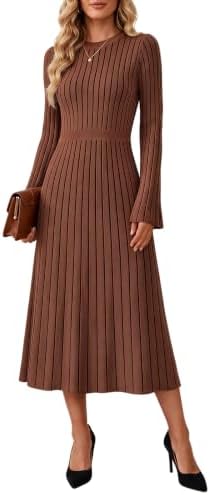

2. Midi Dress With a Longline Cardigan
The look: Layer a long-sleeve midi dress under a neutral cardigan. Finish with low boots or loafers for indoor days.
Why it works: The cardigan can be removed when the building warms up and gives the outfit an intentional finish.
Check before wearing: Make sure the cardigan and skirt do not catch around chair wheels or trail on stairs.
3. Turtleneck Dress With Knee-High Boots
The look: Style a relaxed turtleneck or mock-neck dress with opaque tights and streamlined knee-high boots.
Why it works: The higher neckline and tall boots add coverage without requiring several visible layers.
Check before wearing: Check that the neckline is comfortable and measure boot shaft height and calf circumference.

4. Subtle Plaid Winter Dress
The look: Choose a small-scale plaid in navy, gray, forest green, or burgundy and keep the layers and shoes solid.
Why it works: A restrained pattern adds seasonal interest while remaining easy to repeat.
Check before wearing: Match the scale and contrast of the print to your workplace.
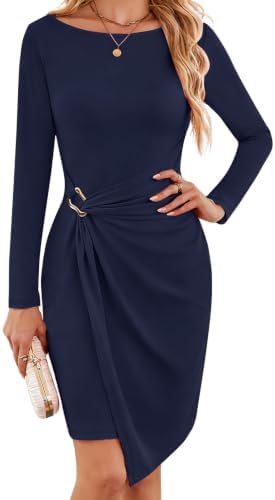
5. Long-Sleeve Jersey Wrap Dress
The look: Use a true wrap or fixed-wrap silhouette in a substantial jersey, with a camisole if desired, tights, and flat or block-heel boots.
Why it works: The shape works for meetings while the knit often allows easier movement than a rigid woven dress.
Check before wearing: Secure the neckline and overlap for bending and seated work; wrap cuts vary.


6. Dark Floral Midi Dress
The look: Choose a dark-ground floral with muted motifs, then add a solid cardigan and ankle boots.
Why it works: It brings personality into winter while coordinating with neutral outerwear.
Check before wearing: Confirm the fabric is opaque with the underlayers you plan to wear.
7. Shift Dress Over a Thin Turtleneck
The look: Layer a sleeveless shift, pinafore, or jumper dress over a smooth fitted turtleneck with tights and flat shoes.
Why it works: This extends the use of a sleeveless dress and lets you vary the base-layer color.
Check before wearing: Check for bunching and pulling at the armholes.

8. Belted Knit Dress
The look: Wear a knit dress with a removable tie belt, or add a belt only if it remains comfortable while sitting.
Why it works: The belt can add structure to a soft knit.
Check before wearing: Avoid over-tightening; it should stay comfortable during long seated sessions.
9. Structured A-Line Dress
The look: Try an A-line dress in a substantial knit, ponte, or workplace-appropriate woven fabric, with a cropped cardigan and tights.
Why it works: The defined shape looks polished while the fuller skirt can allow easier movement.
Check before wearing: Check fiber and care information and make sure pockets do not distort the skirt.


10. Simple Dress With a Blazer
The look: Start with a navy, charcoal, or black dress and add a softly tailored blazer.
Why it works: Changing the blazer can make one dress work for consultations and ordinary office days.
Check before wearing: Raise and cross your arms; tight shoulders make an otherwise polished outfit impractical.
11. Tonal Cream or Winter-White Outfit
The look: Combine an ivory, oatmeal, or stone dress with similar layers and taupe accessories.
Why it works: A tonal palette creates interest through texture without bold patterns.
Check before wearing: Light colors show marks; choose washable pieces if you use art materials or work with children.

12. Casual-Friday Tunic Dress
The look: Pair a longer tunic-style knit dress with opaque leggings or slim pants if permitted, plus clean flat boots or loafers.
Why it works: It is an easy option for spirit days or relaxed settings.
Check before wearing: Confirm that the length and leggings combination meet workplace policy.


How to Build More Outfits From One Dress
A dress earns its place in a practical wardrobe when it can create at least three combinations. Before buying, picture it with one indoor shoe, one weather-ready boot, two top layers, and the tights or base layers you already own. Photograph successful combinations for busy mornings.
- Meeting day: dress + blazer + simple jewelry + polished boots
- Regular counseling day: dress + cardigan + opaque tights + flat boots
- Cold commute: thin base layer + dress + coat + scarf + weatherproof boots
- Casual day: relaxed dress + soft cardigan + permitted leggings + loafers
For footwear, use the companion guide to professional winter boots for psychologists. Find more layers in cozy winter work outfits for counselors.
Smart Shopping Checklist
- Read the current size chart and garment measurements.
- Check fiber content, lining, washing instructions, and opacity.
- Review the neckline, hem, sleeves, pockets, closures, and back view.
- Look for recent feedback about shrinkage, pilling, static, fit, and color accuracy.
- Confirm delivery timing, return terms, and possible return costs.
- Avoid buying a piece unless it works with shoes and layers you already own.
Amazon listings, availability, prices, materials, and sizing can change. Treat the product blocks as starting points and verify every detail on the current listing.
Winter Dress FAQ
Can counselors wear dresses while working with children?
Yes, when the dress suits the activity and workplace policy. A comfortable midi or A-line cut with secure coverage may be easier for floor-based work than a fitted style. Test the full range of movement at home.
What should I wear under a winter work dress?
Options include a thin camisole, fitted long-sleeve base layer, slip, opaque tights, or permitted leggings. Choose smooth layers that do not bunch and can adjust to changing temperatures.
How can I make a sweater dress look more professional?
Use a defined but comfortable silhouette, polished footwear, an intentional outer layer, and restrained accessories. Removing lint and checking for pilling matters too.
How many winter work dresses do I need?
There is no required number. One or two versatile dresses may be enough if they work with several layers and shoes. Start with a real wardrobe gap.
Create a Winter Workwear System That Fits Your Day
The most useful winter dress is not the one that photographs best; it is the one that helps you get dressed, move comfortably, and meet workplace expectations. Choose the silhouette around your routine, then use tights, boots, cardigans, and blazers to adjust warmth and formality.
For a refined direction, explore quiet luxury winter outfits for psychologists. For a year-round foundation, use the professional capsule wardrobe guide.

About the Author
Hi, I’m Eve, a former school counselor with a master’s degree in School Psychology and a passionate advocate for children and families navigating sensory challenges. As a mom of children with sensory sensitivities, I deeply understand the journey special-needs parents face, and I dedicate myself to researching and sharing practical solutions to help children thrive and feel comfortable in their bodies. My goal is also to empower counselors, therapists, and psychologists with creative strategies and supportive resources to enrich their everyday practice. When I’m not writing or exploring new therapeutic approaches, you’ll find me spending quality time with my family and continually seeking inspiration from everyday moments.

