
Designing a child therapy room is not just about making the space cute.
No room can guarantee that a child will feel safe or regulated. A predictable layout, appropriate materials, clear boundaries, accessible choices, and a therapist who introduces the space collaboratively may make it easier to understand and use.
The chair in the corner. The height of the shelves. The colors on the wall. The lighting. The storage baskets. The open floor space. The art supplies. The toys that are visible and the toys that are tucked away. The way a child understands where to sit, what they can touch, and how the room works.
A well-planned room can provide several ways to participate, including talking, drawing, symbolic play, movement, reading, or choosing not to use a particular tool. Caregivers also benefit from understanding where they should sit, what is private, and how transitions will work.
This guide covers layout, zones, storage, lighting, sound, play materials, creative supplies, optional sensory tools, and decor. Adapt every recommendation to your scope of practice, setting, training, supervision, policies, and the needs of the children you actually serve.
Affiliate disclosure: This post contains affiliate links, including Amazon links. If you purchase through them, I may earn a commission at no additional cost to you.
Before You Buy Therapy-Room Furniture or Sensory Equipment
Complete a purchasing gate before ordering anything large, weighted, electrical, climbable, enclosed, or difficult to clean:
- Clinical fit: Does the item match your therapeutic approach, competence, and a real use case?
- Physical fit: Have you measured doors, clearances, sight lines, exits, outlets, vents, and accessible routes?
- Policies and installation: Does the landlord, employer, insurer, fire policy, cleaning protocol, or facilities team require approval?
- Individual suitability: Can the item be offered voluntarily and used according to age, body size, mobility, sensory preferences, supervision needs, and manufacturer instructions?
- Maintenance: Can it be inspected, cleaned, stored, replaced, and reset consistently?
Start with layout, ordinary seating, secure storage, a small set of open-ended materials, and one or two clearly introduced choices. Specialized sensory or movement equipment is not a default decor purchase.

What a Child Therapy Room Really Needs
A child therapy room is different from a playroom, classroom corner, or waiting area.
The room may include toys and art supplies, but each visible material should have a clear reason for being available. Open-ended play and creative materials can offer alternative ways to communicate, while responses and preferences will differ across children.
A strong child therapy room usually supports five needs:
- predictability and appropriate privacy
- creative expression
- choice-based sensory and movement options
- movement and play
- therapist organization
The room should feel welcoming, but not chaotic. Playful, but not overstimulating. Professional, but not cold. Flexible, but not cluttered.
Before buying decor, ask:
Can a child understand this space easily?
Is there room for movement?
Are materials accessible but not overwhelming?
Can I reset the room quickly?
Can parents see that this is a therapeutic space, not just a toy room?
Does the room support the kind of work I actually do?
Use the answers to decide what belongs in the room now, what should remain stored, and what does not need to be purchased.
Core Principles of Child Therapy Room Design
1. Emotional Safety Comes First

Children often decide how a room feels before they say anything.
A space that feels loud, crowded, dark, or unpredictable may be difficult for some children to use. Warm light, clear organization, and developmentally appropriate choices may make the room easier to navigate, but preferences differ and should be observed rather than assumed.
Emotional safety can be supported through:
- predictable layout
- soft lighting
- uncluttered shelves
- gentle colors
- clear boundaries
- comfortable seating
- toys arranged with intention
- cozy but supervised regulation area
This does not mean the room has to be boring. It means the room should not compete with the child’s emotional process.
A child therapy room should gently say:
You are welcome here.
You can play here.
You can feel here.
You can choose here.
You are safe here.
2. The Room Should Offer Choice Without Overwhelm
Children benefit from having options, but too many visible choices can become dysregulating.
Instead of filling shelves with every toy, game, puppet, sensory item, and art material you own, curate what is visible.
Use:
- low shelves
- labeled baskets
- closed storage
- rotating toy sets
- simple categories
- clear zones
A child might choose between art, building, pretend play, sand tray, books, movement, or a calming tool. But they do not need fifty options at once.
A limited, clearly presented set of choices may be easier to navigate than crowded open shelves. Rotate or store materials according to the child, session purpose, and cleanup needs.
The best child therapy rooms make choices visible, clear, and manageable.
3. Play Should Feel Intentional
In child therapy, play materials are not random.
Toys, figures, animals, building materials, art supplies, and sensory tools can help children express feelings, tell stories, explore relationships, practice regulation, and process experiences symbolically.
Good therapeutic play materials often allow open-ended expression.
Consider including:
- animal figures
- family figures
- dollhouse or small world play items
- blocks
- interlocking building bricks
- puppets
- emotion cards
- play food
- vehicles
- doctor kit
- art supplies
- sand tray miniatures
- sensory materials
- story stones
- calming tools
The best toys are not always the most expensive. They are the ones children can use in many ways.
A toy car, puppet, or block structure may become part of a child’s story, or it may simply be used as a toy. Follow the child’s meaning and the therapeutic context rather than imposing an interpretation.
Step 1: Create a Warm Welcome Area
The first few seconds matter.
A child therapy room should have a clear welcome point that helps the child understand they are in the right place.
This might include:
- a small welcome sign
- a cozy rug near the entry
- a low shelf with a few visible materials
- a simple “all feelings are welcome” print
- a plant or soft lamp
- a basket for shoes, if relevant
- a small chair for parent transitions
Avoid making the first thing a child sees your desk, paperwork, or a crowded storage area. The entrance should feel warm and understandable.

- ❤ Convenient to Hang: Pre-tied twine and wooden stick make hanging effortless, and they can be easily removed if needed.
- ❤ Size/Color: Dimensions are 11.2*10.8 inch, in a charming beige hue.
- ❤ Premium Canvas: Crafted from natural cotton canvas, featuring 1 durable twine and 1 sturdy wooden stick. Its lightweig…
Affiliate product ideas:
- child-friendly welcome sign
- small washable rug
- low bookshelf
- soft table lamp
- woven basket
- framed affirmation print
- faux plant
A simple, grounded welcome area can help reduce uncertainty and set a softer emotional tone.
Step 2: Use a Soft, Muted Color Palette
Bright primary colors are common in children’s spaces, but they are not always the best choice for therapy rooms.
A child therapy room can be playful without being visually loud.
Consider colors such as:
- sage green
- dusty blue
- soft peach
- warm beige
- cream
- muted teal
- pale terracotta
- gentle lavender
- warm gray
- light wood tones
These colors feel child-friendly but still calming. They also photograph well for Pinterest and pair beautifully with natural materials, soft rugs, and wooden shelves.
You can add brighter colors through toys, art materials, and small accents, but keep the background gentle.
A good rule:
Calm base. Playful materials. Clear organization.
Affiliate product ideas:
- peel-and-stick wallpaper in soft patterns
- sage green rug
- muted wall art
- warm neutral curtains
- soft pastel storage bins
- calming color posters
Step 3: Design the Room in Zones
Zones help children understand what happens where.
A well-zoned child therapy room might include:
- regulation corner
- play area
- creative expression area
- movement space
- caregiver conversation area
- storage area
You do not need a large room. Even a small therapy office can use zones through rugs, shelves, baskets, and furniture placement.

Zone 1: Cozy Regulation Corner
A cozy regulation corner gives children a place to pause when feelings become too big.
This does not need to be a hidden or enclosed space. In fact, for safety and supervision, it should remain visible and easy to access.
Include:
- soft floor cushion
- small rug
- weighted lap pad if appropriate
- calm-down cards
- breathing cards
- quiet fidgets
- sensory bottle
- feelings chart
- soft lighting
- basket for calming tools
- noise-reducing headphones if useful
Keep the space simple. Too many sensory tools can become distracting.
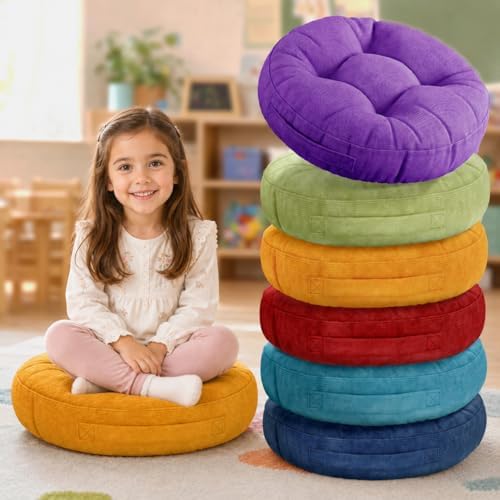
- SAFE FOR CLASSROOM: Our seating passed the smolder resistance test, is difficult to ignite, and will even slow the sprea…
- PORTABLE SEATING: Lightweight and handle-equipped cushions that kids can easily carry anywhere. Versatile and suitable f…
- EASY TO MAINTAIN: Surface fabric is water-resistant, keeping the foam inside the sitting pillow dry and mold-free, so it…

- Fur
- Huggable Comfort – Ground on the go with your weighted stuffed animals. Give kids a reassuring squeeze they can take in …
- Find Focus – Meant for anyone with ASD, sensory processing, or attention disorders, your weighted lap pad for adults and…

- 【Extra Large Design for Enhanced Play】Our sensory activity board has passed the CPC certification and is made of high-qu…
- 【Double the Fun with Dual-Sided Design】Experience a versatile 2-in-1 sensory experience! One side features a precision p…
- 【Boost Creativity & Brain Development】Turn play into a brain-boosting exercise! This open-ended sensory board acts as a …
Use weighted items carefully and only when appropriate for your setting, training, and the child’s needs.
Zone 2: Movement and Play Space
Children often regulate through movement.
A child therapy room should have at least one open area where a child can move safely. This may be used for active games, body-based regulation, role play, or simply shifting energy.
Movement-friendly options include:
- soft rug
- balance stepping stones
- small tunnel
- yoga cards
- bean bags
- floor cushions
- foam blocks
- body boundary activities
- movement dice
- toss-and-talk games
If you use larger equipment such as swings, climbing tools, or trampolines, follow all safety requirements, professional guidance, supervision policies, and installation standards. These items may be appropriate in some therapeutic or occupational therapy settings, but they should not be casually added without planning.
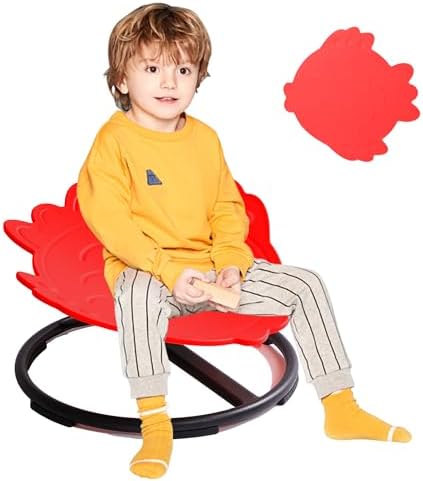
- Encourages Balance and Coordination: This fish sensory swivel chair offers 360 degree of spinning action, The fish desig…
- Perfect for Sensory Needs: Specially designed for children with autism, ADHD, and sensory processing challenges, this sp…
- Safe and Sturdy Construction: Built with a durable frame and a stable non-slip base, this sensory swivel chair provides …

- 🤗 DESIGNED FOR BABIES & KIDS – SAFE PLAY MAT FOR FLOOR & CRAWLING: MioTetto baby play mat creates an ANTI-SLIP & COMFORT…
- 😴 EASY-TO-ASSEMBLE AND STORE: Our 12.4 x 12.4-inch interlocking foam tiles fit securely together, creating a customized …
- 🧐 NON-TOXIC, SOFT & WATERPROOF PLAY MAT: Made from certified and durable EVA foam, this floor mat is 0.4 inches thick fo…

- IMPROVE COORDINATION: Use the stepping stones and balance beams to teach better balance and movement while increasing th…
- INSPIRE CONFIDENCE — Great toddler and kindergarten toy to work on confidence, create a balancing beam obstacle course …
- INCLUDES: 5 textured stepping stones and 8 colorful blocks, kids can easily rearrange and create endless configurations!

- Comfy Kids Bean Bag Chair: The material of the bean bag chair is corded fabric, give a cozy and comfortable feeling, inc…
- High-density Foam Filling: The bean bag chair for kids is made of shredded foam filling. Stuffed with a shredded foam th…
- Kids Friendly Design: The comfy kids chair is lightweight for kids to move to any room they want, whether its reading, p…
Movement tools should support regulation, not create chaos.
Zone 3: Creative Expression Area
Art materials help children express feelings that may not yet have words.
A creative expression zone can be as simple as a small table, washable mat, and organized art supplies.
Include:
- washable markers
- crayons
- colored pencils
- child-safe scissors
- glue sticks
- paper
- watercolor set
- clay or play dough
- sticker sheets
- feelings drawing prompts
- art tray
- wipeable table covering
Keep messy supplies controlled and easy to clean. Store materials in labeled bins or a rolling cart so you can choose what is available for each session.
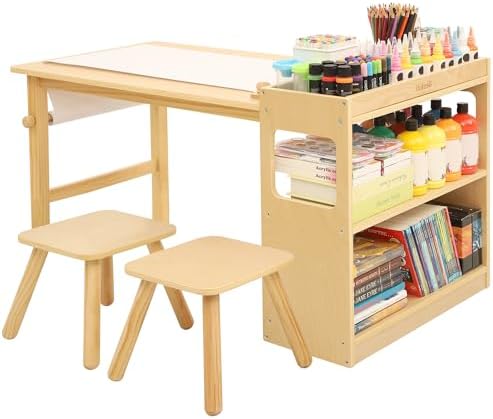
- KID ART TABLE WITH PAPER ROLL: Comes with a wooden table, 2 chairs, a paper roll and a built-in dispenser. Just pull and…
- NATURAL SAFE WOOD: Crafted from premium, natural wood, this toddler activity table is built to last. Smooth, rounded edg…
- LARGE STORAGE SPACE: The kid craft table features 3 spacious storage layers to help keep art supplies tidy and organized…

- Super Value Pack: This coloring marker bulk set includes 256 count markets, 16 of each in 16 colors——black, red, brown, …
- Washable Markers: The pigment of the marker can be washable. If paint stains your hands, you can easily rinse them off w…
- Perfect School Supplies: Our products are grouped according to color, so that students can take them easily. And broad l…

- Reinforced All-Metal Construction, Ultra-Sturdy: Our patent-pending frame geometry combines optimized weight distributio…
- Larger Storage Capacity, Multifunctional Storage: Featuring 3 spacious metal baskets, 2 hanging cups, and 3 hooks, this …
- High-Quality Coating, Stylish and Durable: Elevate your space with the rolling storage cart on wheels that masters both …

- 【Multi-layer separation design】The storage box has a 5-compartment tray that can be placed or taken out according to you…
- 【17-Quart Capacity】Capacity: 17-quart. Overall Dimensions: 15.94″L * 11.61″W * 7.28″H. Perfect for arts and crafts suppl…
- 【Perfect Solution for Craft Storage】If you need to organize art or craft supplies, this plastic storage bin is an ideal …
You can also create a small display area for temporary art, but be mindful of privacy. Do not display client work without consent and careful consideration.
Zone 4: Storytelling and Symbolic Play Area

Many children communicate through stories before they can talk directly about themselves.
A storytelling zone might include:
- dollhouse
- family figures
- animal figures
- play people
- vehicles
- small buildings
- puppets
- story stones
- miniature objects
- wooden blocks
- sand tray if trained and appropriate
This area does not have to be large. One shelf with well-chosen materials can be enough.

- Modern Home Design: Contemporary styling with low-saturation colors complements modern children’s room decor while provi…
- Complete 6-Room Layout: Features living room, bedroom, kitchen, bathroom, kids room and balcony with 26 furniture pieces…
- Working Doors & Drawers: Equipped with working shutters front door and storage drawers that offer authentic household si…

- What you get: the package includes grandparents, parents, children, baby, including whire black latin,really restore fam…
- Material: the toy family dolls are made of natural wood and high quality wool fabrics, with smooth edges, protect player…
- Unique design: the wooden dollhouse figures are dressed in soft clothes and feel comfortable to the touch, and the addit…

- Play Therapy Supply’s Basic Portable Starter Kit includes 150+ miniatures, storage tray, sand tray, and sand: everything…
- Developed by a sandtray therapist. Designed for mobility. Complete, self-contained set weighs under 8 pounds!
- Based on latest sand tray and sandplay research, includes a wide range of miniatures for creative worlds including small…
Choose materials that leave room for many kinds of stories, not only happy or perfect ones. Children may need to explore conflict, separation, protection, fear, rescue, power, sadness, and repair.
Step 4: Add an Interlocking Building Brick Wall
A building brick wall can be one of the most engaging features in a child therapy room.
It invites children to build vertically, use both hands, create scenes, tell stories, practice frustration tolerance, collaborate, and express ideas without needing a worksheet.
To keep the language brand-safe, describe it as an interlocking building brick wall rather than using a specific toy brand name.

Benefits of a Building Brick Wall
A building brick wall can support:
- fine motor skills
- bilateral coordination
- imaginative play
- storytelling
- problem solving
- emotional expression
- collaboration
- frustration tolerance
- visual organization
Children might build:
- a feelings tower
- a safe house
- a worry wall
- a calm garden
- a family scene
- a protective boundary
- a bridge between two characters
- a before-and-after story
How to Create One
Use:
- large building brick baseplates
- strong removable mounting strips or appropriate wall-safe adhesive
- a child-height wall area
- clear storage bins
- sorted bricks by color or type
- small building prompt cards
Before installing, make sure the wall surface is suitable and safe. Test the height so children can reach comfortably without climbing.

- Take Your Builds To New Heights – Literally! Turn any wall or table into an epic playground with our giant building bloc…
- 812 Building Blocks & Gears For Endless Fun: From siblings and parents or even friends, everyone can join in the buildin…
- Develop STEM Skills: learning games designed to encourage creativity and imagination, our STEM toys will help your littl…

- Fit Major Brands: Our baseplates compatibility with DUPLO-Blocks, delivering a smooth and adaptable building experience
- 470+ Pcs: With over 470 pieces, unleash endless design possibilities, encouraging imaginative play and personalized crea…
- Self Adhesive: Each base plate is peel-and-stick , making it easy to apply to various smooth surfaces including wood, gl…
This feature can be especially useful for children who regulate through tactile, structured, or constructive play.
Step 5: Choose Sensory-Smart Lighting
Lighting affects how a child experiences the room.
Harsh fluorescent lights can feel intense for some children, especially those with sensory sensitivities, anxiety, headaches, or neurodivergent profiles.
Use warm, layered lighting when possible:
- table lamp
- floor lamp
- cordless lamp
- dimmable lamp
- warm LED bulbs
- soft shaded lamp
- natural light with curtains
Choose bulbs around 2700K to 3000K for a warmer feel.
Avoid flashing lights, color-changing lights during sessions, or lighting that creates strong glare.
If you work in a school or clinic, always follow safety rules around cords, outlets, lamps, and batteries.
Step 6: Soften Sound and Reduce Noise Stress
Sound matters in child therapy.
Some children are sensitive to hallway noise, sudden sounds, HVAC systems, loud clocks, or voices outside the room. Sound also matters for privacy.
You may not be able to fully soundproof a room, but you can soften it.
Try:
- thick rug
- curtains
- upholstered seating
- fabric wall hanging
- acoustic panels
- white noise machine outside the door
- felt pads on furniture legs
- quiet storage bins
- soft-close containers if possible

- ✨ SUPERIOR SOUND QUALITY – The plug-in white noise sound machine delivers crystal-clear sound, blocking distractions to …
- ✨ 20 NON-LOOPING SOUNDS FOR ANY ENVIRONMENT – Enjoy a wide range of 20 relaxing, non-looping sounds including two types …
- ✨ PLUG-IN DESIGN WITH OPTIONAL WIRE EXTENSION – This elegant Italian-designed white noise machine plugs directly into th…
Avoid loud ticking clocks, noisy toys left accessible, or background music that plays automatically. Sound should support regulation, not become another demand.
Step 7: Use Open Shelving Carefully
Low, open shelving can empower children because they can see and choose materials independently.
But open shelves can also become overstimulating.
Use shelves thoughtfully.
Good shelf categories include:
- building toys
- pretend play
- animals and figures
- art supplies
- calming tools
- books
- puppets
- games
- sensory materials
Use baskets and bins to group materials. Leave empty space between categories. Rotate materials instead of displaying everything.
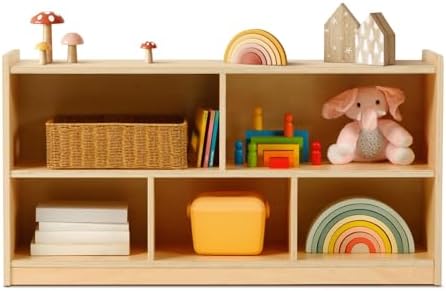
- TOY STORAGE CABINET: Wood storage cabinet is designed with 5 storage compartments in 2 sizes, which can store children’s…
- MULTIPURPOSE CABINET: Not only can it be used as a bookshelf or storage shelf in the children’s room, playroom, bedroom,…
- DESIGN FOR KIDS: The edges and corners of this shelf are smoothly rounded off in case of any wood splinter that may hurt…
For younger children, picture labels can help them return materials to the right place.
Step 8: Add Wall Art That Supports Safety and Growth
Wall art in a child therapy room should feel comforting, not visually loud.
Good themes include:
- trees
- clouds
- animals
- rainbows in muted colors
- mountains
- ocean waves
- butterflies
- stars
- gardens
- abstract shapes
- gentle affirmations
- feelings posters
Helpful phrases might include:
- All feelings are welcome here.
- You can try again.
- Your story matters.
- You are safe to be yourself.
- Big feelings can soften.
- We can figure it out together.
Avoid too many words on the walls. Children who struggle with reading, attention, anxiety, or visual processing may find word-heavy spaces tiring.
Affiliate product ideas:
- child therapy wall art
- feelings poster
- calming affirmation prints
- botanical prints
- nature wall art
- framed rainbow print
- wooden frames
- cork board
Wall art should leave emotional room for the child, not tell them how they are supposed to feel.
Step 9: Include a Feelings and Coping Skills Station

Read “How to make You Belong Here Tree” article.
A feelings station can help children build emotional vocabulary and choose coping tools.
This could be a small shelf, wall board, basket, or clipboard.
Include:
- feelings chart
- body sensations chart
- coping skills cards
- breathing cards
- “I need” cards
- blank drawing paper
- emotion wheels for older children
- simple reflection prompts
- dry-erase check-in board

- Emotions Chart for Kids – Brings many positive benefits to children: emotional self-awareness development, learning to c…
- SIZE & QUANTITY: 2 posters size 11×17″ – double-sided laminated, thick and sturdy 250 GMS paper, waterproof, high resolu…
- Development of emotional self-awareness: These posters help children recognize and understand their emotions from an ear…
This station can also support transitions at the start and end of sessions.
For example:
Beginning: “Choose a feeling card for how you came in today.”
Middle: “Choose a tool that might help your body.”
End: “Choose one coping card to remember this week.”
Step 10: Create Parent-Friendly Seating and Flow
Child therapy rooms often include parents, caregivers, or family members at different points.
Make sure there is a place for an adult to sit without taking over the child’s play space.
Consider:
- one comfortable adult chair
- small side table
- tissues nearby
- clear pathway
- parent handout folder
- warm lamp
- simple wall art
- secure storage away from parent view
A parent-friendly space communicates professionalism and care. It can also help caregivers feel more relaxed during intake, feedback, or family sessions.
If your room is small, choose one versatile adult chair and flexible child seating.
Step 11: Use Storage That Makes Reset Easy
A child therapy room needs fast reset systems.
Between sessions, you may need to clean up toys, sanitize materials, secure artwork, put away confidential items, and prepare for a different child with different needs.
Good storage helps you do that without stress.
Use:
- labeled bins
- lidded baskets
- rolling carts
- clear drawers
- low cubbies
- closed cabinets
- art supply organizers
- zip pouches
- toy rotation boxes
- lockable storage for sensitive items
A calm room is easier to maintain when every item has a home.
Step 12: Build a Small Therapy Bookshelf for Children
Books can help children understand emotions, relationships, difference, grief, worry, anger, family change, and courage.
A child therapy bookshelf might include books about:
- feelings
- anxiety
- anger
- grief
- divorce
- friendship
- self-esteem
- sensory differences
- kindness
- bravery
- body safety
- mindfulness
- family changes
- neurodiversity
Keep the shelf curated. Too many books can become visual clutter.
For privacy and sensitivity, avoid placing very intense titles where every child immediately sees them. Rotate books based on age and topic.
Shop the Child Therapy Room Look
Use this shopping list as a category guide. Measure the room, check organizational policies, verify current product details, and buy only items that fit a defined clinical, practical, or maintenance need.
Furniture and Seating
- child-sized table and chairs
- adult accent chair
- floor cushions
- bean bag chair
- storage ottoman
- low bookshelf
- front-facing book display
- rolling cart
Regulation Tools
- calm-down cards
- feelings chart
- visual timer
- sensory bottle
- quiet fidgets
- weighted lap pad
- noise-reducing headphones
- breathing cards
Creative Expression
- washable markers
- crayons
- watercolor set
- play dough
- clay
- art supply organizer
- easel
- wipeable table mat
- paper storage tray
Therapeutic Play
- animal figures
- family figure set
- puppet set
- dollhouse
- wooden blocks
- building brick baseplates
- classic building bricks
- story stones supplies
- sand tray miniatures
Decor and Atmosphere
- washable rug
- warm LED bulbs
- cordless lamp
- soft curtains
- child therapy wall art
- faux plants
- woven baskets
- acoustic panels
- storage bins
Organization
- low cubby shelf
- clear storage drawers
- lidded baskets
- toy rotation bins
- label maker
- zip pouches
- lockable storage cabinet
- rolling utility cart
Choose products that support the therapeutic purpose of the space. A child therapy room does not need more stuff. It needs the right tools, arranged with care.
Common Child Therapy Room Mistakes to Avoid
Avoid filling the room with too many toys. More toys do not always mean better therapy. Too many options can make it harder for a child to choose and harder for the therapist to track themes.
Avoid overly bright primary colors on every wall. Bright colors can be playful, but they need balance.
Avoid strong scents. Children may have allergies, asthma, migraines, sensory sensitivities, or negative associations with certain smells.
Avoid fragile decor within reach. Child therapy rooms need durability.
Avoid cluttered shelves. Visual overload can make regulation harder.
Avoid unsafe movement equipment. Install and use movement tools only when appropriate and safe.
Avoid making the space too adult. A child therapy room should invite children into expression, not ask them to behave like small adults.
Avoid making the space too chaotic. Child-friendly does not mean overstimulating.
Child Therapy Room Checklist
Use this checklist before finishing your room refresh.
Safety and Comfort
- Clear walkway
- Soft but safe rug
- Comfortable child seating
- Comfortable adult seating
- No fragile items within easy reach
- Age-appropriate materials
- Warm lighting
- No strong scents
Regulation
- Calm-down basket
- Feelings chart
- Visual timer
- Quiet fidgets
- Breathing cards
- Optional weighted lap pad if appropriate
- Noise-reducing headphones if useful
Creativity
- Art supplies
- Drawing paper
- Play dough or clay
- Wipeable table surface
- Art storage
- Creative prompts
Play
- Open-ended toys
- Figures or animals
- Building materials
- Puppets
- Books
- Small world play
- Optional sand tray materials if trained
Organization
- Low shelves
- Labeled bins
- Closed storage
- Toy rotation system
- Easy cleanup routine
- Lockable storage for sensitive items
Emotional Tone
- Muted colors
- Gentle wall art
- Soft textures
- Plants or natural elements
- Clear zones
- Space for movement
- Room to breathe
Final Thoughts
A child therapy room can be playful and calm at the same time.
It can hold soft rugs, building bricks, art supplies, puppets, story figures, feelings cards, fidgets, plants, warm lamps, and cozy cushions without becoming cluttered or overwhelming.
The key is intention.
Every item should serve a clear purpose: accessibility, seating, play, creative expression, storage, privacy, movement, or an optional support already appropriate to your work.
You do not need to create a perfect Pinterest room. You need a space that works for real children, caregivers, sessions, documentation, cleaning, and transitions.
Start with emotional safety. Add clear zones. Choose soft colors. Keep materials organized. Offer movement, creativity, and sensory support. Use toys that invite stories. Make room for both play and quiet.
A well-designed child therapy room does not do the therapeutic work for you.
Thoughtful planning can reduce avoidable barriers and make the room easier to use, observe, and reset.
A place where a child can enter, look around, and sense:
I can be myself here.
I can play here.
I can feel here.
And someone will help me make sense of it all.
- ADHD Parenting & Executive Function
- Crafts & Activities
- Creative Style & Self-Expression
- Ethical Practice & Tools
- Gift Guides
- Home & Seasonal Living
- Kids Mental Health
- Lifestyle
- Mental Health
- Mental Health Education
- Mindful Living & Self-Care
- Nervous System Healing
- Recipes & Food Ideas
- Relationships
- School Counselor Offices & Spaces
- SEL & Emotional Regulation
- Sensory Rooms & Calming Environments
- Therapist & Counselor Lifestyle
- Therapist & Counselor Style
- Therapy Business & Marketing
- Therapy Office & Counseling Spaces
- Therapy Practice

About the Author
Hi, I’m Eve, a former school counselor with a master’s degree in School Psychology and a passionate advocate for children and families navigating sensory challenges. As a mom of children with sensory sensitivities, I deeply understand the journey special-needs parents face, and I dedicate myself to researching and sharing practical solutions to help children thrive and feel comfortable in their bodies. My goal is also to empower counselors, therapists, and psychologists with creative strategies and supportive resources to enrich their everyday practice. When I’m not writing or exploring new therapeutic approaches, you’ll find me spending quality time with my family and continually seeking inspiration from everyday moments.

