
There’s a moment that often happens when a child sits down to paint something new.
They hesitate.
“Is this going to look good?”
“Can I actually do this?”
And if the activity feels too complicated, they stop before they even begin.

That’s why easy rock painting ideas matter more than we think. When something feels simple and achievable, children don’t just create—they stay with it. They relax into it. They begin to enjoy the process instead of worrying about the result.
In this article, you’ll find easy, cute rock painting ideas that children can actually recreate—paired with a deeper understanding of why these small creative wins matter for confidence, focus, and emotional wellbeing.
This post may contain affiliate links, including Amazon Associate links. If you make a purchase through these links, I may earn a small commission at no extra cost to you.
Why “Easy” Activities Are So Important for Kids’ Confidence
When an activity feels too difficult, children often disengage quickly. Not because they’re not capable—but because the gap between effort and result feels too big.
Easy, achievable creative tasks do something very different.
They create early success.
And that success builds momentum.
When a child finishes something and thinks, “That actually looks good,” it changes how they approach the next activity. They’re more willing to try again. More willing to experiment. More open to learning.
Over time, these small moments build a quiet but important belief:
“I can do things.”
That belief matters far beyond crafts.
What this supports:
- confidence through success
- willingness to try new things
- reduced frustration and avoidance
Quick Rock Painting Supplies
Want to keep rock painting simple and frustration-free? These basic supplies can give kids more control while keeping the setup easy.

- DUAL TIP FOR PRECISE & CREATIVE WORK: Each acrylic paint marker features a 1 mm fine tip for detailed lines, writing, an…
- READY TO USE WATER-BASED ACRYLIC PAINT: Unlike traditional pump-action paint markers, these pre-activated cotton tips ar…
- VIBRANT COLORS FOR CREATIVE FREEDOM: Richly pigmented, water-based acrylic paint delivers vibrant color and smooth cover…

- 【KIDS PAINT BRUSHES SET】Anezus paint brushes for kids come with 10 pcs paint brushes of 5pcs round paintbrushes and 5 fl…
- 【HIGH QUALITY PAINT BRUSHES FOR KIDS】These toddler paint brushes made of soft hog bristle, bright colored handles and ru…
- 【WIDE APPLICATIONS】With combination of round and flat craft paint brushes for kids, work great with washable paint, temp…
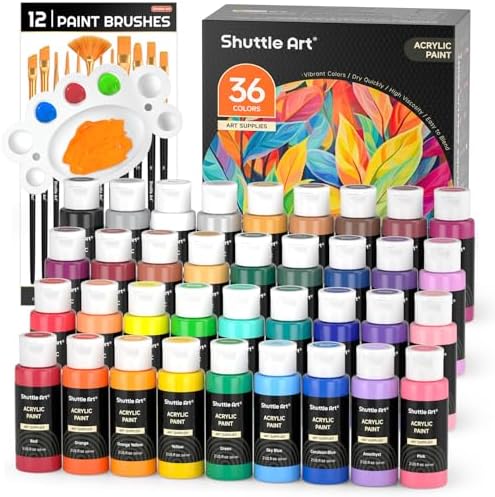
- 36 VIBRANT COLORS : Shuttle Art 36 colors acrylic paint set contains 36 unique colors highly pigmented paints, including…
- ARTIST QUALITY & STURDY PACKAGE: Creamy acrylic paints are easy to blend, mix and layer, providing great coverage and tr…
- WIDE APPLICATION & EASY TO CLEAN: Dry fast, water-proof and fade-resistant, acrylic paint is suitable for most surfaces,…

- Acrylic sealer spray provide a protective, clear finish
- Give a glossy luster to virtually any indoor or outdoor project
- A durable protective finish
This section contains affiliate links. I may earn a small commission at no extra cost to you.
1. Simple Animal Face Rocks (The Fastest Way to Feel Successful)

Animal faces are one of the easiest starting points because they rely on very simple shapes.
A circle becomes a ladybug.
Two dots become eyes.
A small line becomes a smile.
This simplicity removes pressure. Children don’t need to figure out proportions or complex designs—they just follow a recognizable pattern.
What makes this especially powerful is how quickly the result becomes “real.” A child doesn’t see random shapes—they see a character. Something alive. Something they made.
That moment creates instant satisfaction.
Why it works so well:
- clear structure reduces overwhelm
- fast results keep kids engaged
- familiar shapes build confidence
2. Dot Pattern Rocks (Calm Through Repetition)
Some children feel more relaxed when they don’t have to “draw” anything specific.
Dot painting is perfect for this.
Each dot is simple. Predictable. Repeatable. There’s no pressure to make something look a certain way. The focus shifts from outcome to process.
And this is where something interesting happens.
As the child repeats the same small motion—dip, dot, dip, dot—their body begins to settle. Their attention stays in one place. The activity becomes rhythmic.
This kind of repetition is deeply calming for the brain.
What this supports:
- emotional regulation
- longer focus
- calming sensory input
3. Rainbow Rocks (Color Play Without Pressure)
Rainbows are naturally appealing to children. They’re bright, simple, and forgiving.
There’s no “wrong way” to paint one.
Lines don’t need to be perfect. Colors don’t need to stay inside boundaries. The end result still looks joyful and complete.
This freedom is important.
When children don’t feel pressure to be precise, they take more creative risks. They experiment. They enjoy the process instead of worrying about mistakes.
And enjoyment is what keeps them coming back.
What this supports:
- creative confidence
- freedom to experiment
- positive emotional experience
4. Name Decoration Rocks (When Creativity Becomes Personal)
Writing their name on a rock turns the activity into something meaningful.
It’s no longer just a design—it’s theirs.
Children often take more time with this kind of project. They think about colors more carefully. They add details. They return to it even after it’s “finished.”
Because it represents them.
That sense of ownership builds a deeper connection to the activity and strengthens their sense of identity.
What this supports:
- self-expression
- identity development
- pride in personal creation
5. Easy Flower Rocks (Gentle, Repetitive Design)
Flowers are another great option because they are built from simple repeated shapes.
Petals can be:
- dots
- small lines
- soft curves
This makes them easy to create, even for younger children.
At the same time, the repetition involved in creating petals has a calming effect similar to pattern work.
Children often slow down naturally here without being told to.
What this supports:
- calming focus
- fine motor skills
- relaxed creativity
6. Emoji Rocks (A Simple Way to Explore Feelings)
Emoji designs are one of the easiest ways to combine creativity with emotional awareness.
Children already recognize these expressions. They don’t need to learn something new—they just recreate something familiar.
But once the rocks are finished, they can be used in a different way.
You can ask:
“Which one feels like you today?”
This creates a safe and simple way for children to express emotions without needing complex language.
What this supports:
- emotional awareness
- communication skills
- safe expression
7. Kindness Rocks (Small Actions That Feel Meaningful)
Kindness rocks introduce a new layer to the activity.
Instead of creating something just for themselves, children create something for someone else.
A short message. A simple word. Something positive.
When they leave the rock somewhere for someone to find, the experience changes. It becomes about connection.
This helps children understand that even small actions can have an impact.
What this supports:
- empathy
- kindness
- sense of purpose
8. Shape-Based Designs (For Kids Who Need Clear Structure)
Some children feel overwhelmed by open-ended tasks.
They do better when there is a clear starting point and a simple rule.
Shape-based designs—like hearts, stars, or circles—provide that structure.
They reduce decision-making and make the activity feel manageable.
Once the child feels comfortable, they often begin to add their own variations.
What this supports:
- reduced overwhelm
- easier engagement
- structured creativity
9. Nature-Inspired Rocks (Connecting Creativity to the Real World)
Using elements like leaves, suns, or clouds connects the activity to something familiar and grounding.
If the rocks are collected outside beforehand, the experience becomes even richer.
The child:
- explores
- collects
- creates
This combination of movement and creativity helps regulate both body and mind.
What this supports:
- grounding
- connection to environment
- reduced stress
10. Free Paint Rocks (Where Creativity Fully Opens Up)
Not every activity needs guidance.
Sometimes the most important creative experiences happen when there are no instructions at all.
Free painting allows children to:
- mix colors
- experiment
- create without expectations
This removes pressure completely.
And when pressure is removed, creativity often expands naturally.
What this supports:
- emotional release
- creative freedom
- reduced performance anxiety
How to Keep Rock Painting Easy (So Kids Actually Enjoy It)
The biggest mistake people make is overcomplicating the setup.
Too many tools. Too many rules. Too many expectations.
To keep this activity effective:
- offer a few color choices instead of many
- allow mistakes without correcting them
- avoid focusing on “perfect results”
- keep the atmosphere relaxed
When the experience feels safe and simple, children stay engaged longer.
And that’s where the real value happens.
Optional Tools That Make It Easier
A few simple tools can make the experience smoother:
- paint pens for easy control
- thicker brushes for younger kids
- basic acrylic paint sets
- seal spray for outdoor durability
This post may contain affiliate links, including Amazon and selected partner links. If you make a purchase through these links, I may earn a small commission at no extra cost to you.
Final Thoughts
Easy doesn’t mean low value.
In fact, for children, easy often means:
- accessible
- enjoyable
- repeatable
And those are the conditions where confidence, creativity, and emotional growth actually happen.
So if you’re choosing between something complicated and something simple—choose simple.
Because simple is what children return to.
And what they return to is what shapes them.
Read more:
👉 If you’re looking for a full collection of designs and deeper ideas, you can explore my complete guide here:
Rock Painting Ideas for Kids: Easy, Cute & Meaningful Designs to Try This Summer

About the Author
Hi, I’m Eve, a former school counselor with a master’s degree in School Psychology and a passionate advocate for children and families navigating sensory challenges. As a mom of children with sensory sensitivities, I deeply understand the journey special-needs parents face, and I dedicate myself to researching and sharing practical solutions to help children thrive and feel comfortable in their bodies. My goal is also to empower counselors, therapists, and psychologists with creative strategies and supportive resources to enrich their everyday practice. When I’m not writing or exploring new therapeutic approaches, you’ll find me spending quality time with my family and continually seeking inspiration from everyday moments.

