This post may contain affiliate links, including Amazon and selected partner links. If you make a purchase through these links, I may earn a small commission at no extra cost to you.
When people imagine a therapy office, they often picture pale walls, soft beige chairs, natural wood, and gentle daylight. And while those spaces can be beautiful, they are not the only way to create calm.
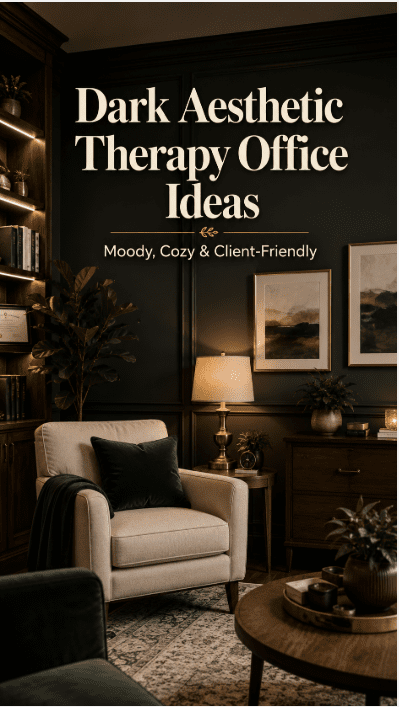
A dark aesthetic therapy office can feel deeply grounding, intimate, and sophisticated when it is designed with warmth and intention. Instead of feeling cold or heavy, a moody therapy space can become a cocoon-like room where clients feel protected from the noise of the outside world.
The key is not simply painting the walls black or choosing dramatic furniture. A modern dark therapy office works best when it balances depth with softness, privacy with openness, and style with emotional safety.
Today’s dark aesthetic is much warmer than the old industrial look. It includes soft charcoal walls, dark olive greens, deep chocolate browns, walnut wood, curved seating, textured rugs, warm brass lamps, sculptural decor, linen curtains, and carefully layered lighting. It feels less like a dramatic showroom and more like a quiet, elegant place to breathe.
If you are designing a counseling office, psychotherapy room, school counseling space, or private practice office, this guide will help you create a dark aesthetic that feels modern, cozy, professional, and emotionally supportive.
Why a Dark Aesthetic Therapy Office Can Feel So Calming
A dark therapy office is not about making a room feel gloomy. It is about creating a sense of containment.
For many clients, especially those who feel overstimulated, anxious, exposed, or emotionally guarded, bright rooms can sometimes feel too open. A darker, softer environment can help reduce visual noise and create a sense of privacy.
Deep colors can make a room feel more enclosed in a comforting way. They visually pull the walls closer, which can help the space feel less clinical and more emotionally held. This is why dark libraries, cozy lounges, and quiet evening rooms often feel so inviting.
In a therapy office, that same effect can support the emotional tone of the work. The space says: you can slow down here. You do not need to perform. You are not under bright lights. You can settle.
A modern dark therapy office may be especially helpful if your brand feels reflective, trauma-informed, depth-oriented, artistic, warm, or sensory-aware. It can also work beautifully for therapists who want their office to feel different from a medical setting.
For more foundational office planning, you can also link to your broader guide: Therapy Office Setup Guide

Choose a Modern Dark Color Palette That Still Feels Warm
The biggest mistake with dark office decor is choosing colors that feel flat, cold, or harsh. A pure black-and-white palette can look striking in photos, but in real therapy work, it may feel too stark unless softened carefully.
A more modern approach is to use dark colors with warmth and depth.
Think of shades like:
Deep charcoal
Soft black
Dark olive green
Forest green
Warm espresso brown
Smoky taupe
Dark mushroom
Deep navy
Muted aubergine
Warm burgundy
Chocolate brown
These colors feel more layered than plain black. They pair beautifully with wood, linen, wool, leather, brass, clay, stone, and soft cream accents.
If you want the room to feel elegant and cocoon-like, try a color-drenched effect. This means using one deep tone across the walls, trim, and sometimes even the ceiling. In a small therapy office, this can actually make the space feel more intentional because the eye is not constantly stopping at contrast lines.
If full color drenching feels too bold, use a dark accent wall behind the main seating area and keep the remaining walls warm neutral. This is a good option for rented offices, shared spaces, or therapists who want a softer transition into dark decor.
A beautiful starting palette could be:
Charcoal walls
Walnut wood furniture
Cream boucle or linen seating
Brass lamp
Dark green pillow
Warm neutral rug
This combination gives you mood and professionalism without making the room feel visually heavy.
Core Styles to Inspire Your Office
Try a Dark Organic Modern Therapy Office
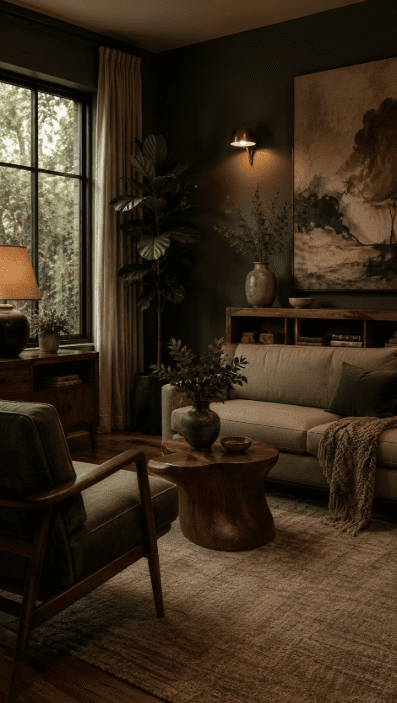
One of the most beautiful modern directions for a dark therapy office is dark organic modern decor.
This style blends moody colors with natural materials. It feels grounded, calm, and refined without being overly formal.
A dark organic modern therapy office might include:
Charcoal or olive walls
Walnut furniture
A linen sofa
A handmade ceramic vase
A wool rug
Plants with deep green leaves
Soft brass or bronze lighting
Abstract nature-inspired art
This style works especially well for therapists who want their office to feel calm, mature, and connected to the natural world.
The emotional message is subtle but powerful: this is a place where you can come back to yourself.
To keep this look from becoming too plain, vary your materials. Pair smooth wood with textured fabric. Pair matte walls with a small metallic accent. Pair a structured chair with an organic-shaped side table.
- Tip: Use reflective surfaces like glass or polished metal to prevent the space from feeling too heavy.
2. Rustic Charm
If you prefer a warmer, more organic feel, rustic charm might be the way to go. This style integrates dark woods, earthy tones, and natural textures that evoke a sense of comfort and connection with nature.
Elements to Consider:
Lighting: Use natural light and warm, ambient fixtures to soften the depth of dark colors.
Materials: Rich, dark wood for furniture and shelving.
Textures: Rough-hewn materials paired with soft textiles.

- Tip: Incorporate natural light where possible to balance the darker tones.
Create a Moody Luxe Therapy Office Without Making It Feel Too Formal
Moody luxe is another beautiful version of the dark aesthetic, but it needs careful balance in a therapy room.
Too much luxury can create distance. A client may feel like they are sitting in a hotel lobby rather than a human, emotionally safe space. But a few luxe details can make the office feel elegant and intentional.
Think velvet, brass, dark wood, framed art, soft lamps, and rich color.
A moody luxe therapy office might include:
Deep burgundy or forest green accents
A velvet pillow or chair
Brass picture lights
Framed abstract art
Dark wood shelving
A sculptural table lamp
Cream curtains to soften the room
The secret is restraint. Choose one or two elegant elements and let the rest of the room stay calm.
For example, you could use a dark charcoal wall, a cream sofa, one emerald velvet pillow, a brass lamp, and a warm walnut table. That is enough. It feels designed, but not staged.
This style works well for private practices that want to feel professional, boutique, and emotionally warm.

- Tip: Use rich jewel tones like burgundy or sapphire as accent colors to enhance the depth of the design.
4. Industrial Chic
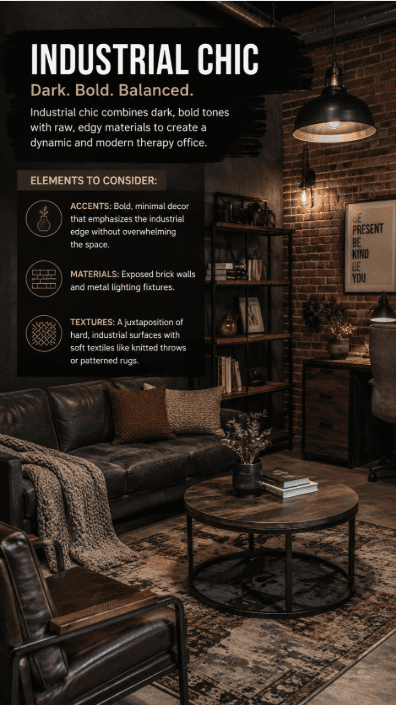
Industrial chic combines dark, bold tones with raw, edgy materials. This style embraces exposed brick, metal fixtures, and a mix of rugged and soft textures to create a dynamic and modern environment.
Elements to Consider:
Accents: Bold, minimal decor that emphasizes the industrial edge without overwhelming the space.
Materials: Exposed brick walls and metal lighting fixtures.
Textures: A juxtaposition of hard, industrial surfaces with soft textiles like knitted throws or patterned rugs.

- Tip: Add softer textures like a chunky knit throw or a patterned rug to balance the hard edges.
Use Wall Art to Set the Emotional Tone
In a dark therapy office, wall art becomes especially important because the background color gives artwork more presence.
Choose art that supports the emotional energy you want in the room. Avoid anything too chaotic, sharp, disturbing, or visually loud unless it has a specific clinical or creative purpose.
Good options include:
Abstract landscapes
Soft botanical prints
Minimal line art
Moody nature photography
Textured neutral canvas art
Gentle symbolic artwork
Warm-toned gallery walls
A dark wall behind soft artwork can feel incredibly grounding. It creates a focal point without needing clutter.
If your work is reflective or trauma-informed, choose art that feels spacious and non-demanding. If you work with children, you can still use dark aesthetics, but soften the room with playful, warm, emotionally safe artwork.
You can naturally link here to: Therapeutic Wall Art: How Visuals Impact Client Mood.
Plan Your Therapy Office Layout Around Emotional Safety
A beautiful dark office still needs a functional layout.
Before choosing more decor, think about how the room will actually feel during a session.
Where will the client sit?
Will they face the door or have their back to it?
Is there enough space between chairs?
Can you reach tissues easily?
Is the lighting comfortable from both seats?
Does the room allow privacy without feeling trapped?
A strong layout usually includes three main zones.
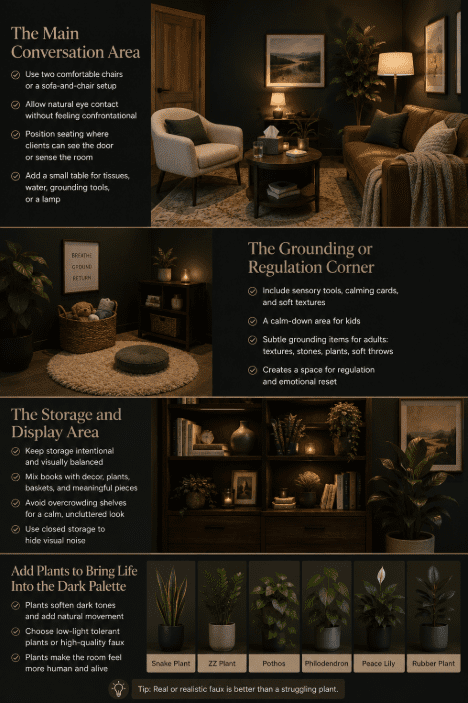
The Main Conversation Area
This is the heart of the office. Choose two comfortable chairs or a sofa-and-chair arrangement that allows natural eye contact without feeling confrontational.
Avoid placing the client in a position where they feel cornered. Many people feel safer when they can see the door or at least sense the room around them.
A small table between or beside the seating can hold tissues, water, grounding tools, or a small lamp.
The Grounding or Regulation Corner
If your space allows, create a small grounding corner. This might include a soft rug, a basket of sensory tools, a weighted lap pad, calming cards, or simple breathing visuals.
For child therapy spaces, this can become a gentle calm-down area. For adult therapy spaces, it can be more subtle: a textured object, grounding stone, soft throw, or small plant.
The Storage and Display Area
Dark offices look best when storage is intentional. Open shelves can be beautiful, but they need breathing room.
Mix books with decorative objects, plants, baskets, and a few meaningful pieces. Avoid overcrowding shelves, especially in a small therapy office, because visual clutter can reduce the calming effect.
Add Plants to Bring Life Into the Dark Palette
Plants are one of the easiest ways to keep a dark office from feeling too heavy.
Deep green leaves look beautiful against charcoal, navy, olive, and warm brown walls. They bring movement, freshness, and a natural sense of life into the room.
Good plant choices for therapy offices may include:
Snake plant
ZZ plant
Pothos
Philodendron
Peace lily
Rubber plant
If your office has low light, choose low-light tolerant plants or high-quality faux plants. It is better to use a realistic faux plant than to keep a struggling plant in the corner.
Plants also help visually soften modern furniture. A dark office with only furniture and walls can feel static. A plant adds organic shape and makes the room feel more human.

Shop This Post: Dark Aesthetic Therapy Office Essentials
A dark aesthetic therapy office does not need many products, but a few well-chosen pieces can make the room feel complete.
A warm brass floor lamp for layered lighting
A cream boucle or linen accent chair for contrast
A dark green velvet pillow for a soft color accent
A washable neutral rug for warmth and texture
A walnut side table for natural grounding
A framed abstract wall art set for the statement wall
Cordless table lamps for offices without ideal wiring
Woven baskets for discreet storage
A ceramic vase or stone tray for desk styling
Low-light plants or realistic faux greenery
Common Mistakes to Avoid with Dark Therapy Office Decor
A dark aesthetic can be beautiful, but a few choices can make it feel uncomfortable.
Avoid using only black and gray. This can make the room feel cold and flat. Add warmth through wood, cream, brown, brass, olive, or burgundy.
Avoid harsh overhead lighting. It can create shadows and make the space feel less safe. Use layered lamps instead.
Avoid too much clutter. Dark rooms can feel visually busy faster than light rooms, so give objects space.
Avoid furniture that looks stylish but feels uncomfortable. A therapy office needs emotional and physical comfort first.
Avoid making the room too dramatic. Your office can be beautiful without feeling theatrical. Clients should feel held, not overwhelmed by the decor.
Final Thoughts: A Dark Therapy Office Can Still Feel Gentle
A dark aesthetic therapy office is not about being trendy for the sake of it. It is about creating an atmosphere.
When done well, a moody therapy office can feel private, warm, elegant, and deeply calming. It can offer clients a soft place to land, especially if the outside world feels bright, loud, rushed, or overstimulating.
The most successful dark therapy offices balance contrast and comfort. They use deep color, but also warm light. They use dramatic walls, but also soft fabrics. They feel professional, but not distant. They feel beautiful, but still human.
Start with one grounding color. Add layered lighting. Choose comfortable seating. Bring in natural texture. Keep the room uncluttered. Then add personal details that reflect your therapeutic style.
Your office does not need to look like every other counseling room to feel safe.
Sometimes the most healing spaces are the ones that feel quietly different.
Frequently Asked Questions
Is a dark aesthetic therapy office appropriate for clients?
Yes, a dark aesthetic can be appropriate when it is designed with warmth, comfort, and emotional safety in mind. The space should feel calm and grounded, not gloomy or intimidating.
What is the best dark color for a therapy office?
Charcoal, forest green, deep olive, warm brown, smoky navy, and dark taupe are often easier to use than pure black. They create depth while still feeling soft and natural.
How do I make a dark therapy office feel cozy?
Use warm lighting, soft seating, layered textiles, natural wood, plants, and cream or warm neutral accents. Texture is especially important in dark rooms.
Can a small therapy office use dark walls?
Yes. Dark walls can actually make a small room feel intentional and cocoon-like. To keep it balanced, use warm lighting, a lighter rug, simple furniture, and uncluttered styling.
What decor style works best with a dark therapy office?
Dark organic modern, warm minimalism, moody luxe, vintage modern, and modern cozy styles all work well. The best choice depends on your personality, client population, and practice brand.
Should I use black furniture in a dark office?
You can, but balance it carefully. If your walls are already dark, too much black furniture may feel heavy. Warm wood, cream upholstery, brass accents, and textured fabrics usually create a softer result.
read more:
Therapy Office Setup Guide
Cozy Therapy Office
10 Inspiration Ideas for Modern Therapy Office Decor
Sensory Room Design for Counselors
Therapeutic Wall Art: How Visuals Impact Client Mood
About the Author
Hi, I’m Eve, a former school counselor with a master’s degree in School Psychology and a passionate advocate for children and families navigating sensory challenges. As a mom of children with sensory sensitivities, I deeply understand the journey special-needs parents face, and I dedicate myself to researching and sharing practical solutions to help children thrive and feel comfortable in their bodies. My goal is also to empower counselors, therapists, and psychologists with creative strategies and supportive resources to enrich their everyday practice. When I’m not writing or exploring new therapeutic approaches, you’ll find me spending quality time with my family and continually seeking inspiration from everyday moments.