This post may contain affiliate links, including Amazon and selected partner links. If you make a purchase through these links, I may earn a small commission at no extra cost to you.
There’s something unexpectedly powerful about giving a child a small rock and a few colors.
At first, it looks like a simple craft—something to fill time on a warm afternoon. But if you watch closely, you’ll notice something deeper happening. Their movements slow down. Their attention settles. The outside noise fades just a little. What started as play begins to feel like focus, like calm, like something meaningful.
That’s why rock painting ideas for kids are becoming so popular again. Not just because they’re cute or easy—but because they offer something many activities don’t: a natural way to support emotional wellbeing without forcing it.
In this guide, you’ll find simple, beautiful rock painting ideas—but also a deeper understanding of how this activity supports children’s mental and emotional development in quiet, lasting ways.
Why Rock Painting Supports Mental Health (In a Way That Feels Natural)
When children paint rocks, they’re not just being creative—they’re engaging in a process that gently regulates their nervous system.
The act itself is repetitive and controlled. The brush moves back and forth. Colors are layered slowly. Small details require attention. These elements create a rhythm that the brain recognizes as safe and predictable. And when something feels predictable, the body begins to relax.
For children who are often overstimulated, distracted, or emotionally overwhelmed, this kind of activity creates a pause. It gives them a space where they don’t have to react quickly, perform, or keep up. They can simply stay with one small thing and complete it at their own pace.
Over time, these moments matter. They build the ability to focus, to tolerate small frustrations, and to stay present a little longer than before.
This is why activities like rock painting often have similar benefits to other creative emotional tools, such as
https://eveyou.eu/creative-craft-ideas-to-help-children-express-anger
or outdoor engagement activities like
https://eveyou.eu/summer-camp-activities-for-kids-fun-engaging-unforgettable-ideas-for-outdoor-adventures
What this supports in children:
- calmer nervous system
- improved attention span
- emotional regulation
- reduced overstimulation
Easy Rock Painting Ideas for Kids That Feel Good to Create
These ideas are not just chosen because they look nice—but because they are easy to succeed at and emotionally rewarding to make.
1. Animal Rock Painting Ideas (Creating Comfort Through Familiar Shapes)
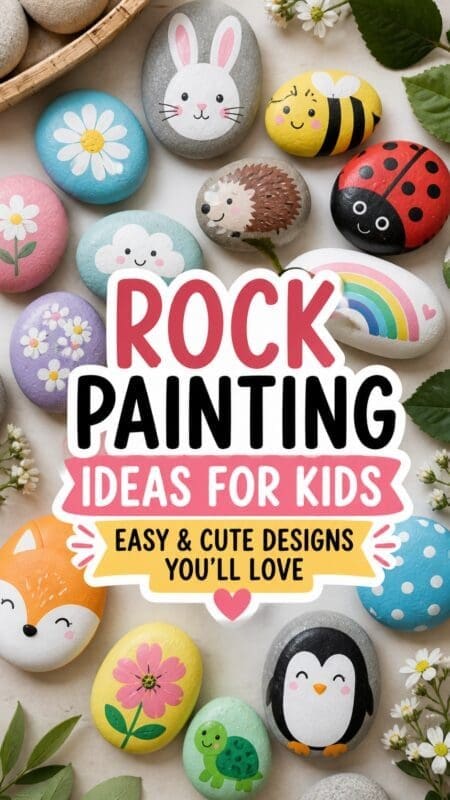
Painting animals is often the easiest way to help children feel successful quickly. Familiar shapes like ladybugs, bees, or frogs give them a clear direction. They know what they’re trying to create, and that clarity reduces hesitation.
When a child recognizes what they’ve made, something shifts internally. The result feels real, not abstract. It becomes something they can show, share, and feel proud of.
That early success is important. It builds confidence and encourages them to keep going, rather than giving up when something feels difficult.
What this supports:
- confidence through clear outcomes
- reduced frustration
- early creative success
2. Rainbow & Pattern Rocks (Why Repetition Feels So Calming)
Some children don’t enjoy drawing shapes or figures—and that’s completely okay. For them, patterns and colors are often more soothing.
Painting dots, stripes, or repeating color sections creates a steady, predictable rhythm. This kind of repetition sends a subtle signal to the brain that things are under control. There are no surprises, no sudden changes—just a simple, repeated action.
You might notice that children who are usually restless stay with this type of activity longer. They don’t rush. They don’t abandon it halfway through. They simply continue.
That’s because repetition is deeply regulating.
What this supports:
- calming sensory input
- sustained focus
- reduced anxiety
3. Name Decoration Rocks (Building Identity and Ownership)
When a child writes their own name and decorates it, the activity becomes personal in a different way. It’s no longer just about making something—it’s about expressing something about themselves.
This kind of personalization strengthens a child’s sense of identity. It reinforces the idea that their name, their choices, and their creations matter.
It also creates a sense of ownership. They are more likely to keep the rock, display it, or return to the activity again.
These small experiences help build internal confidence over time.
What this supports:
- self-identity
- pride and ownership
- personal expression
4. Kindness Rocks Ideas (Helping Children Think Beyond Themselves)
When children create rocks with messages for others, the activity shifts from self-expression to connection.
Writing something like “You matter” or “Be kind” encourages children to think about how others feel. It introduces the idea that their actions—even small ones—can impact someone else’s day.
This is a powerful emotional shift. It moves children from focusing only on their own experience to considering others in a meaningful way.
And because the act is creative and voluntary, it doesn’t feel like a lesson—it feels like something they chose to do.
What this supports:
- empathy
- kindness and prosocial thinking
- sense of purpose
5. Mandala Rock Painting Ideas (Deep Focus and Quieting the Mind)
Mandalas create a very different experience compared to other designs. Instead of focusing on what the image represents, the child focuses on the process itself.
Each dot, each circle, each repeated pattern builds on the previous one. There is no rush. No need to finish quickly. The attention stays in one place.
This kind of focused repetition can feel deeply calming. For some children, it’s one of the few times they naturally slow down without being told to.
Over time, this kind of activity helps build the ability to concentrate and stay with a task longer.
What this supports:
- deep focus
- mindfulness
- anxiety reduction
6. Emoji Rocks (Understanding Feelings in a Safe Way)
Emoji rocks seem simple, but they offer a gentle way to explore emotions.
By painting different faces—happy, sad, angry, surprised—children begin to recognize and label feelings without needing to talk about them directly.
Later, these rocks can be used as a tool:
“Which one feels like you today?”
This creates a bridge between internal feelings and external expression.
For children who struggle to talk about emotions, this can make a big difference.
What this supports:
- emotional awareness
- communication skills
- safe expression of feelings
7. Nature-Inspired Rock Painting (Grounding Through the Environment)
Using natural elements like flowers, leaves, or suns helps children connect to something steady and familiar.
If the rocks are collected during a walk, the activity becomes even more grounding. It combines movement, observation, and creation into one experience.
Nature-based activities are known to reduce stress and improve mood—even in small ways. Painting these elements reinforces that connection.
What this supports:
- grounding
- stress reduction
- connection to environment
8. Story Stones (Helping Children Express Through Imagination)
Story stones allow children to express thoughts and emotions indirectly.
By painting simple symbols and using them to create stories, children often reveal ideas, experiences, or feelings that they might not express directly.
This is especially helpful for children who:
- find it hard to talk openly
- process experiences internally
- prefer imaginative play
Stories create a safe distance from real emotions while still allowing them to be explored.
What this supports:
- emotional expression
- storytelling skills
- processing experiences
9. Seasonal Rock Painting Ideas (Structure That Reduces Overwhelm)
Seasonal themes provide helpful structure for children who feel overwhelmed by too many choices.
Instead of deciding “what should I paint?”, the direction is already there—summer, beach, sunshine.
This reduces decision fatigue and makes it easier to start.
And starting is often the hardest part.
What this supports:
- easier engagement
- reduced overwhelm
- clearer direction
10. Free Expression Rocks (Letting Go of Pressure)
Not every activity needs a goal.
When children are given space to paint freely—without instructions or expectations—they often create in ways that feel more natural and expressive.
This kind of open-ended play allows for emotional release. There’s no right or wrong outcome. No comparison. No pressure to “get it right.”
And for many children, that freedom is exactly what they need.
What this supports:
- emotional release
- creativity
- reduced performance pressure
How to Set Up Rock Painting for a Calm, Positive Experience
The environment you create matters just as much as the activity itself.
A calm setup helps children settle into the process more easily. Too many materials or too much stimulation can have the opposite effect.
Keep it simple. Offer a few colors. Give enough space. Let the pace be slow.
Most importantly, avoid correcting or guiding too much. The value comes from the child’s experience—not the final result.
Optional Tools That Make Rock Painting Easier
Some simple tools can make the process smoother and more enjoyable, especially for younger children.
- paint pens for easier control
- thicker brushes for better grip
- beginner acrylic sets for strong colors
- seal spray for outdoor use
This post may contain affiliate links, including Amazon and selected partner links. If you make a purchase through these links, I may earn a small commission at no extra cost to you.
Final Thoughts
Rock painting may seem small—but the experience it creates isn’t.
It offers a rare combination of calm, creativity, and emotional expression in a way that feels natural to children. No pressure. No expectations. Just the simple act of creating something with their hands.
And sometimes, that’s exactly what helps a child feel a little more grounded, a little more focused, and a little more themselves.

About the Author
Hi, I’m Eve, a former school counselor with a master’s degree in School Psychology and a passionate advocate for children and families navigating sensory challenges. As a mom of children with sensory sensitivities, I deeply understand the journey special-needs parents face, and I dedicate myself to researching and sharing practical solutions to help children thrive and feel comfortable in their bodies. My goal is also to empower counselors, therapists, and psychologists with creative strategies and supportive resources to enrich their everyday practice. When I’m not writing or exploring new therapeutic approaches, you’ll find me spending quality time with my family and continually seeking inspiration from everyday moments.