
The therapy waiting room sets the tone before a session even begins. For children, it can feel intimidating to wait, especially if they’re nervous, restless, or unsure of what to expect. With the right social-emotional learning (SEL) tools, you can transform your waiting area into a calm, engaging, and therapeutic space.
“Is it going to hurt?” the little boy whispered, twisting his sleeve. His mom’s eyes did that quiet scan parents do—chairs, lights, other families—searching for a cue that everything would be okay. I handed him a soft fidget and pointed to the “How am I feeling today?” board. He moved a magnet to nervous, then to curious. By the time we started, his shoulders had dropped.
That’s the power of a thoughtfully designed therapy waiting room. Before a session even begins, the environment can co-regulate a child’s nervous system, give caregivers a breath, and prime social-emotional learning (SEL). With a few intentional tools, your waiting area becomes the first step of therapy—not just a holding space.
It’s important to disclose that this blog post contains affiliate links. This means that if you make a purchase through these links, we may earn a commission at no additional cost to you.

Why SEL Tools Belong in the Waiting Room
When a child is waiting, the brain is rarely idle. It is scanning. It is wondering. It is anticipating. That is exactly why this space matters so much.
A waiting room stocked with intentional social-emotional learning tools can reduce anticipatory anxiety by giving children something concrete to do with their hands, eyes, and attention. Quiet coloring, sorting, reading, building, or checking in with a feelings board can help shift the nervous system away from threat-monitoring and toward gentle regulation.
It also turns waiting into practice.
Instead of thinking of the waiting room as dead time, it helps to see it as a bridge. Children can rehearse emotional skills in a natural, low-pressure way. They can point to how they feel, squeeze a fidget instead of grabbing, read a calming prompt, or try one quick breathing exercise before the session even begins.
Just as importantly, the room itself sends a message. Warm light, simple choices, soft textures, and predictable stations tell children something powerful without saying a word: you are safe here, your feelings are not too much, and this place knows how to hold them.
Parents benefit too. A child who is more engaged and less overwhelmed gives the caregiver a chance to settle, fill out forms, read a notice, sip water, or simply stop bracing for a moment.
What anxiety looks like while waiting: leg bouncing, rapid questions, bathroom trips, clinginess, grabbing or interrupting. Your room can meet those needs before they spill into session.
Trauma- & Neuro-Informed Design Principles
- Low sensory load. Soft, cohesive colors; avoid busy patterns and harsh contrasts.
- Choice + predictability. Clearly labeled stations (“Color & Calm,” “Build & Focus”) with 1–3 options each.
- Movement outlets. Chair bands, wall push-up spot, or a small balance pad for quiet regulation.
- Visual schedules. A simple “First…Then…” sign or icon strip (“Wait → Meet therapist → Sticker/Book return”).
- Hygiene + safety. Washable bins, wipeable fidgets, flameless candles, no loose beads for toddlers.
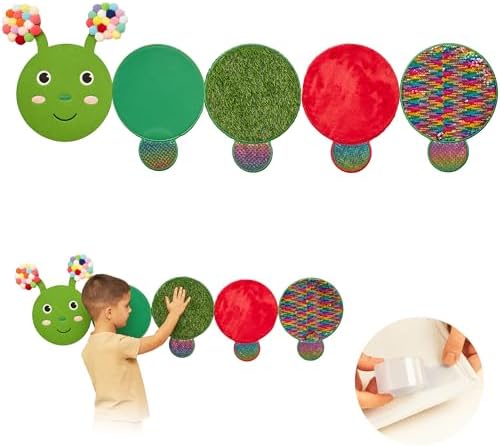
- 【PATENT-PENDING SENSORY WALL PANEL】Discover the joy of sensory play with our Patented Caterpillar Sensory Wall for child…
- 【TOUCH, FEEL, AND LEARN】Each tactile panel offers different textures depending on the animal you choose; from faux grass…
- 【EASY TO SET UP, EASY TO ENJOY】Only one step is required to set up the Sensory Wall for kids. Simply secure the mat on t…

- What’s Our Difference: Our routine chores chart for kids is designed with a double-sided felt board to provide more room…
- With 113 Cards, Easy To Use: 89 cards are printed with various patterns related to chore chart, outing activities, schoo…
- With Detachable Bag to Hold Cards:Our visual Schedule for Kids are made of coated paper, which is strong, waterproof, no…
The best therapy waiting rooms do not need to be large or expensive. They need to feel intentional.
One of the most helpful principles is keeping sensory load low. Soft, cohesive colors usually feel easier on the nervous system than bright visual clutter. Too many patterns, bins, toys, and signs competing for attention can make children feel more dysregulated, not less.
Choice also matters, but only in a manageable way. A child who sees twenty options may feel more overwhelmed. A child who sees two or three clearly labeled stations often feels more capable. Predictability and limited choice create calm.
Quiet movement opportunities are another important piece. Some children regulate best through stillness, but many regulate through subtle movement. A chair band, balance cushion, wall push-up card, or small tactile station can help busy bodies settle without turning the whole room into a play zone.
Visual support helps too. A simple sign showing “Wait, then meet therapist” or a short first-then board can reduce uncertainty, especially for younger children, autistic children, and children with ADHD.
And of course, anything in the room should be easy to clean, easy to reset, and appropriate for the age range you se
Zone Your Space (even if it’s tiny)
- Quiet Focus Nook – worksheets, clipboards, mindful coloring
- Tactile/Movement Corner – fidgets, putty, chair band, “Wall Push-Up” card
- Emotion Check-In Wall – feelings chart, moveable magnets, 2–3 sentence stems
- Reading Retreat – feelings books, beanbag, soft lamp
- Gratitude & Kindness Spot – jar + slips, kindness wall
- Parent Pause Station – short scripts for co-regulation, consent/FAQ cards, tissues, water

A waiting room does not need separate rooms to have different functions. Even one small area can feel calmer when it has gentle structure.
A quiet focus nook can include clipboards, mindful coloring pages, and a few simple worksheets about feelings or coping. This is helpful for children who settle through visual structure and solo tasks.
A tactile or movement corner can hold a small basket of sensory tools, therapy putty, a textured item, or a card showing wall push-ups or chair stretches. This helps children who need input through the hands and body.
An emotion check-in area can be as simple as one poster and a magnet board. It gives children a quick, meaningful way to name what is happening inside.
A reading retreat can hold a few curated books about worry, friendship, feelings, mindfulness, and confidence. Books often co-regulate in a way that is quieter than toys.
A gratitude or kindness spot adds a gentle positive focus. Even one jar and a stack of paper slips can turn waiting into a small practice of noticing good.
A parent pause station can make a surprisingly big difference too. One little shelf with tissues, water, a short co-regulation script, and practical office information can help the adult nervous system settle as well.
The Waiting Room SEL Toolkit (what to stock + how to use)
1) SEL Worksheets & Mindful Coloring
- Include: emotion wheels, “Name 3 things you can hear/see/feel,” seasonal mandalas.
- Why it works: Quiet, structured attention lowers arousal; prompts build language for feelings.
- Set-up tip: Clipboards + short golf pencils; a “Turn-In” tray so you can celebrate or save for session.
2) Fidget & Sensory Baskets
- Include: stress balls, therapy putty, textured stones, soft fabric swatches, a few pop-its.
- Why it works: Tactile input steadies arousal; hands get busy so minds can settle.
- Set-up tip: Label “Take one, return when you go in.” Add a mini “How to Use Fidgets Respectfully” card.
3) Emotion Boards & Posters
- Include: diverse faces/emojis; magnets/Velcro pieces; sentence stems:
- I feel ___ because ___.
- When I feel ___, I can ___.
- Why it works: Normalizes emotion talk and preps the handoff to therapy.
- Set-up tip: Rotate seasonally; keep language inclusive and simple.
4) Gratitude & Kindness Corner
- Include: gratitude jar + slips, “Kindness I Saw Today” sticky-note wall.
- Why it works: Orienting to positives widens perspective and primes cooperation.
- Set-up tip: Invite kids to pull one note and read it to a caregiver.
5) Cozy Reading Nook
- Include: board books & picture books on feelings, mindfulness, friendship, worry; soft seating.
- Why it works: Story = co-regulation. Kids borrow the calm of the narrative.
- Set-up tip: Face covers outward (front-facing rack). Add titles in multiple languages if possible.
6) Quiet Activity Corner
- Include: puzzles, magnetic tiles, stacking blocks, simple matching games; small sensory bin (rice substitute like paper shred for easier cleanup).
- Why it works: Open-ended play restores focus without overstimulation.
- Set-up tip: 10–15 pieces per bin max; one bin out at a time; “Clean-up card” with photo.
7) Calming Decor Elements
- Include: warm cordless lamps, plant or two, soft rug, nature print.
- Why it works: Light, texture, and biophilic cues directly downshift the nervous system.
- Set-up tip: 2700K warm LED bulbs; avoid scented items unless very subtle (or opt out entirely).
Micro-Tools Kids Can Use in Under 2 Minutes
- Five-Finger Breathing card
- Box Breathing coaster (4-4-4-4)
- Wall Push-Ups card (10 slow presses)
- “5-4-3-2-1” Senses bookmark
- Feelings Thermometer (point now/after tool)
Print postcard-size and keep at each station.
Parent/Caregiver Pause Station (one shelf, huge impact)
- “How to Co-Regulate in a Waiting Room” mini-guide:
- Sit side-by-side, not face-to-face
- Breathe slower than your child; they’ll match you
- Name one body cue (“I feel my shoulders soften”)
- Short scripts to borrow:
- “Your body looks busy; let’s choose squeeze or stretch.”
- “You can feel nervous and still do brave things.”
- Logistics: tissues, water, pen, consent/FAQ, QR to office policies.
Age & Neurotype Adaptations
- Toddlers/Pre-K: Large-motor options (animal walks picture card), chew-safe fidgets, board books.
- Elementary: Clipboards, visual timer, emotion wheels, building bins.
- Tweens/Teens: Subtle tools—minimalist journals, adult-looking magazines, discreet fidgets, headphones sign (own device ok with volume off).
- Autistic/ADHD: Clear labels, fewer choices at once, low-clutter visuals, seating variety (firm + soft), opt-out corner (noise-reduction earmuffs available).
Different children need different things, and a well-designed room quietly makes space for that.
Toddlers and preschoolers often need larger movement options, sturdy board books, and simple visuals. Elementary-age children usually do well with clipboards, feeling charts, fidgets, and small building or matching tasks. Tweens and teens may prefer tools that feel more subtle, such as a minimalist journal, discreet fidget, magazine, or quiet grounding card that does not look childish.
For autistic children and children with ADHD, the most supportive changes are often visual clarity and reduced clutter. Fewer choices at once, clear labels, seating variety, and access to an opt-out or low-stimulation corner can make a huge difference. Noise-reduction headphones or a posted option for reduced sensory input can also help some children feel safer.
Hygiene, Safety & Flow
- Color-code bins by day and rotate for cleaning.
- “Clean Me” basket for mouthed items; “Ready” for sanitized items.
- Laminate visuals; wipeable covers only.
- Traffic flow: Seat line of sight to door; keep one “visual breathing wall” clear for calm focus.
- Allergies: Avoid nuts; keep scents optional and posted.
A therapy waiting room can only stay calming if it is easy to maintain.
Laminated visuals, wipeable tools, labeled bins, and clear cleaning routines matter. It helps to have a separate basket for items that need sanitizing and a simple rotation system for fidgets and shared tools. Keeping the line of sight clear to the therapy door can also reduce anxiety for children who need predictability.
Little logistical choices often shape the emotional experience more than we expect.
Quick Start (15-Minute Makeover)
If your space feels bare or too bright right now, you do not need to redo everything at once.
Start by turning off harsh overhead lighting where possible and adding one or two warm lamps. Put out one small basket of fidgets and one neat stack of clipboards with a few calming pages. Tape up a feelings chart with one or two sentence starters. Add a gratitude jar or a simple welcome sign that says this is a feelings-friendly space.
Even those few changes can completely shift the tone.
- Turn off harsh overheads; switch on two warm lamps.
- Put out one fidget basket + one clipboard stack with coloring sheets.
- Tape up a Feelings Chart + two sentence stems.
- Place a Gratitude Jar with slips and pens on a small table.
- Add a table tent: “Choose one activity while you wait. You’re safe to feel how you feel.”
Sample Signs & Prompts (copy/paste)
- Welcome: This is a feelings-friendly space. Choose one activity while you wait.
- Fidgets: Take one. Squeeze, stretch, or roll quietly. Return before session.
- Breathing Card: Trace the snowflake. In…out…four times.
- Kindness Wall: Add one kindness you did or noticed today.
FAQs
Won’t activities make kids too excited before session?
Choose quiet tasks, limit quantities, and use warm lighting. Calm engagement reduces, not increases, arousal.
What if items disappear?
Assume some attrition; stock low-cost, replaceable tools and label “For waiting room use.” Loss typically drops once systems are clear.
We have only one sofa. What’s realistic?
A lamp, a clipboard stack, one fidget basket, and a letter-size feelings chart transform the vibe—truly.
How do I measure impact?
Track: fewer front-desk escalations, smoother session starts, parent feedback (“It feels calmer”), and quicker check-ins during the first five minutes.
Recommended Stock List (mix & match)
- Clipboards + golf pencils
- Mindful coloring + emotion worksheets
- 2–3 styles of fidgets (stress ball, putty, textured stone)
- Visual timer (quiet)
- Feelings chart with magnets/Velcro
- Two warm cordless lamps (2700K)
- Small rug + two child chairs or floor cushions
- Book rack with 8–12 curated feelings titles
- Gratitude jar + slips
- Labeled bins: Fidgets • Coloring • Building • Books


Final Thoughts
Children rarely walk into therapy as a blank slate. They arrive carrying tension, hope, resistance, curiosity, embarrassment, tiredness, and everything that happened before they opened the door.
A therapeutic waiting room honors that reality.
It says to the child, you do not need to be completely calm yet. You do not need to know exactly what to say. You can come in with a busy body, a worried heart, a quiet mood, or a handful of questions. There is space for you here.
When you add thoughtful SEL tools, warm light, simple structure, and a few regulating choices, the waiting room stops being a place to pass time. It becomes the first layer of care.
Next reads:
DIY Winter Sensory Corner for Therapy Offices or Classrooms

About the Author
Hi, I’m Eve, a former school counselor with a master’s degree in School Psychology and a passionate advocate for children and families navigating sensory challenges. As a mom of children with sensory sensitivities, I deeply understand the journey special-needs parents face, and I dedicate myself to researching and sharing practical solutions to help children thrive and feel comfortable in their bodies. My goal is also to empower counselors, therapists, and psychologists with creative strategies and supportive resources to enrich their everyday practice. When I’m not writing or exploring new therapeutic approaches, you’ll find me spending quality time with my family and continually seeking inspiration from everyday moments.

